Even consensus science acknowledges a super-cell thunderstorm is electric. They often liken it to a battery, where immense static charge builds as it sweeps over the land, and winds internally stir water and ice.
Convection cells of warm moist air rise into frigid layers of the stratosphere, causing condensation towers with anvil tops. Winds rise and fall carrying rain and hail, and occasionally twist into vortexes that drop to the ground and scour the scrim of humanity from their path.
These are effects of temperature and pressure in the act of convection we are told.
Baloney.
The proper electrical analogy for a super-cell storm is a thermopile. Actually, it’s not an analogy, it’s what it is.
A thermopile is a thermo-electric circuit that you’ve probably seen in use. Plug-in-the-cigarette-lighter ice coolers made for cars use the thermo-electric effect. Look it up if your curious, we’ll only need to talk about the basics.
Thermo-couples are an instrument to measure temperature that use the thermo-electric effect. It’s a circuit that couldn’t be simpler. All it takes is two, or more wires of different conductivity connected in series. When current is passed through, a temperature difference arises at the junction of the wires. Or reverse that – heat the wires, and generate a current. The effect can also be made with solid state materials in a manner very similar to photo-voltaic solar cells.
Current generation from thermo-electric effect.
The different electrical properties of the dissimilar materials create a temperature difference – one conductor chills and the other heats up in the presence of current; or vice versa, current is produced by a temperature difference.
Full stop and allow me to repeat that. Current is produced by a temperature difference. Temperature is a consequence of electrodynamics. There are all kinds of things one can delve into about temperature and radiation and how it’s transported by conduction and convection, but the bottom line is electricity – excited electrons. Most people don’t think of it that way, and they should.
There are three related mathematical relationships that describe the conversion of current to heat and heat to current in terms of a circuit, called the Seebeck, Peltier and Thomson effects. The differences are not important – they describe different conditions and aspects of the same thing. Current produces heat, and heat produces current, provided the right dissimilar materials are properly arranged in the circuit.
The current-temperature relationship is precisely understood. Properly calibrated thermo-couples are used to detect the slightest temperature differences in every kind of scientific and industrial application, as well as to measure the most extreme temperatures.
The relevance to a thunderhead is in the central updraft core of the storm, which becomes a thermo-couple circuit. It’s a flow of wind bearing ionic matter – water vapor is one, and surface dust is another – which produces a current.
The updraft rapidly chills as it rises, becoming more saturated with condensate and more ionization. It also shrinks. The central updraft column gets denser as it rises, so the column has to shrink in volume, and this causes it to speed-up.
All of these changes to the state of the air in the updraft drastically change the conductivity of the air in the column. The updraft column is electrically no different than a wire of changing conductivity, which in the presence of current, will exhibit a thermo-electric effect.
It won’t maybe do it, it’s gonna do it. It has to do it. In the presence of a huge electric field, a wet, surface-wind rising into the cold dry stratosphere is going to cause a whopper electric current. If anyone doubts this, go look at a thunderstorm.
When there is a sequence of several conductors of different conductivity in series, the thermo-electric effect can be amplified by adding more junctions. This is called a thermopile. It’s several thermo-couples connected together.
Thermopile Circuit
A super-cell thunderstorm is a thermopile. It has more than one ionization event and each one changes the column’s conductivity in a feedback that increases current and amplifies ionization.
The rising central updraft ionizes where the moisture is saturating and condensing, or freezing, at specific temperature layers. All around the column is a shear zone between it and the surrounding air, and this is where the ions go to collect. The shear zone is an interface – a dielectric barrier that attracts charged species to it.
Have you ever seen llamas in a field? They always stand at the fence, because they are like guard dogs protecting their perimeter. Charge does the same thing. It flows to the interface, like a llama runs to the fence. And if there is a hole in the fence it leaks out.
There is a perception of a charged species being an independent particle that will immediately be attracted to the first oppositely charged particle it finds and neutralize. Plasma won’t do that. It acts as a coherent fluid, organized by electric field. It seeks balance in an equi-potential layer transverse to the electric field, so it spills out from the walls of the column and forms ‘sheets’, which is what is detected in thunderstorms: ‘sheets’ of charged species.
They actually have more complex geometry than a ‘sheet’. They organize into plasma coronas that actively spit out electrons and ions in channeled currents. Coronas have a geometry and produce effects that depend on the polarity of the charged species mix.
The channels of discharge they create explain every aspect of a super-cell thunderstorms. Coronas explain rain, downdrafts, tornadoes and lightning. They explain cloud-to-ground lightning and positive lightning; intra-cloud lightning and inter-cloud lightning. They explain sprites, elves and gnomes – electrical discharges to space that are the Earth’s equivalent to a solar flare, caused by the same thing – coronas.
They explain the shape of wall clouds, beaver-tails, meso-cyclones and anvils. They explain things I haven’t even heard of yet, but before this week is out I will read an article about some aspect of a thunderstorms I didn’t know, and it will explain that too.
Because this is the electric model of a thunderstorm it’s closer to the truth. It’s not that convection doesn’t occur, it does. But convection is heat transfer and that is fundamentally electric, like everything else.
Heat is atoms getting excited, which is a purely electrical thing. Add heat to a volume of atoms and they will spread out and try to cool down. They prefer a state of rest. But if you contain that volume, bottle it up so it can’t use more space, the pressure and temperature rise. Pressure is the result of the excited atoms trying to push outward, but being confined from doing so. Pressure and temperature are intimately related as physical expressions of electrodynamics.
Convection cells form like hot air balloons. Imagine big balloons of warm air with invisible envelopes all jostling together and rising. When they begin to form, electro-dynamic forces have already been at work. Solar radiation and heat from the land warmed the air in the first place. The air carries an ambient ionic charge. As they rise they ionize more as moisture in the air condenses.
It’s been known since the beginning of the twentieth century, that a fast-moving charged particle will cause sudden condensation of water along its path. In 1911, Charles Wilson used this principle to devise the cloud chamber so he could photograph the tracks of fast-moving electrons.
In 2007, Henrik Svensmark published a theory on galactic cosmic ray influence on cloud formation, and later demonstrated his theory in a cloud chamber at Cern, demonstrating certain cloud formations are catalyzed by cosmic rays ionizing the atmosphere.
These are examples of ionization causing condensation. Let’s postulate condensation causes ionization too.
Water vapor condensing into droplets self-ionize into cations and anions. In the hugely building electric field of a thunderstorm, they ions are torn apart as they form, filling the rising air with charged species. This condensation event forms the first corona, a negative corona around the central updraft with charge density concentrated in the lower clouds where condensation first occurs.
Another corona forms higher. This is the anvil top, caused by another ionization event, when the water freezes to ice. The ionic mix here is different and a positive corona is the result. It has a different shape, being a broad diameter and less dense in terms of charge density.
The coronas are the thermopile’s different current junctions, where charge bleeds out into a corona, just as it would from a power line if the insulation is damaged. Atmosphere is a leaky insulator. It’s the strength of the electric field that gives the storm it’s shape.
And once this motor gets started – the conveyor belt of wet wind in the updraft keeps rev’ing as charge density builds. The rain curtain and downdraft are the same current looping and dumping hydrolyzed charge in the form of rain at the exhaust of the updraft.
It’s a looping current from ground to atmosphere, and back to ground, in a continuously changing conductive path through several temperature regimes – a thermopile.
And so builds the strength of the corona, until it spits electrons that avalanche into lightning bolts. If conditions are right, a charged corona will lower towards the ground, abating it’s lightning to send downwards a twisting tendril of plasma, while stirring ground winds below into a vortex. A tornado is born of a corona.
Coronas develop unipolar winds. Where charge density is low, the corona can’t make lightning, but it still spits electrons that drift towards ground. The drift region of a corona creates winds as drifting electrons drag ions and neutral matter along. Downdraft, inflow and updraft winds result.
In the above diagram, a point electrode generates a corona opposed to a plate electrode connected to ground, with a gap in between. This is a similar circuit to a storm except the corona in the clouds would not have the geometry of a point electrode, but likely a flattened toroidal shape.
The region in the gap labelled drift region, channels of current are created based on the charge density of the region of corona from which it radiates. The outer edges where charge density and electric field tension are lowest, channels form electric, or unipolar winds.
Sudden and intense down-bursts are highly mysterious to atmospheric scientists and they attribute them to density bombs – pockets of dense heavy air that rapidly sink from the clouds. These violent downdrafts will slap airliners from the sky. They aren’t density bombs – they are unipolar winds.
The entire morphology of a thunderstorm is explained by a thermopile circuit with leaky insulation. But that isn’t all it is. In Electric Earth Theory, there is a more significant meaning.
The looping circuit of a super-cell is a weak form of electrical expression known as a coronal loop. Coronal loops are the result of the corona’s themselves moving relative to the plate electrode. The differential movement creates an offset between the center of charge density in the sky versus the center of charge density on the ground, distorting the electric field. It’s a dog chasing a cat that can never catch-up – negative chasing positive polarity in a wave.
The result is it bends the current into a loop. It goes up in a flowing discharge of current and comes down, energy expended and recombined into rain. If charge builds enough, though, the loop breaks out into a fully realized discharge. The current has broken through the dielectric barrier of the atmosphere to splash charge into space. On the Sun we call them Solar Flares, and Coronal Mass Ejections. On Earth we call them Sprites, Elves and Gnomes.
So, here we are in the world of plasma. Double layers, Alfven waves, z-pinches and corona – it happens in our everyday lives as much as it does on the surface of the Sun – because it’s all the same thing.
So too, we have symmetry. Not the artificial symmetry of mathematical equations and categories consensus science keeps force fitting to Nature, but Nature’s true symmetry of nested fractal repetition.
Solar Coronal Loop
This why we can be confident it’s true. Such organization and harmonic resonance between phenomena across all orders of scale is not the result of random anything. It’s the result of electricity.
The same phenomena is found on any planetary body that carries an internal current that forms an electromagnetic field. The coronal loops are ultimately caused by the voltage between the magnetosphere and Telluric currents below Earth’s crust, just as they occur above and below the photosphere of the Sun and in the atmospheres of Jupiter, Saturn and Venus.
As above, so below… the ancients knew what was going on and they weren’t just talking about the sky. They were talking about below the ground, too.
The electrical stress across the layers of atmosphere and crust is charge building on layers of dielectric, which is what a capacitor is. A storm is an expression of capacitor discharge. If clever technicians made a high voltage capacitor with a fluid dielectric over a grounded flat plate dielectric they would see coronal loops form, I’ll bet.
Tornadoes are a harmonic fractal repetition of the super-cell storm as a whole. They are nested coronal loops inside the bigger loop of the storm. Because they are smaller and generate from an intense charge density region of the corona, the energy is more concentrated.
Look again at the image of a solar coronal loop and see there is a smaller loop of higher intensity. This is the effect of an embedded harmonic repetition; and that is what a tornado is to the storm it’s born from. But, as always it’s more complicated than that. We’ll delve deeper into tornadoes next to complete the picture.
If rolling stones gather no moss, my Uncle Smith was a rock-slide. Not kinetically – he always seemed very calm – but emotionally, living the moment in a state of pure joy.
When I was a child in the sixties, Smith lived and traveled the National Parks in a Streamline travel-trailer towed behind a Dodge pick-up. He took his wife, Mildred, and a small dog.
He was a seventy-plus year-old, free-spirit, when the Beatles wore matching page-boy haircuts and suits – in other words, even when ‘rebels’ helplessly conformed more obviously than normal, Smith was authentically weird.
Smith and Mildred with the road weary Streamline
He was old and retired, living on a pension from the time I could remember. I physically outgrew him before I reached puberty. Built like a wiry elf, he weighed about ninety pounds, with more hair in his ears than anywhere else.
He was blind in one eye. His wire-rimmed glasses had the bad eye fogged, but were so dirty and scratched you couldn’t tell. The eye was poked-out by a tree branch, he claimed, while chasing a bear from camp one night in the woods. He had only aspirin and cotton-balls to catch the draining fluid, while he slept in a tent until daylight. He said he slept – I don’t know how – the bear alone would have kept me up.
Smith was actually my great uncle, my Grandmother’s brother on Dad’s side. Dad was born in 1910, and I in ‘57, so there’s some generation gap at play. Lord knows when Smith was born, but he grew up at a time when pipe-organs outnumbered cars, sometime after the ‘War between the States’.
On the subject of pipe organs, that was his occupation back in the day – organ tuner. Not a cleanse-your-colon, fitness guru you’ll find if you ‘Google’ that term today, but a pipe-organ tuner.
There were not many of them even fifty years ago – Smith may have been the last. In any case, he never voluntarily retired. Pipe-organs did.
Pipe organs are the only musical instrument that can’t be taken to the shop for tuning. They need a building to hold them up, so, Smith got used to travel. Eventually, the number of vaudeville, bawdy houses and churches with pipe organs dwindled as the century ticked away. Smith got a travel-trailer and kept driving with Mildred and the dog.
He’d take the job of Camp Host in National Parks where they’d stay the season, then visit kin in the weeks between odd-jobs at the handful of Mormon temples still using pipe organs. He was always on a continuous roam, Mildred and the dog with him, or not. At some point in my youth, the dog quit showing up.
He followed the seasons through a circle of his favorite haunts that ranged the entire west. Oak Creek, Sedona and Apache Junction were favorite camps on the Arizona leg of his loop. There is a cluster of family in Tucson, a good VA hospital, and our trailer park for a place to stay, so we were on his route.
Most of his waking hours he spent at a workshop in the back of the Dodge beneath a camper shell. It was a complex and messy workshop from his days roaming the country tuning organs. Besides the carpentry and machining tools required for pipe organ maintenance, there were automotive tools, and everything for the Streamline RV. Except for food, Smith carried everything he needed with him.
Because it was what he liked to do, he spent most of his time tinkering in the workshop. One thing he made was a bellows from wood, leatherette and brass tacks, with a rolled sheet-metal nozzle and marble for a check valve. He originally made them for tuning pipe organs, because he needed a way to blow air through the pipes to get sound.
The bellows also worked marvelous with a fireplace, and he continued to make them long after the last pipe organ wheezed. We got several for those chilly, sub-100 degree days we lit the fire-place in Tucson.
While Smith worked at the narrow workbench on the tailgate of his truck, work piece in a vise bolted to the bumper, I helped him. At that time in my life, adults were generally telling me to shut-up, or go away. Smith asked for my thoughts, encouraging me to join him in whatever he was doing and talk. He was always interested to listen, and interesting to listen to.
Smith’s pipe organ days must have been something. He took my Father to Chicago with him in the later days of Prohibition. Drinking establishments bloomed in Chicago like nowhere else on Earth back then, because they were illegal. Nothing makes business boom better than making it illegal, and Chicago was ground zero for illegal booze. Dad was about twenty, and while Smith tuned bawdy house organs, Dad got a job helping manage an A&P store.
I asked my Father about those days once – I mean Speakeasy’s and Al Capone – he was right there – I wanted his ‘Forest Gump’ account.
I learned more than I wanted about A&P’s. Capone and the gangsters he only remembered reading about in the papers. All he said about Speakeasy’s was, “We called them clubs”.
That’s as much as I got. But Dad had a butterfly tattooed to the inside of his right arm he never spoke about. Something so out-of-place with the straight-up Father I knew, it had to be from those days of his youth in the Chicago “clubs”.
And I think it strange it was a butterfly, given my own obsession with them now.
Smith told stories about the war. And I mean – The War: World War I. The best I heard involved him and a driver, he said, inadvertently crossing enemy lines. They were in France carrying some communication, or moving from one place to another for a reason I don’t recall, and suddenly they realized the uniforms around them were different.
He said they turned around and hauled out of there before anyone noticed their uniforms were different too.
I try to picture such a scene. It has a ‘Three Stooges’ element to it that, along with Smith’s mischief, makes the story less credible. But then, stranger things have happened.
I can’t picture Smith holding a gun in anger. Perhaps he never did, but he surely witnessed the darkest side of man. Though he never told me anything gruesome about the war, I imagine he saw things that would curdle blood. He only spoke about funny things, like the French he learned to parlez local girls. He probably didn’t want to remember the other parts. That’s sometimes how people are who have seen the darkest – they only want light shining through.
I remember most talking about the outdoors with Smith. He was the first adult who shared that passion with me; alp-en-glow in a mountain valley, bears at night, panning for gold… the adventure of wild places been, or to go.
One adventure of Smith’s nearly killed him. I was about thirteen and Smith was edging towards eighty. An older brother suggested we take a family hike. There was a miscalculation, or misread map involved somehow – I don’t remember, but the trail was well over twenty miles of rugged, steep terrain. In the mountains around here, that’s a hike better suited for two days, not one. Smith, of course, insisted on going.
The hike began beautifully. Crisp, chilly air at nine thousand feet on a bright spring morning. The creek was still sheathed in ice. As we crossed the stream on icy rocks, Smith slipped and broke through. He twisted his ankle and soaked his pants. He wouldn’t turn back though, said he was fine, just had a little limp to make him take it slow.
Of course, the pain and inflammation took awhile to build, and in the meantime we kept going. As he slowed down more and more, the older ones stayed back with him and the younger of us went ahead. Smith seemed to be managing, so there was no reason to hold the young gun’s back. My brother and I separated from the group descending fast down switchbacks. I still remember how it burned my legs.
The sun went down miles before we reached the end of the trail. There was a fortunate full moon, because we had no flashlight. The moonlight gave an ethereal beauty to the canyon grasses shifting in the breeze. The trail from this point was easy ground, but it wound in hairpin turns through side canyons such that it took a mile of walking to advance a hundred yards.
Walking a mile to arrive at a point where you can throw a rock to the place you started is demoralizing. Mile after mile, every canyon looked the same, until we joked that we’d entered a nightmare.
“Imagine, if you will, a trail that never ends. Under a silver moon of surreal beauty, these unfortunate souls find it leads forever nowhere, because they have entered … The Twilight Zone.” That was the nature of our talk.
The final section of trail required a push over a ridge, then a long corkscrew of winding switchbacks to the end of the park road. It was such a relief to get down. Our feet were hot-irons, but my brother Rich also suffered toe-jam. It happens going downhill if your nails aren’t trimmed short. The pain is like bamboo shoots and will cause the affected toenail to turn green and eventually fall out.
Our glee at trail’s end was suddenly clouded by the realization there was no phone at the end of the road, and the Park gate was locked until morning. I think it was another four pain-filled miles to the gate and a telephone.
Sometime three, or four hours later my older brothers and sister-in-law came down, and Dad went to pick them up while I soaked in a hot shower. Smith wasn’t with them.
Still high on the mountain, he decided he needed to rest his leg, so he sat down and lit a fire. Then he decided the fire was warm and his leg was not working, and insisted on staying the night. My brothers were unsure about leaving him, but it was at a point of leave him, or spend the night with him. They gave him extra sweaters and came down.
In the morning we were at the gate when it opened and immediately set up the trail. Smith met us at the top of the switchbacks – almost down already. He was a little stiff, black-faced and dirty from crawling into the campfire coals to keep warm, but remarkably cheery.
It was below freezing that night. Not many octogenarians would have made it, or even attempted the hike. In spite of his fall, Smith knew his own capabilities and how to deal with the situation. The experience to him was of so little drama, he was embarrassed he put anyone to worry.
Had anyone suggested the following week to do the same hike again, Smith would have been the first to go. Probably by himself, because no one was making that suggestion.
Smith was unconventional. It’s the most endearing and memorable aspect of him. He lived on the fringe; happy, law-abiding and respectable, no man’s but his own. His example resonates through the family.
My take on life included a “Smithsonian” perspective forever-more. Uncle Smith’s alternative lifestyle seemed more agreeable than convention offered. Doing things mattered more than having things, to Smith. If given a mansion, I don’t think he would have known what to do with it. Anything more than what fit in his pick-up was too much.
Lifestyle isn’t the issue, though. A curious mind, empathy for the ways of others, minding ones own business and getting on with life in the fashion best suited for you is the point. Smith was a great example of those qualities.
We all have unique perspectives. From a trailer park, the perspective is closer to the edge of the lens, so to speak, and there is less distortion to reality. Layers and layers of social obligation and expectation are stripped away in a trailer park. So long as you keep the weeds down around the place, you’re socially acceptable.
Once that hurdle is met, one can do as they please. It’s classic Smithsonian. The night sky is brighter, more vivid and detailed from the top of a mountain than it is from a city. Such is the view of reality from the trailer park.
I’m actually a neoclassic Smithsonian. I lack the rigor for his austere simplicity, but ideologically I’m on the same page. It allows me a fresh take on Nature. Let’s now examine some notions about Nature from the trailer park perspective.
Chapter Four – The Chicken Hath No Egg
Everything being electric, phenomena scale infinitely, repeating fractal patterns within fractal patterns. The universe is a Mandelbrot Set of embedded repetitions. It has little to do with fancy mathematics. It’s cellular automata progression of self-same order over infinite magnitudes, producing similar effects at different scales.
The fractal forms are never exact reflections because they are modified by charge density and phase changes. Whether a hot plasma is at work, or a cold plasma we can’t see, the degree of ionization, relative polarity, charge density, electric field strength and field geometry are the things that influence most. Phase of material, whether liquid, gas, solid, or airborne water and dust; the mediums response to electromagnetic forces has relevance to the effect.
Proof of the concept is in the fractal forms that repeat over orders of magnitude in scale. To recognize the patterns becomes easy if the consensus brainwashing is ignored and a correct perspective is used.
Trailer Park Cosmology requires a change in how Earth is viewed in the first place. Our sight is limited, and therefore our perception. The “blue marble” of astonishing beauty we see in spacecraft photos only shows the reflection of visible light. Earth is much bigger, reaching all the way to the Moon with its electromagnetic sheath.
The Geomagnetic field should rightly be viewed as the boundary of the Earth. Looking at only the blue marble is like seeing the nucleus of an atom without electrons. The picture, and therefore perception of it, is incomplete.
The Earth is a torus of electromagnetic energy orbiting in waves of solar wind. The blue marble spins inside, shielded from life threatening radiation by shells of magnetic field. Those shells induce current from the solar wind that emit coronal light at the poles – the aurora is a physical tell about the electricity in the Solar System that science has completely missed the significance of until recently.
The Earth is like the electromagnet inside a generator. It must be excited by current to manifest a magnetic field.
Magnetism is a consequence of electric current, it cannot come into existence on its own. It is the product of electricity flowing through dielectric matter. Mathematically, flowing a given quantity of current through a given dielectric barrier yields a given magnetic field. It’s like flowing water through a chiller to freeze it to ice. It’s phase change of energy – electricity to magnetism, like phase change of matter – water to ice, with the dielectric being the chiller that takes away heat.
That’s a simple analogy, but helps to define the relation of electricity to magnetism – that they are two sides of the same coin.
Magnetized rock and man-made magnets are the result of current that aligned the atomic dipoles of the matter into coherency, lining them up in the same direction so they are magnetically focused. The magnet keeps this focus as static, or Remanent magnetism until another electrical force changes the dipole orientation.
Man-made magnets are created by exposing ceramics to high voltage current. Natural magnetism, found in magnetite and load stones, are the result of past lightning strikes, or some similar exposure to current. Magnetic remnants of meteors were exposed to current at some point as well, perhaps as they entered Earth’s influence.
The problem with consensus scientific theory on the Earth’s magnetic field is that it’s predicated on the Earth’s core being a magnet whose spin creates the Geomagnetic field. The idea is like pulling yourself up by your bootstraps. To mix metaphors, it’s not a chicken-and-egg problem, but a chicken without an egg.
For the last hundred years they’ve said the Earth’s core is like a bar magnet, yet they can’t explain how the core of the Earth became a magnet. Their models also can’t explain why, if Earth’s core is an electrically static magnet, it’s magnetic field varies so much. It acts like an electromagnet, and that requires current. Without an internal current, Earth would be a dead hulk like Mars.
This fact is only recently being contemplated and beginning to be verified by surveys. Fast streams of magma below Earth’s crust have been detected that betray the electric current. It should be intuitively obvious, but that isn’t the way of science. Reduction before deduction is the name of their game, which means trees before forests, dumb before wisdom, etc. It’s an echo chamber of bad ideas.
Current has to be flowing through the interior of the Earth from the poles. There is no verifiable physical explanation for the Geomagnetic field without accepting, as fact, there is an excitation current internal to the blue marble that causes it to act as an electromagnet.
With current internal to the blue marble, and current in the ionosphere that surrounds the atmosphere, the layers in between are like plates in a capacitor with charge on either side. These plates, the atmosphere, and crust of the blue marble, are in charge equilibrium with the internal and external flows of energy.
Because the plates are charge neutral – the atmosphere and crust of the Earth always carry charge, but the vast predominance of matter in these regions is neutral – we live in an equi-potential layer that causes us to perceive equi-potential as the norm.
It’s not. The universe is filled with charged plasma and electric current. The ‘Goldilocks zone’ we occupy is a very special place. It’s special because it’s charge neutral, and balanced, or otherwise things would fly apart. Even so, it’s not without electrical drama. We live inside an electrical circuit.
Thunderstorms and hurricanes race through the atmosphere in the tropics, discharging accumulated atmospheric charge. Volcanoes and seismic zones stripe between the poles like the spiraling seams of a baseball, betraying the flow of current beneath the crust, and discharging to surface on occasion.
Given some change in the Solar System’s electrical environment, these layers become the most energetic. A change in electric field between internal and external currents stresses the equilibrium of the dielectric plates in between. We see it in the atmosphere every day.
In the course of understanding Earth’s crust, it becomes apparent the surface of the Earth was formed by winds and arcs of electricity more closely associated with the planet Jupiter than the Earth we know today. There is evidence for atmospheric coronal discharges causing gargantuan lightning bolts, surface conductive arcs, dielectric barrier discharges, sputtering discharges and global, uni-polar winds of supersonic velocity that fed vortex storms of immense size and energy. In proportion to Earth’s size, the storms were similar to the giant storm on Jupiter known as The Great Red Spot.
It also becomes evident those same forces are at work today in Earth’s atmosphere and lithosphere, creating the same effects only far milder. Whatever events caused the continents to form was an external influence to the Earth. The Earth’s response was no different then, from how it responds to external influence now, only the magnitude has changed.
This is how Earth looks from the trailer park. It’s because I watch a lot of thunderstorms – can’t help but notice since the roof leaks. Thunderstorms are the result of Earth’s electrical currents. They are themselves coronal loops.
Thunderstorms are a consequence of the dielectric breakdown of the atmosphere as it is subjected to an intensified electric field. Since we know more about them than we know about the Great Red Spot on Jupiter, or coronal storms on the Sun, they are the best place to begin understanding coronal dynamics on Earth.
It’s time to begin this book, because I finally know the ending. I can’t tell you how important that is. Writing without an outline is a great way to exercise creativity, but it’s no way to write a serious book. This is a serious book.
I’m breaking the rule and writing without an outline, though. I know the ending, so its okay, but I need to amble and divert this message with humor and introspection. I can’t write without relying on humor, and that is something to do with the power of the message. It wants softening to pretty it up; some window dressing to blur the vision of hell it presents, for surely, some will see it as that.
Others are going to see beauty and know there is nothing to fear. You’re the people I’m talking to – you have a sense of humor. That’s what those awakening to reality need more than anything else.
The core of the book’s message is the answer to one of mankind’s Big Questions – how the surface of the Earth got it’s shape. It’s the one key piece in the jigsaw of the Cosmos that is tangible and readily available to us.
Science was born of the pursuit to understand Nature, yet no one can deny Nature poses as many enigmas today as it did when we began. Every scientific ‘answer’ turns out to be a guess that begs more questions. Why is that?
We are going to turn that around in this book, and start looking at answers to questions no one’s been asking. When answers to unasked questions start popping up everywhere, and you can see things with your own eyes, you will say, “Hot damn… this is real!”
Religion, myth, and iconography from the past echo a belief in catastrophic events that flooded the land, glowed in the sky and rained fire. Some of them are related as eyewitness accounts. Is it possible the ancient portrayal of celestial battles and thunderbolts of the Gods is true?
Schools, government and private institutions brim with scholars who say those myths are fantasy, because they believe tectonics tumbled Earth’s hard crust like a clothes dryer – very, very slowly. Could they be replacing one fantasy with another?
Today, a slew of self-righteous environmentalists, catastrophists and intelligent design theorists attempt new interpretations that involve meteors, solar storms and CO2. Are they thinking out of the box, or forcing results to fit their theories?
These questions can be answered. And now that I can settle the issue, I feel it’s urgent to get this out, so everyone can relax and focus on other important things.
I know, that sounds preposterous. You’re thinking, get the tin foil and make this guy a hat – another internet genius-in-his-own-mind. Well that may be, but what I’m going to show you is all based on real electromagnetic effects – things we can see and experience. I present visual evidence with my best explanation of its cause. This is a study in natural philosophy, one that brings cause and effect in the world around us into coherent focus. It’s your decision whether to believe what you see with your own eyes.
The patterns in nature aren’t some miraculous, unknowable coincidence of randomness. There is cause and effect in every pattern, from rocks and bird feathers, to clouds and lightning. The patterns reflect, fracture and nest in fractal repetition across scales from the atom to the entire cobweb of galactic clusters that make-up the universe. The face of Earth and all of the planets and moons were shaped by the same unified force of Nature – electricity. So too, all of the stars, galaxies, and odd, flickering, spooky things out there.
I’ll confess right now, I don’t have all of that figured out. Other people are covering those aspects of cosmology we call, Electric Universe Theory. My part only pertains to the face of the planet – how the continents were made, specifically; and how the same forces at work long ago are still at work in the environment today. But that’s a pretty Big Question in the panoply of Big Questions, certainly closest to us in terms of proximity and impact to our lives.
The land and its form, weather, and climate is the environment we live in, so it’s the best starting point to discuss all the Big Questions and put our lives in proper context with the cosmos. I call the collective work, Electric Earth Theory.
I’m going to tell you the ending for this book right up front so you know I’m being square and not just withholding for suspense. The very next chapter will describe how the continents were formed and the physics behind it, in a concise overview. But I’m writing a long book, so there has to be something to keep your interest through the next – however many – chapters.
So, big picture first, then we’ll work our way into the details. That’s ass-backward from how I figured it out, and writing this gives me a way to look from a new perspective, which will help to refine the theory. You’ll have to keep reading to get the details, but it’s astonishingly simple.
Also, it occurs to me I’ve acquired some insight few people in today’s world can lay claim to, so who I am might be of future interest. After-all, what I’m going to tell you will expand your imagination. It has to for you to comprehend the reality it presents. Forces of nature few have ever contemplated will be exposed.
Your getting it straight from the trailer park were I live, which is a pretty humble perspective. An unvarnished, earthy reflection on what is really important, which is a perspective I have because I don’t spend my time like most. I’ve taken to a semi-hermetic lifestyle that allows me to contemplate the Big Questions in the sublime quietude of a retiree’s mobile home park.
I’m not unique. There are others unlocking a Pandora’s box of neglected science. The mystery of the Holy Trinity – dielectricity, electricity and magnetism, is under scrutiny by modern-day Faraday’s using home-made ferro-fluids and powerful magnets. They are able to comprehend where formal science fails because they see with the wisdom and curiosity of fresh eyes and open minds, instead of dead-eyed conformance with the establishment.
Others are revealing how gravity is electric, how currents flow in space, how galaxies are fed and how stars are made. The revelations extend down to the atom and the nature of matter, the ether and how electricity is the grand unifying energy in Nature. We will explore some of these folks and their work.
So, I’ll dribble out the geo-morphological details along with a bunch of other stuff. This book will present (at least it will when edited) both a coherent look at nature and describe the elegant simplicity of its form, while I rant about some of the establishment’s monumentally stupid theories, and tell you some stories from my life – this last being for humor. In context, my theory and ravings might leave a trail of crumbs for future psychiatrists to ponder what kind of brain damage I’m struck with.
I will also reach out into realms I don’t understand, but strive to. These will be another source of entertainment and allow me a way to build suspense. There are mysteries down the road to keep you reading.
Along those lines, we’ll look deep into the past when ancient people on this Earth knew what I’m going to tell you. They left scratches in rock and stories about dragons, because they were trying to pass-on important information. We’re digging to the heart of the story of mankind, really, to take a holistic view at what we are, within the bounds of known physics.
We’ll look at arcane things like the Eye of the Sahara and discover how it was made, and why there are sea horses in Lake Titicaca. We’ll look at other planets in the Solar System and discover possible answers for anomalies that have never been adequately explained. We will certainly touch on Dinosaurs, and perhaps UFO’s, crop circles and Bigfoot.
One could easily call the theory and speculations I present the consequence of too much time on my hands, with perhaps a little too much vodka. But if you actually look at what I’m going to show, you will come to understand, because it is all anchored in observable nature and real, verifiable physics.
My observations are undeniably present and verifiable. It’s the interpretation that matters, and my approach works because nature is a simple thing. That what I present will be recognized by a few during my lifetime is all I expect, but it will outlast me and come to be understood with greater fidelity some time in the future. I hope my grandchildren will be proud.
Chapter 1 – Coronal Storms and the Violent Artist In Them
Earth’s continents lay like sheets of clay smeared over a baseball. The ball is a layer of basalt, covered by oceans two-thirds around. Over the rest, basalt is covered by cratons, or sheets of granite, that are in turn covered by layers of sediment and volcanic extrusion. These are the continents.
Conventional science holds to the notion these continents obey plate tectonics, which was arrived at by an interpretation of their shapes. The west coast of Africa seemed to nestle with the east coast of South America so well, they must have once been together. This reasoning led to other theories about how this came to be, and now plate tectonics is a virtual given in geo-science.
A piece of advice: don’t ever pick a trained geo-scientist to be on a competitive jigsaw puzzle team.
If one actually tries to fit the continental shapes together, like a jigsaw puzzle, they really don’t fit anywhere, except for the Africa/South America coast line. But, there are patterns that repeat all over the globe that resemble each other in uncanny ways, and much more precisely than the one piece that fits the Uniformitarian Bible.
I don’t think it’s because they haven’t noticed. Good Lord, Google Earth is free. Geologists aren’t like the proverbial weatherman who never looks out the window, are they? They must have noticed. I think it’s that their theories can’t provide an explanation, so they pretend the patterns don’t exist. But secretly, I have to believe they feel totally confused.
The patterns are there because they were formed by Coronal Storms that electroplated the face of the planet. The continents are the result of volcanoes bubbling stuff to the surface and coronal storms welding stuff on top. The repeating forms occur because electricity is a fractal phenomena. It repeats self-same heteromac forms in the same way harmonics emerge in sound.
That in a nutshell, is how the continents formed. Okay, I guess a little more detail is warranted, but some of you already know what I mean… right?
It’s the same thing that makes solar flares, the Great Red Spot on Jupiter, and other things people may, or at least should already recognize as coronal storms – or sun spots, or their prominence, called coronal loops. So let’s talk first about Corona. It’s one of my favorite beers.
I happened to be drinking one when I saw a coronal loop over my head. It was a strange cloud formation – huge in fact, spread across the entire southern sky. One of those high, thin layers of feathery cirrus formations making a coherent disc of concentric waves stretching maybe ten miles across.
It looked like a ray gun in space hit the outer atmosphere and rolls of concentric clouds spread out like waves in a pond, with interference patterns and delicate criss-cross standing waves embedded. Next to it, the same diameter, was a six-point star of horsetail filaments with a rising center. It looked like a compass rose. The two were obviously a pair, one the conjugate of the other. I suspect it was formed by a looping electric current that connected them to Earth.
Although I wouldn’t call it a storm, it was like the ghost of one advancing in a weather front moving over the area. The condensation was an ionization event, of the kind confirmed by Heinrich Svensmark in cloud chamber studies at CERN. Since it is a recent revelation that coronal loops have such significance to the environment, I took comfort in it’s confirming presence and savored my Corona while the rose flush of sunset lit the stunning clouds.
A corona is an electromagnetic plasma construct. That is, a self organized cloud of ionized gas in a high-potential electric field, where electrons are being stripped from atoms, leaving ions. Ions are charged gas molecules, or little clusters of atoms that define the species – oxygen, nitrogen, or hydrogen, say – that either have extra, or missing electrons, because the fast, free electrons flying about either attached themselves, or knocked another off, giving the species of whatever kind of gas it is, positive, or negative charge.
The free electrons continue to zip along the potential gradient of the field, knocking off more electrons and making more ions as long as the voltage stays high enough. It’s a domino effect. When the percentage of ionized species reaches about one percent of the ambient atmosphere, the result is a plasma. Plasma differs from neutral gas because it’s charged and behaves in response to electromagnetic influences.
Corona forms at interfaces. St Elmo’s fire is a form of corona that glows atop masts and steeples during thunderstorms. It’s because the supercharged electric field during a storm pools positive ions on the surface of the Earth, attracted to the highest and most narrow grounded points. There it glows, fizzes and spits as the activated plasma starts discharging.
Charge collects at an interface to create a corona because it’s like a seam between different fabrics. On either side is material of different dielectric property that the electric field spans across. The dielectric wants to keep a balanced electric field across it, so it pushes positive and negative charge in opposite directions until it accumulates at the seams.
But the seam has its own dielectric property because of surface tension and material differences that make it like a hill the charge can’t cross easily. Positive and negative charge lines up on either side of the hill forming what is called a double layer, where they face off like enemy soldiers in battle waiting for orders to attack, or in this case a big pulse in voltage to push them over. Positive accumulates on one side and negative on the other, in effect becoming plate electrodes, or in the case of narrow protrusions, point electrodes facing each other.
The corona is the massing of charge that forms a plasma sheath on the face of the electrode. It is the source of arcs and other forms of current discharge. The electrode itself doesn’t carry charge, it’s just the surface, or interface where charge collects. There is no need for a copper wire. This, by the way, is what baffles atmospheric scientists to this day – what generates arcs of lightning in thunderstorms. It’s a corona, but we’ll get into that later.
A coronal storm occurs when the Earth is put under electrical stress. That could be caused by Solar Wind, high energy cosmic rays, or a significantly large comet intruding to the inner Solar System. The events that cause coronal storms is something we’ll discuss more later, as well.
It’s effect on Earth is to compress the Earth’s electromagnetic field, charging its layers like a capacitor in a circuit. Ultimately, it energizes the atmosphere and lithosphere into layers of charge to the point they ionize into a partial plasma. Partial means some of the atmosphere and ground is still neutral, but an amount greater than one-percent is ionized.
To get a flavor for plasma, consider two types we all experience, lightning and flame. Flame is a partial plasma, or cold plasma, because not all the gas is ionized. Hot plasma in a lightning channel is a fully ionized gas.
In a flame, the oxidizing fuel emits ions but there is also a lot of neutral charge species caught-up with it, and it’s not in an intense electric field. Things aren’t moving very fast, so it waves around and gets blown in the wind, and the ions recombine very quickly into new gases like CO2 which extinguishes the flame in a short distance. Keep the wind away and it will conform to a more-or-less stable shape, however.
The lightning bolt, on the other hand, is a highly ionized channel in a high electric field and looks and acts differently. It ionizes air, heating it thousands of degrees across miles of sky in the blink of an eye. They are both plasma obeying the electric field, though to a different degree. At the cold end of the spectrum in a weak electric field, plasma behavior is flame-like, and at the hot end with a strong field, it’s a ray gun.
Under tremendous electrical stress, the atmosphere partially ionizes into coronal clouds that stratify in layers differentiated by velocity, pressure, temperature and electric charge. Energized by an electric field measured in billions of volts, facing each other like plate electrodes connected to a powerful battery, current flows across the gap.
Corona discharges current in different ways. There is lightning, or sparks of discharge in fully ionized channels. Then there are the glowing flames of discharge, like St. Elmo’s fire. And then there is dark discharge, which the eye can’t see.
All this current flowing from the corona interacts with the neutral species in the atmosphere to do some creative things, like whirlwinds and electro-kinesis, which is ionic wind caused by moving ions dragging neutral species with them. We use the effect in air ionizors and blade-less fans.
It can also machine surfaces by creating little puffs of discharge, called sputtering, that carve material away. We call it electro-dynamic machining (EDM), or etching when it’s used in manufacturing.
It also sticks things together, which we call electroplating and welding when we do it on purpose.
You see, almost every physical occurrence we will talk about here is something known about and used in applied science. We’ll not go into the details and complexities, and certainly not equations any further than needed to illustrate and give those interested a lead to follow. We won’t because I don’t know enough to go there. Getting the big picture doesn’t require it, though.
Electricity is confounding, so it’s no wonder it scares scientist bat-shit crazy. It does. They would rather wade through reams of equations than confront nature in its raw form. What is important to understand about electricity is that it scales, for all we know, infinitely. The spark from your finger and the five-mile long lightning bolt have the same morphology. So do humongous lightning bolts observed on Venus and Saturn. In every way they look and act the same, just at different scales and in different mediums.
If a tiny corona from a wire electrode under a few kilo-volt potential can circulate the air in a room, think of what one scaled up to global proportions in a field of over a billion volts would do. We are going to think about that next.
Sunspot – top view
Armageddon
What it would do, and did, is build continents with screaming supersonic winds, electric arcs spanning thousands of miles, boiling, fuming magma that erupted in chains of strato-volcanoes, and lightning bolts that welded mountains and split the ground. We are talking coronal storms here, folks.
Sunspots are coronal storms, the Great Red Spot is a coronal storm, so we have examples to look at. Let’s look at what they are and how they act.
This is a sunspot in the first image. Sunspots are coronal storms in the Sun’s hot plasma environment. They can last from days to weeks, showing in pairs of opposite polarity and often in clusters. Pair polarities swap between north-south to south-north orientation with the Sun’s eleven year magnetic cycle. It’s been confirmed they have powerful downdrafts beneath them.
Coronal Loop – side view
Now look at what comes out of them in the second image. Holy crap! You could throw Earth through that hoop. It’s called a coronal loop.
Now take a close look at the small, bright loop inside the giant arcs. I’m going to show you the same thing happened here on Earth.
First, we look at another coronal storm in the solar system to get a different perspective. The next image is Jupiter’s Great Red Spot in a NASA color enhanced image. Looping clouds appear in the red, just below the white clouds.
These are coronal loops – they look like the Roman arches of an aqueduct. There are several, but the lower, right arch is very distinct where it dives into a doughnut shaped cloud that looks like a drain. On the other side it rises higher, pulling a pillar of orange cloud with it. There appear to be two layers of arches, or loops, one above the other.
This is consistent with what a loop on Earth should look like judging from the footprints left on the Colorado Plateau. Jupiter’s atmosphere is cold plasma and less ray gun-like than the Sun. It’s fluid and chemically diverse, like Earth’s atmosphere. Though Jupiter is a gas giant, and has no solid crust beneath the storm, the action of the storm system is sandwiched in a layer hydro-dynamically similar to the way Earth’s atmosphere is sandwiched between the ground and ionosphere.
Electrical compression and expansion of the boundary layers surrounding the storm, being sandwiched between strata above and below, and how that effects ionization in the region between appears to have a significant influence on the storm morphology. It’s worth noting that the Great Red Spot has been raging for centuries – as long a we’ve known about it. This image has a number of other features to discuss later, so we’ll see it again.
What makes it occur, at least in part, is a wave of polarity in the plasma. The wave of polarity stems from an offset between centers of charge distribution between the coronal cloud and ground. Since the ground is fixed, and the cloud isn’t, the offset is inevitable. The waveform, and it’s effects are governed by how the offset propagates as an Alfven Wave. The EM field, conforming to it, generates loops of current. In the hot plasma of the Sun, the rings build as current pushes outward, ultimately to break through the solar coronal atmosphere in a discharge, called a Solar Flare.
In the cold plasma atmospheres of Jupiter, Saturn, or Earth, the currents are not so high, are less collimated by magnetic flux and move much slower. The effects are seen in violent atmospheric winds and vortex storms.
On the ground, beneath one of these storms, what happens is depicted next. Beneath the updraft storm, the loop accelerates dusty wind to supersonic speed vertically through its eye, sweeping a pile of sediment beneath that forms a dome. On the downdraft side, the loop blows violent winds downward forming a crater-like depression. The winds are driven by electric current in a loop through the ground and the atmosphere. These dome and crater pairs are all over the world, but we’re going to look at North America first.
San Rafael Swell
This is San Rafael Swell in Utah, formed by an updraft, and the downdraft crater is next to it. Together they look like butterfly wings.
Google Earth – San Rafael Swell is northern lobe
The Swell, or updraft dome is ringed by rows of flat-iron mountains that look like rows of sharks teeth. The downdraft crater is also ringed by sharks teeth, only they point outward. I call these dragons teeth, or triangular buttresses, created by standing shock waves from ionized supersonic wind. You will be shown proof that shock waves made them.
Also note, the crater’s rim to the east conforms with the Colorado River and its tributary. This is no coincidence, because the river’s path was formed due to the electromagnetic event. So to, the mountains interior to the crater – they are the footprint left from a strong electric current.
And opposing the fulgamite mountains in the center of the crater, are canyon-lands eating deeply into the dome.
Forested mountains are fulgamites in downdraft lobe – foreground; canyons are etched from the updraft dome – San Rafael Swell – backgroundSan Rafael Reef outlines the updraft dome like rows of shark’s teethThe reef is a windblown pressure ridge that displays harmonic reflections of shock waves
Now look how this pattern repeats, because we know these things like to cluster. Farthest left is the San Rafael Swell butterfly in Utah, then a pair for Monument Valley and Black Mesa, then the Chuska Mountains, Arizona and Zuni Mesa in New Mexico. Circulating the other way out-of-frame is a downdraft crater forming San Luis Valley, Colorado.
I could go on, but this is one cluster of similarly sized and shaped domes and depressions that formed the Colorado Plateau and central Rockies. The domes and depressions overlap older formations like new footprints over old, but the ones circled appear as the freshest, and apparently the last formations of the storm.
So what? Ovals on a map… who knows what’s really under those circles.
Those details have to wait, because it will take several chapters. The evidence is substantial, and has to do with mapping visual evidence of shock waves and supersonic winds, plus lightning, arcing, volcanic, EDM and flood features. Instead, for now, I’m going to show you something amazing. Back-up to a higher view, and you’ll see the pattern of the Great Red Spot in the following wind map derived from the orientation of wind formed mountains.
North America, shown sideways in the first image is annotated with tracing of supersonic wind and shock wave patterns clearly embossed on mountain features. The wind map displays wind patterns almost identical to the Great Red Spot, shown in the second image. The last image above is color enhanced and the shear zone between three circulating systems is marked in black. The same shear zone pattern appears in the first image, shown by heavy red lines.
The Spot is divided into multiple vortex counter-clockwise rotations, as is the Earth wind map, forming two major lobes, with three major inflows of vortex winds. One from the right, one from the left, and a slipstream flow from the right that curls over and down at the top, as if from the three points of a triangle.
Note the triangular positioned inflow winds in both images – Earth and Jupiter. This is a fractal element in a vortex formed by opposing winds. The location of the clustered coronal storms march along one side of the red division, the winds braiding their way up-and-down and around the storm system like crocheted yarn, making the ‘aqueduct’ structure in The Great Red Spot.
This is fractal repetition, in similar electromagnetic phenomena. The smaller coronal storms are embedded, or nested inside the larger one. Not convinced yet? Then let’s go small, and see what we find.
The next images are from the San Rafael Swell again, along the outer edge of the updraft dome. The Swell is about seventy miles across the long axis. Circled are butterfly wings along the rim of the Swell. They appear to be made by nested coronal loops that span the Swell instead of falling next to each other. The first two images are the updraft dome, which is 12 miles across. The next shows both updraft and downdraft. The final image is the downdraft crater, now farmland, approximately 20 miles across – an expression of fractal repetition.
Then there is this pretty little set of wings right between the wings of the San Rafael butterfly. These are only seven miles across, a self-same harmonic reflection one full order of magnitude smaller – another fractal repetition.
I count at least five layers of fractal repetition caused by coronal loops, covering three orders of magnitude in scale.
Coronal storms and coronal loops are verifiable stellar and planetary phenomena, and there is an abundance of morphological, geological and electrical evidence to support that it happened here on Earth. That is the path of discovery we are on and I guarantee it will yield answers to some Big Questions.
I’m also confident that forensic geologic study of the rocks beneath our feet will prove this to be true, eventually, once geologists start including some electrical engineering in their curriculum. As we go, I’ll try making predictions they can verify.
The continent of North America was made in this way by coronal storms, but wasn’t an isolated event. It’s part of a squall line that spread from pole to pole. Anodes, or positive electrodes in the circuit, are the continents of North and South America, with South America’s centered near Nazca, Peru.
Cathodes, or negative electrodes are the deep-sea trenches in the Caribbean and South Atlantic, and though it appears covered over, one is assumed in the Arctic, where the loops burned out of the Earth’s interior through the crust.
Coronal storm system centered over the Colorado Plateau/Great Basin of North AmericaCoronal loops arced through the crust in the CaribbeanCoronal storm centered over Nazca, PeruCoronal Loops erupted through the crust in the Southern Sea
The face of Earth was shaped by winds and lightning and tsunamis the storm system created, dragging with it material from the sea floor, mantle and crust, and plating it at anode spots that grew into continents. It spread into roughly triangular shapes and thickened to the west as the Earth rotated beneath the storms, being generated by some extraterrestrial source, leaving their most lasting and indelible imprint in the mountain arcs, deserts and plateaus of west-central North and South America.
The other continents will be shown to be made the same way, only it gets a bit more complex. But now that you have the concept, it will be easier to discuss.
A Note to the Reader
This is a raw draft, although I’ve edited each paragraph several times. It will be edited again, and again for clarity, grammar and relevance before it publishes. New information, better graphic depictions and input from others will improve it over time. You can help. You’re comments and likes are welcome. There’s nothing bleaker than a dark room and keyboard on a sunny day, when no one seems to be out there.
Don’t worry about the typo’s unless it’s something very sinister, or foolish that needs immediate attention. Constructive input and any support will be appreciated.
Articles with richer technical detail and less fun are available at Thunderbolts.info and at this website for further reference. Bruce Leybourne and I are working on a true, no nonsense technical paper on the theory and our field investigations in Utah.
If all you have to say is I’m wrong and your right, please try to hold your keyboard because I’m already aware my theory will conflict with most people’s belief system. You don’t have to tell everyone unless you have something pertinent to add to this discussion and can back it up, respectfully, not in the comments, but linked.
As chapters are added, they will be moved to a Page, where the book takes form as a whole. That is the place to see the entire work in progress and make comment. Thank you for reading.
People who witness a tornado never forget. They may recall awe and beauty, or awe and terror, depending on their vantage point. Either way, they will be awed and it will haunt them forever.
For many, it becomes an obsession. An obsession to watch, film, chase, drive beneath – a need to understand. Or else, an obsession to hide every time the wind howls.
A tornado is nature’s demon. Winds in rotation, tight as a knot, with a body and energy that give it life, coherency, and a dislike for trailer parks. Most terrifying of all, it will chase you down, suck you off the ground and spit you back naked, muddy and dead.
That’s demonic.
It’s size and power seems to materialize from thin air. And it does. It’s nothing but air, at least until it picks you up, along with tons of dirt, cars, buildings and cows. All are then part of the coherent, rotating structure.
But is it really just air, spinning like a top – or is there something too organized about the mayhem – something we still don’t know?
The Mystery…
No one fully understands tornadoes. Scientists and weather nerds chase them all over the Midwest every spring; they can’t hide. So what’s the mystery?
There are a few, but the primary one is how this coherent mass of rotating air gets vertical and ‘descends’ itself to the ground.
Tornadoes are believed by consensus science to be a purely thermodynamic event, caused by convection of moist, warm air into cold jet streams above, and the shear winds and condensation that results.
It’s no reach to understand how shear winds generate rotation, but the shearing in thunderstorms tends to be drafts traveling up and down, and cross winds at different elevations. Either shear can produce rotation, but only in the horizontal plane.
The theory approved by consensus science for grade school education, is that the column is created by shearing horizontal winds, one over the other, that create a horizontal rotating mass that gets lifted and stretched by updraft winds into a vertical vortex. What they don’t tell the grade-schooler’s is that the physics doesn’t work.
The Consensus Notion
To illustrate the issue, think of a similar vortex, like a whirlpool in a bucket of water. If you stir the water with a spoon near the surface of the water, at first no whirlpool appears.
Keep stirring…
After awhile, when you have water rotating at the top of the bucket, the vortex forms. But it won’t extend any deeper than where the water is rotating. It won’t reach bottom until the rotation translates downward and the whole bucket of water is spinning.
If you want to make a whirlpool fast, put the spoon all the way down and stir at the bottom of the bucket. Then it forms quickly, like opening a drain. To ‘descend’, the vortex needs to be pulled down by the low pressure created by centrifugal effects of the rotating water around it. If the bulk body of water around the vortex isn’t rotating, the funnel loses coherency and dissipates.
What is really happening is the vortex is created at the bottom of the bucket when you stir, and the funnel descends to meet it. The vortex has to be there first, and made to spin faster to draw the void of air down, which is the funnel we see.
So, one might ask, isn’t the funnel sucking like a straw and pulling itself down a column of air like a climber on a rope? Does your vacuum cleaner hose pull you down when you hold it a foot, or so above the ground?
No, there is nothing for it to pull on. The air beneath the hose keeps getting replaced as fast as it’s sucked in, so there is no tension created. A sufficient low pressure region can’t develop beneath the hose to provide any force unless you hold it less than an inch away from the ground, where friction can slow the inflow and generate a region of low pressure between the hose and the ground.
Just like the whirlpool, there needs to be a low pressure region to pull the funnel down and vortex winds at ground level. Before a tornado touches down, these winds need to be there. But there is often relative calm before a touchdown. All hell doesn’t break loose until after.
Consensus Theory #1…
Yes, it’s usually counter-clockwise, but I’m not going to redraft it.
Some researchers do predict rotating ground winds initiate tornadoes. The appearance of descent is really not the swirling winds of the tornado, but the visible condensation forming in the low pressure inside the vortex, and this condensation descends as the vortex ‘spins-up’, rotating faster.
In this concept, the tornado’s wind is already there in a compete column surrounding the descending condensation. It’s thought the tornado is initiated by a ground level vortex wind and this ground vortex controls the spin of the tornado.
Inflowing ground winds are certainly in the equation during the tornado’s life. But before touchdown, the existence of a ground vortex hasn’t been verified. It’s thought to be at low wind speeds, below speeds that would cause damage. It’s not until this ground vortex spins itself-up enough to start lifting dust that the tornado technically ‘touches down’ and we notice it.
The issue with this theory is that rotating funnel clouds are commonly seen that never seem to touch down at all, or be associated with ground winds, which implies they are rotating up there by themselves caused by something other than a ground vortex. This puts tornadogenesis back in the clouds.
Even in the event a subtle ground vortex is involved in creating a rotating column, how does this ground vortex form? Data is lacking because no one can predict where a tornado is going to land in order to set up the instrumentation.
Consensus Theory #2…can it still be a consensus?
Another theory proposes that the vortex is drawn to the ground when a descending column of air and rain wraps around a funnel cloud.
It’s called an occlusion downdraft, and it’s commonly seen, but not always. The theory requires the rainy downdraft wrap around the funnel to form a concentric vortex that merges with the funnel cloud and creates a smoke ring effect, a torus of rotating winds, with a longitudinal momentum that drags the funnel down. No photographs of this torus exist, as far as we know.
It sounds like a complex process. Too complex to explain several types of tornado that form when the mechanisms required aren’t there. Non-supercell tornadoes, albeit typically weaker, form when the conditions required for rain-wrap aren’t present.
Strange behavior…
Non-supercell tornadoes are circulations that do not form from organized storm-scale rotation. These tornadoes form from a vertically spinning parcel of air already occurring near the ground.
One non-supercell tornado is a landspout. A landspout is a tornado with a narrow, condensation funnel that forms while the storm clouds are still growing and there is no rotating updraft – the spinning motion originates near the ground.
Waterspout
Waterspouts are generally classified as non-supercell tornadoes. Waterspouts have a five-part life cycle: a dark spot on the water surface, spiral pattern on the water surface, a spray ring around the pattern, a visible condensation funnel, and ultimate decay.
Again, the life cycle begins at the surface, when a “dark spot” forms. They normally develop as their ‘parent’ clouds are still in the process of development.
Waterspouts are known for raining fish. From as deep as three feet below the surface (how do they know this?) fish can be lifted into the air and deposited as far as 100 miles inland.
Tornadoes display other perplexing behavior. Witnesses claim seeing tornadoes die suddenly and another rapidly form in apparently the same track as the previous.
Did they see one tornado fluctuating in strength, or two vortexes in sequence? The disappearance and reappearance is so rapid it is hard to imagine the atmospheric dynamic that would cause it.
Mounting evidence, including Doppler mobile radar images and eyewitness accounts, show most tornadoes have a clear, calm center with extremely low pressure, like the eye of a hurricane. The mystery of this is why it surprises anyone, but it’s still fascinating.
What follows is an excerpt from a 1930 report by Mr. Will Keller of Greensburg, Kansas, eye witness to the inside of a tornado:
“Steadily the tornado came on, the end gradually rising above the ground. I could have stood there only a few seconds but so impressed was I with what was going on that it seemed a long time. At last the great shaggy end of the funnel hung directly overhead. Everything was as still as death. There was a strong gassy odor and it seemed that I could not breathe. There was a screaming, hissing sound coming directly from the end of the funnel. I looked up and to my astonishment I saw right up into the heart of the tornado.
There was a circular opening in the center of the funnel, about 50 or 100 feet in diameter, and extending straight upward for a distance of at least one half mile, as best I could judge under the circumstances. The walls of this opening were of rotating clouds and the whole was made brilliantly visible by constant flashes of lightning which zig-zagged from side to side. Had it not been for the lightning I could not have seen the opening, not any distance up into it anyway. Around the lower rim of the great vortex small tornadoes were constantly forming and breaking away. These looked like tails as they writhed their way around the end of the funnel. It was these that made the hissing noise.
I noticed that the direction of rotation of the great whirl was anticlockwise, but the small twisters rotated both ways – some one way and some another. The opening was entirely hollow except for something which I could not exactly make out, but suppose that it was a detached wind cloud. This thing was in the center and was moving up and down.”
There are other types of tornado-like phenomena. Gustnado’s that form at storm fronts display the characteristics of a tornado touchdown, kicking up dust and debris in a vortex on the ground, but without any apparent rotation, or funnel above.
Sometimes without even clouds above. Dust devils also form this way. Isn’t there a common dominant influence underlying all these atmospheric whirlpools?
Now let’s remember that we live on an Electric Earth…
Take the blinders off, and see if there is another way to look at tornadoes.
By taking blinders off, it means adding electromagnetism back into the picture. It has been excluded almost completely by consensus science, even though it is the most pervasive feature of thunderstorms – the very things that makes tornadoes.
The word tornado is an altered form of the Spanish word tronada, which means “thunderstorm”. This in turn was taken from the Latin tonare, meaning “to thunder”. So even the etymology recognizes the obvious, fundamental connection that many, in influential positions, miss. With that in mind, let’s digress a moment to discuss lightning.
Atmospheric Circuitry…
We don’t notice what’s happening electrically in our atmosphere, because we live on the earth’s surface in an equipotential layer. We don’t notice, that is, until a thunderstorm arrives.
Our atmosphere carries an electric field. The atmospheric field varies widely – from night-to-day and summer-to-winter – between 100 volts per meter vertically in clear weather, to orders of magnitude stronger during thunderstorms.
Dust devil
For example, dust devils have been researched by very dirty scientists who measured a vertical electric field gradient of 10,000 volts per meter, even in small whirlwinds. They also found them to produce radio noise and a fluctuating magnetic field at frequencies of 3 to 30 Hz.
Since no intrepid storm-chaser has yet stood under a tornado with an antenna and voltmeter (not for lack of trying) we don’t know the potential in a tornado. Assuming an average tornado column to be three km long and carrying the same potential gradient over the column, that would be a 30 million volt potential. That’s two and half million car batteries connected in series.
A strong electric field will lift materials off the ground and into the atmosphere. Field experiments indicate that a large dust devil measuring 300 ft across can lift about 15 tons of dust into the air in 30 minutes.
Electricity is also known to aid formation of sand storms on Earth, and NASA believes it to be instrumental in raising dust on the Moon, dust devils on Mars, and tornadoes in the atmosphere of the Sun.
Normally the atmosphere carries a minor fair weather current of one pico-amp per square meter. This tiny current is thought to be a return current caused by lightning around the world, diffused throughout the atmosphere. This tiny, diffuse current is only part of the return circuit in a lightning bolt, however.
Keep stirring…
NOAA Image
Lightning from a thunderstorm has no ‘electrode’ in the sky. It comes from accumulations of charge in the clouds – pools of electrons, or ions, like the accumulated charge on a capacitor plate.
Temperature and pressure moved by shearing winds take the place of the plates in segregating regions of charge.
A study using interferometer and Doppler radar to correlate lightning with updraft and downdraft winds, showed that lightning avoids the updraft core (red arrow in the image) and forms in regions of weaker, lower pressure winds around the updraft. As a storm intensifies and the updraft speeds up, lightning frequency dramatically intensifies.
Fast updraft winds and their role in supercell structure is a discussion for another day, however it will be shown they are likely motivated by electric current in the storm in the first place, so it is not surprising in an electric atmosphere that positive ions in a powerful updraft would collect negative charge around the updraft column, which is where the study found lightning to initiate.
Updraft winds don’t produce much lightning until they reach 10 to 20 mph. Then strike frequency escalates with updraft speed. From 20 to 50 mph wind speeds, lightning frequency might be 5 to 20 strikes per minute, whereas above 90 mph, the flash rate can exceed one strike per second.
It’s like a motor running.
Coincidentally, cloud-to-ground lightning frequency is seen to decrease as a tornado touches down, and return to the baseline level when the tornado dissipates. This is an important point, but we’ll return to it later.
The charged layers in the cloud, and the thin, flashing filament we see in common cloud-to-ground lightning, is only part of the event. There is also buildup of positive charge on the ground. The ground charge forms as a pool of positive ions over the surface of the land and its features, accumulating in concentration at high points. The positive ions form when electrons are stripped away from air and surface features by the powerful electric field.
The lightning bolt initiates when the negative charge invades the air below with filaments of charge called leaders. Remember, there is an amplified electric field of millions of volts between the storm clouds and Earth. The leaders zig-zag downward in stepped segments while the ground charge reaches up in a filament of positive ions called a streamer. When leader and streamer meet, the channel is complete and dumps the negative cloud charge to ground. This is called an arc discharge.
Electrons flood through the channel at relativistic speed, creating a magnetic field that constricts the channel and the current, called a z-pinch. It is the dielectric breakdown of atmosphere to allow a discharge – a short circuit between the clouds and ground.
The ionic ground charge follows, ions being heavy and therefore slower than electrons, rushing up the channel at 60,000 miles per second in what is called a return stroke. It’s the return stroke we see emitting light from particle collisions in the constricted channel. Return strokes often repeat as new charge pools and discharges, producing multiple flashes until charges equalize.
It all happens within tenths of a second, involving volumes measured in cubic kilometers. So these charged layers in the clouds and on the ground must be highly coherent.
Dark – Not Arc…
Arc discharge is the extreme end of the spectrum for electrical discharge, however. There are other types of discharge that occur under different regimes of electric field intensity, charge density, and the polarity and physical properties of the electrodes and medium the discharge takes place in.
The channel lightning travels in is a fully ionized plasma generated by the strong electric field between the cloud and ground. The leaders and streamers are the plasma channel being created. Other modes of current flow can occur without dielectric breakdown, or full ionization of the plasma. These currents don’t create an arc of lightning.
Glow discharge in a Plasma
The chart above demonstrates that extremely high current is required to make an arc, (red part of curve). Medium currents produce only a glow, like the polar aurora and neon lights (blue curve). Low currents will produce no light emission at all (black curve).
From ‘A’ to ‘B’ is a regime of discharge initiation, where reactions are taking place to saturate the channel with ionization. Then from ‘B’ to ‘D’, current rises exponentially with very high voltage. Current density is low enough though, there are few particle collisions and it emits no visible light. This is the regime of dark discharge, or dark current mode, and it’s invisible.
Cosmic ray creating an avalanche.
In this region, the high electric field gives electrons enough energy to ionize a neutral atom, releasing another electron which initiates a chain reaction. The new free electron ionizes another neutral in a secondary reaction and this continues, leading to an avalanche of new ion and electron production. The avalanche results in the exponential current rise as charge density amplifies. It’s called a Townsend discharge.
When current is high enough, visible glow can occur near the electrode and edges, sharp points, or other narrow objects where charge collects. This is called corona discharge. One form of corona discharge is St. Elmo’s fire.
Another glow discharge related to corona discharge is dielectric barrier discharge between two parallel plate electrodes. Both occur at high voltage, low current in atmospheric air below the dielectric breakdown threshold, and without the explosive blast and temperatures of an arc.
A dielectric barrier discharge, shown above, demonstrates how current collects itself into plasma streamers. The discharge is occurring in air between two parallel electrode plates layered with mica at about 30 kHz, with a discharge gap of about 4 mm. The wide foot of the discharge is ionic charge pooling on the barrier surface.
Cold, Dusty Plasma…
For air to become plasma and carry current, the air has to be partially ionized. A plasma state can be defined by “plasma density” – the number of free electrons per unit volume, and the “degree of ionization” – the proportion of atoms that have lost, or gained electrons.
Even a partially ionized gas in which as little as 1% of the particles are ionized is considered a plasma, responding to magnetic fields and displaying high electrical conductivity. A partially ionized plasma is often referred to as a “cold plasma”, and highly ionized plasma is referred to as “hot”.
A negative corona begins with an ionization event, such as a pooling of ions in a strong electric field generating primary electrons, followed by an electron avalanche. Secondary electrons are created by photoelectric effect at the electrode.
Corona discharge will produce dark current by generating the electrons and ions in a current flow that has a particular geometry. The glowing region that halos around the point electrode is where primary ionization occurs. The charged species then enter a ‘drift’ region where they follow the electric field, but are dispersed by charge repulsion in a spray, like a wonky shower-head.
It’s in this region secondary ionization occurs. If electrons/ions have enough oomph from the electric field, the secondary reactions will continue to occur, maintaining a current to the plate electrode. If not, they recombine with positive ions and neutralize, extinguishing the current.
The center of the coronal discharge is more energetic and isolated from interaction with surrounding particles of opposite charge, so more often cascade into avalanches. Closer to the edge of the discharge, weaker reactions manifest in transfer of momentum and heat between the ions and neutrals. This causes a current density distribution, as shown by the curve at the bottom of the above diagram. The current segregates into channels oriented to the distribution.
The geometry in a negative corona is three concentric regions of emission. The inner region, corresponding to the peak distribution of charge density, is ionizing plasma where high energy primary electron-neutral collisions avalanche. The intermediate ring is a non-ionizing plasma where electrons collide with neutral oxygen and water vapor with insufficient energy to avalanche, but produce a plasma of primarily negative ions that drift to the flat plate electrode and complete the circuit. The outer region is a flow of negative ions and sparse electrons known as the unipolar region.
These regions correspond well with the anatomy of a super-cell, assuming charge accumulates around, or near the central updraft that breathes life into the storm.
The Ionizing Plasma Region…
Directly beneath the core of the corona, avalanches can be energetic enough to establish sputtering arcs. We see it as negative cloud-to-ground lightning, which observations concur, happen around the updraft and with a frequency regulated by the updraft speed.
The Unipolar Region…
The uniplolar region is the outer ring of the corona. It’s not a plasma, but is composed of a low density of negatively charged ions drifting towards the plate electrode, transferring energy primarily as heat and momentum rather than electrical current. Momentum transfer manifests as downdraft winds by the process of electrokinesis.
Electrokinesis is the transfer of momentum from the charged particles to the surrounding neutrals, creating an ‘electric wind’ that moves the bulk fluid along the electric field. Air ionizers and blade-less fans work by electrokinesis, by partially ionizing air in the same fashion, with a coronal discharge.
In humid air, ions will also be hydrated causing selective water transport. Therefore, unipolar drift manifests in a thunderstorm as the forward (FFD) and rear flanking (RFD) downdraft winds, rain and hail.
The Non-ionizing Plasma Region…
The intermediate channel of non-ionizing plasma generates ions at low energy that precludes avalanche, but carry current as these ions drift to the plate. If the ionization rate exceeds the rate of recombination, the plasma will build a tendril (actually called a streamer, but we’ll use the term tendril to distinguish it from a lightning streamer) from the point electrode to the plane electrode (earth) pushing the plasma generating ionization region ahead of it, and drawing behind it a cloud of cold plasma. When this plasma hits the plane electrode a cathode spot is produced, and the electric field redistributes along the plasma channel that is created.
The Tornado…
The cathode spot on the ground (plate electrode) draws positive charge to it, dragging neutrals by electrokinesis, and creating the in-flowing winds that generate a vortex. This is the moment of touchdown, as charged air and dust flow in and spiral upwards around the invisible plasma tendril.
The action is analogous to the lightning bolt leader and positive ground streamer that meet to create a channel for arc discharge, only in this case the plasma channel is partially ionized, diffused with predominately neutral species. Its energy and charge densities are too low to make an arc, so it forms a complex plasma channel called a Marklund Convection.
Marklund convection, showing diffusion of neutral air away from current tendril (blue arrows) creating low pressure. Plasma drift (green arrows) draw positive ions at ground level, creating inflowing winds to the point of contact with the plate electrode.
Rotation is a natural consequence for two reasons. Neutral air is diffused away from the Marklund current creating low pressure. But positive ions near the ground drag air, dust and debris to the ground contact and create in-flowing winds and a sudden change in direction up, and around the tendril. The meeting of these opposing winds is, by definition, a vortex.
But current in plasma will itself rotate, taking a helical path as it interacts with the magnetic field around it. The appearance of a tornado is precisely what one would expect from such a current. Increasing current flow “spins up” the tornado.
It forms an inner spiraling negative current to ground and an outer spiral of positive ionic wind flowing up to the source of coronal discharge.
Because the tornado is a cold, partial plasma carrying a significant mass of neutral air and dust, it can be pushed by winds to create a slanted, or even kinked path, and travel away from it’s point of origin.
Now let’s return to the storm that most often creates tornadoes. Super-cell morphology provides all the effects of corona discharge. The super-cell has distinct regions of updraft and downdraft winds (electrokinesis), rain and hail (water transport) and sputtering arcing discharge (lightning) which we discussed earlier, forms around the central updraft.
Evidence…
If tornadoes are caused by coronal discharge generating a Marklund convection current from cloud-to-ground, what are some tell-tale signs?
Wall clouds…
One piece of evidence may be the wall cloud. Wall clouds form before a tornado in typical supercell evolution. It will develop rotation and sometimes its clouds can be seen to rise and fall in an agitated manner. Puffs of low level clouds are drawn to it below the main cloud base.
It creates a vertical wall of cloud that is incongruous to the general slant of the storm cloud and winds in-flowing to it.
This may be evidence of the vertical orientation of the electric field created by the coronal discharge and ions transported down with moisture. The electric field doesn’t pay attention to the wind.
The funnel cloud doesn’t always emerge from the center of the wall cloud, as shown in most consensus science diagrams. The tornado funnel often appears along the edges of the wall cloud, or from the surrounding clouds.
This is because the tendrils of current are mobile on the negative electrode and can wander. They can also multiply, creating several tornadoes.
Characteristic of parallel currents, multiple tornadoes stand off from each other as if repulsed like two parallel wires flowing current in the same direction. Rare occasions when tornadoes seem to merge, it may be that one simply dies as the other steals it’s current.
The sudden disappearance and reappearance of tornadoes, and the reported skipping, or lifting they seem to portray, are likely caused by pulsating current from an unstable coronal discharge that weakens until recombination steals the current, and then revives when the rate of ionization again overcomes the rate of recombination and a complete circuit to ground is reestablished.
Tornadoes and lightning…
As mentioned earlier, lightning frequency is highest around the central updraft and increases in frequency with the strength of the updraft winds. The central updraft of warm moist air carries positively charged ions and dust particles into the center of the storm. A negative corona might be expected to form around this updraft, attracted to the positive current generated, excited by the electric field and collisions with neutral atoms.
The physics of coronal discharge studied in the lab is generally done with point, or wire electrodes that have a constant position and shape. An electrode formed in the clouds probably forms an amorphous ring structure around the in-flowing central updraft, where charge densities can migrate.
When a tornado forms, it’s been noted that cloud-to-ground lightning frequency diminishes until the tornado dies, and then it picks-up again to the baseline level. This is evidence the electric field has re-aligned along the Marklund convection in the non-ionizing plasma region, sapping energy from the ionizing plasma that manifests lightning and migrating it to the outer portion of the ring.
Sights, smells and sounds…
Tornadoes are formed by a cold plasma, dark current, so light emissions aren’t evident, at least below the clouds. Storms that produce tornadoes are often characterized by a greenish tint in the clouds, however. The green tint is excused by many scientists as a reflection of city lights, and their search for green-tinted city lights continues. The green glow of a coronal discharge internal to the cloud formation explains the green tint.
Luminosity in the clouds and the funnel are also reported. Consensus science blames this on misidentified sources of light from lightning, city lights, or flashes from downed power lines. Some of it no doubt is, but some of it is likely the effect of coronal discharge. Lightning flashes don’t make a continuous glow.
Ionized oxygen can recombine to produce ozone, which has a distinctive chlorine-like “gassy smell”. As Mr. Keller’s close call with the mouth of a tornado attests, a “gassy smell” was present.
Mr. Keller also reported he heard hissing sounds from the multiple vortex tendrils at the base of the funnel. Funnel clouds and small tornadoes are known to produce harmonic sounds of whistling, whining, humming, or buzzing bees, like electricity. As ozone is liberated it produces such a hissing sound.
Energized transmission lines subject to over-voltage conditions produce all of these same effects: faint luminescent glow, ozone production and it’s accompanying hiss and smell. It’s cause is coronal discharge.
Tornadoes also produce identifiable infra-sound. It’s inaudible to the human ear, but it can be felt. It can produce nausea, agitation and body heat… not that a tornado really needs infra-sound to do that.
Lightning is seen internal to the funnel, again as reported by Mr. Keller. These are likely a form of cloud-to-cloud discharges, between the counter-flowing positive and negative currents in the Marklund convection.
Tornadoes are seen to have an inner and outer column, although this is disputed by consensus scientists as another illusion. The inner column, however, is seen if the outer dusty sheath dissipates, or is blown away. This is consistent with the double wall formed in a Marklund convection.
Double wall – an inner tube with an outer sheath of dust can be seen.
There goes Aunt Em…
A good friend who had the misfortune of being in a tornado, said he was momentarily lifted from the bathtub he was hiding in because he was weightless. He swears no wind was lifting him – he was simply weightless.
Stories from other survivors also report the sensation of momentary weightlessness, floating as if no wind was pushing. This is likely because of electrokinesis.
At ground level, the accumulation of positive charge beneath the influence of the electric field from the storm may be charging items, including people and lending them an attraction to the negative electrode overhead.
Perhaps this explains other odd events reported. For instance a house demolished, yet a table sits with a glass of water in the middle of the carnage untouched. Maybe if you don’t want to get picked up and carried away, give yourself a negative charge. Of course, too much of that can kill you, too.
Tornadoes emit on the electromagnetic spectrum as measured at a distance by researchers. Electric fields are detected and tornadoes emit sferics, the same type of broadband radio noise lightning discharges produce.
Non-super-cell tornadoes…
So what if there is no super-cell? How do all the other vortex phenomena form – landspouts, waterspouts, gustnadoes and dust devils, and how are they related.
By the same mechanism proposed here for the super-cell tornado, only in lower energy form.
Funnel clouds, which never result in a touchdown are a tendril of Marklund convection current that begins to recombine faster than it generates ions, and it dies. Landspouts, gustnadoes and waterspouts all begin with a surface disturbance – a vortex without a cloud, or at least not one showing a wall cloud, or rotation.
These may be evidence of ground contacts of the first pulse of the tendril, stimulating the ground vortex to initiate the tornado. The lack of wall cloud, rotation, or in the case of a dust devil, no clouds at all, are because the electrode is simply invisible. A dark discharge from an amorphous collection of charge in an electric field wouldn’t necessarily glow, or generate a condensation funnel.
A powerful thunderstorm creates a charged environment and elevates the electric field, regardless of whether it reaches super-cell proportions. With no organizing rotation in the clouds, the corona may very well be more like a plate electrode than a point, spread out across the sky. In this case, barrier discharge which we discussed earlier, may be closer to the mechanism that shoots tendrils without a rotating cloud overhead. Even in clear weather, thermal convection would create an updraft that could generate a diffuse corona.
This comports with the observations of twisters of all kinds, including dust devils and spouts which are seen to begin on the ground. Or water – in the case of a waterspout – where documented evolution begins with the mysterious “dark spot” on the water.
In theoretical research, not many people are even looking for electromagnetic influences except with respect to lightning. Several surveys have attempted to gain electrical data. Balloons, drones, airplanes and rockets, people in armed vehicles and stationary sounding platforms of various kinds have been deployed to take readings on tornadoes.
The extreme winds, physical danger and uncertainty in pre-positioning instrument arrays has defeated many attempts. As a result, science is relying on chasers, doppler radar and interferometers to get detailed information on wind speeds, pressures, temperatures and other physical parameters, but not so much about the ions and electric field.
Cold plasma with only a percent, or so of ionization may remain below the sensitivity of their instruments. Especially on the ground during tornadogenesis – they either arrive to late, or don’t live to tell about it. Airplanes have flown through storms and mapped clouds of electrons and ions, so we know vast sheets of charge accumulate up there.
Waterspouts were examined for electric fields. The researchers didn’t detect an unusually strong field and concluded electricity had no significant influence. There is always an electric field. Perhaps a waterspout doesn’t require as high a voltage. After all, salt water in particular, is composed of easily ionized constituents. More likely, the scientists didn’t get there on time to record the initiating pulse of the tendril, when the highest current and realignment of the electric field occurs.
We live on an Electric Earth. Weather, climate and even the land forms display it, we just need to learn how to recognize it. So, we’ll look deeper into the super-cell next time, because no one else seems to recognize it’s a thermopile!
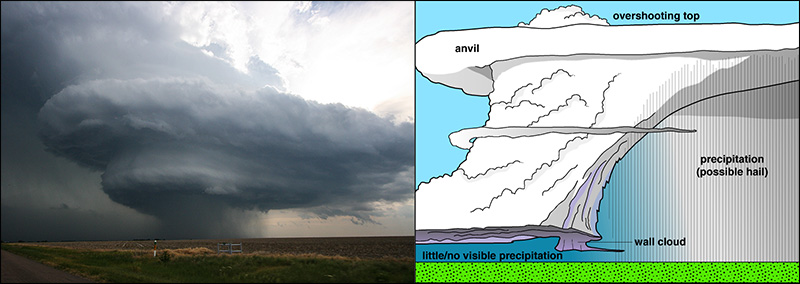
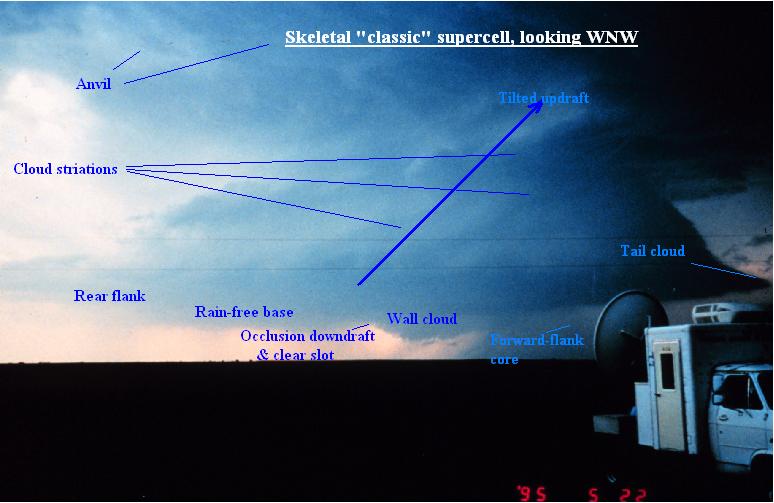 The proper electrical analogy for a super-cell storm is a thermopile. Actually, it’s not an analogy, it’s what it is.
 Thermo-couples are an instrument to measure temperature that use the thermo-electric effect. It’s a circuit that couldn’t be simpler. All it takes is two, or more wires of different conductivity connected in series. When current is passed through, a temperature difference arises at the junction of the wires. Or reverse that – heat the wires, and generate a current. The effect can also be made with solid state materials in a manner very similar to photo-voltaic solar cells.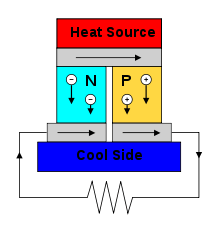
 The relevance to a thunderhead is in the central updraft core of the storm, which becomes a thermo-couple circuit. It’s a flow of wind bearing ionic matter – water vapor is one, and surface dust is another – which produces a current.
 All of these changes to the state of the air in the updraft drastically change the conductivity of the air in the column. The updraft column is electrically no different than a wire of changing conductivity, which in the presence of current, will exhibit a thermo-electric effect.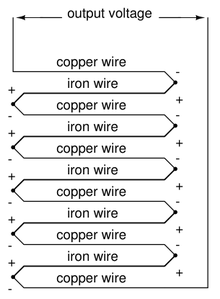
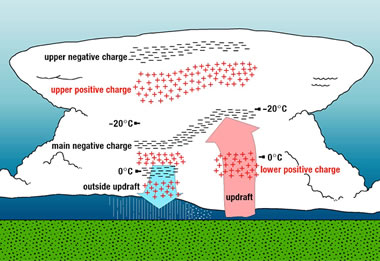 They actually have more complex geometry than a ‘sheet’. They organize into plasma coronas that actively spit out electrons and ions in channeled currents. Coronas have a geometry and produce effects that depend on the polarity of the charged species mix.
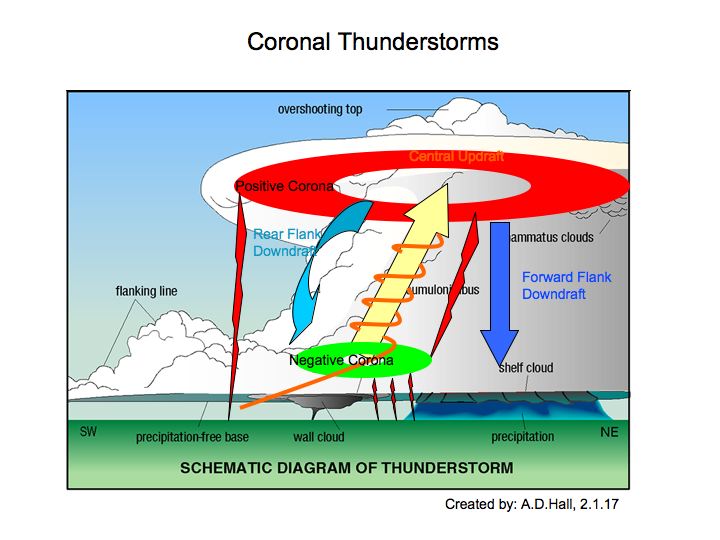 They explain the shape of wall clouds, beaver-tails, meso-cyclones and anvils. They explain things I haven’t even heard of yet, but before this week is out I will read an article about some aspect of a thunderstorms I didn’t know, and it will explain that too.
 Another corona forms higher. This is the anvil top, caused by another ionization event, when the water freezes to ice. The ionic mix here is different and a positive corona is the result. It has a different shape, being a broad diameter and less dense in terms of charge density.
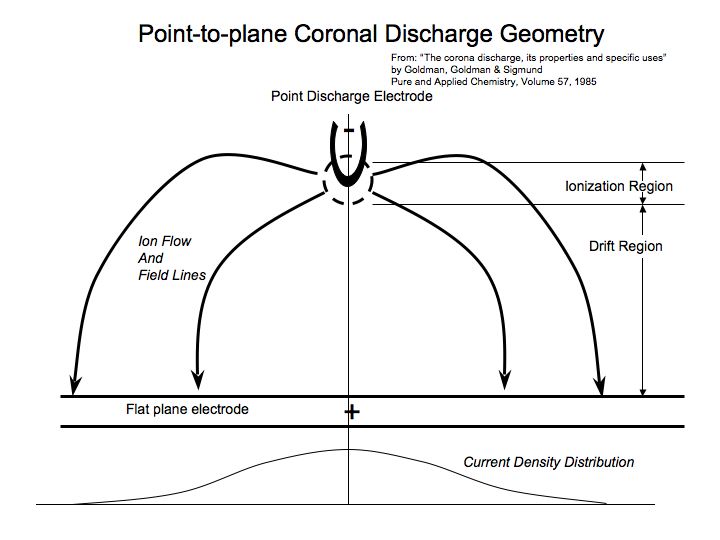 Coronas develop unipolar winds. Where charge density is low, the corona can’t make lightning, but it still spits electrons that drift towards ground. The drift region of a corona creates winds as drifting electrons drag ions and neutral matter along. Downdraft, inflow and updraft winds result.
 Sudden and intense down-bursts are highly mysterious to atmospheric scientists and they attribute them to density bombs – pockets of dense heavy air that rapidly sink from the clouds. These violent downdrafts will slap airliners from the sky. They aren’t density bombs – they are unipolar winds.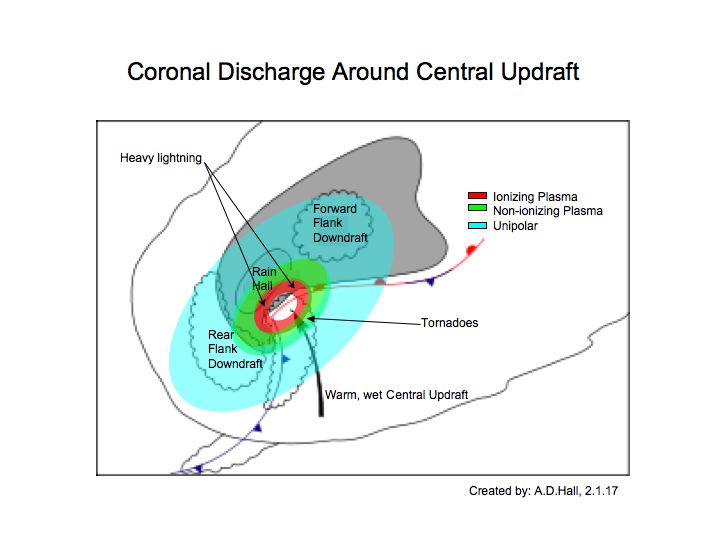
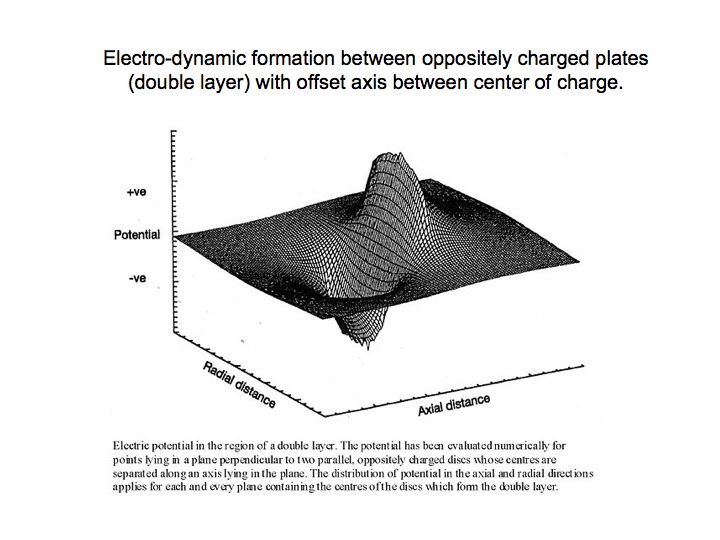
 So too, we have symmetry. Not the artificial symmetry of mathematical equations and categories consensus science keeps force fitting to Nature, but Nature’s true symmetry of nested fractal repetition.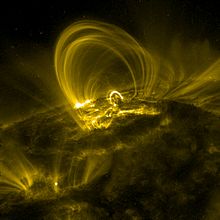
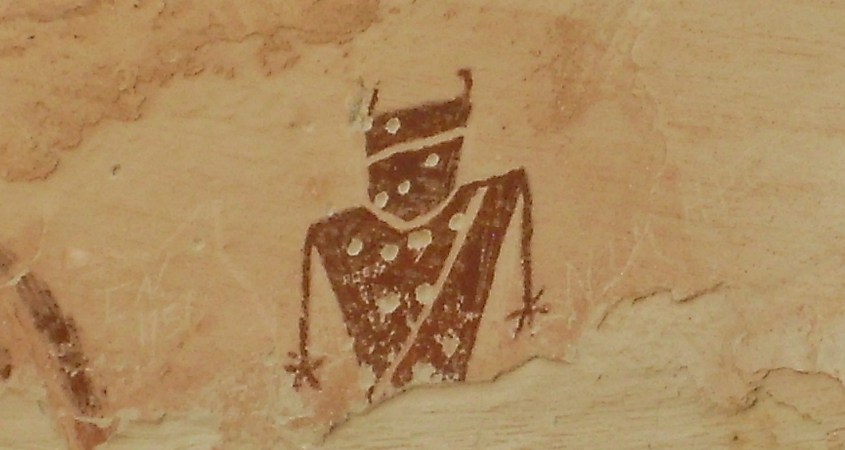
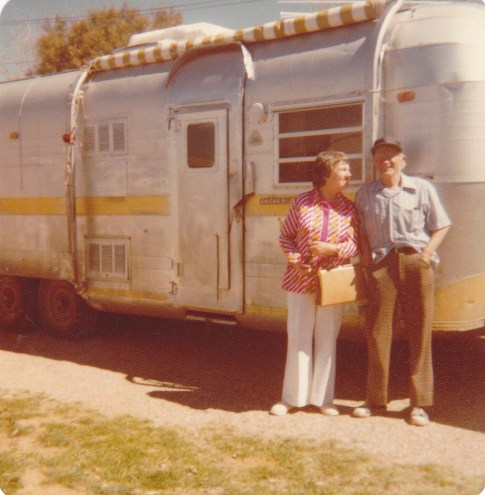
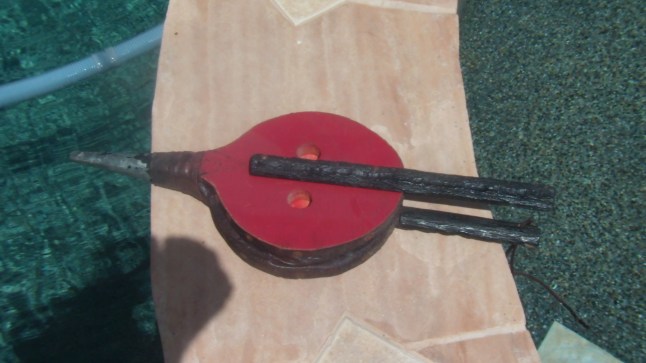
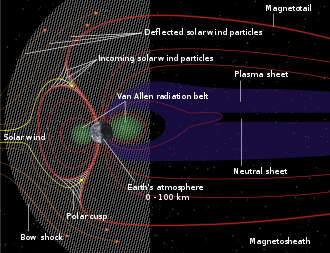 The Earth is a torus of electromagnetic energy orbiting in waves of solar wind. The blue marble spins inside, shielded from life threatening radiation by shells of magnetic field. Those shells induce current from the solar wind that emit coronal light at the poles – the aurora is a physical tell about the electricity in the Solar System that science has completely missed the significance of until recently.
 Magnetism is a consequence of electric current, it cannot come into existence on its own. It is the product of electricity flowing through dielectric matter. Mathematically, flowing a given quantity of current through a given dielectric barrier yields a given magnetic field. It’s like flowing water through a chiller to freeze it to ice. It’s phase change of energy – electricity to magnetism, like phase change of matter – water to ice, with the dielectric being the chiller that takes away heat.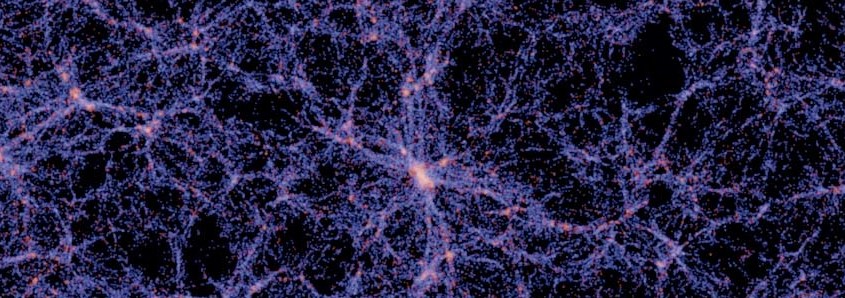
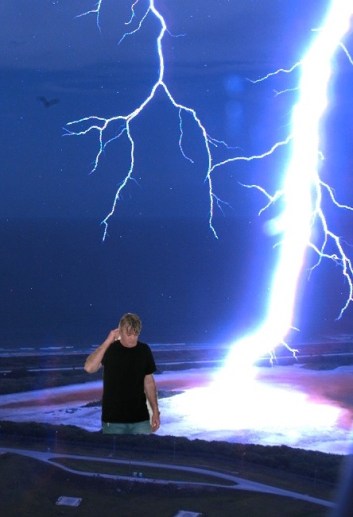 Your getting it straight from the trailer park were I live, which is a pretty humble perspective. An unvarnished, earthy reflection on what is really important, which is a perspective I have because I don’t spend my time like most. I’ve taken to a semi-hermetic lifestyle that allows me to contemplate the Big Questions in the sublime quietude of a retiree’s mobile home park.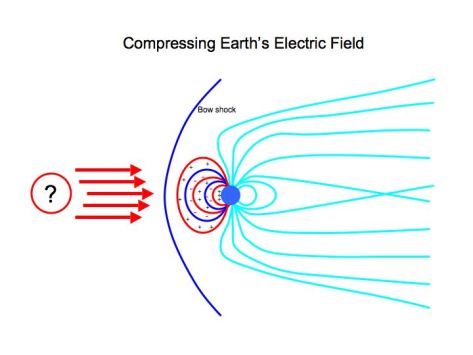
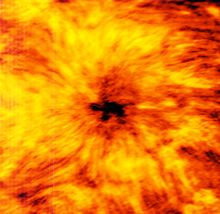
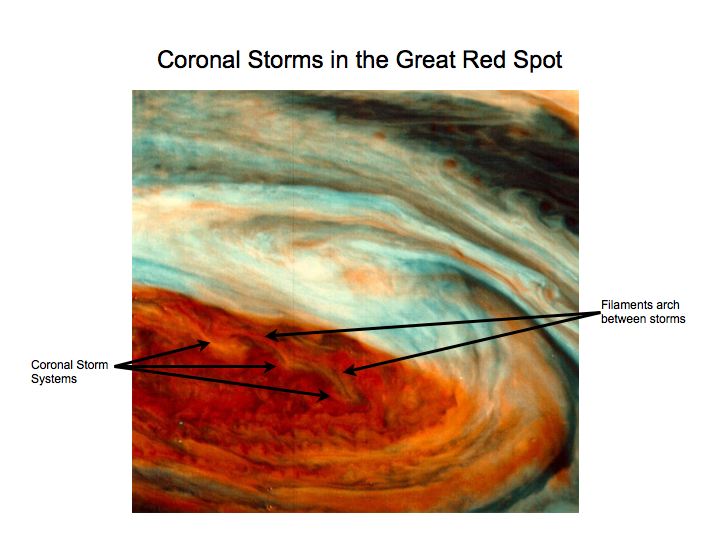
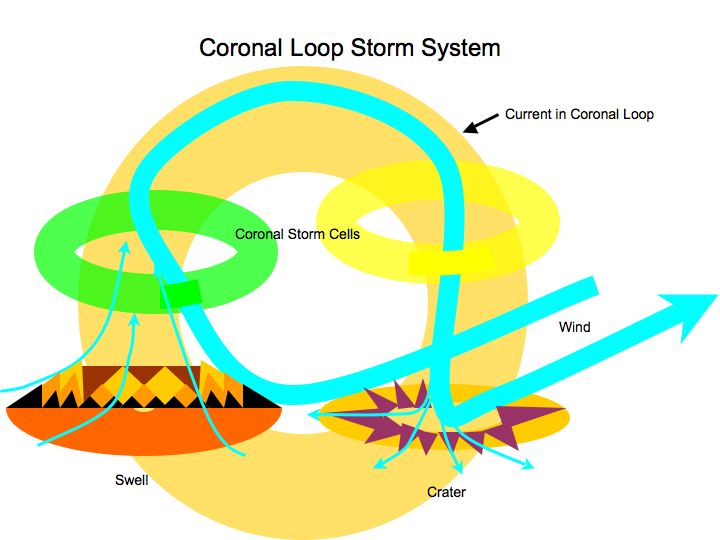
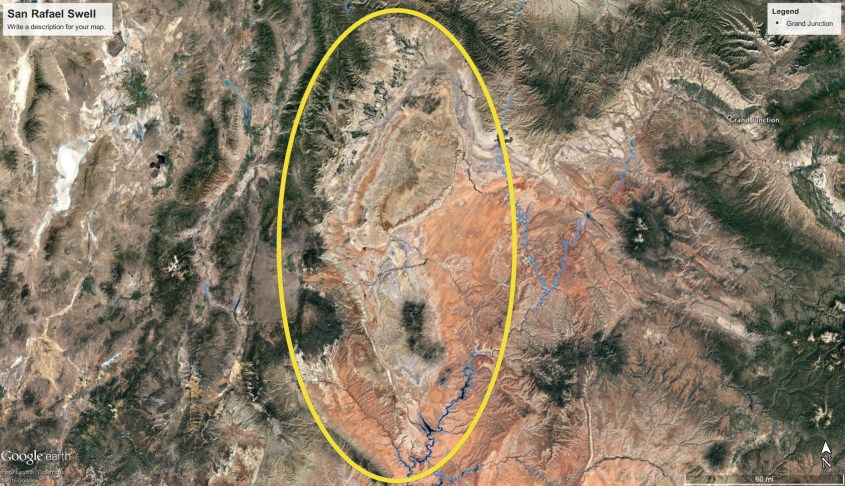
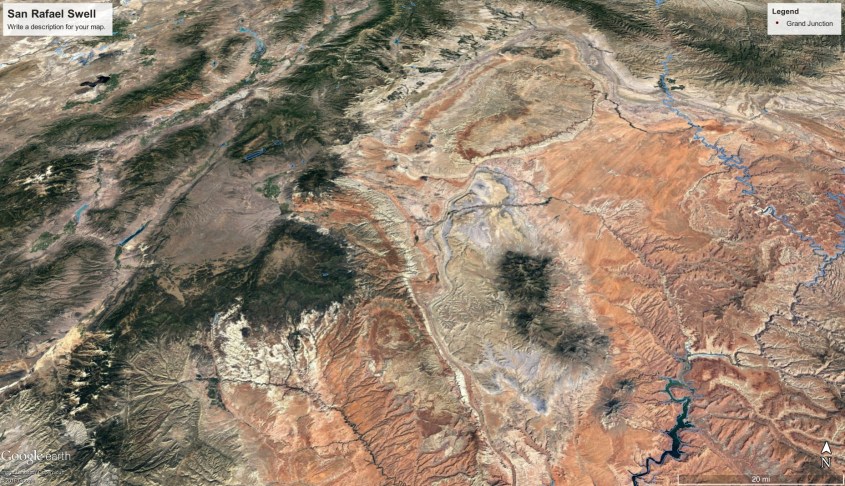
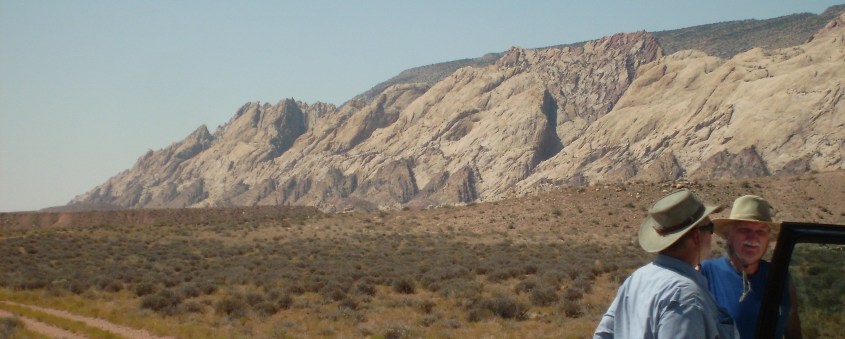
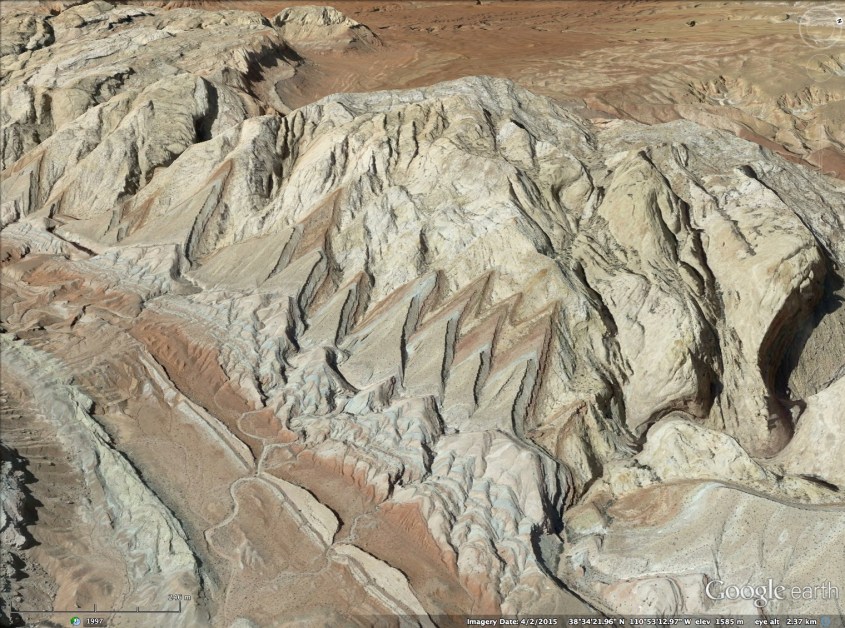
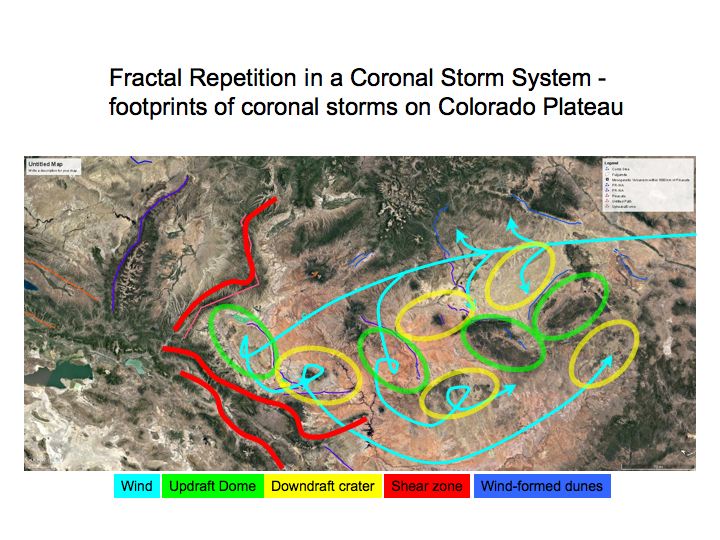
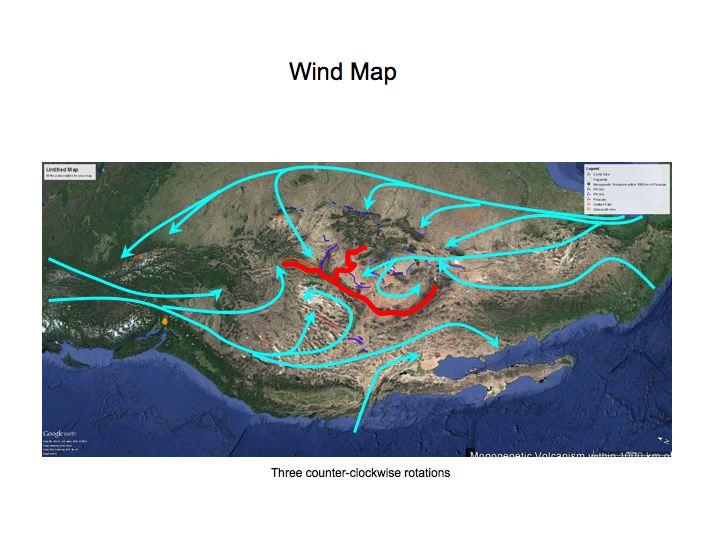
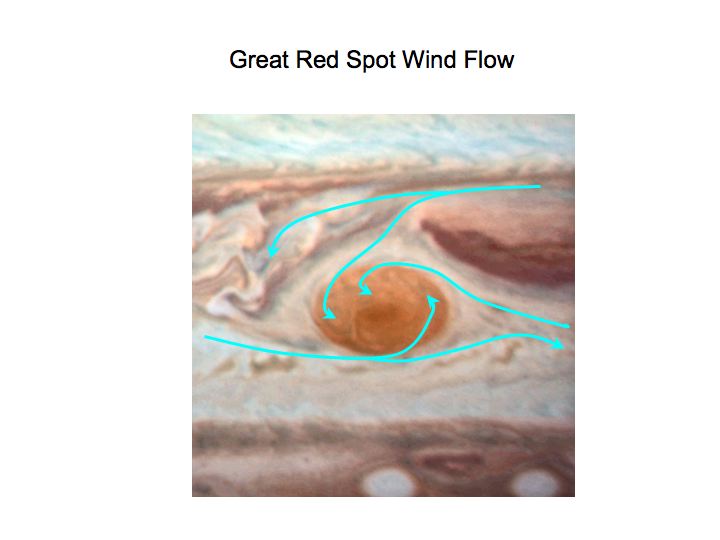
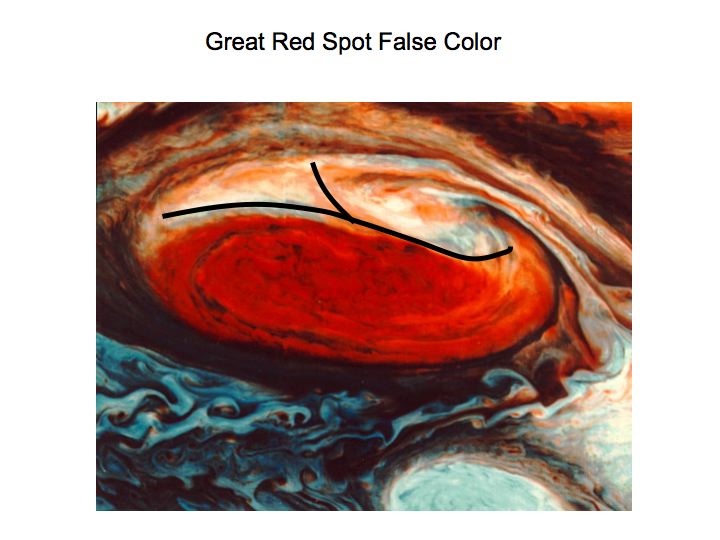
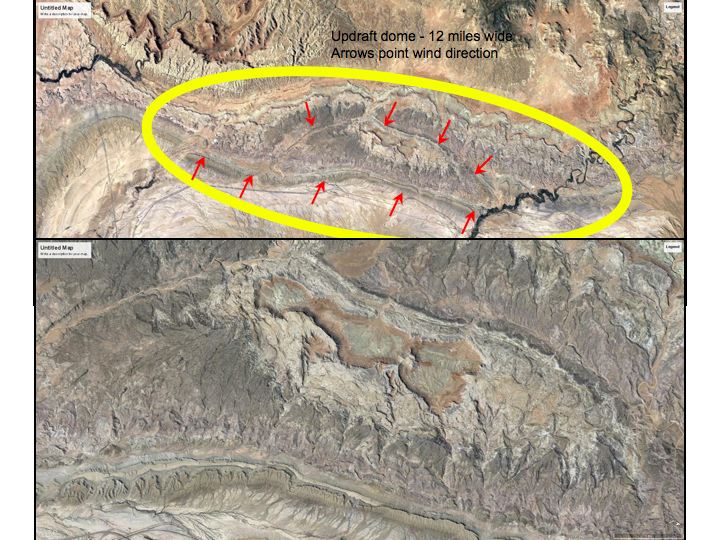
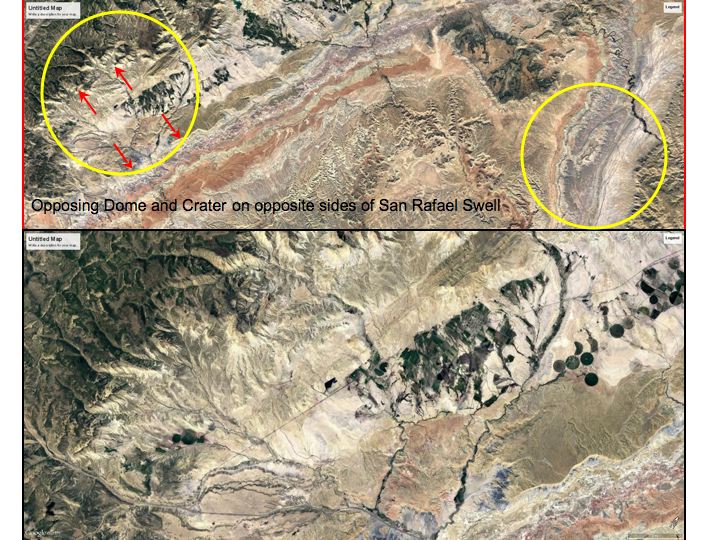
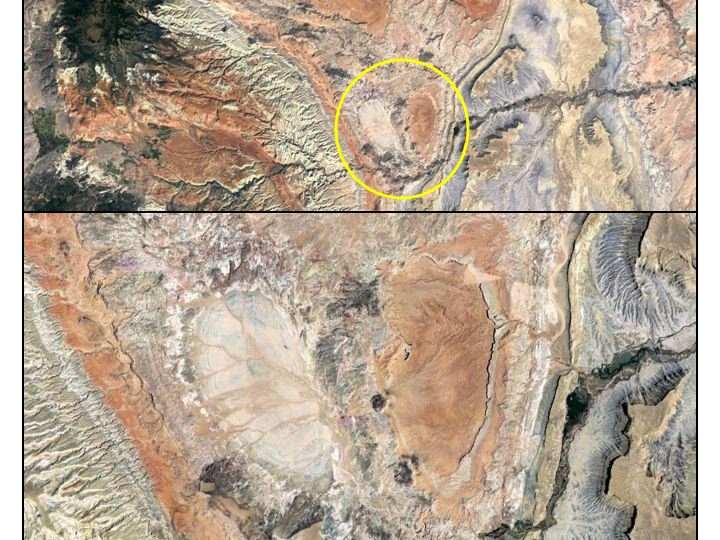
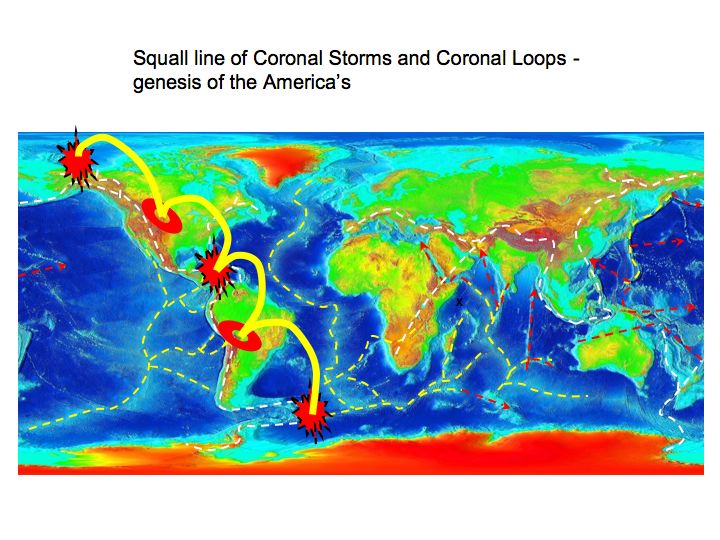
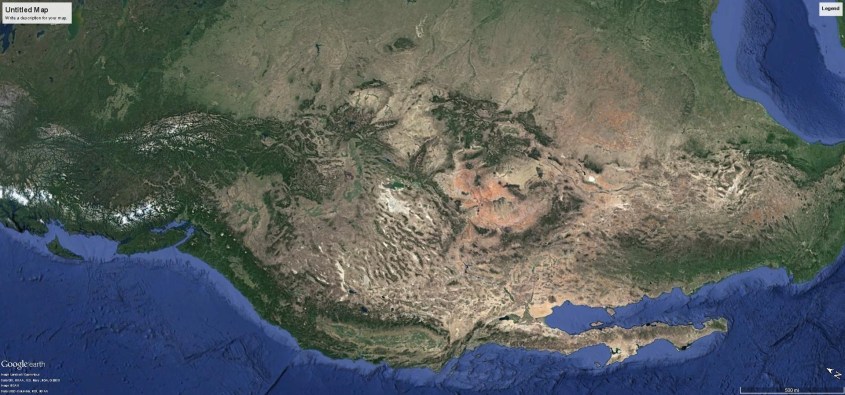
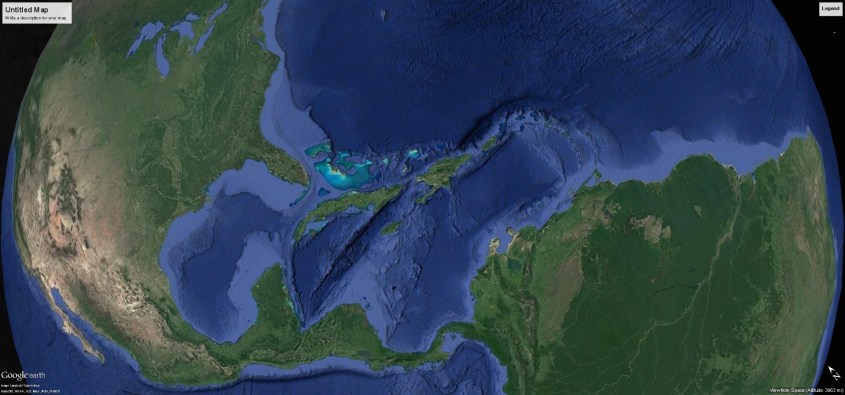
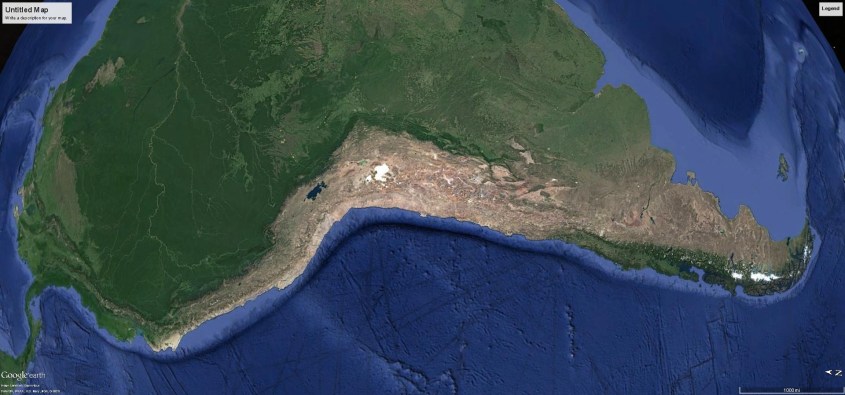
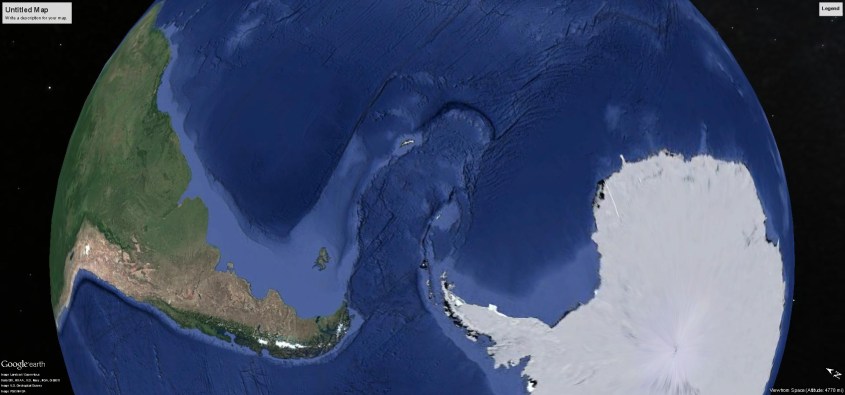
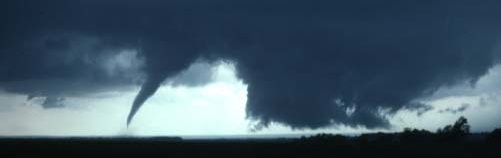
 No one fully understands tornadoes. Scientists and weather nerds chase them all over the Midwest every spring; they can’t hide. So what’s the mystery?


 If you want to make a whirlpool fast, put the spoon all the way down and stir at the bottom of the bucket. Then it forms quickly, like opening a drain. To ‘descend’, the vortex needs to be pulled down by the low pressure created by centrifugal effects of the rotating water around it. If the bulk body of water around the vortex isn’t rotating, the funnel loses coherency and dissipates.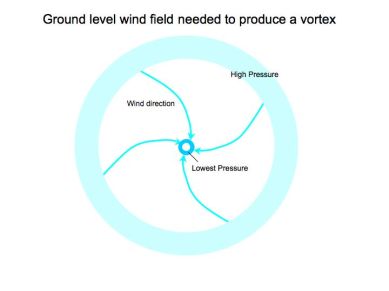
 Another theory proposes that the vortex is drawn to the ground when a descending column of air and rain wraps around a funnel cloud.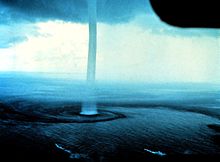
 Did they see one tornado fluctuating in strength, or two vortexes in sequence? The disappearance and reappearance is so rapid it is hard to imagine the atmospheric dynamic that would cause it.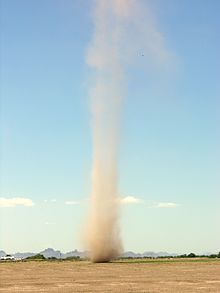
 Updraft winds don’t produce much lightning until they reach 10 to 20 mph. Then strike frequency escalates with updraft speed. From 20 to 50 mph wind speeds, lightning frequency might be 5 to 20 strikes per minute, whereas above 90 mph, the flash rate can exceed one strike per second.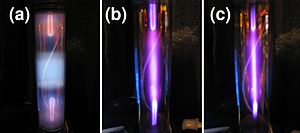
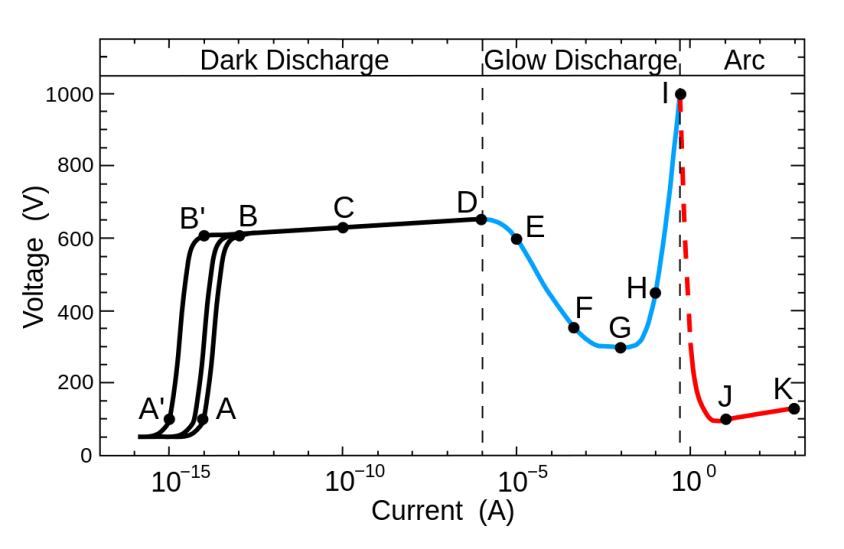


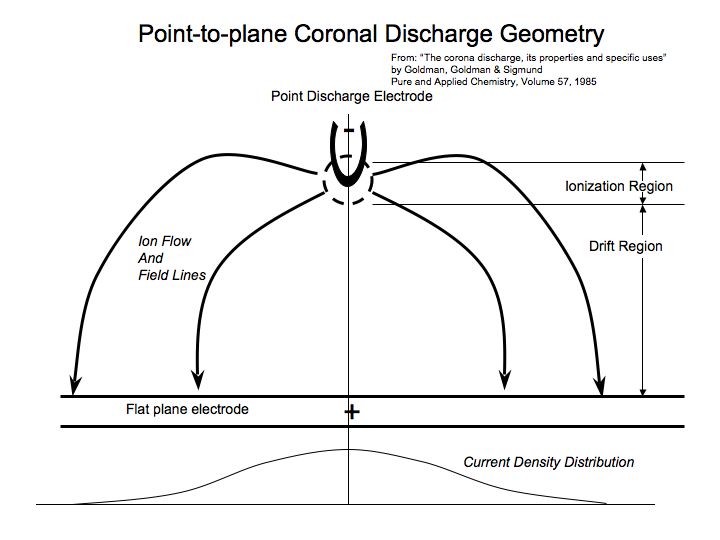
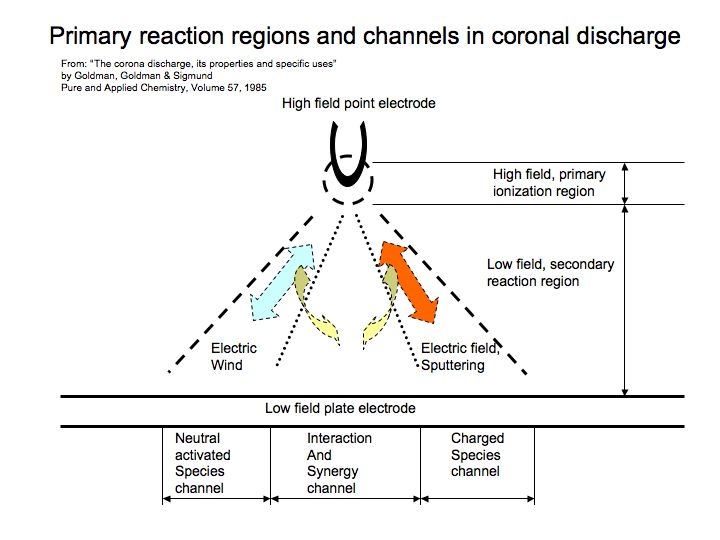 The geometry in a negative corona is three concentric regions of emission. The inner region, corresponding to the peak distribution of charge density, is ionizing plasma where high energy primary electron-neutral collisions avalanche. The intermediate ring is a non-ionizing plasma where electrons collide with neutral oxygen and water vapor with insufficient energy to avalanche, but produce a plasma of primarily negative ions that drift to the flat plate electrode and complete the circuit. The outer region is a flow of negative ions and sparse electrons known as the unipolar region.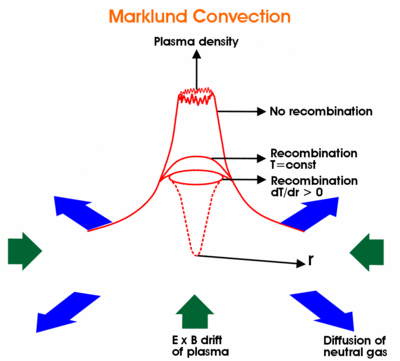


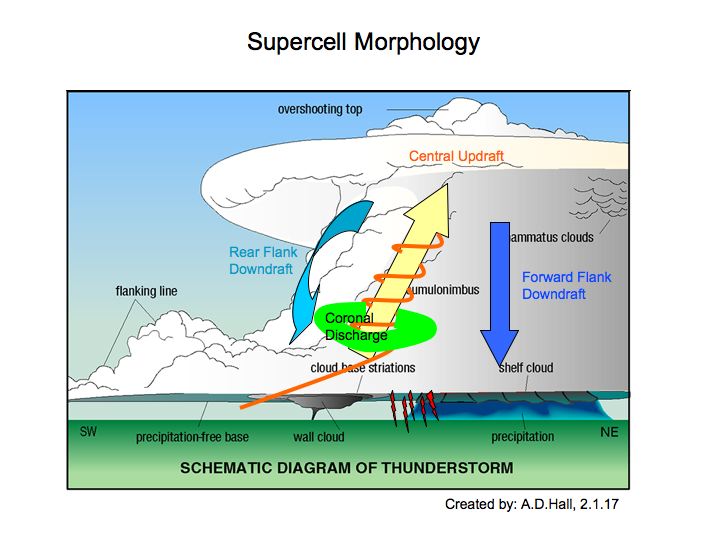
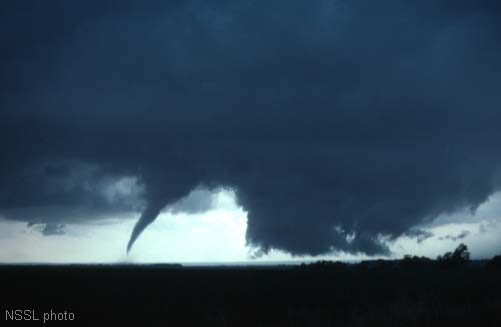 The funnel cloud doesn’t always emerge from the center of the wall cloud, as shown in most consensus science diagrams. The tornado funnel often appears along the edges of the wall cloud, or from the surrounding clouds.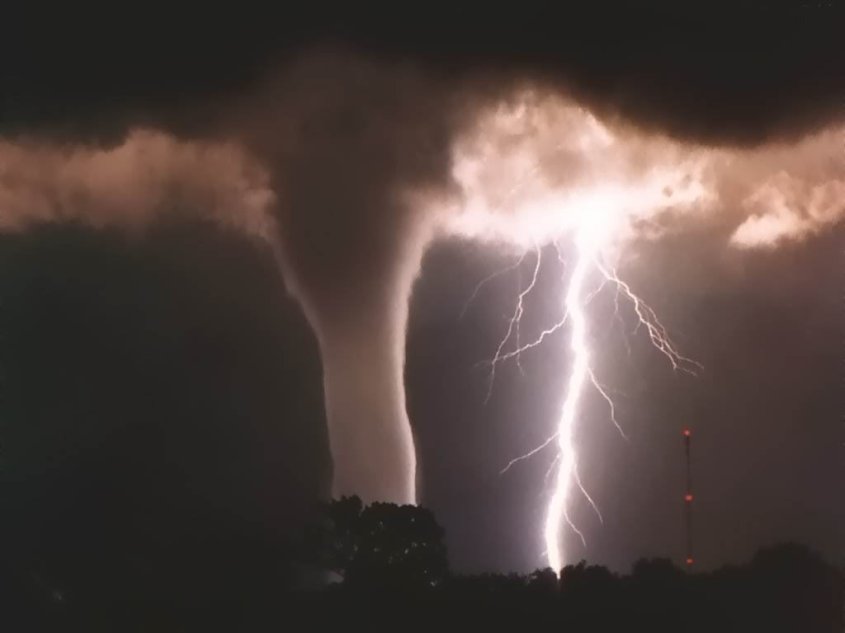
 Mr. Keller also reported he heard hissing sounds from the multiple vortex tendrils at the base of the funnel. Funnel clouds and small tornadoes are known to produce harmonic sounds of whistling, whining, humming, or buzzing bees, like electricity. As ozone is liberated it produces such a hissing sound.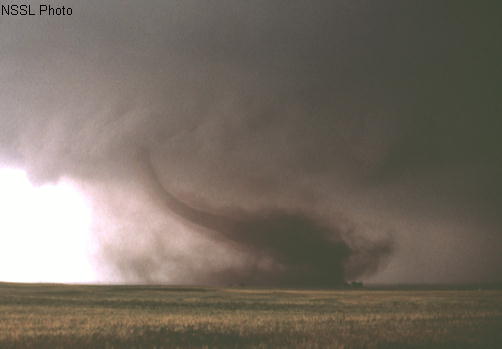
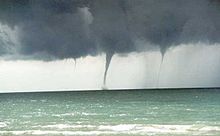 So what if there is no super-cell? How do all the other vortex phenomena form – landspouts, waterspouts, gustnadoes and dust devils, and how are they related.
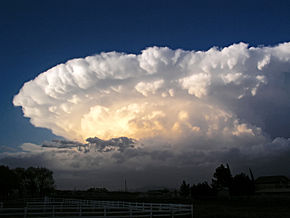
 The Daily Plasma