Tag: geology

Electric Earth Field Expedition 2016

A report on the 2016 expedition to Utah

Sacramento Leo, Southern Comfort Leo, Smooth-in-the-Groove Leo and Geology Leo – dragon hunters armed with compasses, four-wheel drives and field books to confirm that myth is actually fact.  I’m Desert Rat Leo, with my dog – Rat Dog Leo.

The purpose of the expedition was to find evidence about mountains and the physics of their creation coherent with the theory of Electric Universe. Not an easy task, but the theories are our own, which allows some flexibility – not in the science, of course, but in the methods of discovery.

We were using an entirely unconventional method called ‘Looking’. It’s a practice out of favor in academia. Most scientists now use computers to mimic reality – modelling reality to understand it. Like studying clay sculpture of people to understand life – it looks right, but doesn’t say much about the human heart. We took the approach of actually looking.

The trip began for Rat and I two days early. One day, so I could stay the night in Flagstaff and break-up the drive. Another day because I didn’t look at the calendar. I’m more attuned to phase of the moon than day of the week. It was coming up full, so I had to go.

Actually, leaving early allowed independent investigation of a fascinating land form near Kayenta, Arizona, called Comb Ridge.
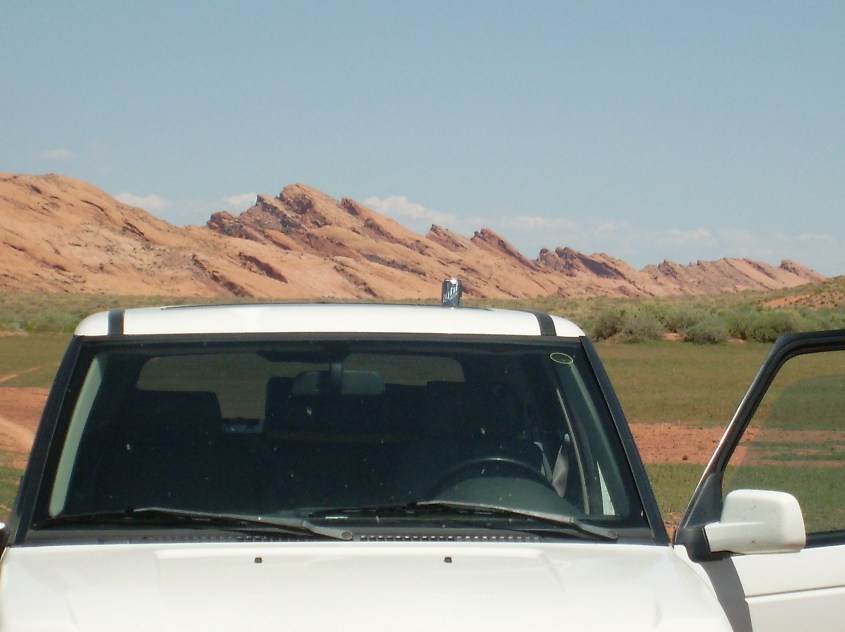
dsci0080
Comb Ridge stretches east behind the beer can.

Comb Ridge is a smaller version of Capitol Reef, the primary objective for the Utah expedition. A stop at Comb Ridge was like the trailer to a movie – a preview of things to come.

The Comb is known as a single-sided monocline. You can look-up the mainstream theory here, but it’s pretty boring. By my theory it’s a pressure ridge, made by searing supersonic winds and shock waves. The theory is called Arc Blast. It’s really hypothesis, not theory, but that word has too many syllables. Most people know what I mean – it’s a concept that still requires proof.

Arc Blast is the literal breath of the mythical dragon – one of the archetypes from mythology that describes hydra-headed serpents launching from the depths of the sea, exposing the basement of Earth, arcing across the land, and dragging a tsunami of ocean behind that flooded to the height of mountain tops.

Arc Blast is caused by electrical discharge – arcs of current – lightning bolts in other words. Only this is lightning from inside Earth. When Earth amps-up from an external cause, like a big comet, or Solar flare, current internal to Earth blast out. The havoc that follows makes weather like Jupiter’s, with winds and lightning of enormous proportion.

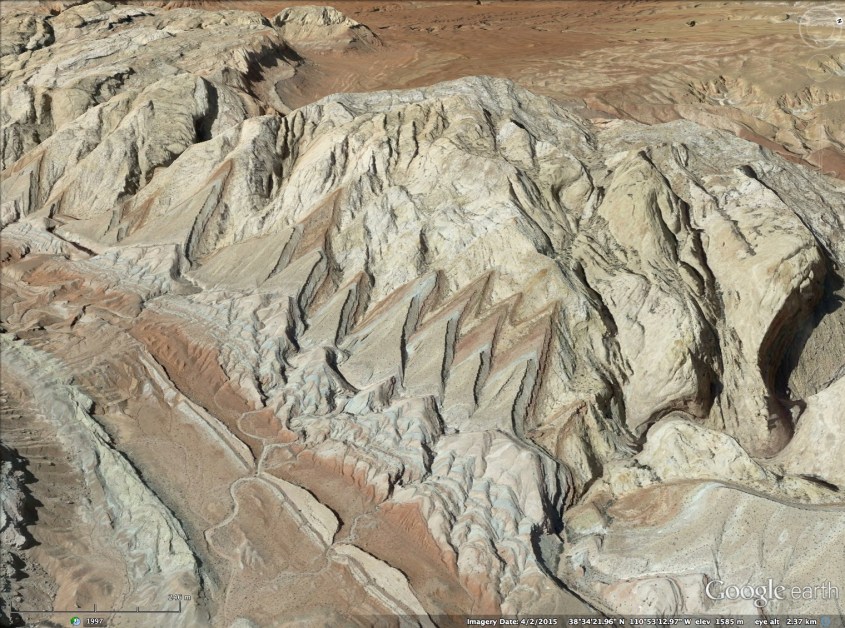
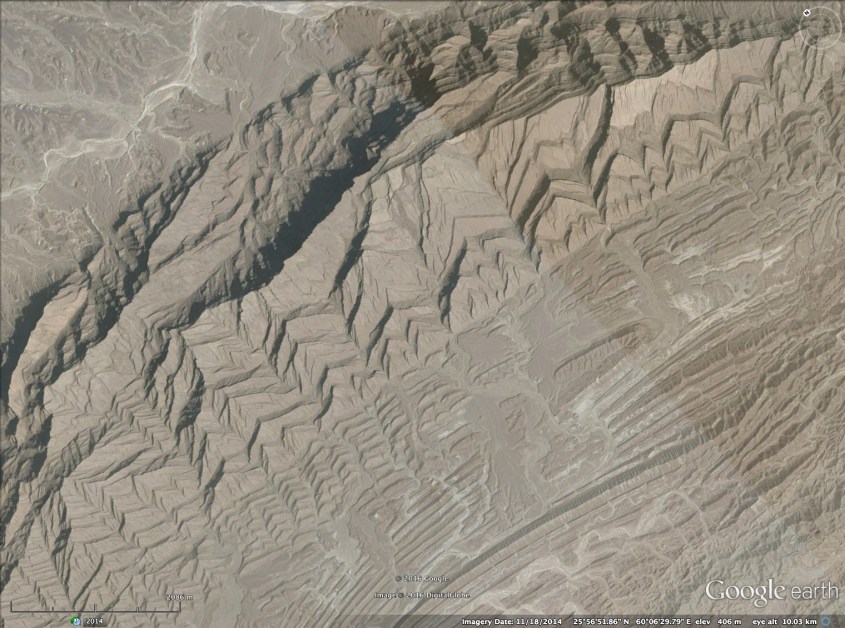
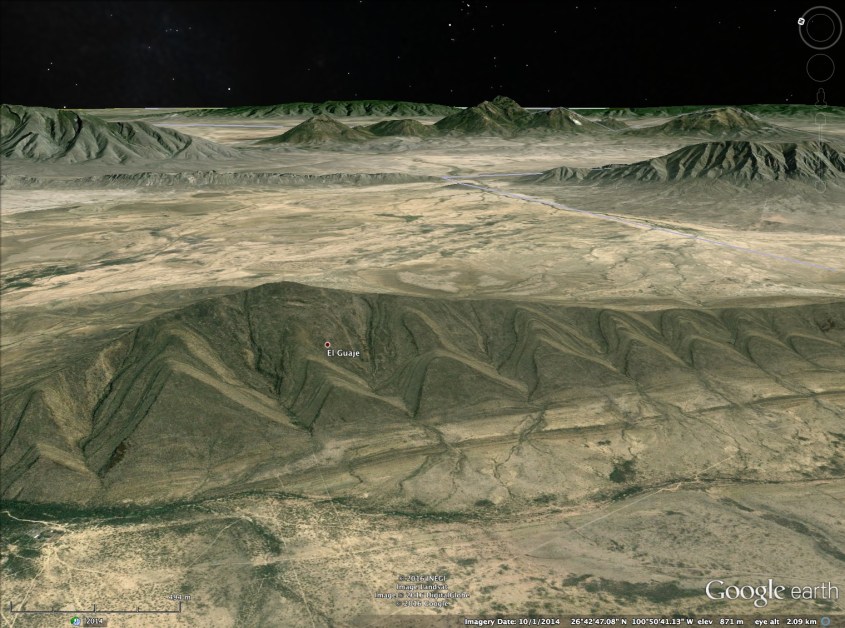
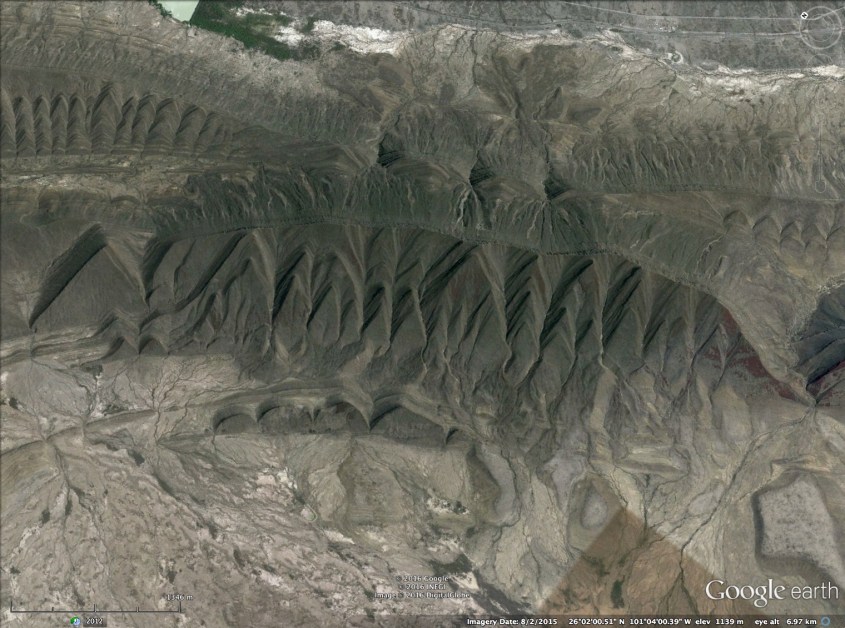
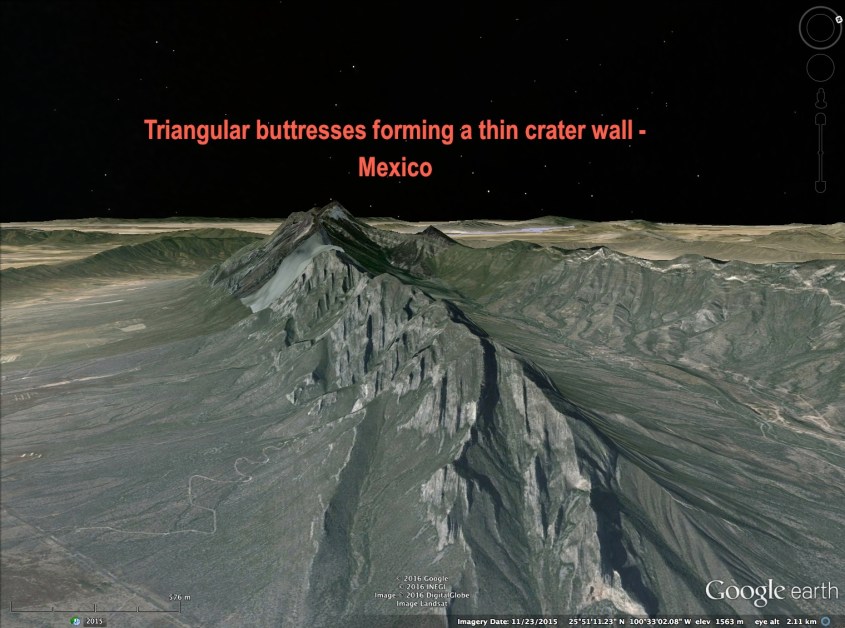
Comb Ridge is a perfect example of an arc blast feature, because it exhibits triangular buttresses. These I contend can only be explained by supersonic winds and sonic shock waves. Mainstream theorizes these triangular forms are made by water erosion, which is entirely inadequate, and I can show that.

The reason is coherency in the forms. Their explanations lack it. Mine don’t. Examining Comb Ridge gave confidence to my claim.

It’s also easily accessible. A graded road runs behind the ridge and cuts through a canyon between buttresses. Rat Dog and I parked the Rover in the sandy wash, and simply climbed up. They lay at a shallow angle of about 20 degrees.
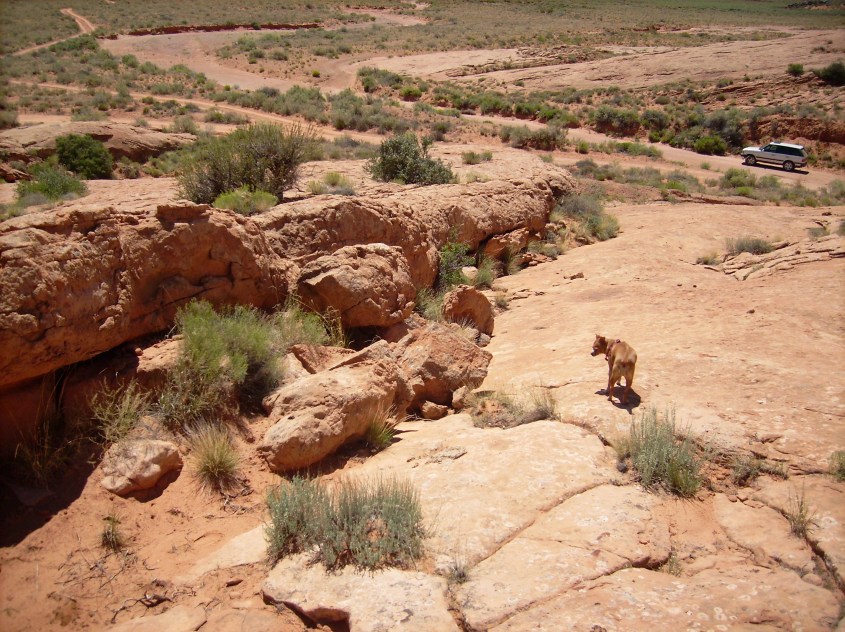
dsci0052

Structurally, everything we examined fit our theory. The buttresses are layered sandstone, no evidence water erosion created the shape of the triangles, and every indication they were deposited by winds.

But we also found things I hadn’t expected.

U.S. Route 163 passes through Comb Ridge, north into Monument Valley. As the road falls away from the Ridge, there is a stark, ugly blister on the land. It’s called Agathla Peak, and pokes 1,500 feet out of the desert floor. It’s dark brown, to black, like it’s made of burnt mud.

dsci0097

It’s where a huge lightning bolt struck, and left this raised blister. Using the preferred scientific instrument, our eyes, Rat and I detected lots of them in the area.

These pinnacles are considered by convention to be diatreme of ancient volcanoes. A plug of magma that stuck in the volcano’s throat, now exposed by time and erosion. The mainstream theory requires all of the surrounding land to have eroded away, leaving these ‘volcanic plugs’ behind.

But how severe erosive forces, capable of scouring away thousands of feet of land, could leave behind these crumbling chunks of sandstone is a bit perplexing to me.

Another feature of these pinnacles are dikes – walls of crumbling, darkened material called minette, also believed to be formed by volcanic process. But minette is like sandstone that has been altered electrically. It’s not like what spews from volcanoes at all.

Rat Dog and I found the same kind of dikes embedded in the buttresses, and radiating across the desert plains. They are too unconsolidated and crumbly to withstand forces that washed everything around them away. It seems more likely they are the remains of electrically charged shock waves from the same lightning that created the pinnacles.
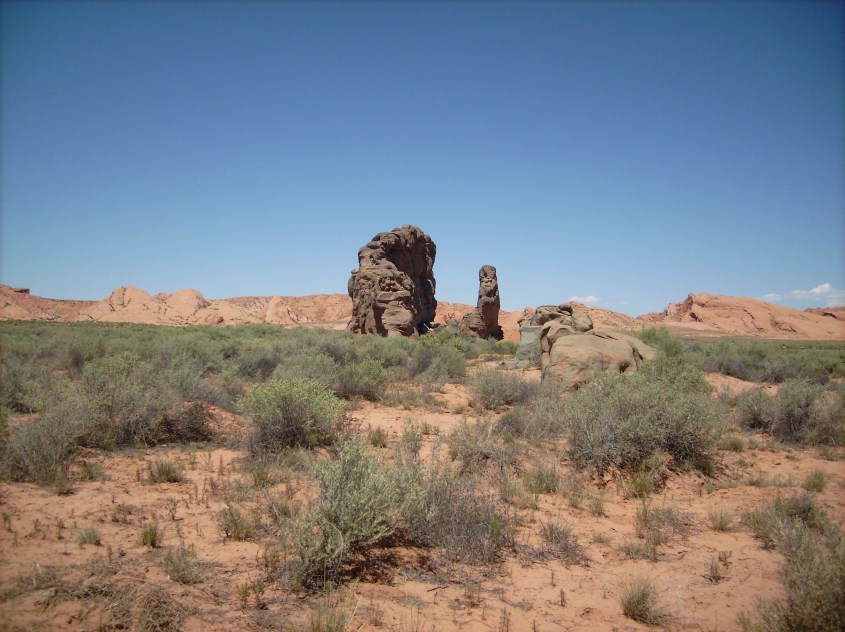
dsci0085
Dikes angle across the plains in front (south) of Comb Ridge.
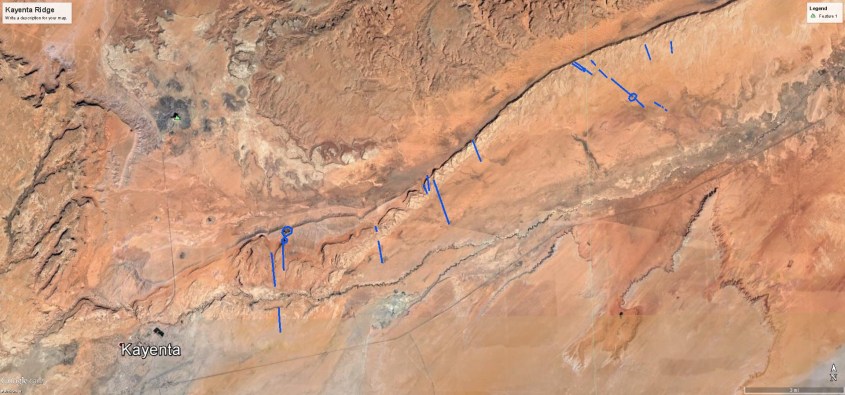
kayenta-dikes-1
Dikes (some are highlighted) radiate from Comb Ridge. Dikes align with the edges and orientation of triangular buttresses, radiating towards the river. Do you see coherency? Geologists think water erosion made the triangular buttresses. But how did water make these dikes – they are supposed to be caused by volcanic process. The black pinnacle due north of Kayenta is Agathla Peak. It’s a cluster of lightning strikes.

Having collected this key intelligence, Rat was hot and needed a nap. Of course, she took my lap, which meant I wore a hot dog in my lap. The temperature on the Comb was around 100ºF.

We drove on through Monument Valley. The place is is astonishing. Many trips back are in order, but on this day we rushed through on our way to Moab. We needed to set camp before dark.

Moab is a pretty patch of green in Canyon Country, where tributary creeks feed the Colorado. We gassed the Rover, ate and restocked the coolers with ice. Then ventured along the river to the campsite where the other Leo’s intended to meet us. That campsite was full. So was the next. And the next. And the next.

2016-08-14-14-33-081Down river we drove, surveying each campsite along the way. Here, the river cuts through a deep walled chasm favored by rock climbers. So the camps were full of these spider people; a strange, underfed and insular cult, festooned with colorful webbing.

Rat Dog felt it was best to keep our distance from the strange beings. Finally, we came to the last campsite available. It was empty.

We took the finest, shady spot at the bank of the river. While I unloaded gear, pitched the tent and collected firewood, Rat Dog sniffed flowers.

She didn’t sniff flowers for long – she wandered away instead. I hated to leash her since there was no-one else around, but couldn’t keep my eyes on her either. She seemed reluctant to stay in camp. The reason became apparent when I pulled branches from a pile of driftwood by the river-bank. Clouds of mosquitoes billowed out.

And so began a relentless night of misery. The Rat found mosquitoes in the flowers. Her hair sprouted clumps where bites raised her skin. She looked pitiful in a funny way, but I was alarmed at how many bites she had. She’s not a big dog and can’t take much poison. So, I zipped her inside the tent.

Meanwhile, the mosquitoes began to consume me. Constant movement was the only relief. I found if I moved fast enough to generate wind, I could outrun them. So I ran around, grabbing sticks and branches for the fire. Every piece of wood I picked-up swarmed more mosquitoes.

I frantically lit the fire to get smoke in the air. It was the only form of repellent available. I’m not used to dealing with mosquitoes because I live in a dry region. I don’t use bug repellent on my skin either. I had to resort to the only other form of relief at my disposal. A bottle of vodka.
2016-08-14-20-11-52I watched the sun angle below canyon walls, wondering how long until it cooled inside the tent to be bearable. I paced back and forth in smoke to foil the mosquitoes, my skin cooking from fire, my insides cooking in vodka, and fever in my brain from both.

When I bent over to tend the fire, mosquitoes attacked my backside. They bit through the seat of my pants. I ate naked crackers for dinner with vodka. It was too hot for cheese. As soon as the temperature dipped I joined Rat in the tent.

When morning sun steamed me awake, a dozen of the insolent bugs lounged on the tent walls. Fat with our blood, they were too sluggish to escape my wrath. I turned them into bloody blotches, and then regretted the stains.

I left Rat sleeping while packing everything, none of which I used. Then collected her and the tent, let her pee, and left for Moab to find coffee.

dscf2097

Once mental cognizance was reestablished with a large, dark roast, the Rat and I took stock. There was no way we were camping along the river again. I had to break down and buy a map.

This was a smart move. We’d been going solely on instinct, as dragon hunters are wont to do, eschewing navigational aides. I noted several campsites high on Dead Horse Mesa, between the Green and Colorado Rivers.

The Mesa had no mosquitoes, and was also out of the oppressive, brooding canyon. Here, there was big sky, clouds and a breeze. It’s called Dead Horse, because some dumb-ass rustlers thought the narrow tip of the Mesa would make a good corral to capture a stolen herd. I’ll let you figure out the rest.

W chose a campsite with trees and pitched the tent and a surplus parachute for extra shade. I strung it between Junipers, and when the wind blew right, it billowed and made an awesome clam shell awning.

The Leo’s arrived early afternoon. Finally, someone to talk with besides Rat. Tents went up, beers came out, along with chairs, ice chests and gadgets. There was also one luxurious, padded cot. I noticed the Rat eyeing it jealously. So did I. “Don’t you dare!” I said, and I gave her a look that meant business.

It belonged to Geology Leo. He laid on it immediately and began snoring, and that’s where he stayed for the rest of the trip.

The rest of us sat at the fire, talking and drinking beer. It was fun and we soon succumbed to disorientation, unbalance and expansive creativity. It wasn’t long before, one by one, they all drifted away to nap. Envy towards Geology Leo, snoring away on that damn cot began to burn inside, so I sat and grumbled to myself.

A couple things of note occurred then. We had our first wildlife encounter as a group. Rat and I met the mosquitoes, of course – my butt still itched from that. But this ‘National Geographic’ moment was more engaging. A fox approached Smooth-in-the-Groove while he napped on the ground, and sniffed his face. It was cute, in spite of the risk of fleas and rabies.

Then the camp host paid a visit and berated us for pitching tents, leaving dogs off-leash, and parking vehicles in the wrong places. Once we made adjustment according to orders, however, he relaxed and talked about the fox. Apparently it was a little rascal who stole campers clothes and food on a regular basis.

The other thing of note were two Italian girls camped across the road. The Rat made first contact. She trotted away to meet them first chance she got. She’s not overly fond of people in general, but she trusts other women.

2016-08-16-09-49-22
The Italians came to say Ciao to the chow. The Rat screams in protest.

The young ladies were from Italy, on a cross country trip through National Parks. I had no intention of bothering them, but Rat didn’t give me a choice. The girls immediately began cooing and fawning over her, so she jumped in their car and sat on the comfy seat. I had to get her back.

Smoothy immediately joined us. He wanted to flirt with the girls. So, while I mentally stumbled trying to communicate, he went-off speaking fluent Italian. This left me standing with my thumb up my butt while they conversed.

I extracted Rat from their car and threw her in the tent. She looked at me with daggers the rest of the night. I know she’d have abandoned me for those girls if I let her.

The next day the wind changed, causing the parachute awning to flap mercilessly, knocking off hats and slapping the unwary. The breeze also brought scent of the toilet to us.
1471452389657
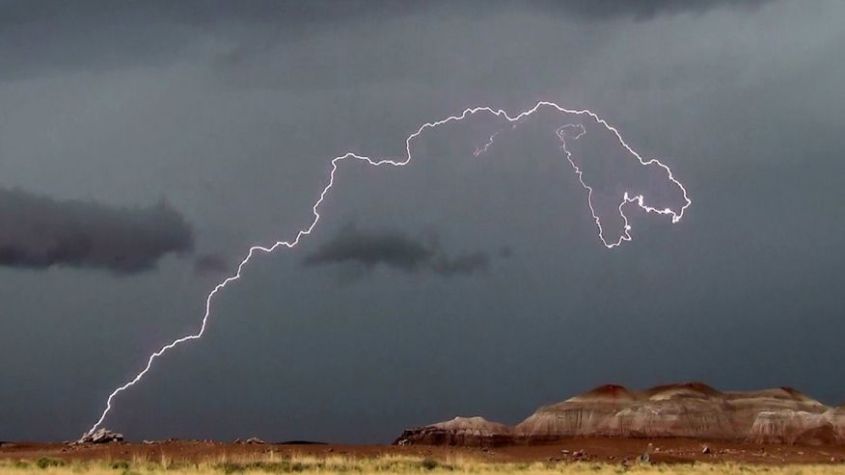
This dragon tried to eat the campsite in Goblin State Park.

I hadn’t noticed any odor when I picked the campsite. But something was different today. Not just wind direction, either. The chemical balance was off in the toilets. It smelled like shit.

We moved in slow modality all morning, shuffling about sipping instant coffee in the smelly miasma. The Italian ladies came and shared granola bars. They brought one for each of us (two for Rat) and shared their travel stories while we munched. They were very charming with their accents and animated story-telling. They spoke better English than we could at that moment, so we just listened.

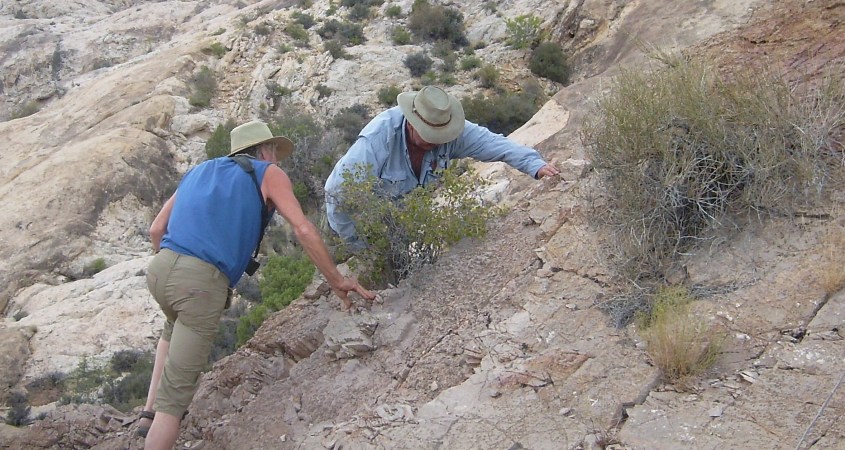
Around Noon, we finally got into the Rover and Southern Comfort’s jeep for some geology field work. What follows is actual field work in action:

Desert Rat Leo, September, 2016.

Arc Blast – Part One

Re-posted Courtesy of Thunderbolts.info

One of the most compelling aspects of Electric Universe cosmology is that it is visually apparent. A person can see a Peratt column in a petroglyph and reasonably conclude that our ancestors viewed a different sky than we do.

Or look at a telescope image of DSCI0078planetary nebula and recognize the hourglass shape of plasma current contracting to form a star.
Or view the red-shifted quasars inside Halton Arp’s “unusual galaxies” and determine for yourself if they are really the distant objects we’re told by conventional astronomy.

In fact, through Electric Universe eyes, you can see that patterns in nature, from galactic to nuclear, are coherent, fractal, and electric.

The planets and moons of our own solar system provide some of the most accessible and compelling visual evidence of all. Hexagonal craters, rilles and the odd distribution of these features, often concentrated near the poles, or in one hemisphere, attest to an electrical formation. One can imagine the vortex of discharging plasma that carved them.

5080_mount_fitzroy_c
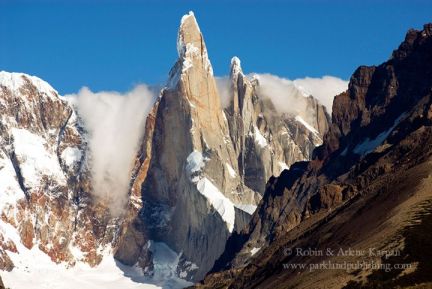
The central pillar of Mt. Fitzroy

Earth should also show electrical scarring – in an Electric Universe it has to be the case. But it’s not intuitively apparent.

Unlike the Moon, or Mercury, Earth doesn’t display a carpet of hexagonal craters. There are some craters we know that are ancient and eroded, but their formation remains controversial.

There does exist proof of electrical scarring on Earth, however, and it’s in abundance. You can say it’s staring us in the face. This article will discuss how to recognize it.

First however, recognize that what distinguishes Earth from a planet like Mercury, or the Moon, is its atmosphere and geomagnetic field. This changes the electrical character of the Earth entirely. It doesn’t respond like a bald, rocky planet in an electric current, drawing lightning bolts from a region of space that carries a different electrical potential.

Earth acts like a gas giant, integral to the circuitry, with current flowing through, as well as around it. But Earth’s current flows in a liquid plasma – the molten magma below the crust. In the event the system is energized, current discharges from within.

The evidence is in the extensive volcanism on Earth. Volcanoes straddle subduction zones at the edges of continental plates, rift zones and mid-ocean ridges. They betray the flow of current beneath the crust.

Surface evidence is in the mountains. Basin and range, mountain arcs, and mountain cordilleras are all proof of electrical discharge. To understand the visual evidence, however, requires looking beyond the simple concept of a lightning bolt from space. The reason is the Earth’s atmosphere.

is3cccWhen electrical discharge occurs in an atmosphere, it creates sonic-hydrodynamic effects. We experience the effect when we hear thunder – the sonic boom of a lighting bolt. It’s the sonic and hydrodynamic effects, in a dense, viscous atmosphere, that leave their mark on the landscape at the grandest scale.

In a previous article, “Surface Conductive Faults”, we discussed the concept of a surface conductive double layer providing a path for arc flash. The surface conductive path is the cloud layer, where we can see that ions collect to produce thunderstorms.

Imagine a lightning bolt of immense proportions, sheets of lightning, in fact, arcing horizontally in this region that is roughly five, to fifty thousand feet above the land. The focus of this article is the hydrodynamic effects of the resulting arc blast. Arc blast is the consequence of arc flash in a surface conductive current discharge.

Four Steps to Build a Mountain…

The following image (annotated by the author) from Los Alamos Laboratories shows a shock wave being created by a supersonic projectile passing over water. The colors display density; highest in the red, lowest in the blue. Purple is the baseline of the atmosphere. It provides a very good analogy for the way a mountain is built.

The result of the arcs passing is embossed on the land by shock waves that act almost precisely  as those made by the projectile.

The difference being  the shock wave is plowing land, not water, and it has the hyper-sonic velocity, heat and power of an arcing current – much more energy than a simple projectile.

AnnotatedBullet2

The bow shock is an anvil of many thousands of psi, at a temperature many times that of the sun, carrying charged electric fields. In a dense, viscous environment, fluid mechanics, shock effects and electromagnetism align in phase and frequency with the arc that creates them.

In Region 1, the bow shock vaporizes, and melts the ground, plowing an oblong crater.AnnotatedRM3Region 2 is a reflected shock wave blasting into the atmosphere, pushing an exploding cloud of vaporized debris into a Richtmeyer-Meshkov instability, more commonly known as a mushroom cloud.

The cloud is not shown in the projectile over water because that simulation did not involve the explosive effects of expanding gases heated instantaneously by an arc flash.The mushroom cloud rises behind the shock wave with a supersonic vacuum at its core. The updraft of expanding gases generates in-flowing ground winds that scream like banshees across the ablated surface of the blast zone, attaining supersonic speeds as they funnel to the core of the updraft, dragging clouds of molten rock and dust.

A simulation of such an event created by an air-burst meteor is portrayed in this video by Dr. Mark Boslough of Sandia Labs.

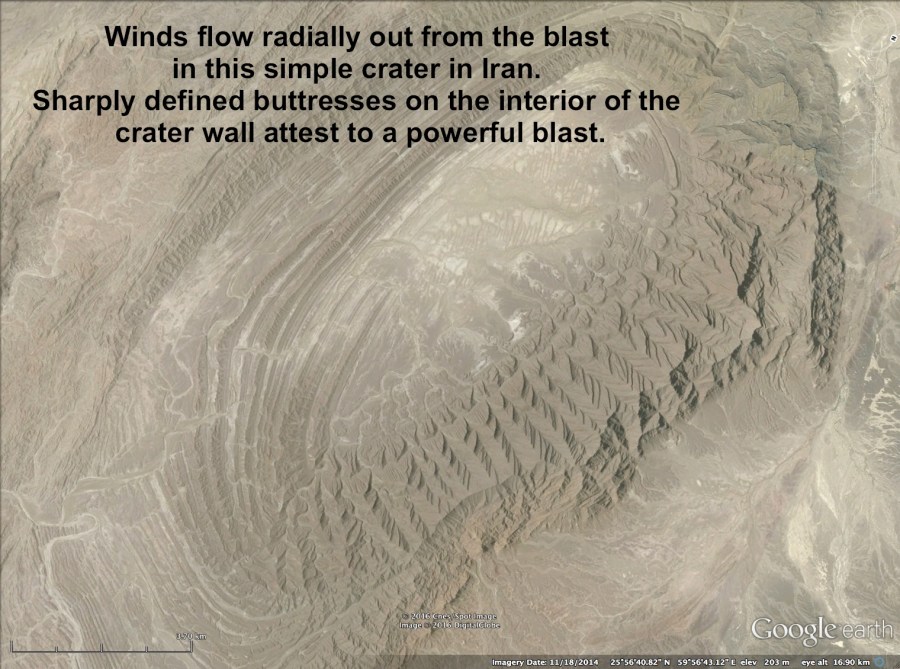
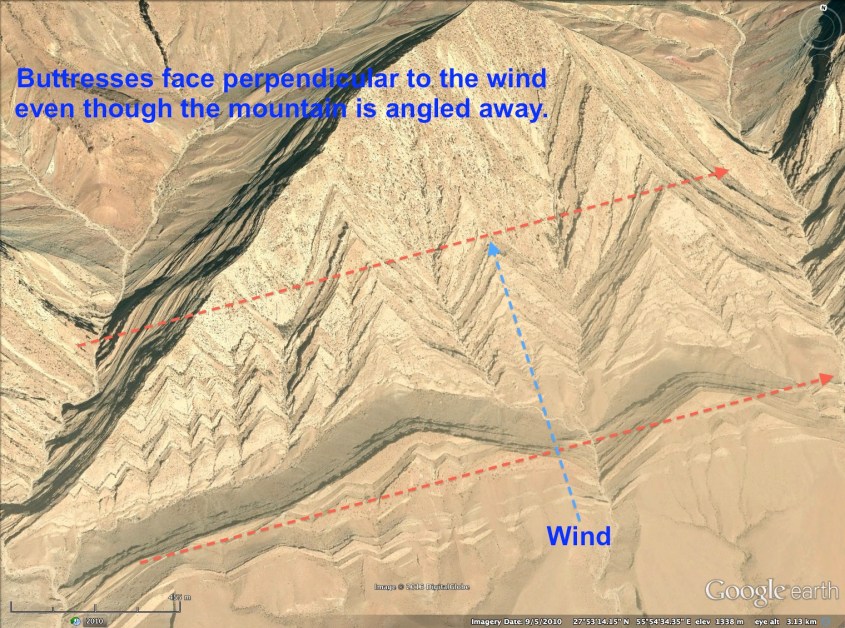
The ground winds are directed perpendicular to the primary shock wave. Keep this in mind, because it is very important evidence in the  geometry of mountains.

In Region 3, a low pressure updraft forms, like the rooster tail behind a speedboat. The rooster tail pulls ablated melt from the crater. It forms the core of the mountain.

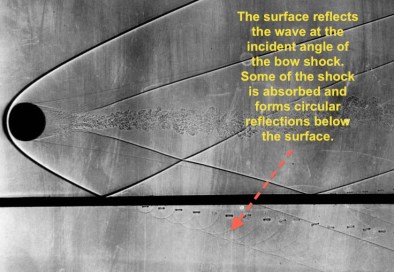
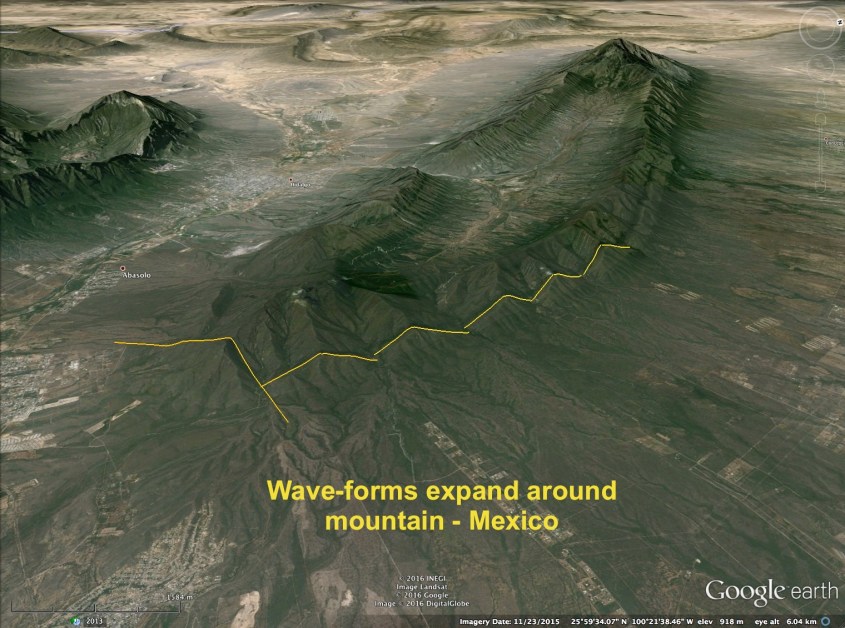
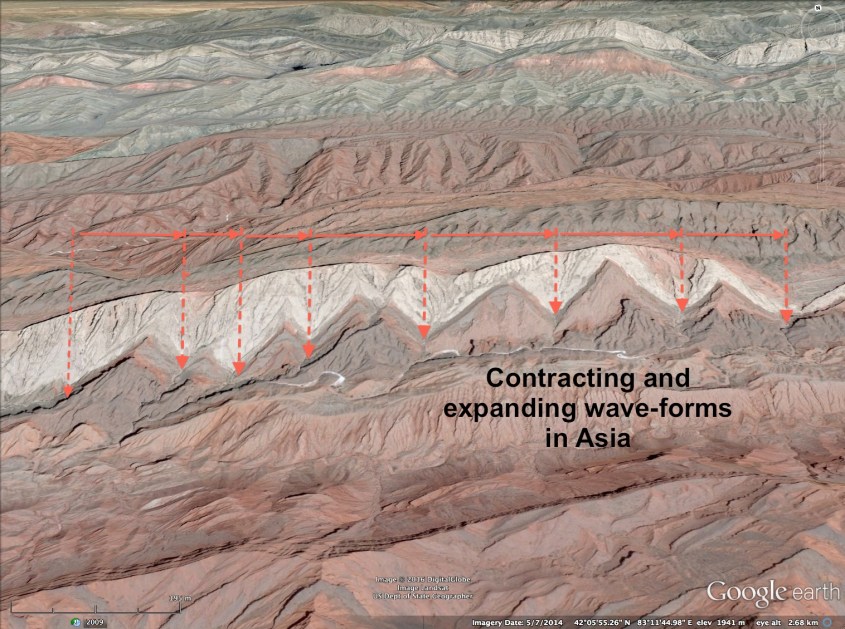
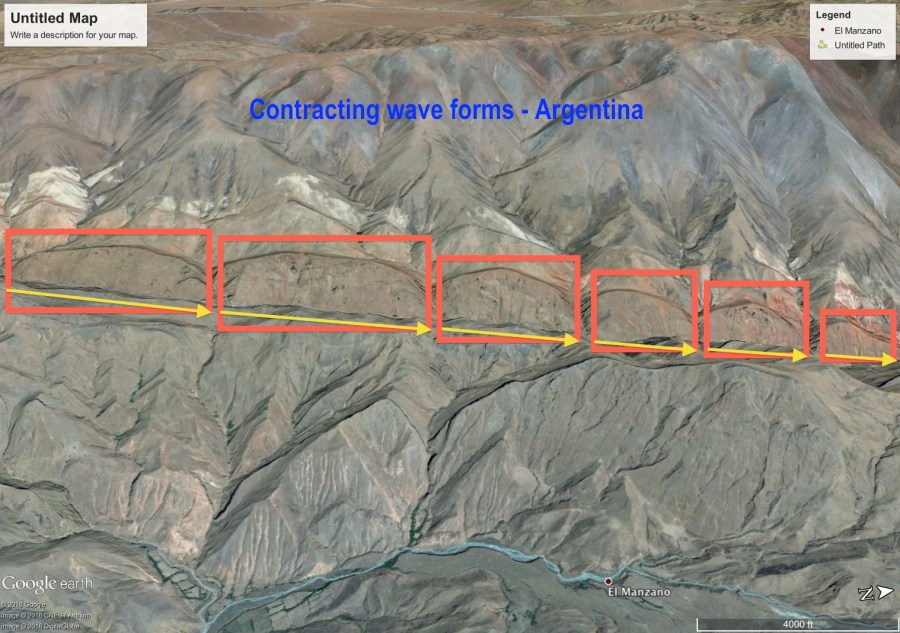
In Region 4, multiple shock reflections form triangular wave-forms. Note, the reflected wave bounces from the surface. The base of the triangle forms on the surface that reflects it.

The multiple shock reflections in Region 4 are standing waves. Standing waves don’t travel. The wave-form stays in place with the energy coursing though it. Reflected waves multiply, like in a hall of mirrors, repeating harmonic wave-forms to the nth degree, until the energy of the shock dissipates.

Slide1The reflected shock waves are rigid and stable when the energy is high, creating a shock ‘envelop’ over the ablated land. The energy does not dissipate quickly, because the vacuum of the mushroom cloud above is punching a hole through the atmosphere, drawing supersonic winds through the shock envelope like a cosmic vacuum. This is a source of free energy to the shock wave that keeps it alive.

Shock waves are highly energetic. They are razor thin sheets of pure energy, entire tsunamis in a sheet of glass. Like steel plates animated with resonate energy that derives from the original bow shock.

The incoming ground winds funnel through triangular plenums formed by reflected shock waves. The entire envelop of reflected waves acts as a coherent entity, with structural stiffness, resonating with the vibrations of the parent shock and the supersonic winds screaming through it.

It rides on the surface of the land, spread across the entire impact zone of the bow shock, like a multi-manifold vacuum cleaner, hosed to a hole in the sky above.

The winds plaster the mountain core with layered triangular buttresses.

Slide1

Prest2

Supersonic Wind Effects…

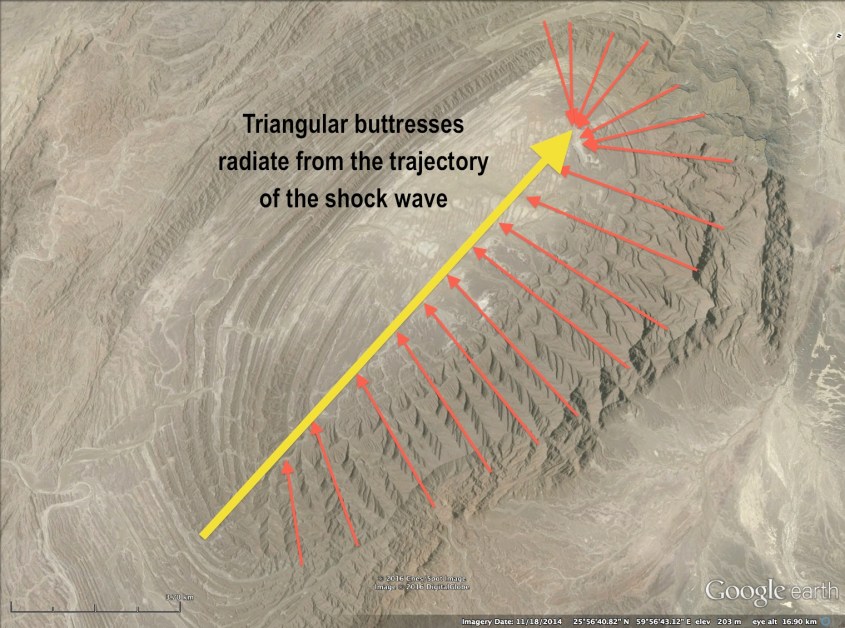
Shock reflections form at 90 degrees to the path of the shock wave that made them, so they emanate radially from the impact as seen in the Schlieren image of a bullet impact.

bulletreflectecshock
Reflected shock waves from a bullet impactHence, the orientation of triangular wave-forms holds information on the path of the initial shock.

It also vectors the supersonic wind flow, which layers the buttress in place. Therefore, wind direction is perpendicular to the stratified layers of the buttress and can be determined.

Examination of the coherent orientation of triangular buttresses dispels any notion they were made by random influences of wind and rain over the eons. The non-random, radial orientation of wave-forms is, in fact, impossible to explain except as the result of a single shock event that produced winds unlike anything we experience today.

aRadialamexcraterainterruptmexawinddirection

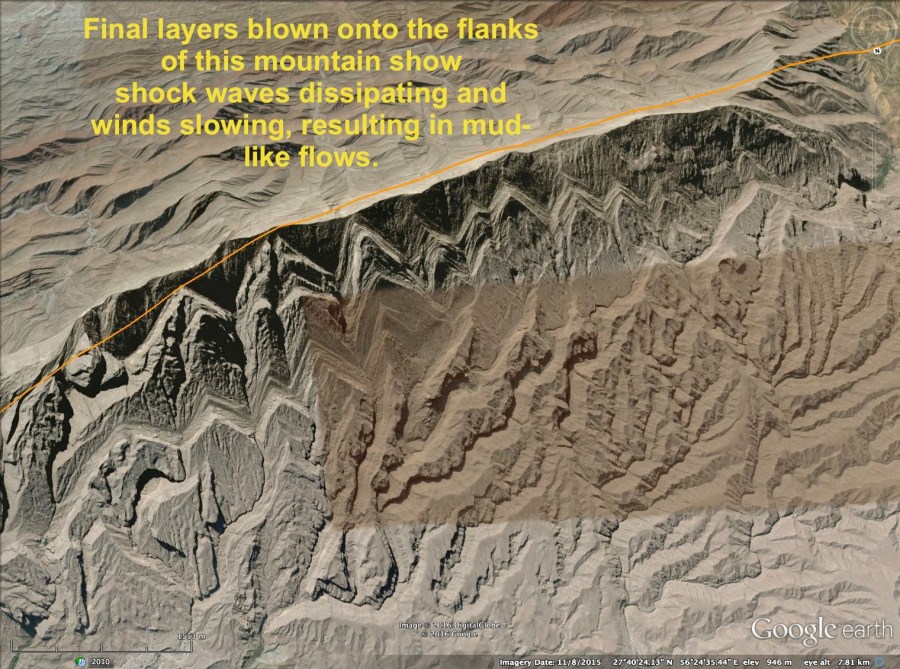
When a shock wave dissipates, the inflow of winds doesn’t necessarily stop, but they slow down and are no longer constrained to the path formed by the shock fronts. The final layers of material deposited often lose coherence and exhibit sub-sonic flow patterns.

Mudflowa

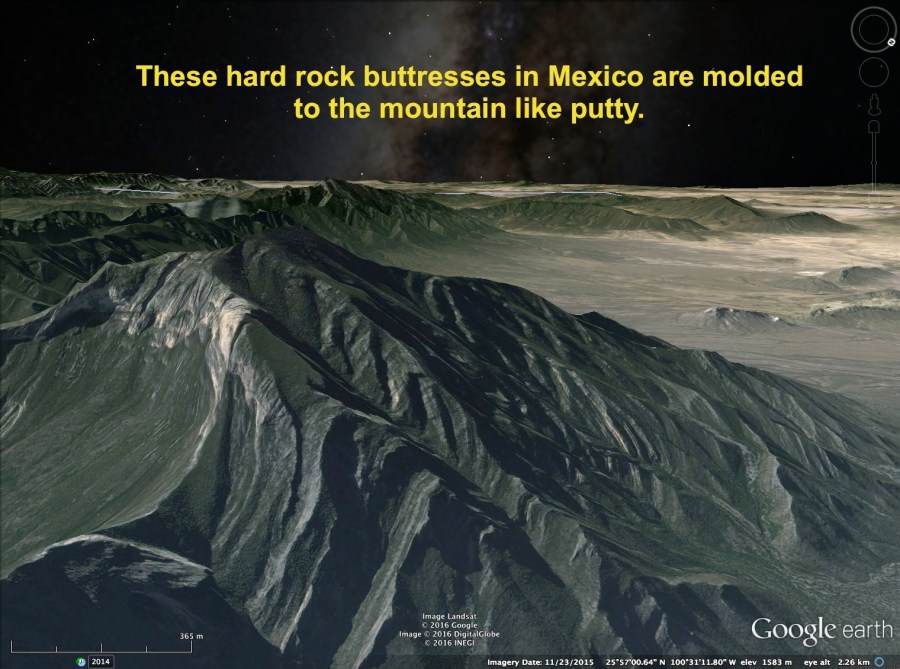
The layered material on buttresses is deposited in a hot, molten state. Patterns of deposition display evidence of molten fluidity at the time they were made.

amexicomelted

Reflected Shock Waves…

Supersonic shock waves display particular behaviors that have been studied by aerospace engineers since the beginning of the jet age. These characteristics must be understood to design airplanes, missiles and rockets. We know a great deal about their behavior.

The angle that the initial shock wave makes is directly related to the Mach speed of the wave, so Mach_angleit is called the Mach angle. Hence, the Mach angle holds information on the speed of the shock wave that made it.

The triangular reflected wave form is an inevitability of supersonic flow. It forms when the initial shock wave hits a surface and reflects.

The reflected wave will have an equal, but opposite angle incident to the surface from the shock wave that made it, assuming the plane of the surface and trajectory of the wave front are parallel.

shockreflections22

When the incident angle between the shock trajectory and the reflecting surface change, more reflected waves are created in predictable ways. Hence, the reflected angle holds information on the trajectory of the shock wave that made it.

The amplitude and wavelength of the reflected waves diminish over time as the energy dissipates. Hence, reflected waves hold information on the energy of the event that made them.

The shock wave travels on a transverse carrier wave called the “propagating wave”. This vibrates the land, seismically, from the hammer blow of the shock wave.

The land will wavesreflects some of the shock and absorb some of the shock, as a function of its modulus of elasticity.

Hard rock will reflect better than sandstone, because the sandstone will absorb much more of the shock. Uneven surfaces will also modify the wave-form. This contributes to the variety of wave-forms we see.

ArcblastPakistanarcblastn. africa

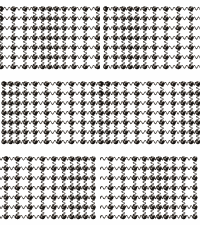
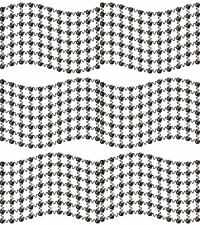
Supersonic shock waves are longitudinal waves. Instead of vibrating up and down in a sinusoidal vibration, longitudinal waves compress and expand back and forth, like an accordian.

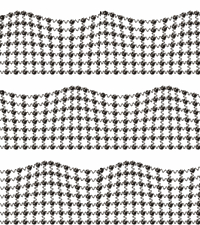
Longitudinal waves Transverse waves, like the propagating wave, travel up and down.

Transverse waves

The result is longitudinal and transverse waves super-positioning. Except inverted to the super-positioned wave shown below, with the fixed boundary above, fixed to the point in space the shock originated from, and wave motion amplified near the ground.

aAstromexico1AcblastAsiaArgentinaexpcontractArgentinaexpcontract2I-35

These wave-forms had to be created from above. A wave needs a surface – an interface – with a medium of higher density to reflect. Pure seismic waves shaking and rolling the ground from below are unbounded above. The atmosphere can’t reflect a seismic shock and create a reflected wave-form on a mountain side. The shock waves came from above.

Our ancestors had a name for them… Dragons.

Conclusions…

  1. Triangular buttresses form on the sides of mountains in the shape of reflected supersonic shock waves.
  2. They are layered onto the mountain, so they are not caused by seismic waves.
  3. They are layered perpendicular to the wind direction, consistent with supersonic winds created by shock waves.
  4. The triangular wave-forms are parallel to the primary shock pattern, consistent with reflected shock waves.
  5. The triangular wave-forms exhibit less energy and more transient effects on softer substrates; and higher energy, sharper angles on hard substrates.
  6. They are not layered sediments from an ancient beach, or waterway since triangles are a consistent feature around the world and do not conform to any motion of random water waves.
  7. They are formed in all types of rock, including granite, so they are not formed by eons of normal winds.
  8. The triangular wave-forms exhibit compression and expansion from superimposed longitudinal and transverse waves that came from a source above.

Triangular buttresses are an imprint of the Dragon’s teeth, formed by supersonic winds and shock waves caused by an arcing current in the atmosphere. In Part Two of Arc Blast, we’ll examine more evidence of the hydrodynamic forces that shaped our planet.

  1. Evidence of harmonic resonance,
  2. Effects of wave super-positioning and cancellation,
  3. Normal shocks and features of density variation and expansion fans,
  4. Boundary layer features of reflected waves in the substrate of the blast zone.

The End – Part One.

Surface Conductive Faults

arcs
Surface conductive currents

Reprinted courtesy of Thunderbolts.info

When high voltage electrical circuitry is sufficiently overloaded, or damaged, the current will seek alternative conductive paths to discharge to ground. It causes a dangerous event called an arc flash. Arc flash occurs when the current discharges in an arc through the atmosphere.

The result is explosive. Arc heat far exceeds the surface temperature of the Sun, in excess of 35,000 °F (19,400 °C). It’s hot enough to vaporize copper conductors, producing an expanding plasma with supersonic shock-wave pressures over 1000 psi. It releases radiation across the spectrum with such energy, it will vaporize, melt and ablate materials far from the arc itself. No contact is required with an arc burn. Damage occurs from the searing hot blast.

300px-Surface_Conductivity.svgAn arcing fault discharges to ground along the path of least resistance the same way a lightning bolt does. It is conducted through plasma formed by ionized air. Like a lightning bolt, it can be a single spark, or it can fork into a sheet of filaments that jump across gaps and craze across surfaces. The reason arcs tend to craze a surface has to do with a thing called surface conductivity.
Surface conductivity is a highly conductive path, where, in a charged environment, solids collect a layer of counter ions around them. The ions build-up near current flows and highly conductive materials, such as minerals and water, due to a phenomena called the Corona Effect. The layer of ionic concentration that results, surrounds the solid surface in a plasma double layer, providing a pathway for arcing currents.

Arcing, surface conductive currents can be shown to be a significant influence in Earth’s geology. But one must imagine an arc of truly colossal size…

Earth bears the scars of many surface conductive fault events. This article presents evidence that astroblemes caused by surface conductive faults are found around the world and are easily identified once it is understood how they form.

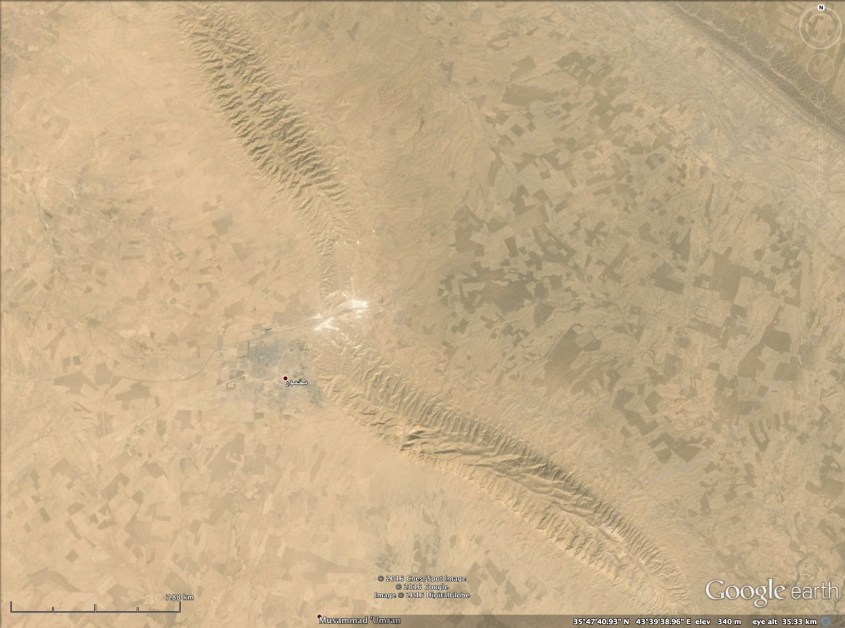
Kirkuk2

Astrobleme is a term for an ancient crater. Typically, craters are recognized as round depressions with raised rims and central peaks, commonly thought to be caused by meteorite impacts. Another type of astrobleme can be created by an air-burst meteor, when no rocky meteorite material actually impacts the ground. Instead, the meteor explodes in the upper atmosphere and its solid matter atomizes to form a bolide of plasma.

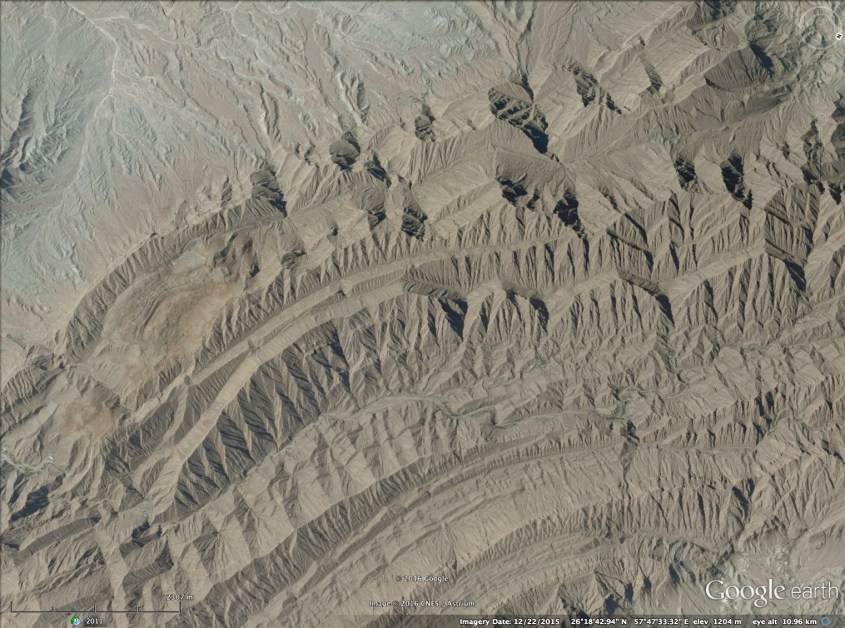
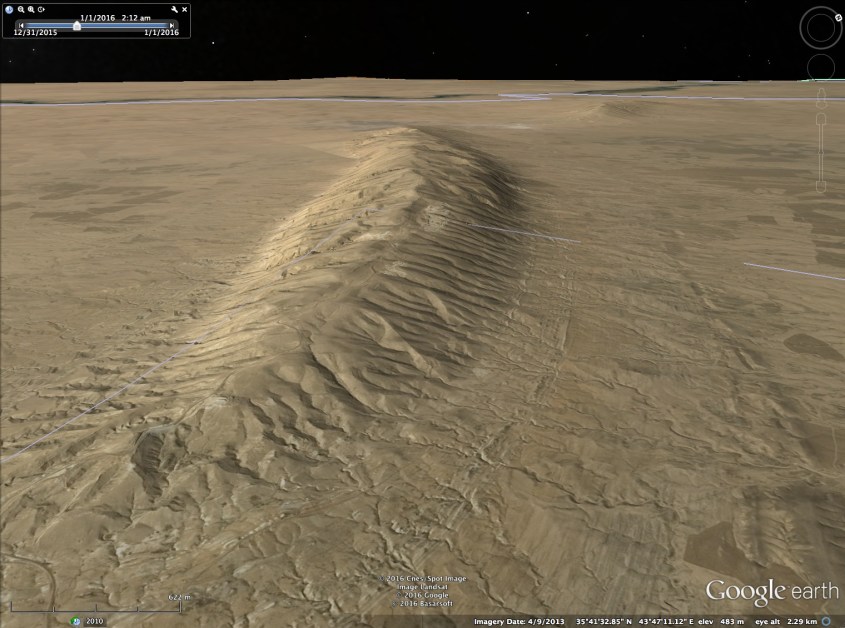
The plasma fireball carries the same speed, trajectory and energy as the original meteor, and essentially blow-torches the earth, creating the astrobleme. The “crater” in this case  is typically a teardrop, or butterfly blast zone of ablated material with a hogback hill down the center. The long hogback is analogous to the central peak in a round crater, and is thought to be formed by blast melt sucked inward by supersonic winds in a central updraft, like those in the ‘stem’ of a thermonuclear mushroom cloud. This central hill, or blister, defines the path of the plasma bolide as it streaks down at an oblique angle.

Meteor researchers, Dr. Mark Boslough, and team at Sandia National Laboratory, have simulated the effects of an air-burst meteor. Dr. Boslough is a noted expert on air-burst meteors, having researched events such as Chelyabinsk and Tunguska. At 21 seconds into this video, their simulation records the fireball’s downward blast of hot plasma, pushing a shock wave with heat and pressure that melts and ablates the ground below.

When the shock-wave rebounds violently upward, rising winds shear a column of updraft opposite to the downward blast. This supersonic updraft, Dr. Boslough theorizes, vacuums molten ejecta into the strike zone,  leaving a characteristic air-burst astrobleme – a linear hill with a sharply peaked ridge and distinctive triangular buttresses on the flanks, surrounded by an outwardly blasted zone of molten ejecta.

Asia 12The astrobleme characteristics, and in particular, the distinctive triangular buttress features that distinguish them, is explained by rogue geophisicist, “Craterhunter,” in this well written article, A Catastrophe of Comets.
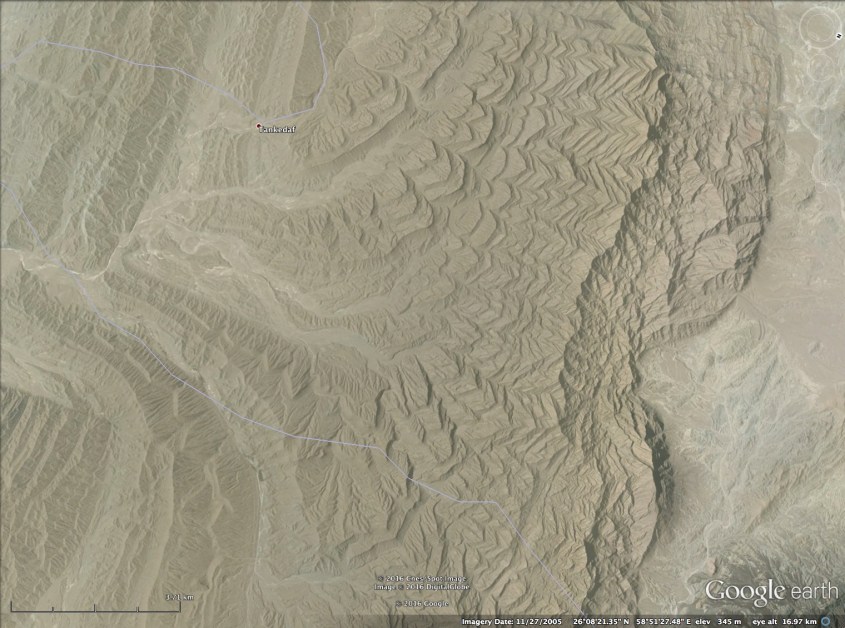
The Sandia simulations show how a bolide, screaming into the atmosphere at a low angle, can blister a mountain in a searing instant. These mountains are seen all over the world. It is a bold and unconventional theory that realistically describes these types of hills much better than conventional geology.
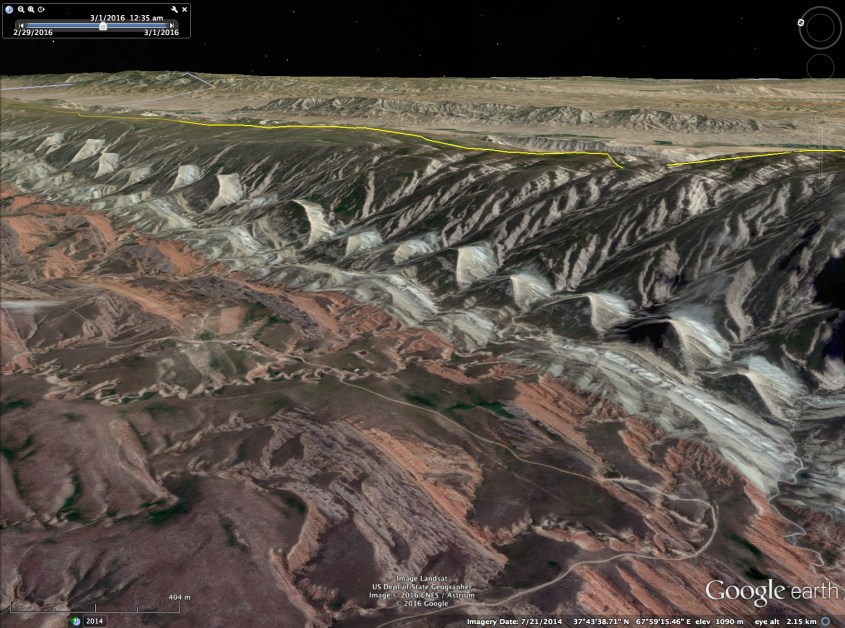
The Surface Conductive Fault Theory…

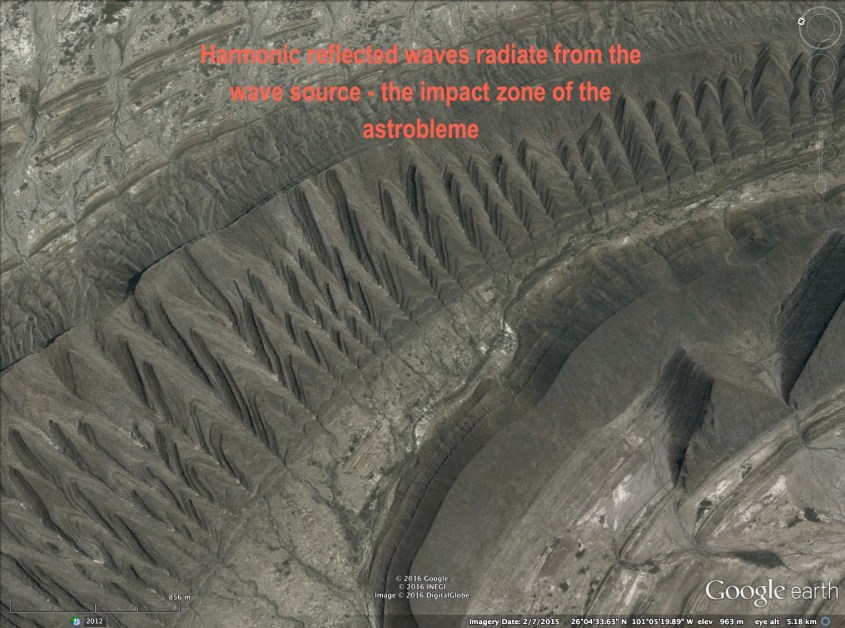
The defining feature of the astrobleme is the repeating pattern of triangular buttresses that display harmonic repetition in shape, size and frequency. They flank linear hillsides all over the world, across slopes from near horizontal to vertical, and across rock types from sandstone sediments to schist and granite, yet they display the same harmonic patterns.
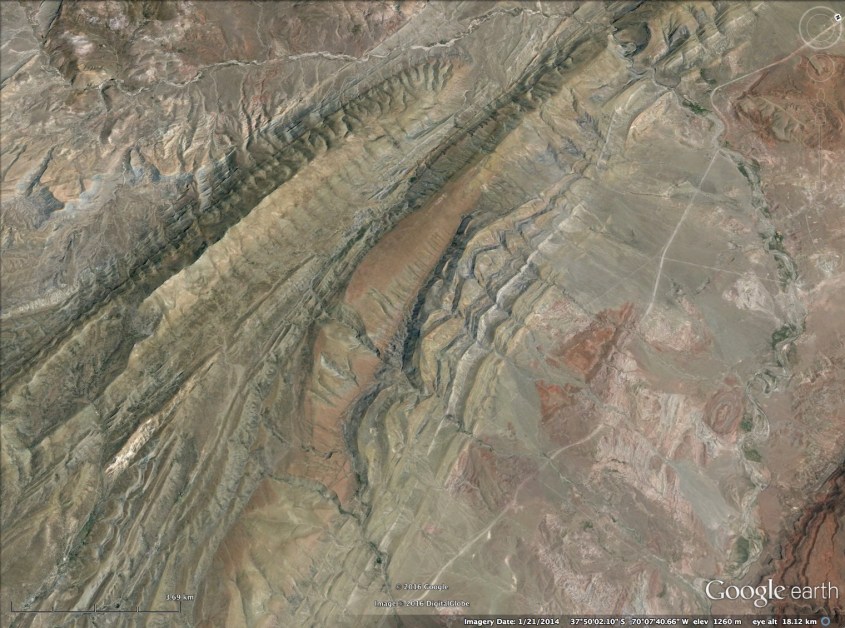
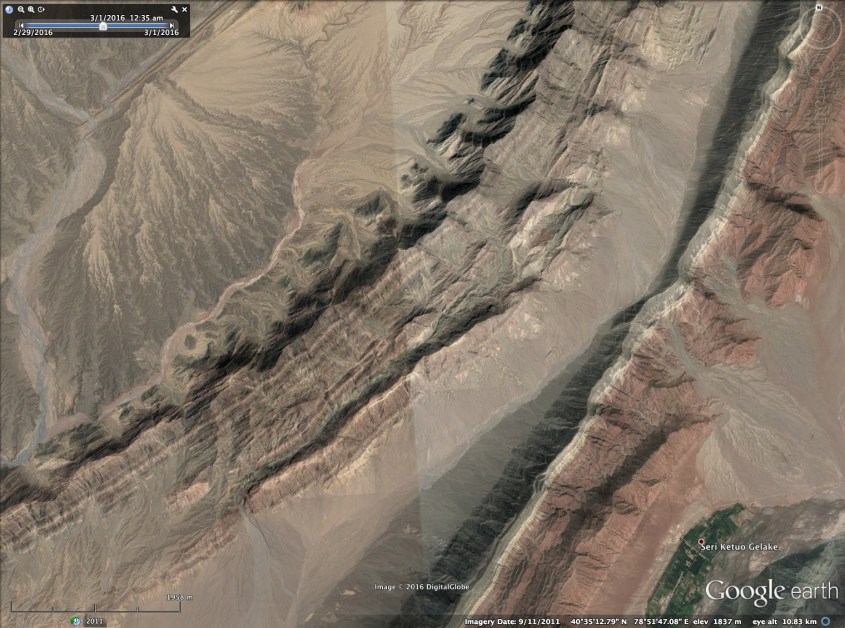
Harmonics are evident where multiple wave-forms are “nested” within larger wave-forms. When nesting waves occur in whole integer multiples of the larger wave-length they are nested within, it is a signature of harmonic resonance. The triangular buttresses appear to be harmonic waves similar to the patterns of reflected waves a linear resonator would make. No Uniformitarian process of random faulting, subsidence, uplift, slumping, and eons of wind and rain can account for harmonics.

Look close and try to count how many octaves are present on these mountain sides:

astroirancomplexastroiranharmastroiranharm2astroiranharm5astroutah2Harmiransweepamplitudemexicosweepmexsweepturkey

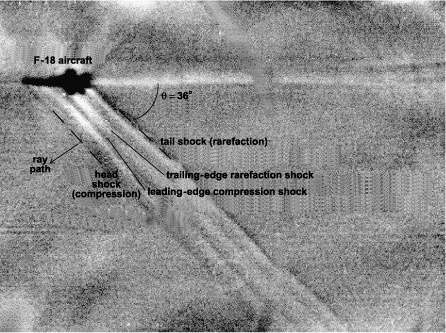
Triangular buttresses are a consequence of reflected shock waves – interference patterns of super-positioning pressure ridges formed by shock waves from the passing bolide. The chevron pattern of the reflected waves can be discerned in the atmosphere trailing the F-18 in the photo below. Shock waves travel in any medium; gas, liquid, or solid, as well as, electromagnetic fields and plasma. Supersonic ionic-winds, heavily clouded with molten rock and dust, form a plasma medium that is molded by the reflected waves. The shock waves fuse these buttresses to the mountain as it’s built by the supersonic in-flowing winds.

reflected shock

Conventional theory of seismic shock-waves can’t explain…

Earthquakes produce shock waves, too. So, there is a conventional theory of how triangular buttresses can be formed by surface waves from an earthquake. The “Love Wave” and similar models could theoretically cause faulting that produce a triangular buttress. It’s a simplistic model that is inadequate to explain the complexity of features actually seen in nature, however.

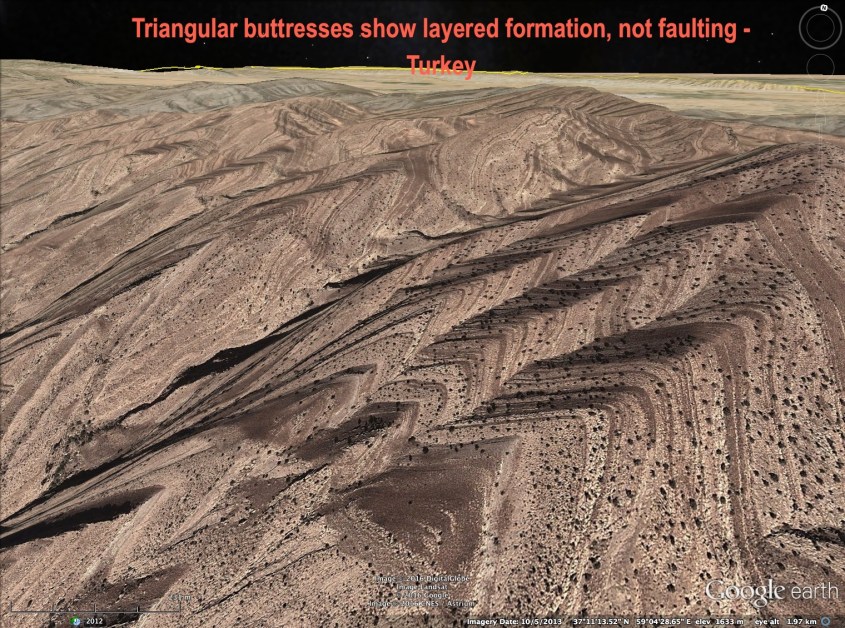
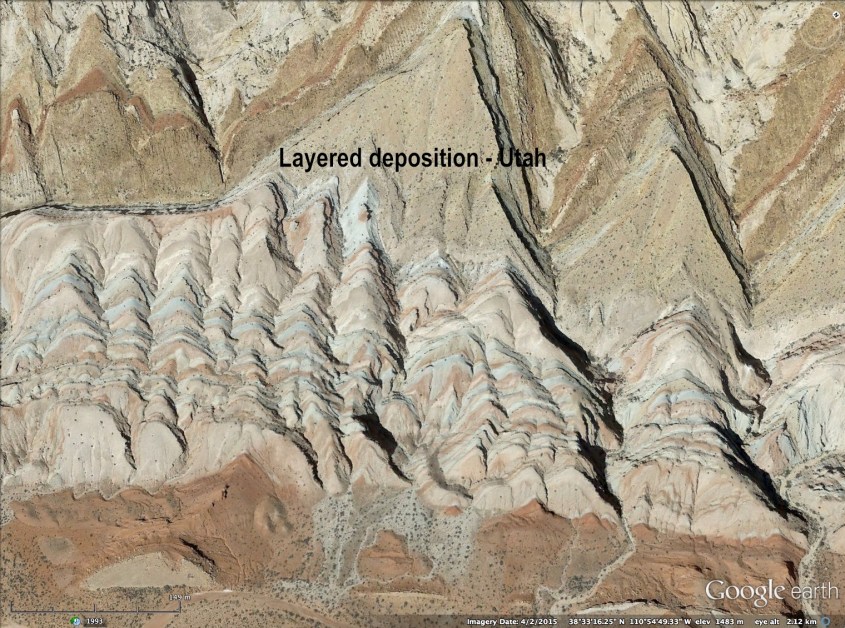
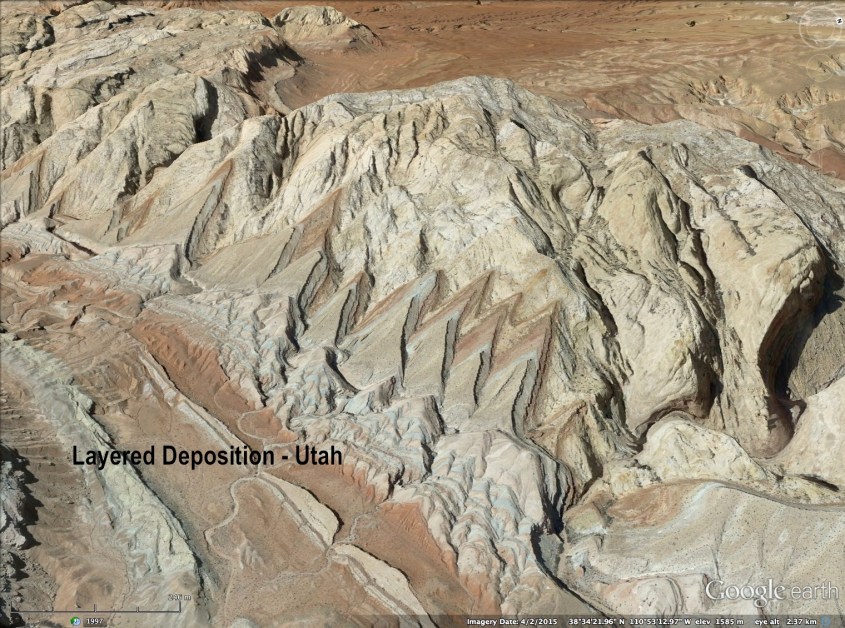
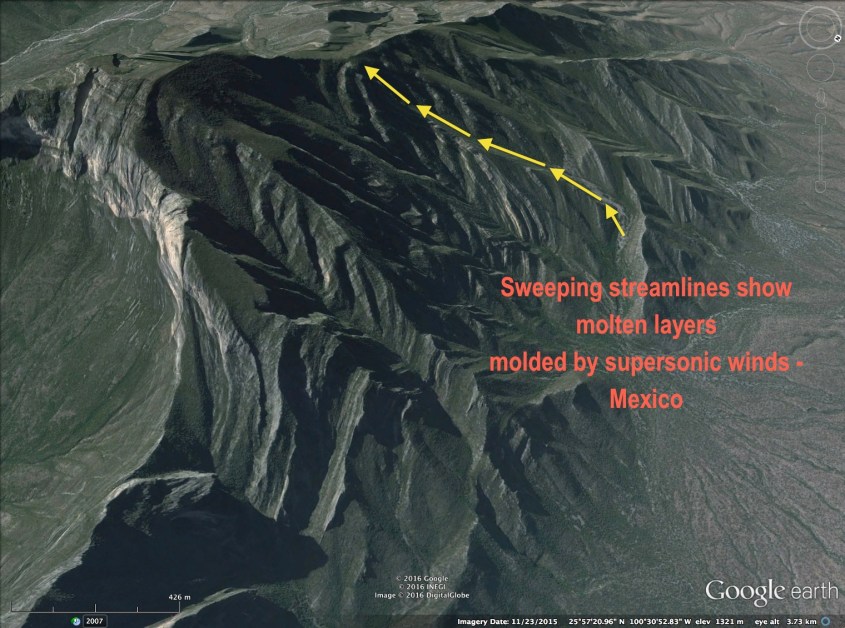
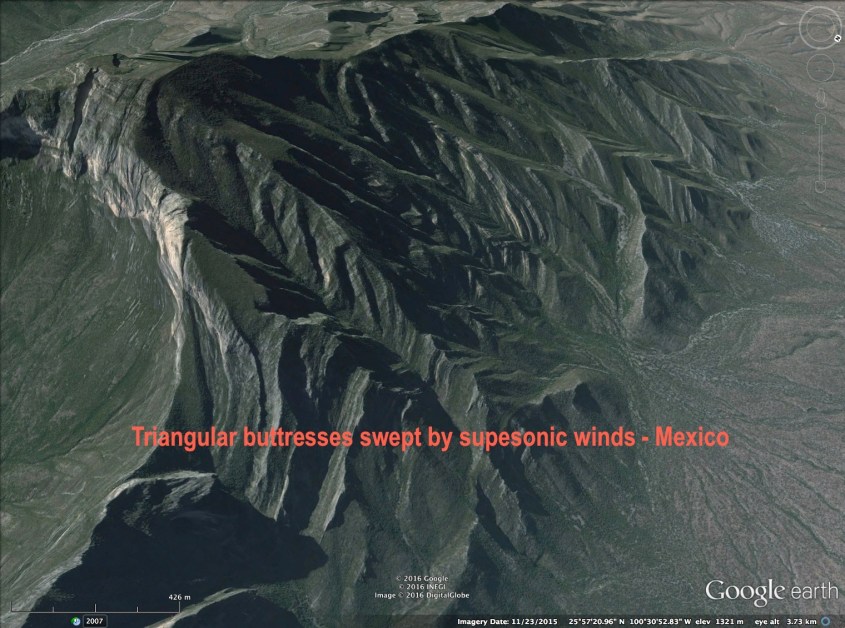
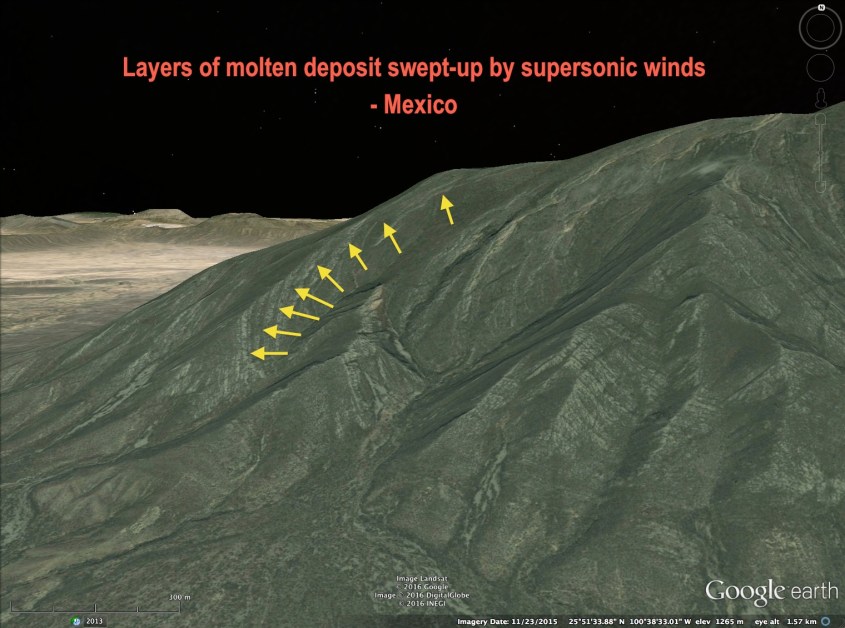
For one thing, the type of faulting predicted by surface waves is not evident on many buttress formations. Instead, they have a melted, layered appearance, as if consecutive layers of molten material were molded to the flanks of the mountains by supersonic winds – which is exactly what we theorize happens to form an astrobleme.

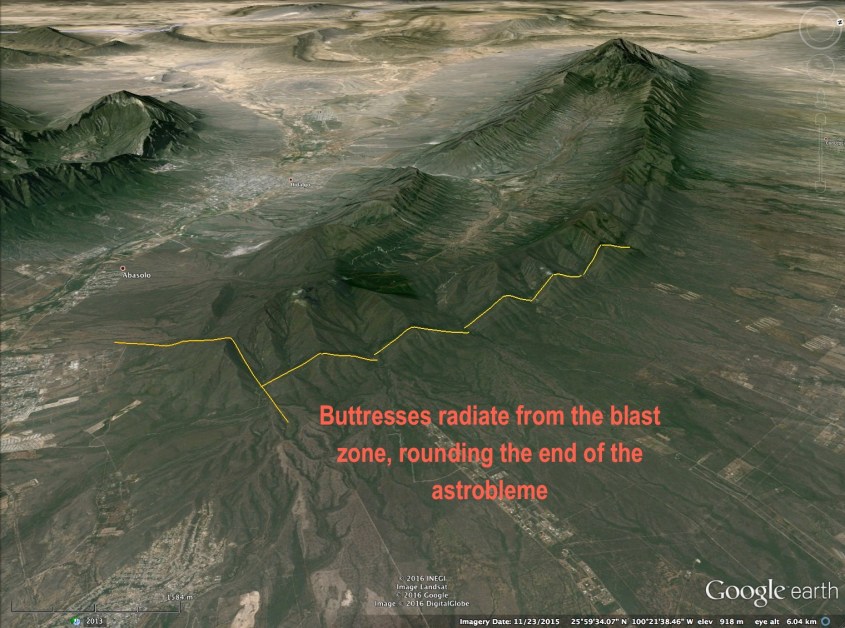
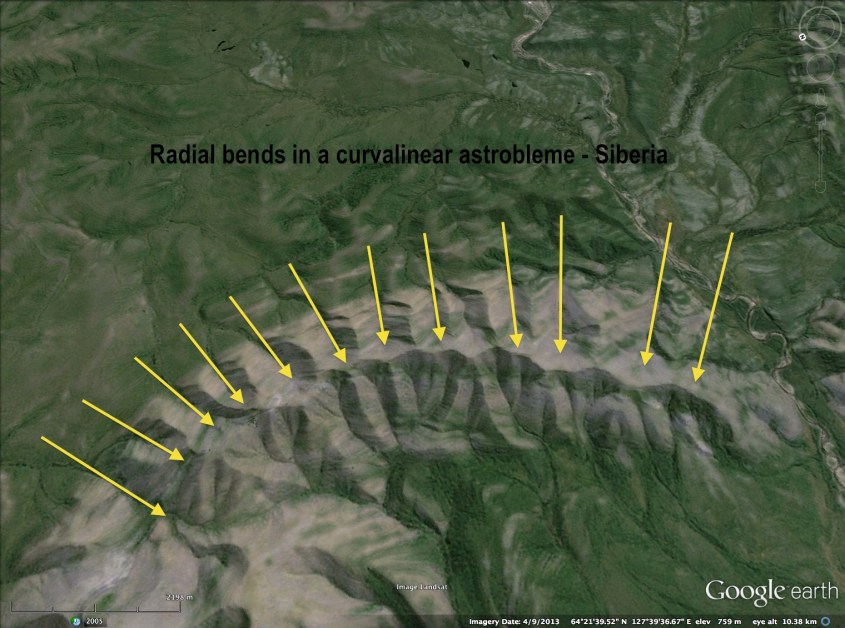
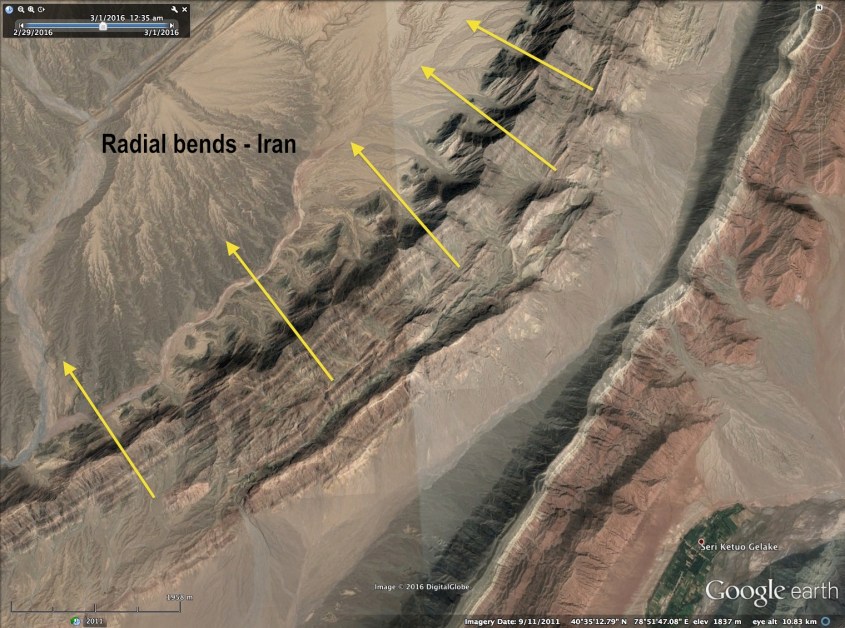
Seismic surface waves radiate from an earthquake. This suggests a surface wave would have to roll beneath the mountain to create triangular features. But triangular buttresses are found oriented radially from the center-line of the hill, indicating that is the direction of the shock wave’s source. Buttresses are found curving around the ends of hills and craters, vectored away from the local blast zone, not from a  rolling seismic surface wave.

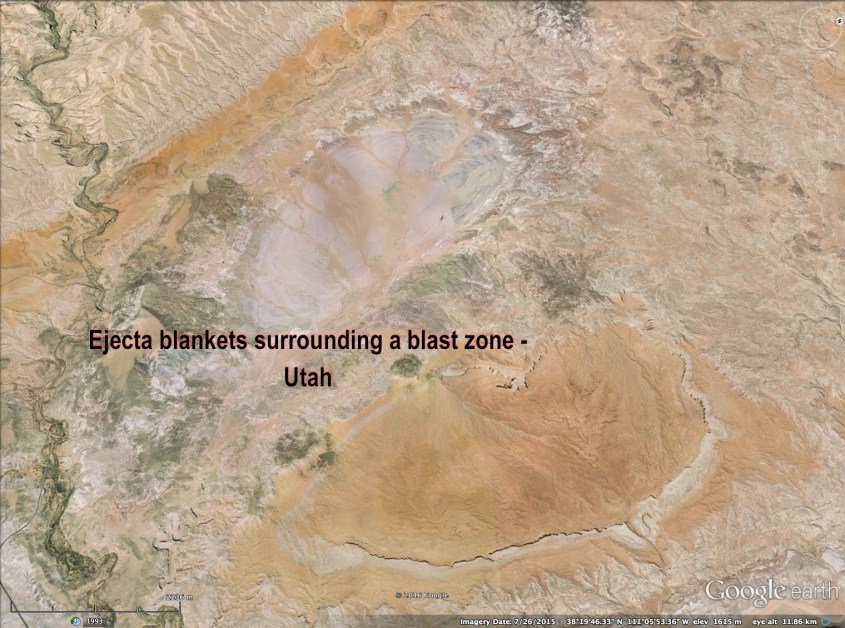
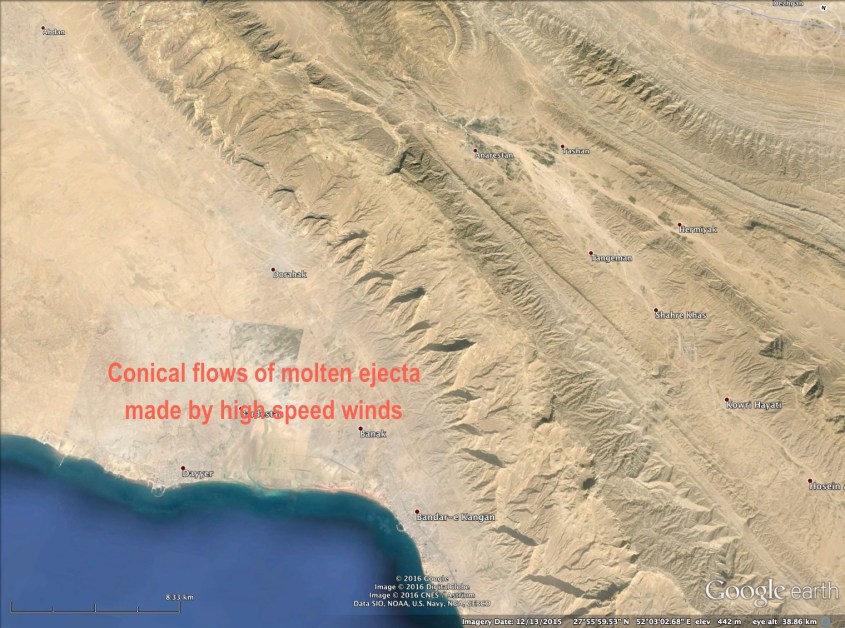
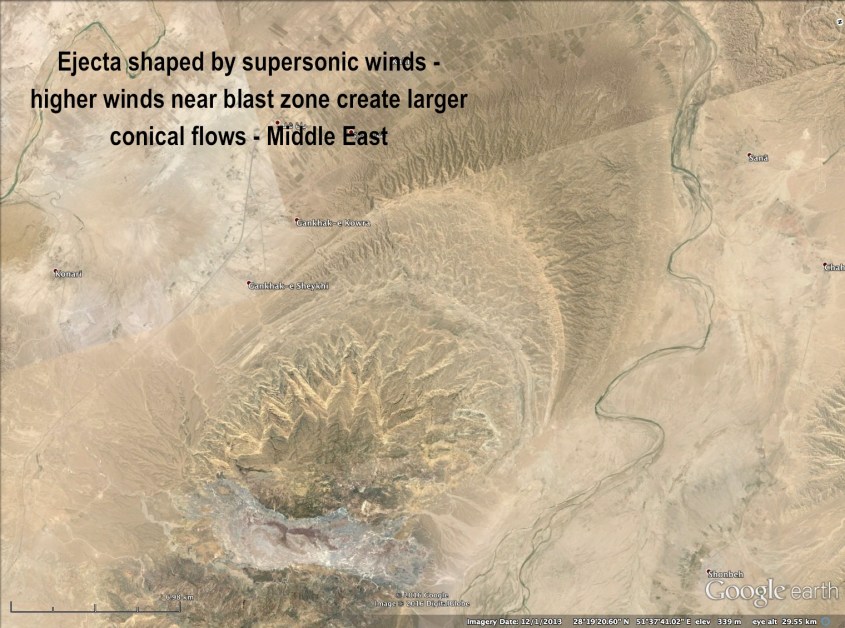
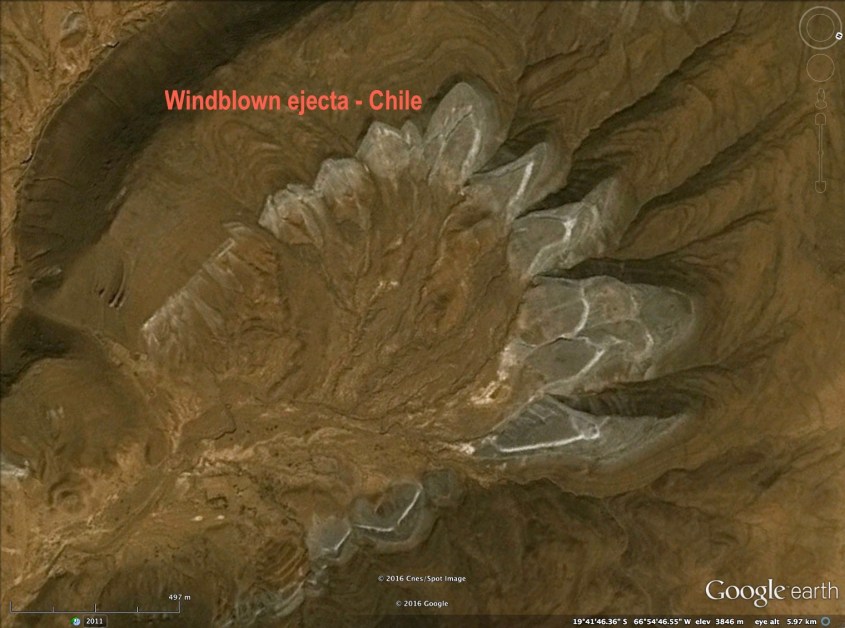
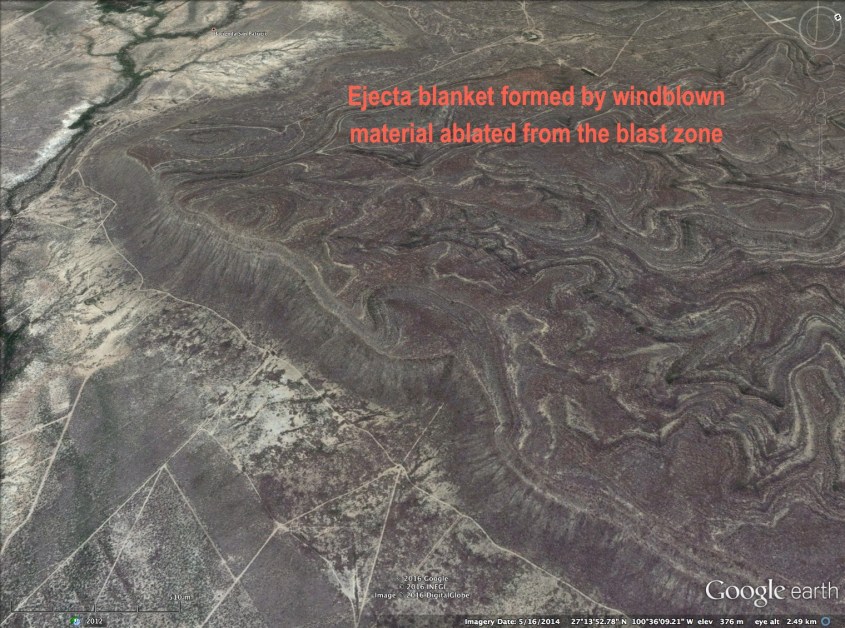
Nor does any conventional theory explain the surrounding areas of ablated ejecta blown away from the astrobleme crater. Ejecta blankets also show the evidence of supersonic winds, displaying conical flow patterns oriented away from the blast zone.

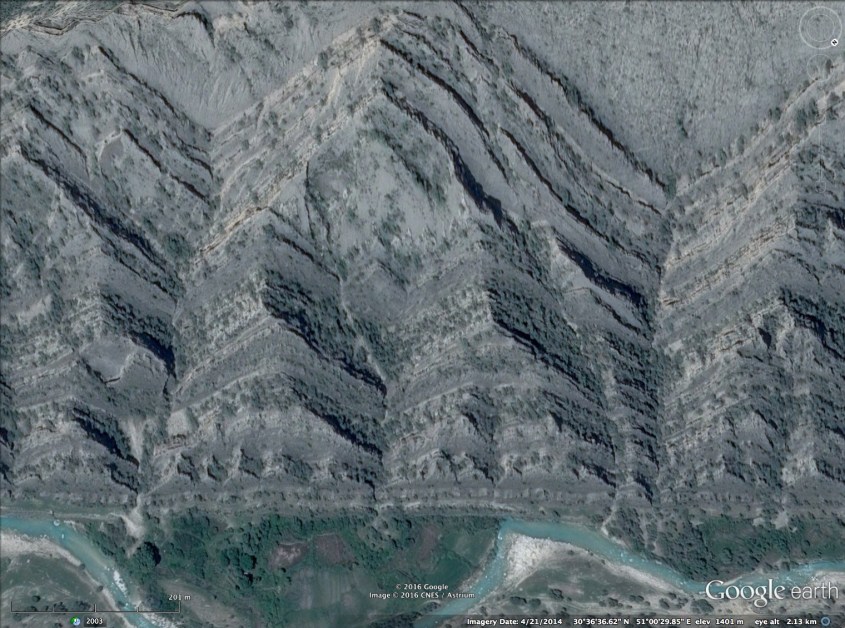
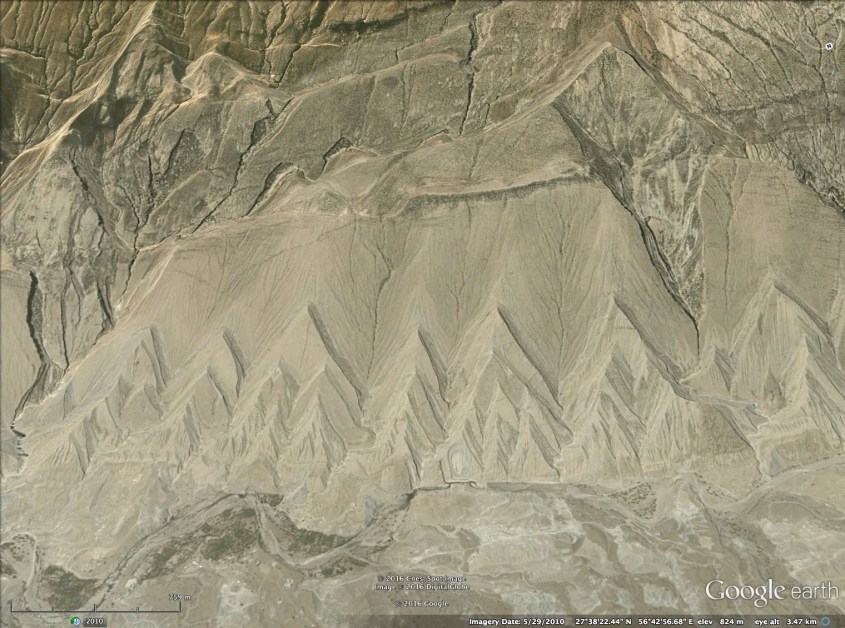
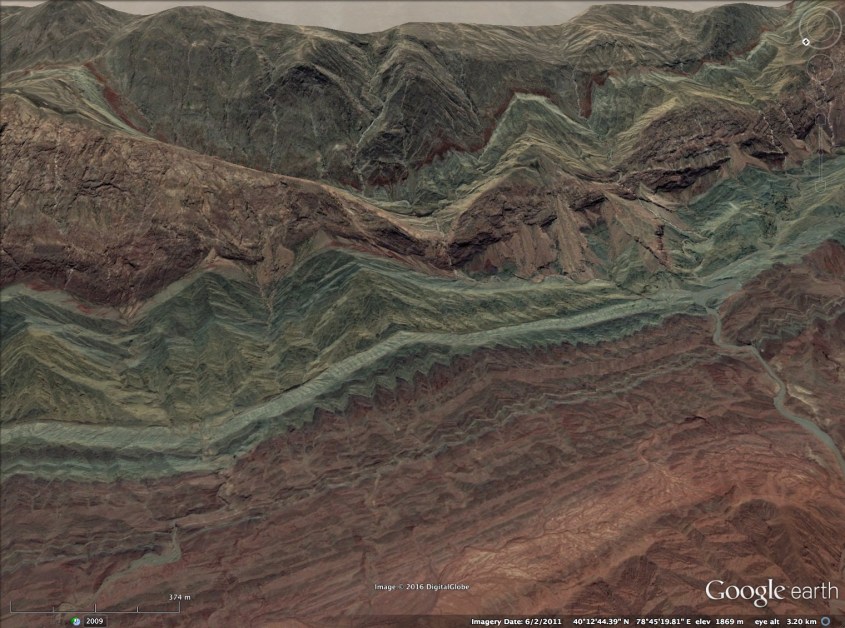
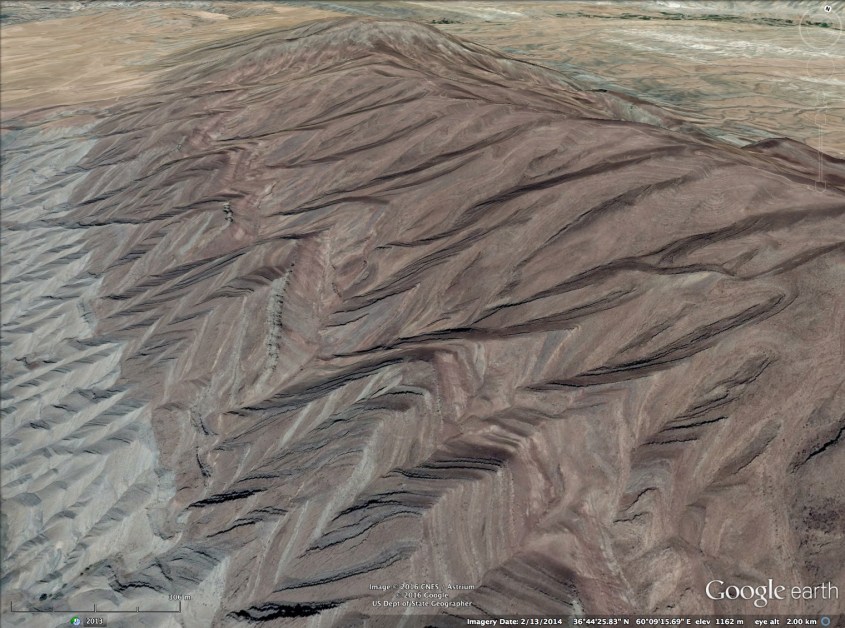
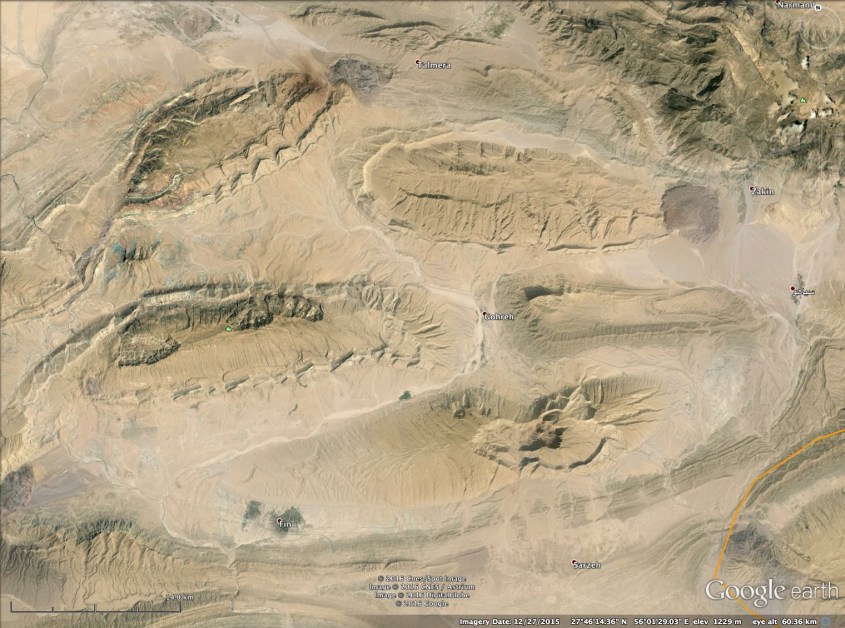
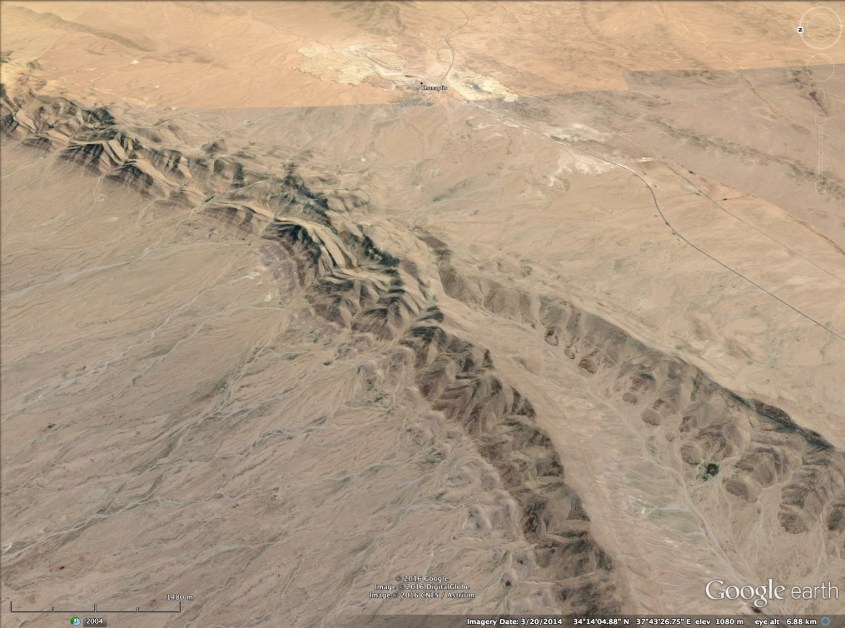
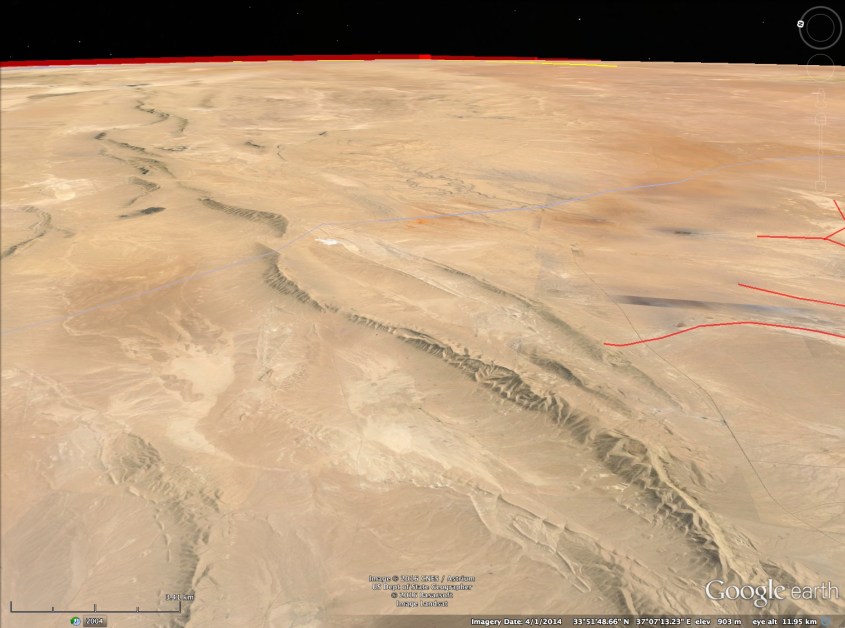
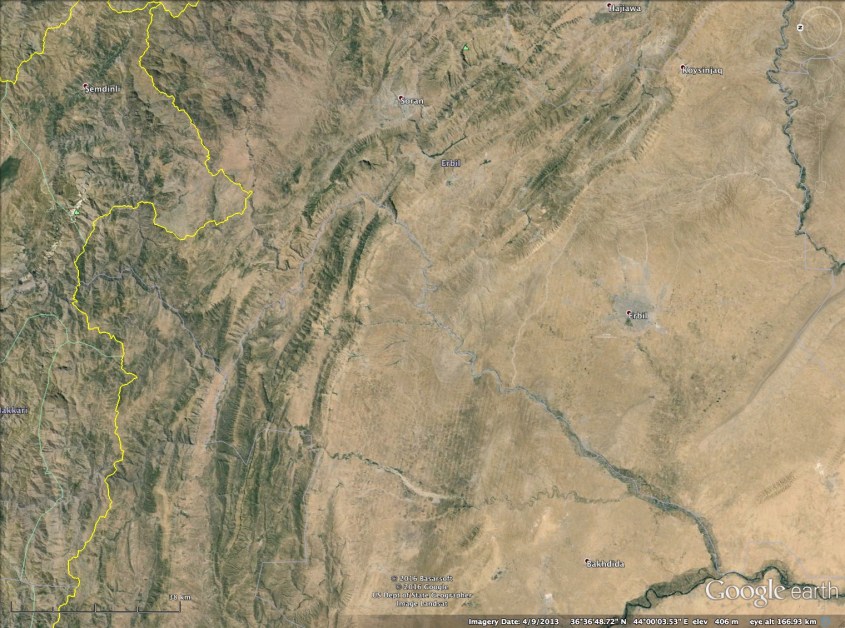
Each of these features; triangular buttresses of layered melt, radially vectored buttresses, and surrounding regions of molten ejecta, are highlighted in the following Google Earth images:

AnnotatedlayerturkeyAnnotaded deposition utahutah4anootateddepositionutahAnnotatedsweepmexico1BacksweepmexicoAnnotatedsweep2mexAnnotated cratermexAnnotatedradial2mexicoAnnotatedradialAnnotated radial IranAnnotated radial siberiaannotatedejecta2Annotatedradial-iranannotateejectaAnnotatedejectaSweepejectairanAnnotatedejecta3sweepejectamex

Dr. Boslough’s work demonstrates how a plasma bolide can sear the Earth, leaving an astrobleme with these features. It falls short however, in providing a complete explanation. The idea they are created by meteors from space doesn’t hold-up. Surface conductive fault currents complete the picture of how these astroblemes were formed.

A rain of bolides from comet fragments, or an asteroid, will travel in a specific trajectory – that’s physics – they can’t land at odd angles to each other, or follow sinuous paths across hundreds of miles of terrain. Yet that is what is seen:

direction3directionarm12Syria1Direction2astraliranradil2astro7astrochileastroiranbendastrosiberia1Astrosiberiacurve

These scars are not produced by fragments of comets, or asteroids. Surface conductive fault currents made these blisters. In some cataclysmic geomagnetic event, Earth’s normal current discharge through the atmosphere – the constant flow of energy through hurricanes, thunderstorms, earthquakes and volcanoes – overloaded, and essentially, short circuited. Sheets of lightning and plasma bolides, arcing through surface conductive paths above the ground, left these blisters.

Untitled5
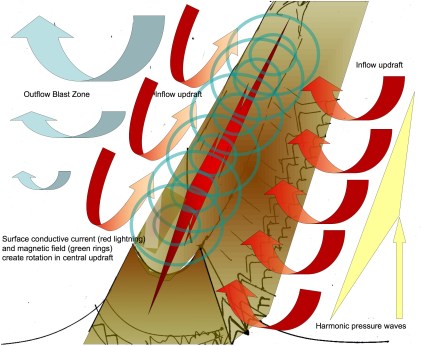
Ground level inflow carries material to form linear hills. Reflected shock waves mold harmonic patterns of triangular buttresses – A. D. Hall.

Unlike a meteor bolide, electrical current doesn’t fly straight, yet it has the extreme energy to create the same temperatures and pressures as a bolide created by an air-burst meteor from space.

As it arcs across the land it is drawn to conductive soils; minerals and moist regions, to skip, branch and gouge divots. Ionized material it carries fires-off as bolides that strike land and leave teardrop astroblemes.

Magnetic fields around the plasma current induce rotation along the horizontal axis of its flight, modifying the speed of the winds. This effect causes some hills to be pushed over, shallower on one side and steeper, with more distinct triangular buttresses on the other. It blows the ejecta blanket asymmetrically, and it may carve a valley longitudinally down the center of the hill. These are all features typically seen and are the result of violent electromagnetic, supersonic blast events.

arc3To understand more about how the Earth’s internal currents are induced by the electromagnetic environment of the solar system, see EU 2015 speakers Bruce Leybourne and Ben Davidson explain theories of our electromagnetic environment and the hot spots of current welling inside the Earth. Now imagine those currents amped-up until they short circuit and produce surface conductive faults. The consequences are apparent in the features of astroblemes. But astroblemes only scratch the surface in the story of surface conductive currents. Other startling evidence will be explored in future articles. Your questions, comments and ideas concerning how surface conductive faults can help re-define our understanding of geology are welcome.