Tag: mysteries

DeDunked! How about a ReDunk?

A monumental shift in ‘critical thinking’ is taking place. People no longer accept scientific claims as scientific fact. They are questioning the “experts”, because thousands of peer-reviewed scientific studies, and the journals that publish them, have been exposed as frauds. Technocrats have used untested theories and their own wishful thinking to portray a version of the “truth” they want us to believe. People are finally awake to the fact that the “reality” they’ve been taught is built on fake narratives.

This is nothing new in the Electric Universe. We have watched the Big Bang cult take control of the narrative for decades, not with proof of their theories, but by hiding their flaws with magical math and closing ranks around a narrated consensus. They then bully outsider’s who suggest alternate theories. It’s been a tactic serially repeated since they vilified Immanuel Velikovsky.

One area this is particularily so is ancient history, where academic interpretations have always been challenged by knowledgable people who see gaps and inconsistencies in the narratives. The academics defend their turf almost as if they are hiding something. Especially regarding theories for past civilizations in a pre-flood era, and the mythologies surrounding the “flood” event itself.

Chief among today’s alternative history theorists is Graham Hancock, who anyone interested in alternative theories certainly knows. He’s hit a nerve with the consensus, so he’s become the latest to be ‘Velikovskied’.

DeDunking” is Dan Richards’ YouTube channel devoted to “alternative history from the perspective of a skeptic.” For those who follow, you’ll know his channel typically uses science and reason to evaluate, and sometimes defend alternative history theories, like those of Graham Hancock, against the onslaught of consensus-science ‘Karens’, gatekeepers and debunkers.

I compliment his courage and style, as he calls out the many flaws, lies and ad hominem attacks served up by the consensus in defense of their narrative. He seems to be a sincere truth seeker and an influential one at that. He is a credible voice because he is savvy to the powers in control of disinformation. However, his credibility will suffer if he ignores the most competent alternative theories regarding science and ancient history – the ones the consensus was invented to hide. Those would be ours, of course, in the Electric Universe.

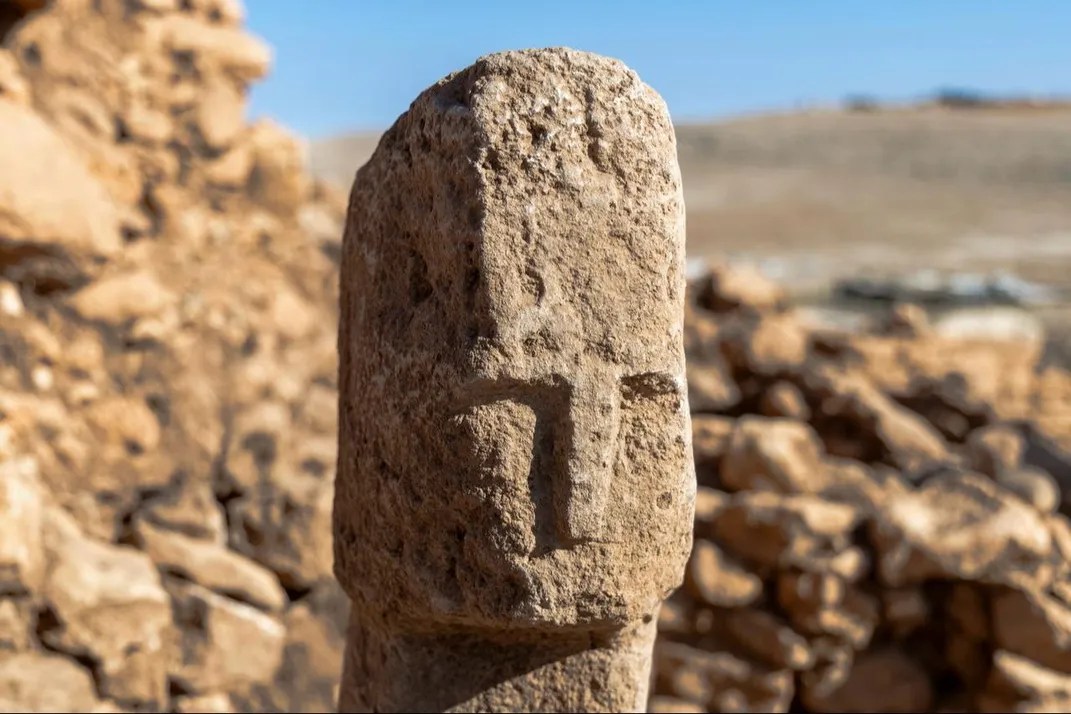
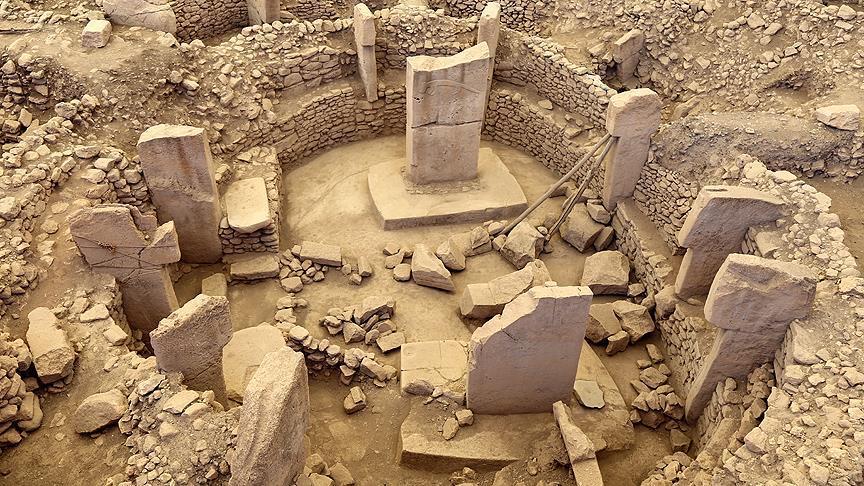
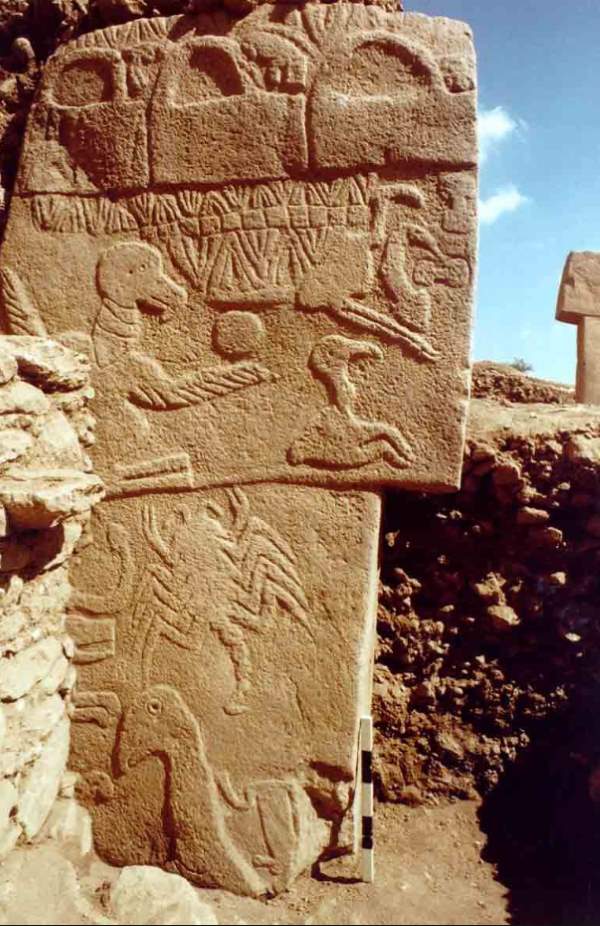
Otherwise, he should have considered it in his video: “New human face carving discovered at Karahan Tepe “T” pillar.” The “T” pillars found at both Karahan Tepe and Gobekli Tepe, I will argue, tell the most significant story of all time. It’s vital to set the record straight about these oldest of all relics, from a time twelve-thousand years ago when the Earth experienced a catastrophic shift in climate. “T” pillars have a story to tell about the very beginning of human society and religion, based upon what people saw in the sky. It is the greatest story of all time. It is the story told in myths. It’s also a story about today, and the battle of narratives vying for everyone’s attention.

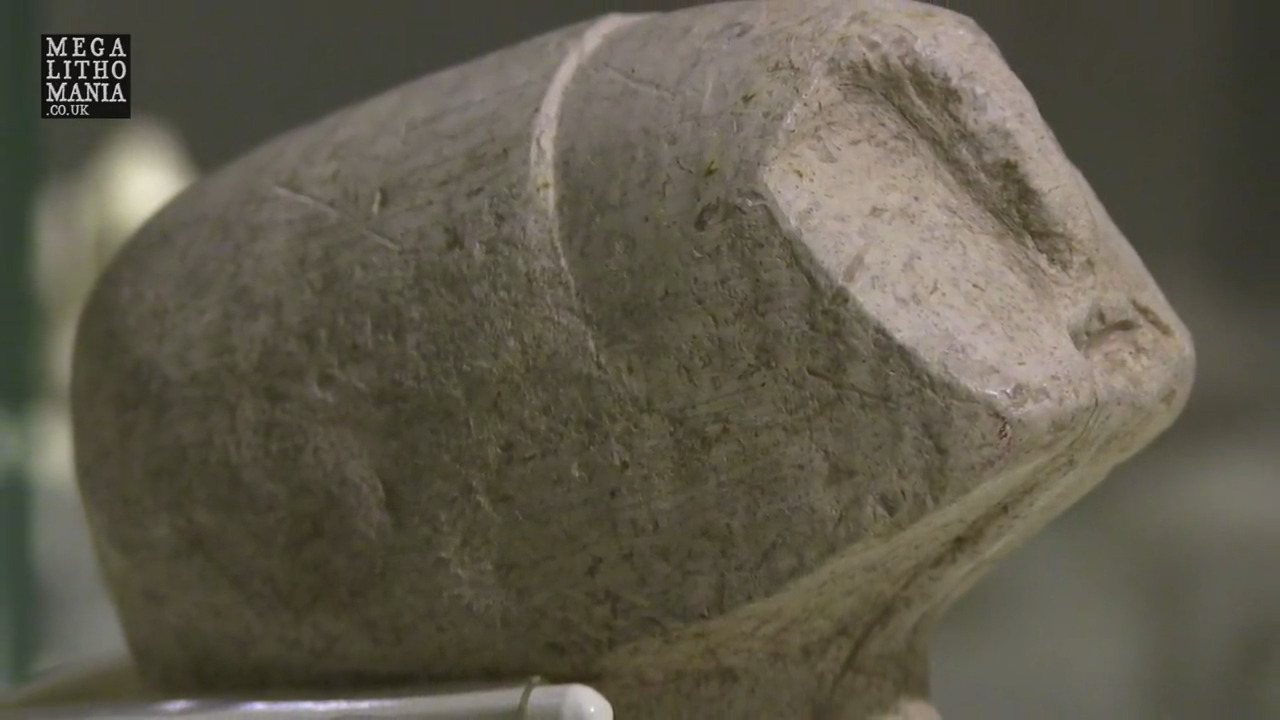
Figure 1. The “Human Face” at Karahan Tepe.

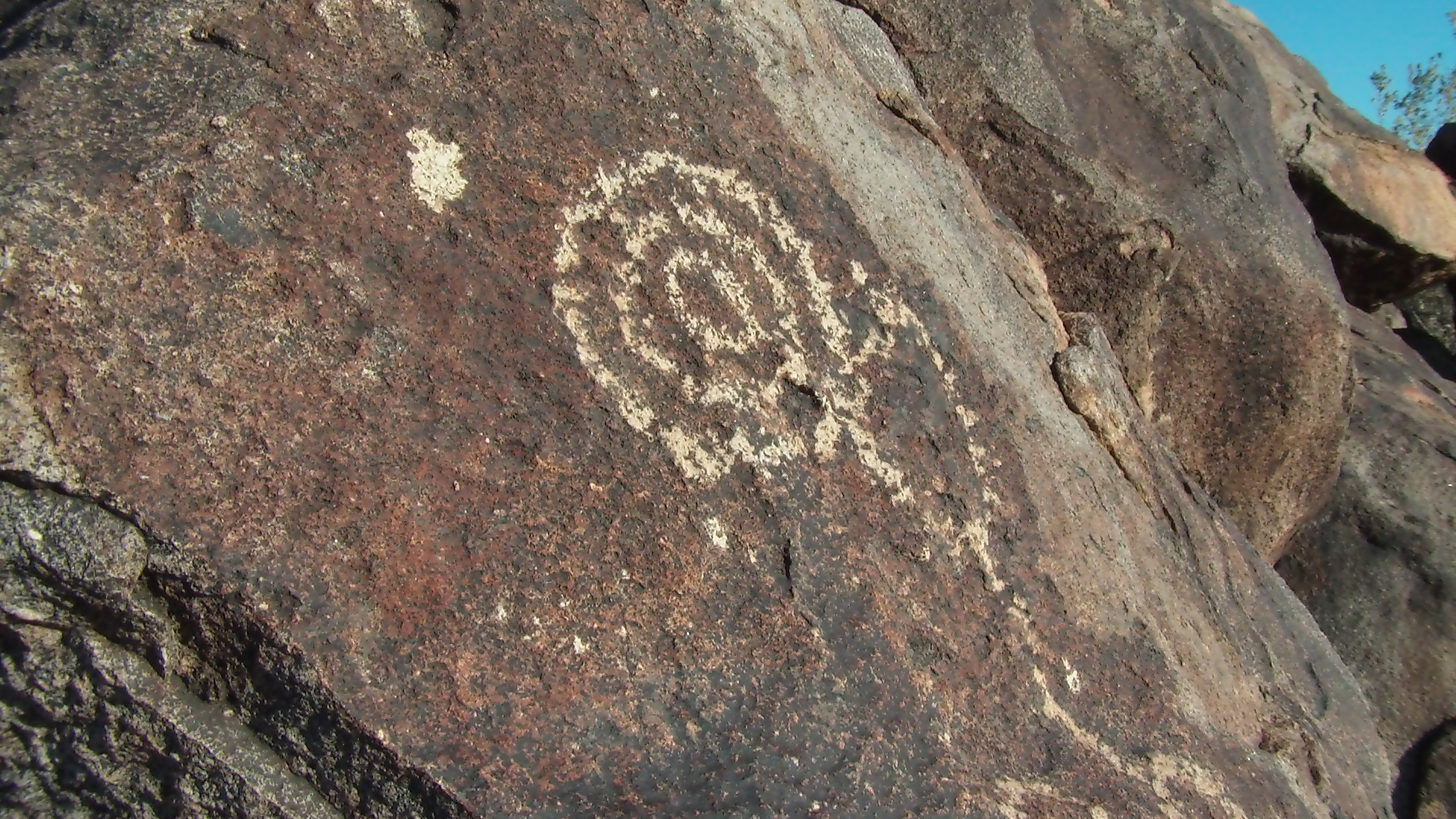
The subject of “T” pillars strikes at the heart of Electric Universe theory. Like the “Squatterman” petroglyphs that Anthony Peratt proved depict a high intensity space storm besieging the Earth, the pillars also depict a plasma phenomena. Dan, being a voice of agnostic moderation, sorting actual fact from the fictions of the consensus and open-mindedly considering alternatives in the way science should, needs to consider our theories.

In his video, he only considers the typical geological catch-all called impact theory. Catastrophists jump to this conclusion because they are brainwashed by consensus science to believe craters are made by meteor impacts. I don’t think he knows impact theory is based on scientist’s say so, not repeatable tests that prove it. The only crater feature an impact can make is a hole. The only way to make craters in a lab with the features we actually see on the Moon, Earth and elsewhere; like doublets, rim craters, crater chains, rilles and hexagons, is with electricity. That is why scientists never find the actual meteors that made purported craters. They are from sparks, not meteors.

It’s my hope he will be made aware of Kristian Birkeland’s currents, Hannes Alfven’s magnetohydrodynamics, Anthony Peratt’s Plasma Universe, Robert Schoch’s Solar Storm theory and the Electric Universe body of work and ReDunk his Dedunk with more electricity. Turn the lights on, Dan.

Dr. Peratt, a world leading nuclear plasma engineer, documented the petroglyphs around the planet, verified the imagery matched with high energy plasma instabilities and proved they were consistently oriented with a view to the sky where such aurora would appear in Earth’s magnetic field. His work is compelling evidence – no, actually it’s proof – that ancient humans witnessed severe space weather due to a high energy event in the Solar System, which lit-up Earth’s magnetic field with induced electric currents, creating glowing plasma figures in the sky.

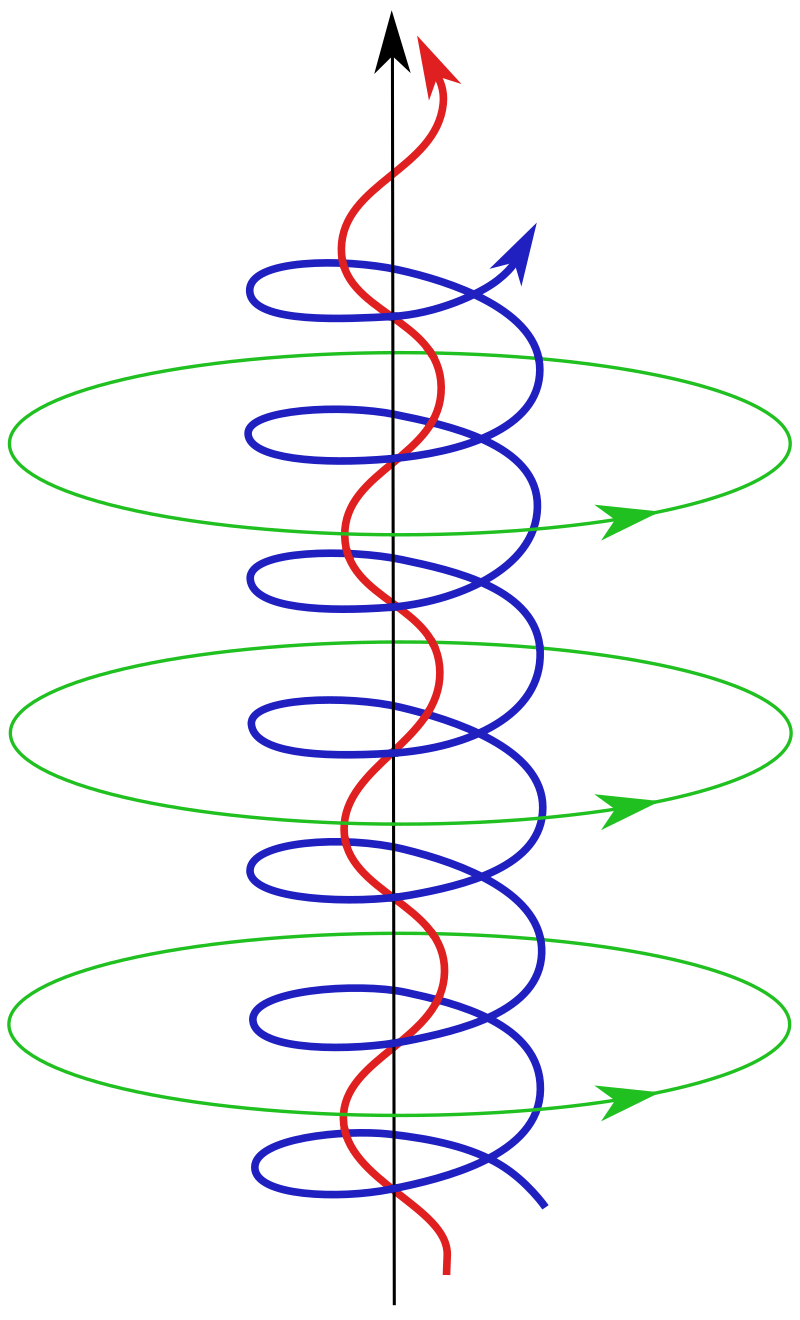
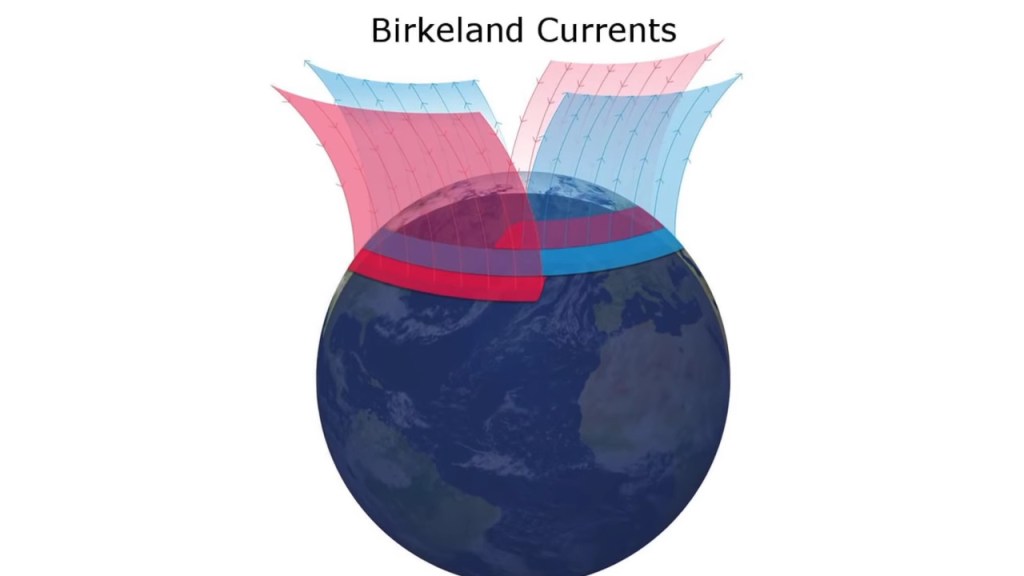
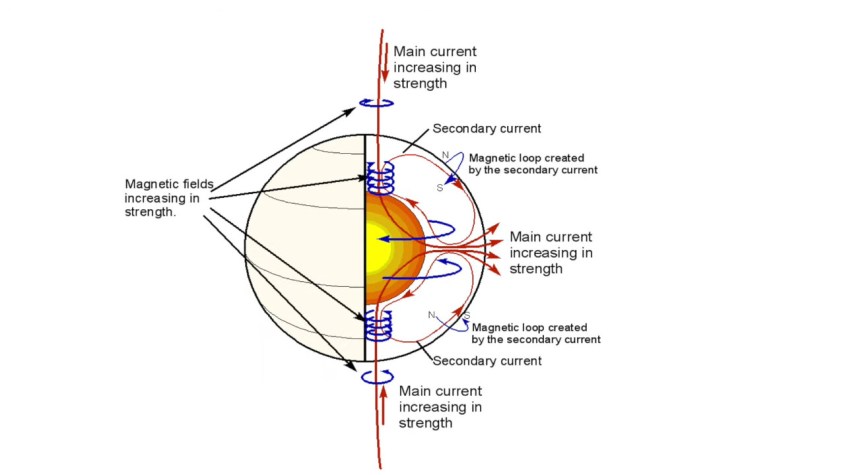
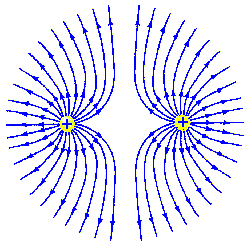
They were aurora, like the multi-colored Northern Lights, only farther from the Earth and ghostly white, since the gases that make the colors would not be present that deep in space. However, the same magnetic field that lit-up in space also connected with the Earth, not only at the poles, but all around the globe. Whatever occurred in space sent huge amounts of energy into Earth’s magnetic field, amping it up to a scale we can only imagine. Parts of it lit, because ions and electrons gathered to form coaxial circuits of plasma along magnetic field lines aimed at the Earth.

Figure 3. Coaxial Birkeland Current structure.

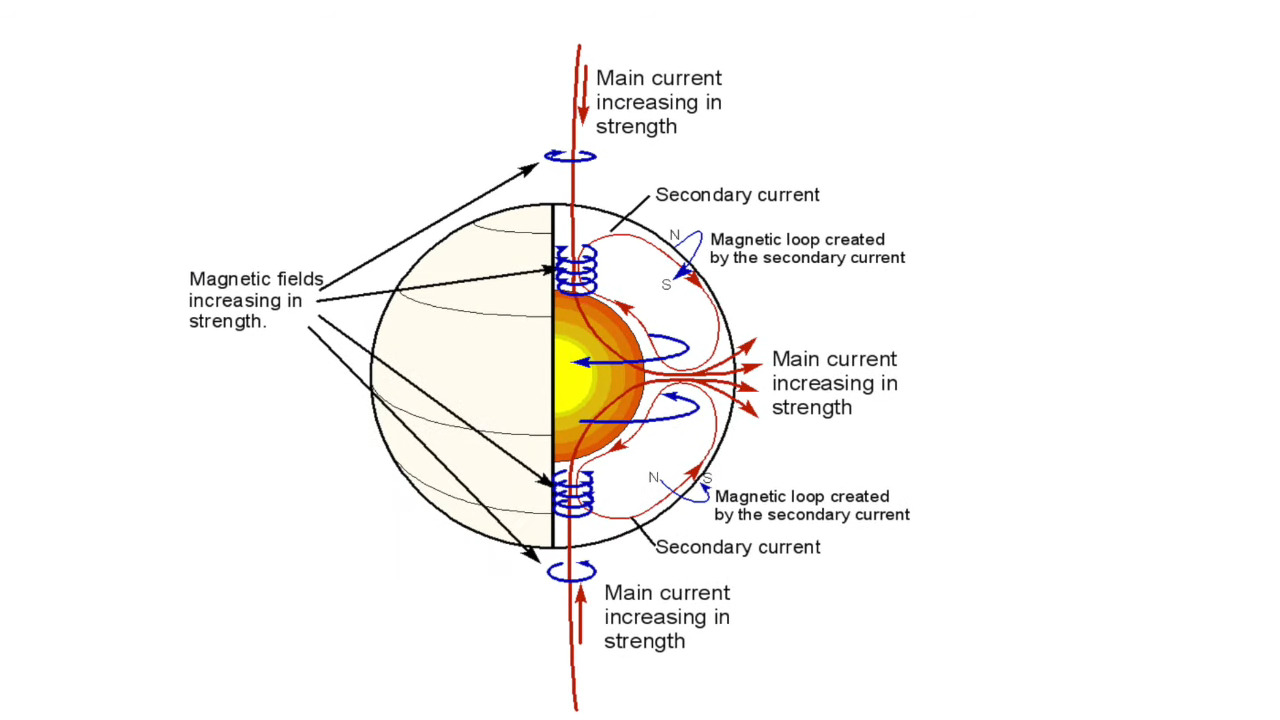
Earth’s magnetic field begins and ends inside the Earth, so current gathered in it’s outer shells is inducted internally. Physics says so. Who would know better than Nobel Prize winner Hannes Alfven, the one person on the planet who best understood plasma, and insisted this must be so in his electrical model of stars. The scientific community pretends that didn’t happen.

The model applies to stars and “living” planets with an active magnetic field. This is electrically how the magnetic field is generated for all stars and planets. The consensus idea that Earth has a core of iron spinning like a frictionless ball-bearing inside a matrix of molten rock for billions of years generating it’s magnetic field – while other planets and stars generate their magnetic field by some other means – is absurd when physics tells us magnetic fields require an electric current.

If they rely on “science”, why don’t scientists admit that, according to physics, the magnetic field must have an electric current generating it, and look for that inside the Earth. Instead they say it’s an impossible, frictionless, spinning iron ball and neglect electricity altogether. It’s even more absurd since aurora allow us to see electric currents feeding massive energy to the planet!

Petroglyphs tell us the Earth’s magnetic field was glowing with current and “z-pinching”, which means incredibly high energies were involved. The amped-up magnetic field had to strengthen and constrict around the Earth like Leviathan, ionizing atmosphere and inducing surface charge on the ground beneath.

Where the energy passed through the atmosphere, storms of biblical proportion raged. How we know is that the Bible says so, and so does every other mythology from ancient times. In fact, the myths talk of storms so much, so explicitly, in so many ways that it’s absurd we don’t get the message. The earliest gods of myth and religion were storm gods.

Megalithic structures many believe to be prediluvian tell a tale of a different environment. If one examines their extreme construction it becomes evident they were built to withstand plasma storms, and it explains why they are found with remnant magnetism, lightning scars and vitrification.

Ancient myths do not say a comet hit the Earth, or anything to indicate an impact. They say storms raged, the Earth erupted with water, dragons set fire to the land, Leviathan circled the Earth and Vimana flew in the sky. Many strange and complex visions were witnessed involving angels, demons and gods. They were in the skies and inside the Earth itself, as the mythologies say, because the entire planet’s circuitry was heating-up.

An impact would be hard not to notice. I think they would have made a note of that somehow on a petroglyph. They were witnessing plasma storms. Plasma storms shook the Earth and erupted the guts out of it by raising it’s internal potential, while cyclones formed at the feet of giant columns of auroral light. The visions they saw are what is recorded in myths, glyphs, columns and statues.

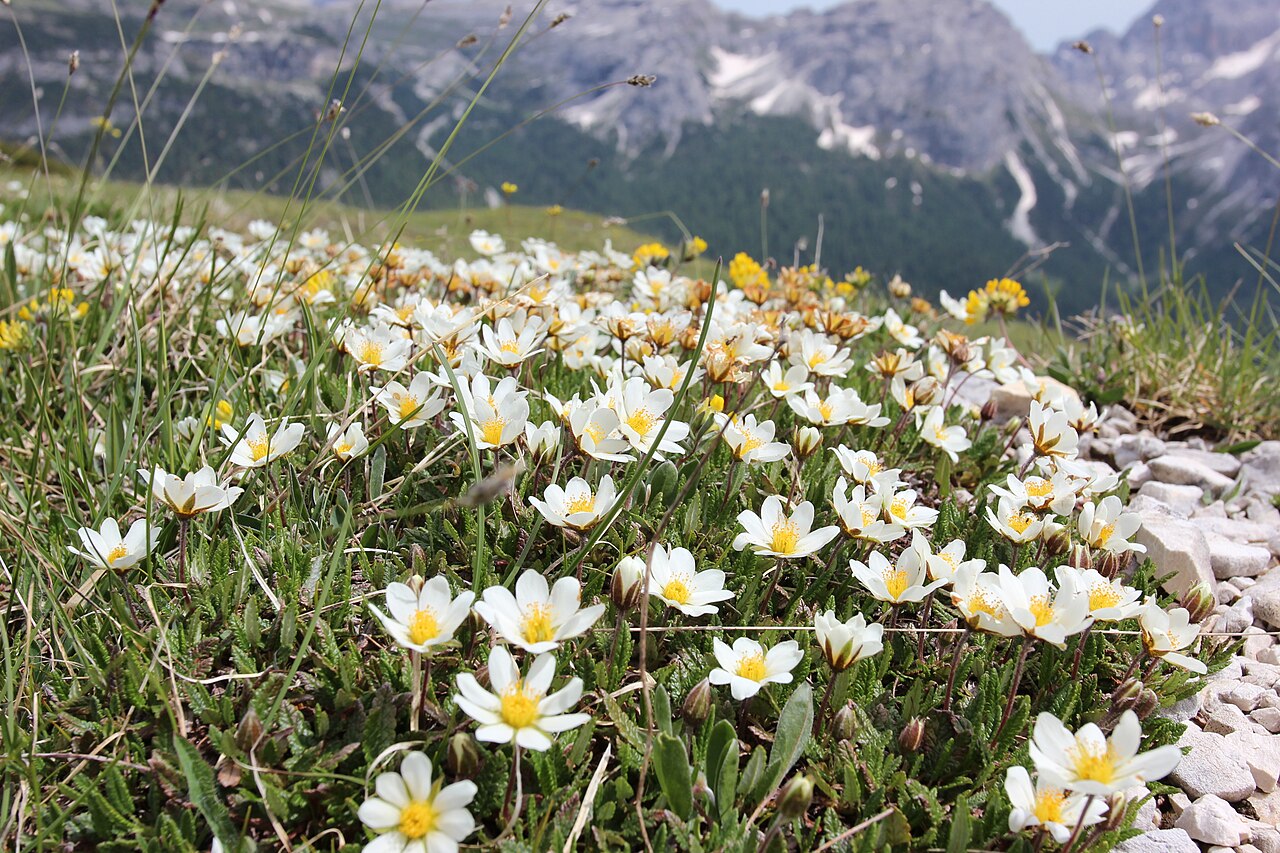
According to several dating methods, many petroglyphs were created around 12,000 years ago. That was the period of the “Younger Dryas“. Roughly a thousand-year period when the climate of half the Earth suddenly cooled, allowing the arctic flower, Dryas Octopetala to thrive everywhere. It also caused mass extinction of megafauna that could not adapt to the changing conditions.

Figure 5. Dryas Octopetala

Though climate scientists have tried to blame Mammoth farts, there is no evidence greenhouse gases were the cause, which has left the scientific community flummoxed. The Younger-Dryas is a mystery. It may have been a comet, the Sun flaring, cosmic rays from a supernova, or some event we haven’t imagined. It could have been Earth’s escape from Kronos, the ancient first Sun. Whatever it was, it happened very suddenly, flash freezing animals as they grazed, then burying them in mud. The period is marked by a mat of charred matter across the Americas and parts of Eurasia.

Taken in context, petroglyphs are substantial proof that the Younger Dryas was a plasma storm event. As is the geology and the condition of frozen remains of animals caught in the maelstrom. Even mainstream geophysicists like Dr. Robert Schoch have come to this conclusion, as he wrote about in “Forgotten Civilization: The Role of Solar Outbursts in our Past and Future“. Dr. Schoch recognized the significance of Peratt’s work. He suggests an extreme Solar Storm fits the Younger Dryas evidence very well.

Following this event the world changed. Megafauna were nearly wiped-out. The landscape made desolate, raised by fire and flood. Humans who survived the cataclysm did so together in Anatolia, part of the fertile crescent of land between the Tigris and Euphrates rivers. The earliest constructions of an organized society discovered so far, are several Neolithic megaliths dated to the Younger Dryas period.

Best known are Gobekli Tepe and Karahan Tepe, in Turkey, which have been dated to 9,700 B.C., at the end of the Younger Dryas. But new sites continue to be uncovered with earlier dates, indicating some of them were occupied during, or even before, the Younger Dryas event. Which brings us to the ReDunk information I hope Dan considers.

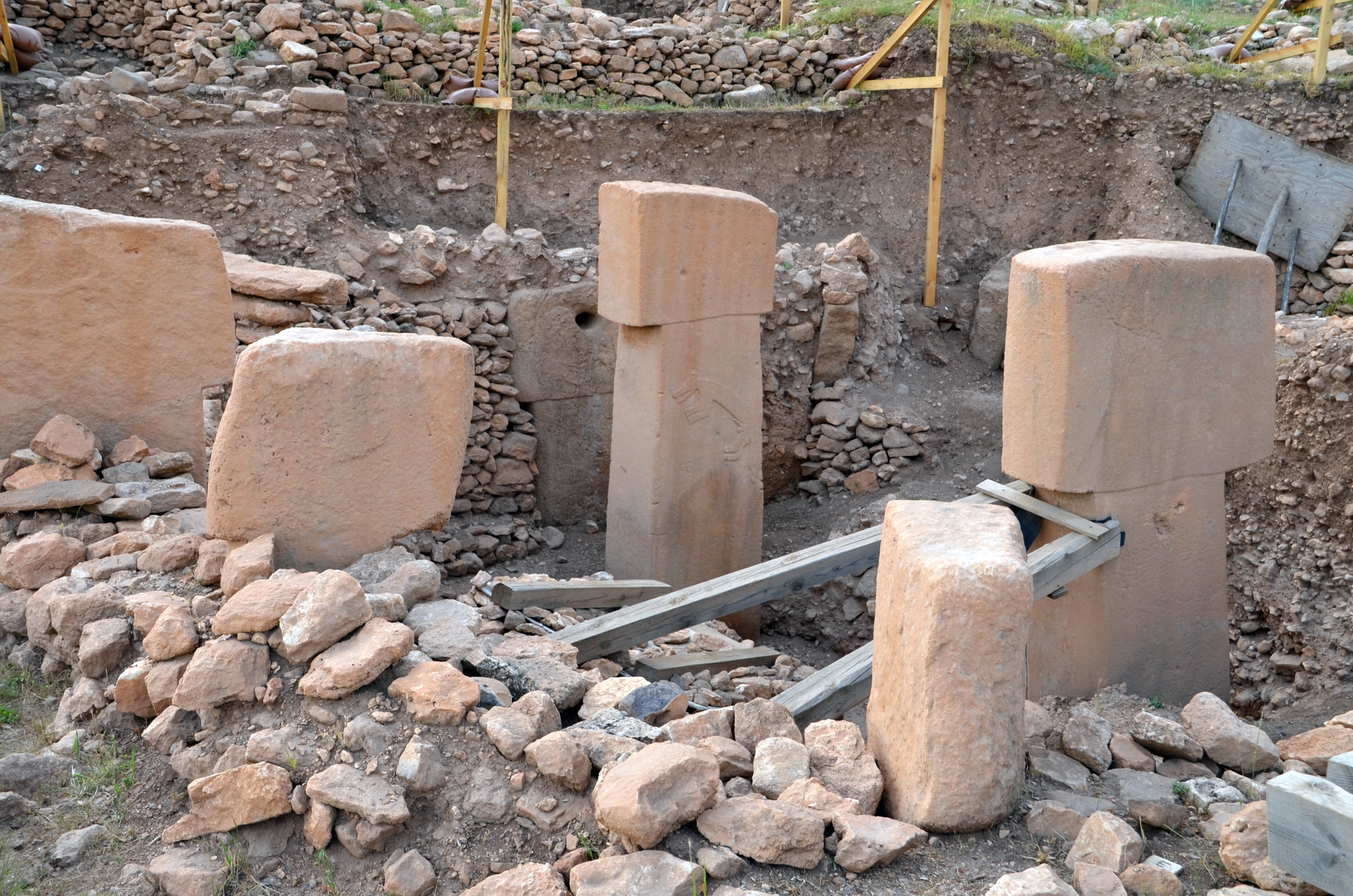
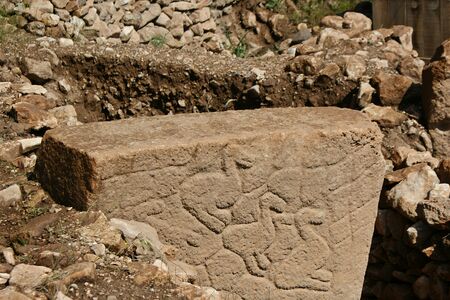
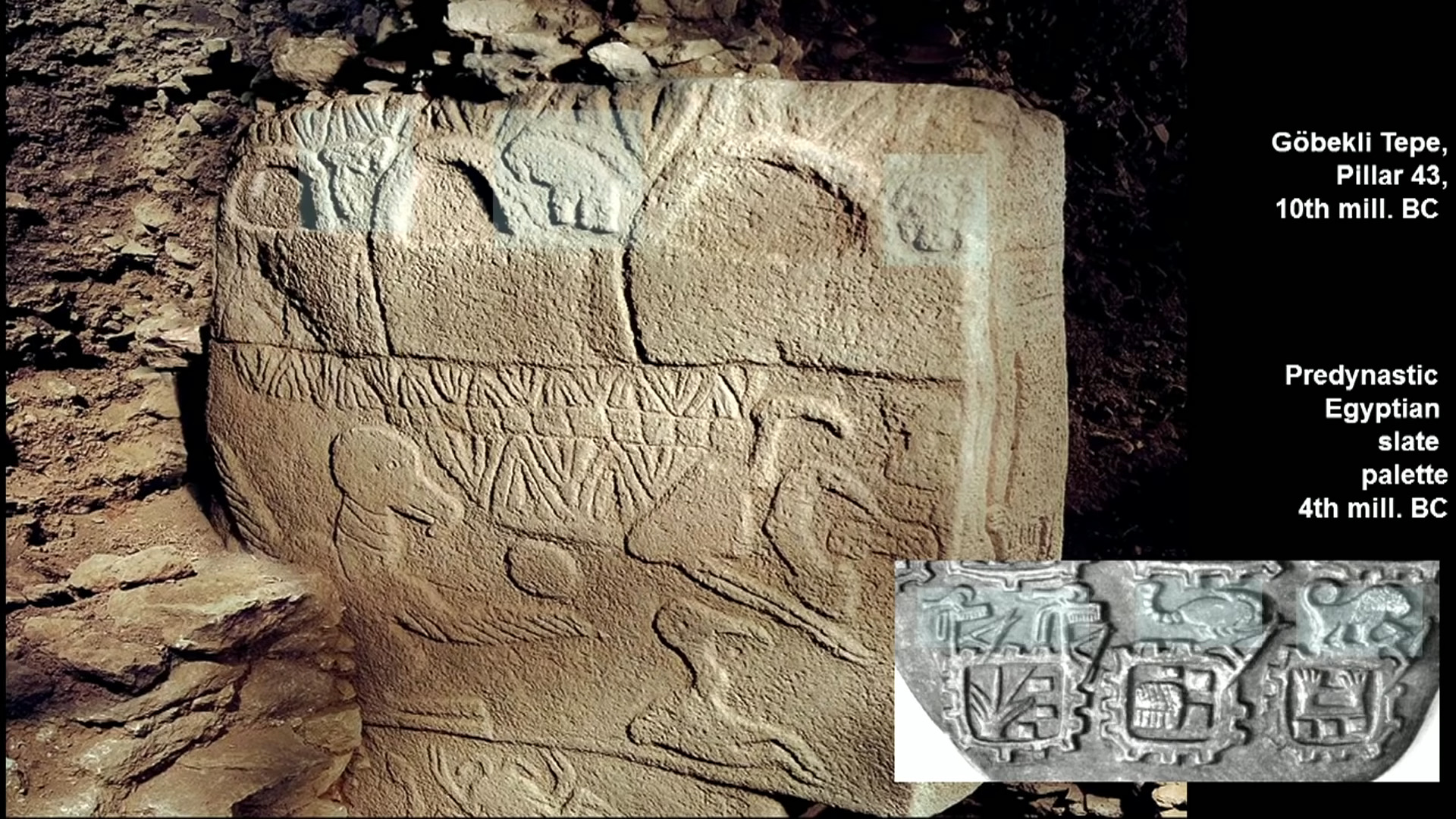
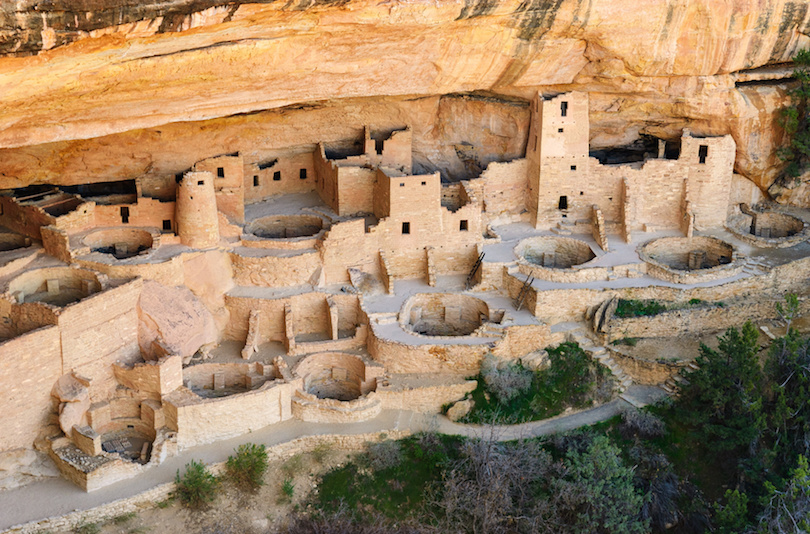
A common feature found at these sites is the “T” pillar. Their meaning is apparently significant, but remains a mystery. There is no discernible structural purpose for the shape. They seem to be more for a spiritual tradition given how some are decorated with carvings, and how they are used in ringed enclosures reminiscent of Ancient Pueblo Kivas of the American Southwest.

What is unusual about this “T” pillar found with a human face carved into it, is that “T” pillars don’t usually have faces. They do often display arms and hands carved into the pillars, as well as other imagery, but not faces. Also, there are similarly pillar-like stone statues found at these sites with heads similar to this “T” pillar. So, the question is: what does this all mean?

It is my opinion the “T” pillars represent the Earth’s magnetic field lines, fired-up with glow-mode currents. The pillars, like squatterman and other petroglyphs, are a physical record of what was witnessed as a space-storm brewed over the Earth’s poles.

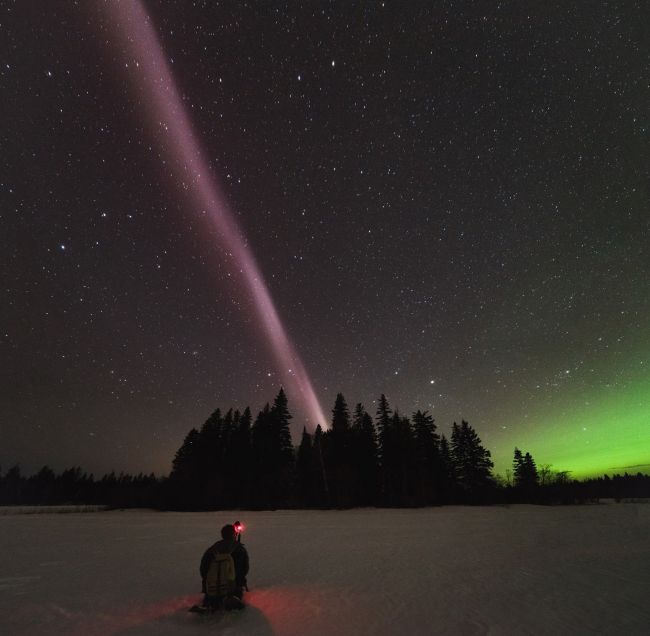
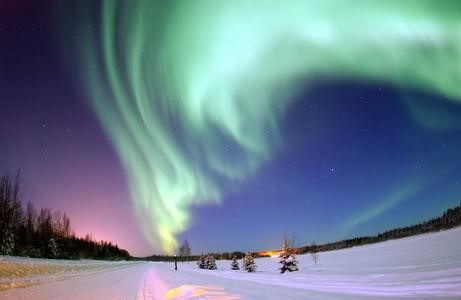
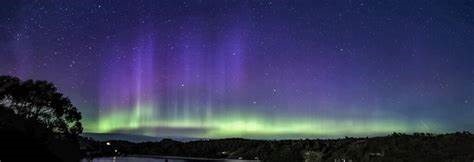
Figure 7. An actual columnar aurora

Columnar rays of light, grouped in a ring with two prominent rays in the center. The prominent pillars represent Birkeland currents, delivering energy from an unknown extraterrestrial source. The ring of pillars surrounding them represent magnetic field lines glowing with induction currents, embedded in the encircling walls representing auroral curtains of light.

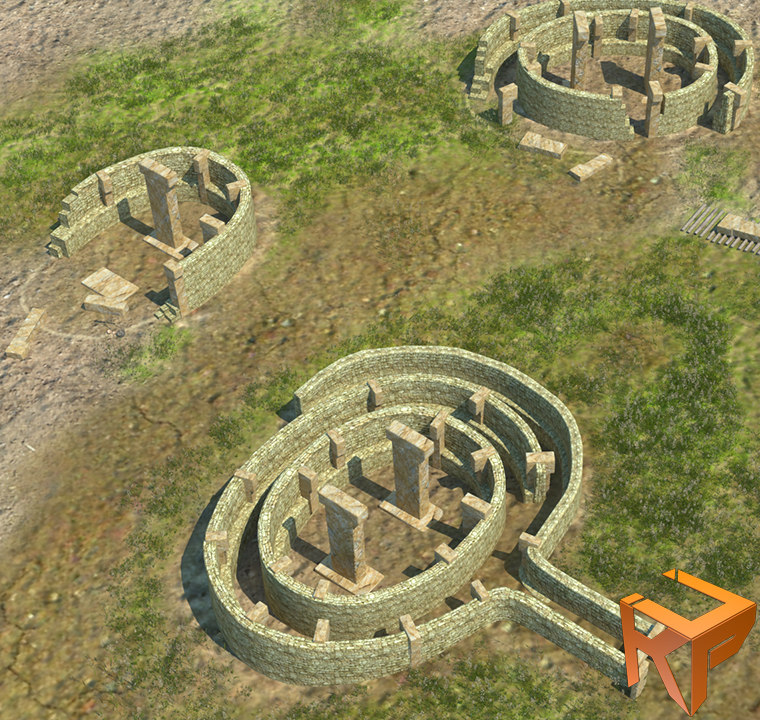
Note that in the artist’s rendition of Gobekli Tepe in Figure 8, the walls appear as one full ring, surrounded by two partial rings that don’t meet, but overlap. This is how counter-rotating curtains of auroral lights actually appear in the sky. The central pillars, the surrounding pillars and the ring walls are all structured the same as polar aurora.

Figure 8. “T” pillar enclosure displays the same configuration as high intensity polar aurora, with two columns representing Berkeland currents and outer rings representing magnetic field lines encircled with counter-rotating auroral curtains.

Astro-archaeologists have noted the enclosures appear to have certain solar alignments, which also makes sense if the enclosures represent the Earth’s magnetic field. Specific regions of the sky where images appeared, when they appeared, and how they appeared would correlate with Earth’s orientation with respect to the Sun, Moon and any other external influences on the magnetic field.

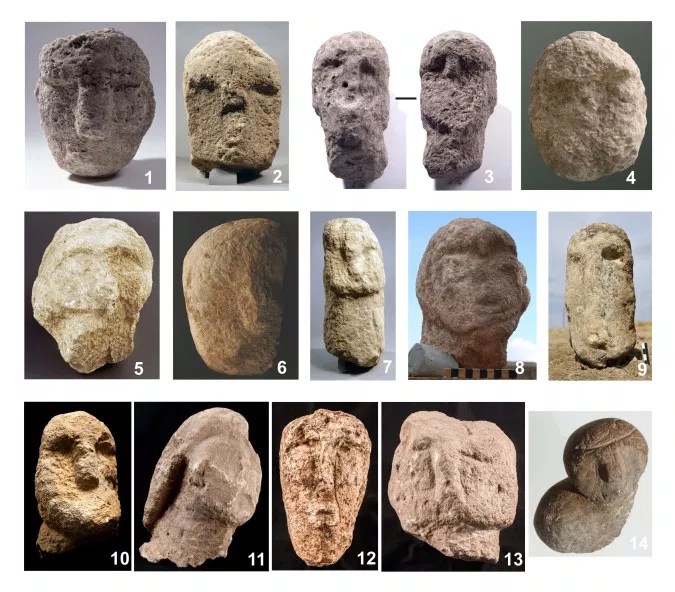
The heads, I believe, were shapes made of light radiating from energized plasma. They were transient effects that made different shapes, some that looked like faces with a little imagination. Sometimes they looked like just a big pair of eyes, bird heads, or fish heads, too.

The first pillars were simple “T” structures. The first heads, found at the same sites on pillar-like sculptures, were not much more. A projecting brow and vertical bar that gives an impression of eyes and a nose. There is a consistent design language and it isn’t very human-like. A long bar-like nose, hollow eyes and no mouth, or just the hint of one, lantern jaw and sometimes a skull cap, hair, or helmet feature.

It’s more like the template for a face, like the stylized, vacant-eyed statuary department stores use to display clothing. Nothing is there to distinguish them as individual human beings. And since these are the earliest sculptures, they are likely the most true to what was actually witnessed. It was enough for fear and shock to stimulate the imagination into believing they were Gods supervising Earth’s destruction.

The most compelling evidence the “T” pillar represents plasma aurora aren’t the heads, but the iconography on the pillars. For one thing, some of it matches petroglyphs, proving the link with plasma discharge. But the main evidence this depicts plasma discharge is their match with excited hydrogen.

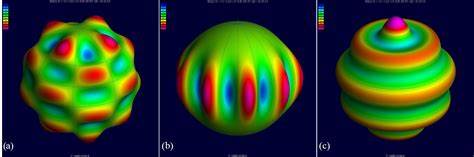
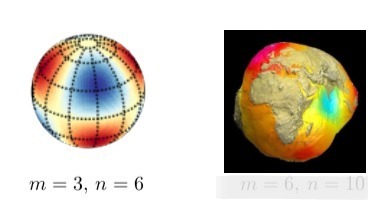
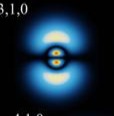
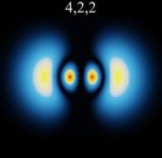
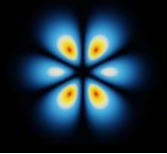
Figure 12. Hydrogen energy densities at 1st to 4th order spherical frequencies.

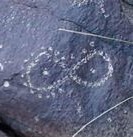
Excited hydrogen atoms vibrate in spherical harmonic frequencies which make the patterns shown in figure 12. These same patterns appear in petroglyphs, as well as the pillars at Gobekli Tepe and other ancient iconography. For example, concentric rings are a common petroglyph found in the same panels with squatterman. Hydrogen makes concentric rings in four different spherical frequencies, shown on the far left in Figure 12, and in Figure 13 alongside sample petroglyphs.

As energy poured into the thin plasma outer reaches of the atmosphere, it met layers of hydrogen. In a plasma storm, hydrogen would be produced in large quantities by electrolysis of surface water. An energized layer of plasma composed of hydrogen resonating at this particular frequency will holographically portray this signature form, at scale across the whole energized region.

Coherent light structures are observed in the sky all the time, even though there is no lens, or prism involved, only tiny particles of water vapor acting holographically to form large structures, like rainbows, moon rings and other atmospheric phenomena. Hydrogen in a plasma will do the same thing.

There is structure to the plasma because the electric field is vertical and perpendicular to the layer of hydrogen, creating a standing wave interference pattern. Each standing wave forms a cell, like a bubble of charge density that tessellates into spherical nodes vibrating at spherical frequencies.

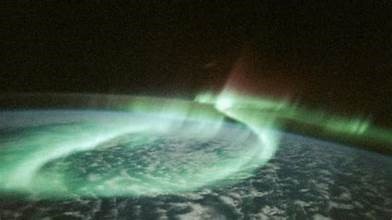
Figure 14. Aurora Australis – tesselation in the plasmasphere causes auroral light to appear as shafts and curtains.

Tessellation of standing waves is also why some common aurora appear as columns of light, like in Figure 14. It is the same phenomena that makes the patterns of light beneath the waves in this pool in Figure 15. The wave structure itself focuses light, defining the wave troughs and peaks in light and shadow. Petroglyph images are also tessellated wave patterns. They were made by glowing waves of plasma instead of sunlight and water.

Figure 15. Waves bending light to display tessellated structure.

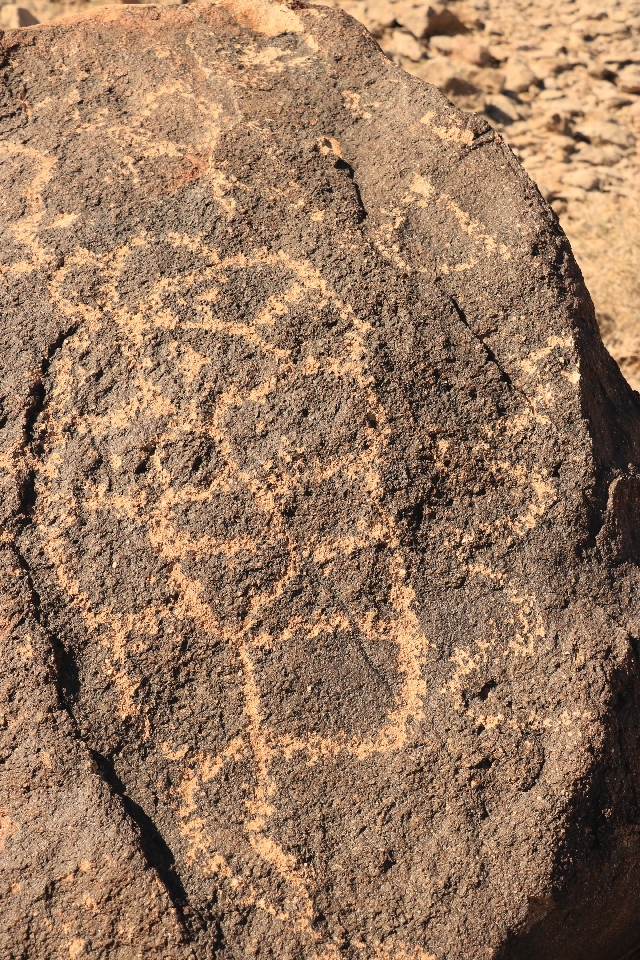
In fact, not all petroglyphs display animals, or anything recognizable. Many petroglyphs display cellular patterns like the pool water, as shown in Figure 16.

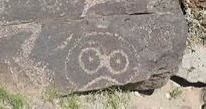
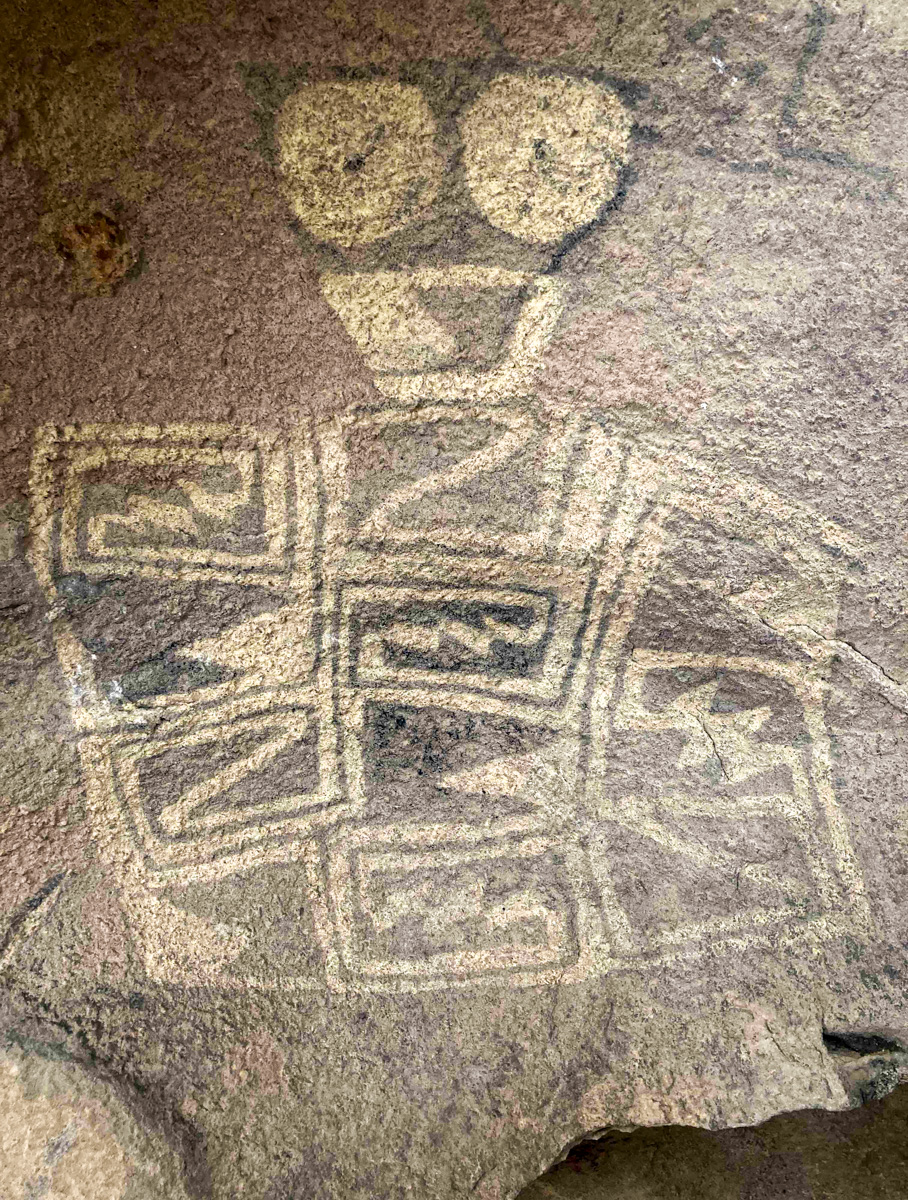
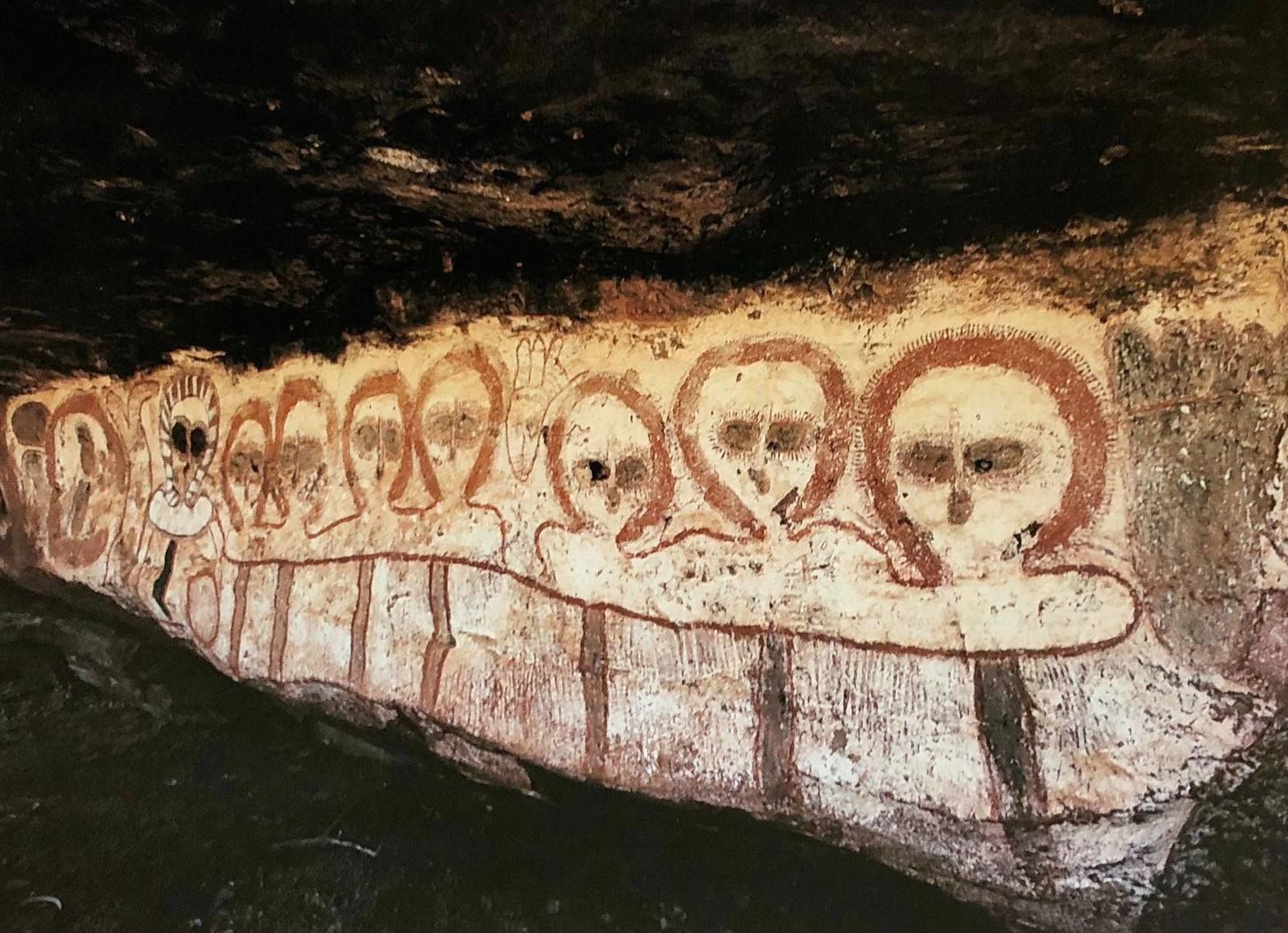
A common image recorded in petroglyphs and elsewhere is known as “goggle-eyes”. As you can see in Figure 17, goggle-eyes are sometimes portrayed alone and sometimes incorporated into a face, or pillar-like anthropomorphic statues. Goggle-eyes are found in petroglyphs alongside squatterman and concentric rings. Goggle-eyes are formed by hydrogen.

At other spherical frequencies, hydrogen forms other patterns similar to ones found on Gobekli Tepe pillars, and elsewhere, proving these were being witnessed in the heavens from around the world. Certain designs that look like dumbbells, or horseshoe magnets facing each other are found on the pillars in Turkey, as well as indigenous African art, thousands of miles and centuries away. They are also patterns created by excited hydrogen that resemble the letters “H”, “I” and “U”, shown in Figure 18.

Stars and flowers are another common theme seen in petroglyphs and ancient iconography that auroral hydrogen is responsible for. The star is the inverse of the flower, and both were portrayed as light emissions oscillated from the flower-shaped outer boundary to the star-like inner filamentary structure of the tessellated plasma cell.

Other forms made by plasma, not necessarily hydrogen, include certain animals, like birds, often shown as a sequence of repeating patterns. They are on pillars as well as petroglyphs, again proving the link as something universally seen around the world.

Repeating forms, especially in rows and columns, is a feature unique to high energy plasma. They are another effect caused by tessellated interference patterns in energized plasma. Instead of one tessellated cell lighting, charge diffuses through a patch of identical standing waves, lighting-up repeating features in each.

Figure 21. Tessellated interference patterns in plasma produce repeating forms resembling a bipedal bull in a flock of bighorn sheep.

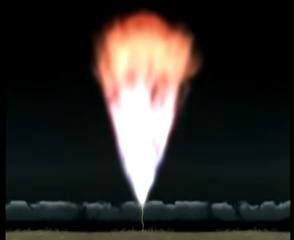
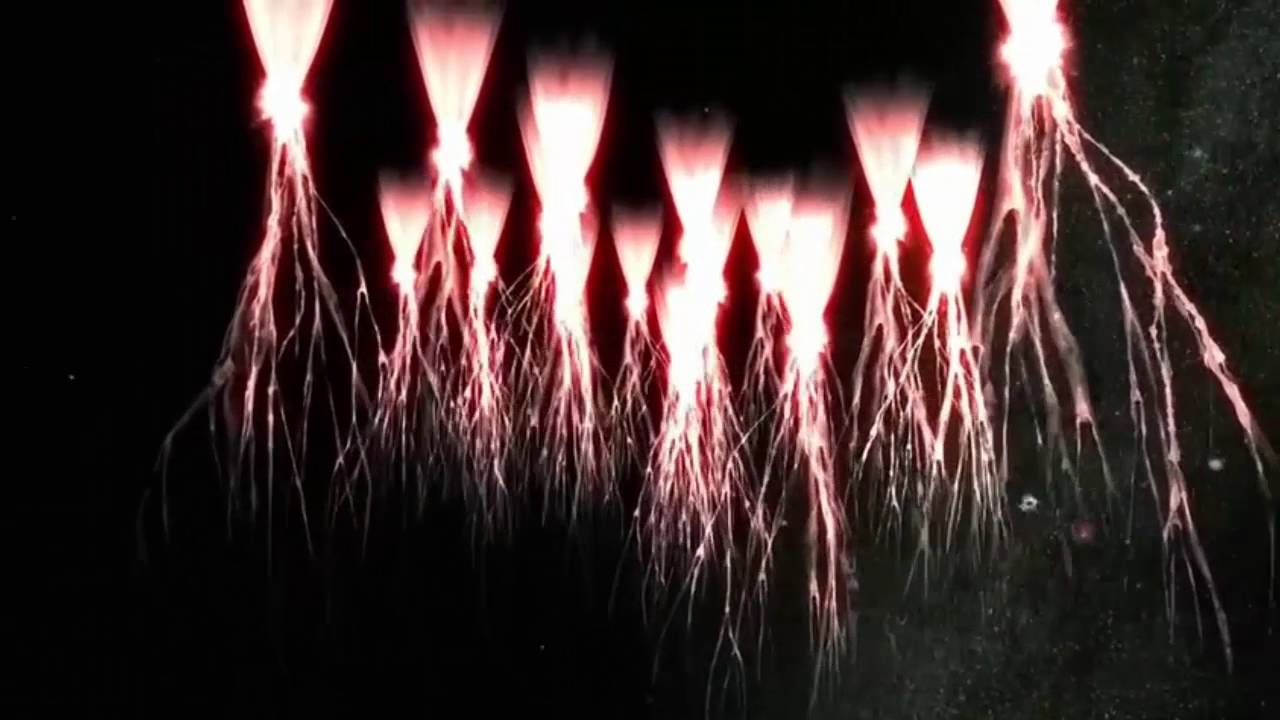
We can see the same thing above thunderstorms with high speed cameras. Figure 22 shows self-similar plasma sprites appear like a school of jellyfish as multiple high altitude tessellated cells discharge in-phase.

It is no coincidence that high energy plasma “Z-pinch” creates a human form, or that interference patterns in a plasma makes forms that resemble living organisms. The universe is holographic with a fabric of pure aetheric energy, so every form is a fractal harmony of wave patterns. Repeating forms in Nature is the rule, not the exception.

Science says petroglyphs and pictographs depict local fauna, scenery and normal activities, like people hunting and dancing. Please, take note of the images and see if things look normal to you. For once, we have a clear example of scientists suffering pareidolia.

There is continuity of images and themes in the artwork of ancient Anatolia that is repeated in rock art around the world. “T” pillars are an example of this and present an astonishing implication. “T” pillars are not exclusive to these sites in Turkey. They are found in all ancient cradles of civilization. Like ‘squatterman’ and “Jacob’s Ladder’ which are found in petroglyphs around the world, a form of the ‘T-pillar is found at megalithic sites around the world.

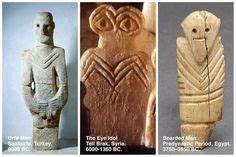
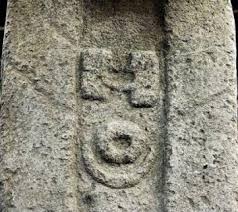
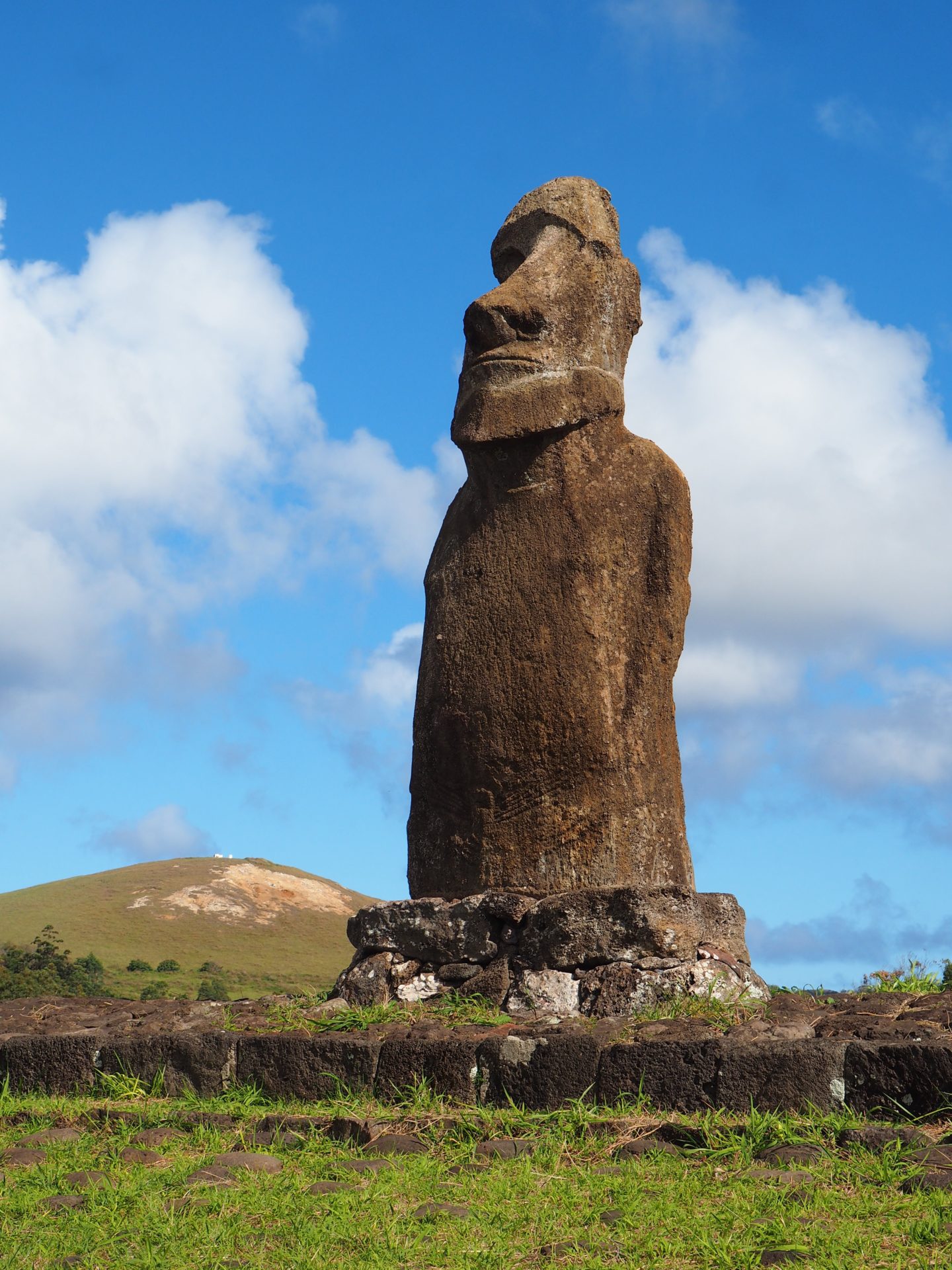
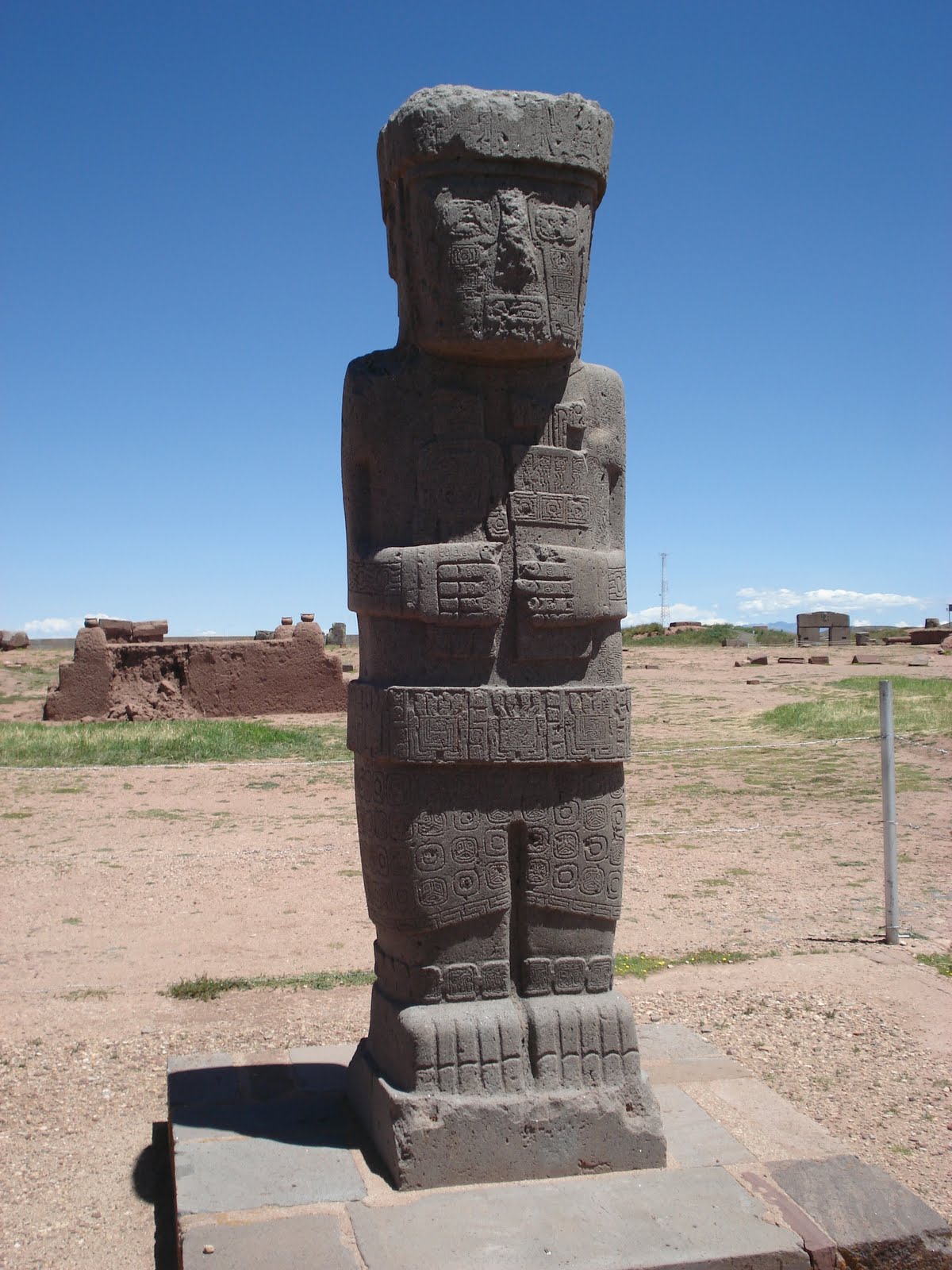
We just don’t call them “T” pillars elsewhere, because the “T”‘s have been replaced with anthromorphic figures with faces. Like Urfa Man in Turkey, they have the same blank faces, striking the same patient pose. They are the Moi in Easter Island, the pre-Incan gods of Meso-America, the Buddha of Asia, the Egyptian pantheon and the Annunaki. Similarities include a long, lantern-jawed head, ski-slope nose, no mouth, or only the suggestion of a mouth and often no feet, or legs. Heads appear wearing a boxy hat, headdress, or helmet.

They simply evolved over time, from columnar structures with simple features, to elaborately featured anthropomorphism with faces, bodies, stories and personalities.

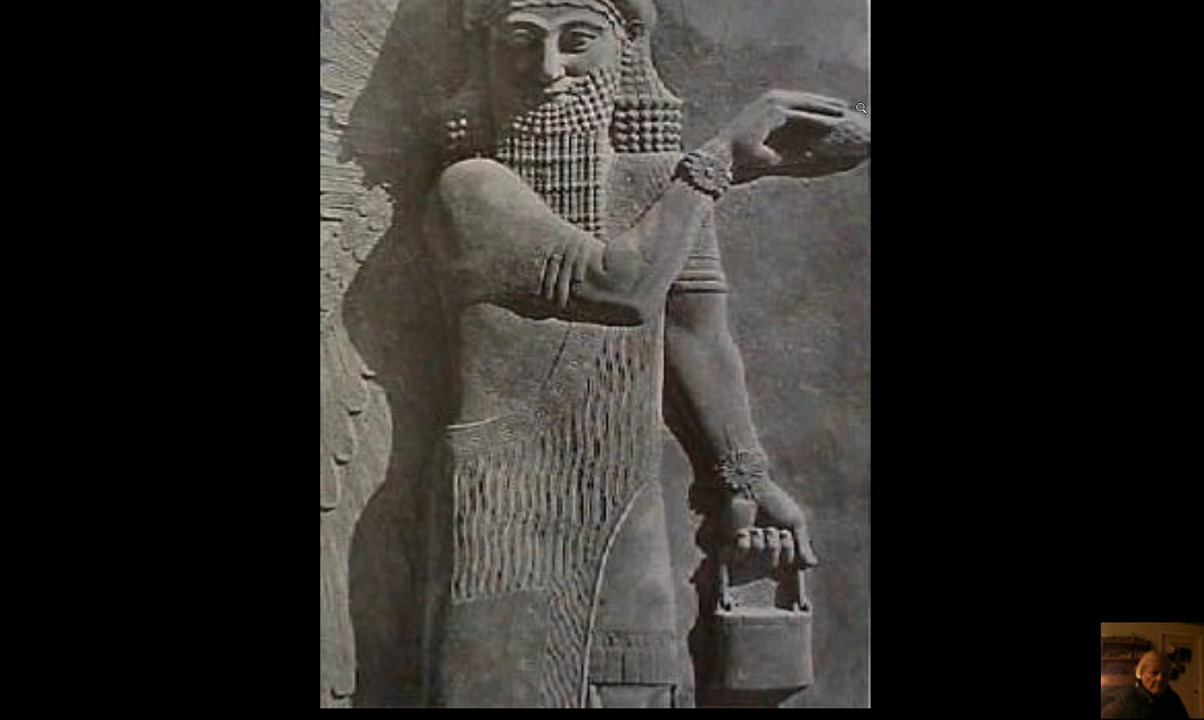
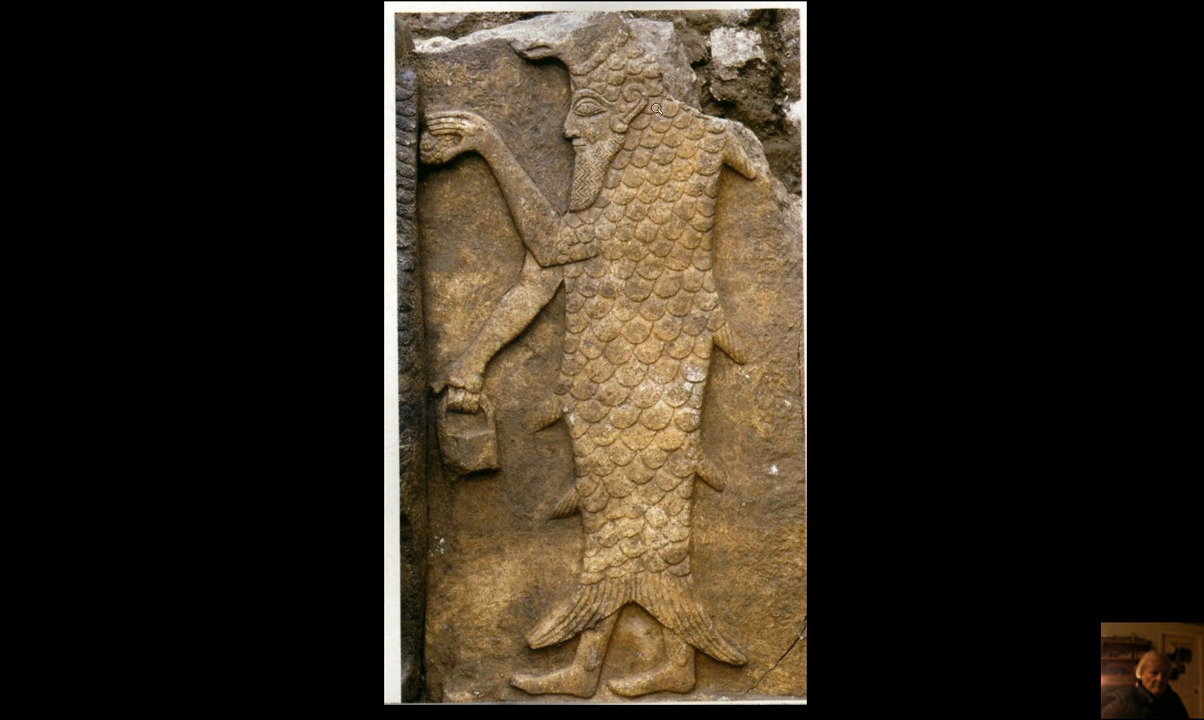
Even more compelling proof the “T” pillars are the archetype for subsequent gods are the goggle-eyed figures mixed with fish found in Australia and shown in Figure 25. You can see how the context of the fish morphs from individual fish, to goggle-eyed fish, to fish with human-like, goggle-eyed heads. Centuries later, fish gods appear among the Annunaki, holding handbags and stories of creation.

There is a simple, direct continuity of themes in the lineage of religions that links a space weather event to auroral lights, catastrophic climate change and shared emotional trauma. The Annunaki, Egyptian, Greek, Roman and every other pantheon of gods were fashioned on the “T” pillar, because ancient man saw electricity in the sky.

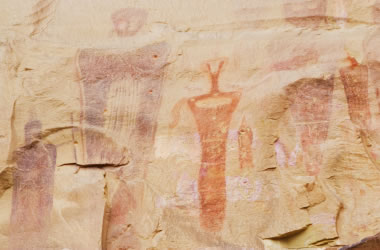
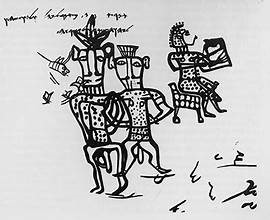
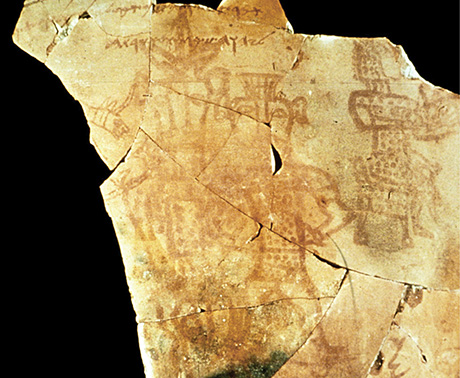
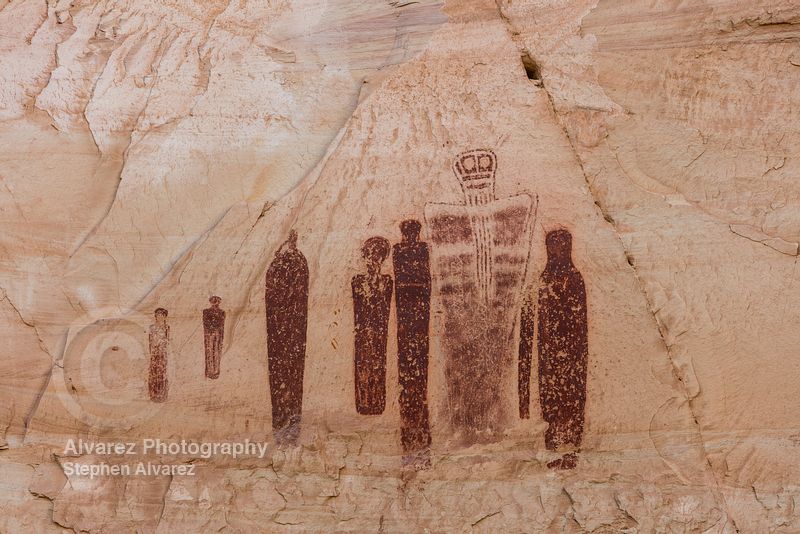
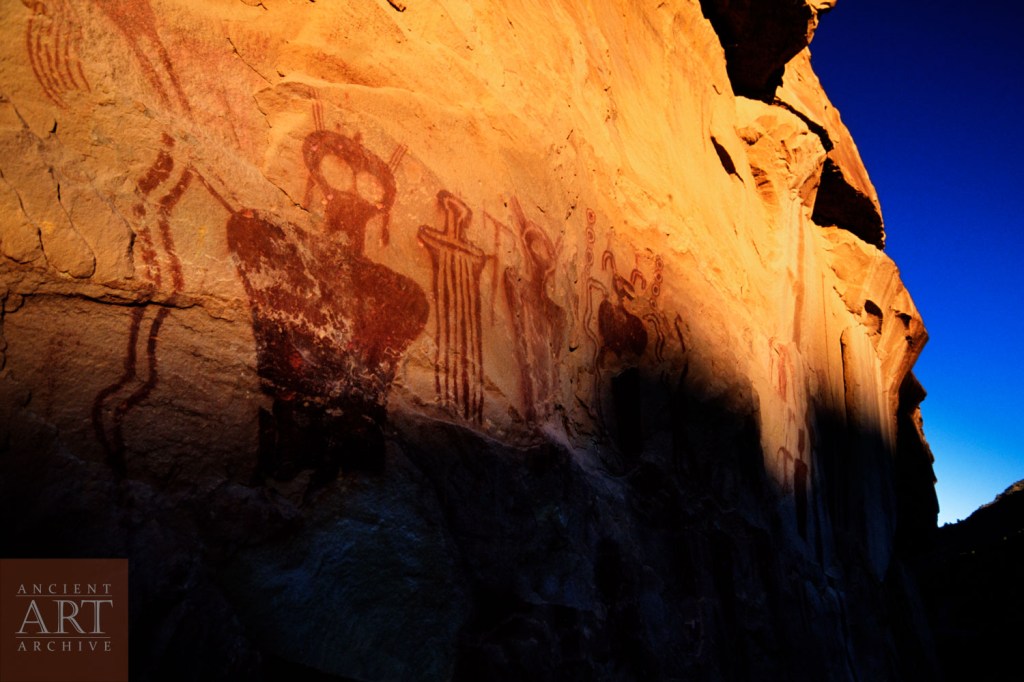
In Figure 26, the Kuntillet Ajrud inscription, discovered on pottery found buried in the Sinai desert and dated to the 9th century BC, portrays the Egyptian god Bess. Barrier style pictographs of unknown age found in Utah’s canyons depict the same goggle-eyed, jug-headed figures without the anthropomorphisms of arms, legs and other appendages.

The Kuntillet Arjud artwork was originally inscribed with the names of Yaweh and a female diety named Ashera, before the images were added. There is controversy whether the images have any connection with Yaweh of the old testament. It is certain that the images represent gods of Egypt, however, linking the rock art, and therefore plasma aurora, to belief in gods.

I contend the “T” pillars represent the “Elohim” of Genesis. They are what the myths are about – storm gods. They are the trauma for which we collectively suffer amnesia. Beings of light from the heavens beaming to mountaintops where lightning and thunder reigned. The notion that Man is made in God’s image is a result of ancient man seeing his image in the sky. What we call “squatterman” today, and imagery like the Barrier Style rock art of Utah, were the creator gods of yore.

I also contend it was people turning away from this pagan pantheon to acknowledge the one true God of the cosmos that began monotheism. A more sophisticated understanding that energy lit the cosmos, and the storm gods were just light fixtures, had to appeal to those who stopped to think. Perhaps that is why so many statues of these storm gods are found headless and why sites like Gobekli Tepe were intentionally buried. They were deemed to be false gods, and rightfully so. They were just lights in the sky and bad weather.

What makes this relevant today is the new/old narrative that Annunaki and other mythological characters were reptilian visitors from another star system who seeded human life on Earth. People are being led into a revival of this ancient pantheon to fill the knowledge void left by the failures of academic science. It’s similar to the “flat earth” phenomena, where a malicious psi-op attempts to gain traction with vulnerable people who just want answers. There was an ancient alien energy that caused plenty of aerial phenomena, but no little green men were involved – at least not with respect to the Annunaki. The Annunaki, like the “T” pillars, represent a ‘Category 5’ space storm and the resultant chaos on Earth.

Also, a course correction is needed for the new-age “catastrophists” who believe an impact is the only possible way Earth’s climate could have been disrupted so severely, so quickly. Not that a meteor, or comet isn’t a possibility. In fact, that is exactly what Emmanuel Velikovsky originally presented in “Worlds in Collision” and the concepts that gave rise to the Electric Universe. A cometary visitor of sufficient size could have caused all of the magnetic field effects recorded in the petroglyphs. However, not by impact, or even airburst.

Figure 27. The Vulture Stone at Gobekli Tepe

Simply coming close was enough. Differential potential between Earth and a large invading body would generate an electrical wind to amp the magnetic field. So, it could have been a comet, or the Sun, or another planet. It could even have been the Moon, or the Earth itself adjusting it’s orbit.

Whatever the cause, it generated plasma storms. They were long lasting and probably recurring. They shook the Earth and erupted the guts out of it, while cyclones formed at the feet of giant columns of auroral light. We know this because the storms are also recorded.

The famous “Vulture Stone” at Gobekli Tepe tells this part of the story. The handbags represent the storm clouds. I’ll refer to “Handbag of the Gods” where I decode the Vulture Stone.

Nature is circuitry. Our bodies work on circuitry. So does every plant and animal on Earth. Inside Earth is circuitry generating a magnetic field that reaches to the Moon and makes a bubble of circuitry so powerful it lights the polar skies. The Earth’s electric bubble lives inside the Sun’s electric bubble, called the heliosphere, making circuitry between Earth and Sun.

Nested spheres of circuitry repeat at the galactic and cosmic scales. Repeating forms in Nature is the rule, not the exception, because it’s all made of circuitry. Everything is electric.

Figure 28. Polar Aurora – Earth recieving electricity from space

So, what do you think, Dan. Are you beginning to see, with electric eyes and your electrician background, how things are wired?

Cheers,

Megalithic Chemistry

The mystery of ancient megaliths stirs wonder in any curious mind. They are artifacts from our deepest past, thousands of years old, yet enduring the millennia with more grace and stamina than anything built since. Controversy over their age; who, how and why they were built has raged, it seems, for as long as they have stood.

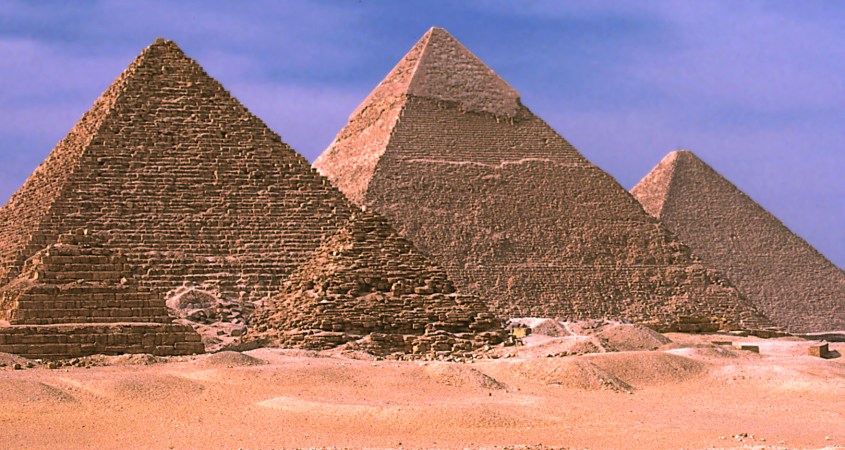
Many investigators contend that answers provided by the academic consensus don’t match the evidence. They say the evidence suggests they were built by an antediluvian race of people using technologies we have yet to decipher. They point to worldwide archetypical iconography that implies a common origin. And they insist pyramids and other structures have features too similar not to be the result of a coordinated effort. They say each one is geo-positioned in relation to the others in an intentionally planned, global pattern. Theories as to their purpose range from granaries to alien spaceports.

Consensus academia says these impeccably designed structural complexes are the tombs and temples of ancient kings and observatories of the stars. They are structures devoted to ceremony and religion because ancient people were highly superstitious and afraid of Nature. They say they were aligned to track the seasons, so the rulers could predict eclipses and know when to plant crops. They built with stone because stone is what they had, and the commonality of the pyramid is because it is the simplest structure to make by stacking stones. And, of course, they say any global pattern in iconography, or geo-positioning is entirely a coincidence. Simple answers for simple, stone and bronze-age people.

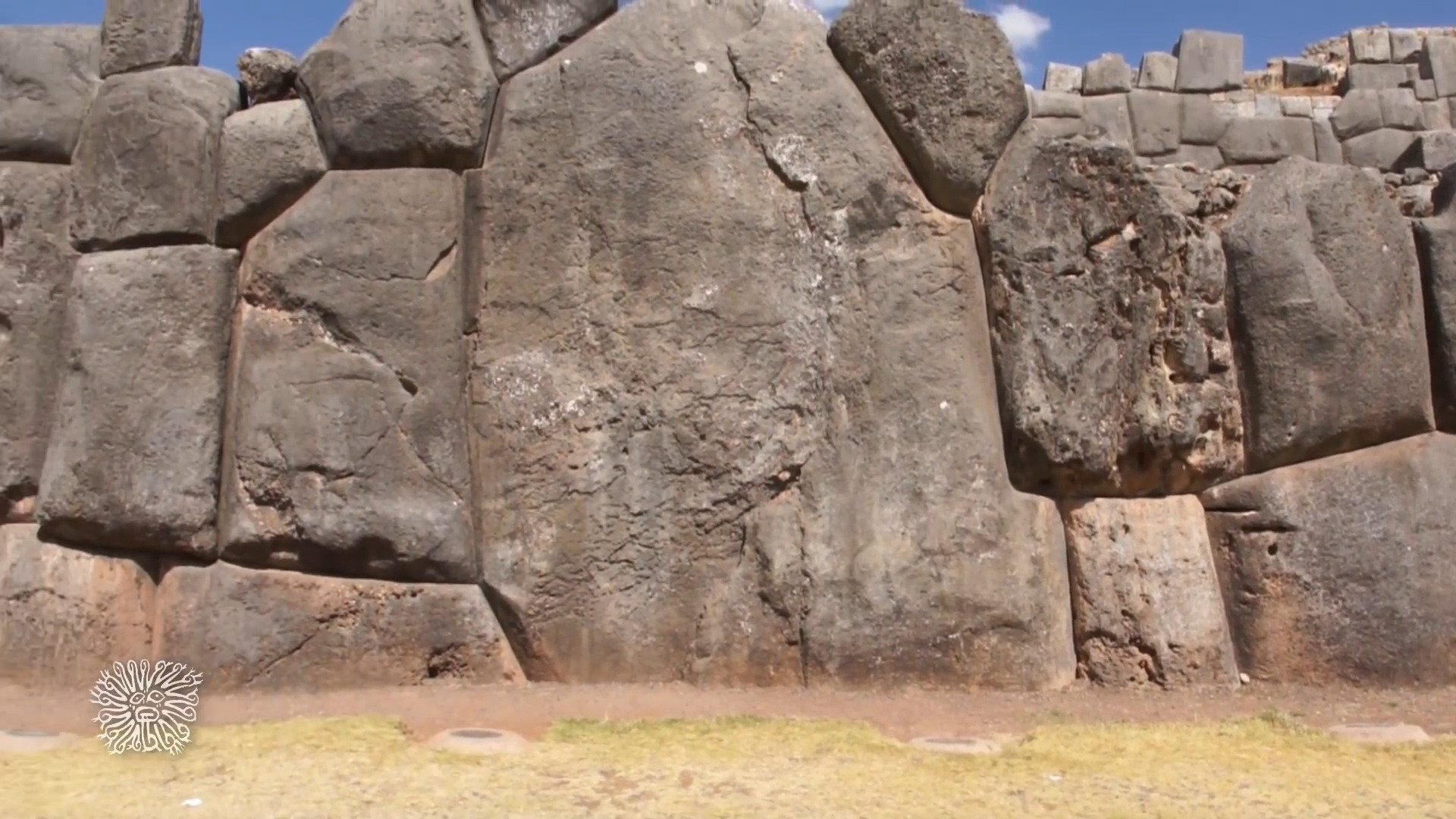
As an engineer, what puzzles me is why ancient people built with stones weighing hundreds of tons when they could have broke them down to smaller, more manageable pieces the way we do. Why the painstaking polygonal masonry with seamless, mortar-less joints? It’s as if these structures were designed to withstand earthquakes and tsunamis. What compelled ancient people, who according to the consensus were learning how to farm, to divert their attention to becoming master architects and erect cyclopean structures just for ceremony.

Big, symmetric pyramids are exceedingly hard to build. So is carving, dressing and moving giant stones. Such effort devoted to ceremonial structures by people just learning to create a sustainable society doesn’t add-up. Living as dirt farmers while building amazing, but otherwise useless temples to the dead is not how societies prioritize resources.

Agriculture without technology requires immense human resources. For example, colonial America utilized 95% of the population for agriculture to keep-up with its needs, leaving 5% to work on everything else, including ceremonial structures.

Roman Aqueduct

We have many examples of early societies that focused colossal resources on agriculture, like the Pueblo culture in central Arizona who built such extensive networks of reservoirs and aqueducts to irrigate the desert that we still follow their plan today. And the Romans who built roads, cities and aqueducts connecting a continent-wide empire. These societies allocated far more resources on utility solutions than on ceremonial clap-trap.

It reasons the ancients would focus resources on practical structures that paid dividends in higher productivity rather than pure ceremony, because that is what we do. We spend the vast majority of our resources to build plants, mines, factories, dams, roads, sewage and clean water systems, and a small amount on cemeteries, churches and monuments. The reason is obvious: it’s necessary; and why would not the same be true in ancient times?

Many independent thinking theorists have pointed to the industrial look of megaliths and proposed a greater, functional purpose that tangibly benefited society; including power generation, water pumping, and wireless communication. These ideas have merit because they are use-cases that would benefit a growing agricultural society to a degree worthy of the expense.

I’ve taken interest in the alternative theories. Building power plants is what I did for many years. Having looked at several of these theories, however, none provided a satisfying answer. The reason is they typically focused on one particular structure, like the Great Pyramid, and had no comparative answer for the other megalithic structures around the world, or even similar ones nearby. They also failed to identify all the attendant facilities needed to use the power, water, or whatever. I keep an open mind, but I have electric eyes and can only see holistically. Important stuff was missing in every theory. There had to be common denominators that connected all of the similarities, diversities and explained the confounding complexities.

Electric Universe theorists, Megalithomania explorers and curious others have been saying as much for a long time. They have uncovered hints at the truth about these structures, but to my eyes, no one has provided an explanation as to their purpose. Now, I believe someone has.

His name is Geoffrey Drumm, and his book is “The Land of Chem”. The “landofchem.com” is his website. He first published in 2017 and has produced a huge amount of video content backing his claims, expanding his theories and exploring the real technology of the ancients.

Drumm presents a thesis that the ancient structures were chemical processing plants used to produce chemicals for solution mining and crop fertilizer. How mundane, yet sensible. The ancients weren’t communicating with aliens, spirits, stars, or the dead, but were actually making nitrates to fertilize their crops and acids to solution-mine and process precious metals. Of course they were – just like we do and every other society one cares to look at throughout history.

Modern Fertilizer Plant

He backs his thesis with on-site investigations to confirm predicted channels, passages, chambers and other features for fluid flow, pressure control and containment in the Egyptian pyramid-temple complexes. Trace elements from the processes are even identified.

I believe he is substantially, if not wholly correct. In my former career I built and operated cogeneration power-plants integrated with a variety of chemical processes and visited too many refining, processing and manufacturing plants to count. I know a process when I see one. Drumm identifies precisely the use of chambers, passages, tunnels, even the choice of rock used in a construction, and how it integrates into an overall process-flow. He identifies the chemistry, the process and the systems integration, as well as the products and purpose. The products and purpose make perfect sense in a growing agricultural empire and the use-cases justify the expense, unlike any other theory ever presented.

The integrity of his work is in identifying how the pieces and parts worked together. They worked like chemical plants do today: mixing and reacting, settling and separating, transferring aqueous solutions here and there. The vessels they used were stone, not steel, but the processes were no different. He provides common sense, holistically viable, technically verifiable answers. This dramatically separates his from any other theory.

The Earth-sky connection.

He also correctly identifies the power source that ran the processes. Nature’s electricity. Lightning and telluric currents. This is another reason I know he’s right. He’s the only theorist who doesn’t lose his mind and go extraterrestrial when it comes the energy source. He understands it comes from the Earth. No aliens were needed.

Drumm’s examination is primarily of the Giza Plateau and it’s pyramid complex, and certain standing stone sites in the UK and Europe, but I contend his model will apply throughout time and geography across most if not all megalithic sites, because it provides the simplest, most verifiable answer that fits with the needs and capabilities of those cultures. It’s a theme repeated at every site one could consider a cradle of civilization. Occam’s Razor will prove Drumm right.

Drumm’s work speaks for itself and I urge anyone interested to begin with his “You Tube” channel, @thelandofchem. I simply want to help spread the word and unabashedly promote his work. I hope everyone listens to what he has to say. I know there are those in the Electric Universe who will see the value in his work immediately.

I also hope some of you will will use your knowledge to test his work. More eyes will help elucidate the truth. I doubt anyone can actually refute his theory as a whole, and expect more eyes will simply corroborate and expand the evidence he’s right. This is knowledge the whole world needs.

Drumm’s work is important to the Electric Universe, especially. It is essential to understand our true past and the electrical state of the planet in past times, particularly at the dawn of civilization when these impressive works were erected. The knowledge Drumm is sharing aids our understanding of the environment that demanded such incredible specifications. The insight of knowing purpose when contemplating the mystical past also sharpens our focus understanding ourselves and our planet today.

The world was different thousands of years ago. It was different when petroglyphs were being laboriously pecked into rocks to depict plasma aurora in the sky. It was different when people occupied vast underground chambers excavated in natural rock, or sheltered precariously under canyon walls. And it was different when the megaliths were built, because they were built to standards that surpass any kind of construction needs we can imagine in todays environment.

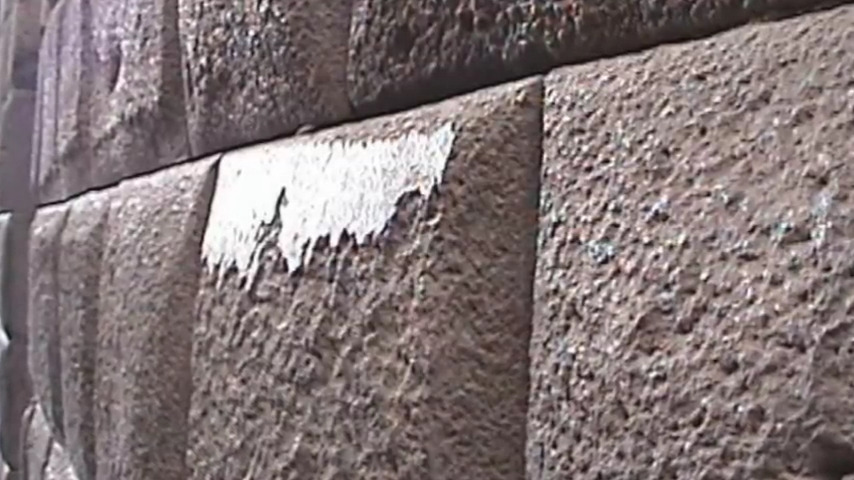
Stones as much as a thousand tons are found stacked upon each other and fitted with such precision it defies logic. Compound curves are commonly mated to perfection. It is the type of complexity we use computer aids, robotics and heavy equipment to achieve today, but the ancients apparently did it with their eyeballs, plumb bobs and soft bronze tools. They must have had a very important reason to build that way.

It’s not that they couldn’t build the megaliths by such primitive means with lots and lots of time and labor; the question is why? Why build to such extreme specifications, as if each structure must withstand a tsunami.

Perhaps that is why – they did need to withstand tsunami’s, fierce winds, earthquakes and lightning. Not to mention the pressures, heat and corrosive environment of a chemical plant. The electrical nature of the planet was in a much higher state of potential in ancient times than it is now. We know this because of the archetypes from those cultures – the Thunder-Gods – and the decoding of those archetypes by Velikovsky and the Electric Universe community. We know the consensus does not account for these factors. Therefore, I look for evidence of an electrically stressed environment when I look at ancient structures. And there is ample evidence to be found.

There is significant evidence of lightning damage, vitrification and burning found at many megalithic sites. Magnetic signatures in the stones reveal past electrical stress. And the nubs and various odd architectural features appear designed to collect and discharge built-up surface-charge away from walkways and openings where people would pass.

I have pointed to the mortar-less perfection of how the blocks are fit being a requirement for electrical continuity. Also, I’ve noted that the copper, bronze and iron pins placed between stones would be useless for structural integrity and must be for ensuring electrical continuity across gaps and seams. Maintaining continuity prevents step-voltages that might spark, causing structural damage, a fire, or even killing someone. Solid contact between blocks would be a specification required by structures designed to withstand electrification.

The megaliths were built not only to withstand plasma storms of intense lightning and the attendant winds, floods and telluric currents, but to also absorb and utilize the power from them. Energy ebbs and flows through our planet. It’s an electric circuit that inducts, stores and releases energy as it spirals through waves of plasma from the Sun and stars. Ancient megaliths made use of this energy flow as it transferred from Earth to sky. The ancients reigned in the power of Zeus almighty – and his thunder gods – to geo-engineer, at scale, their nations.

Dowsers can identify telluric power avenues in the land by feel. I know they are right because they match my own findings in geology, where I see that current flow left it’s pattern. Dowsers will point out that megaliths, almost without exception, are built on these telluric avenues.

Rory Duff is a researcher of note in this field. His work demonstrates that the megalithic sites are built on grids that coincide with Ley Lines. In my own research, I’ve shown that Ley Lines correlate with landscape features on the continents. The features and the Ley Line patterns are due to spherical capacitance at the planet’s crust. And this spherical capacitance power grid is what ancient megaliths are positioned on.

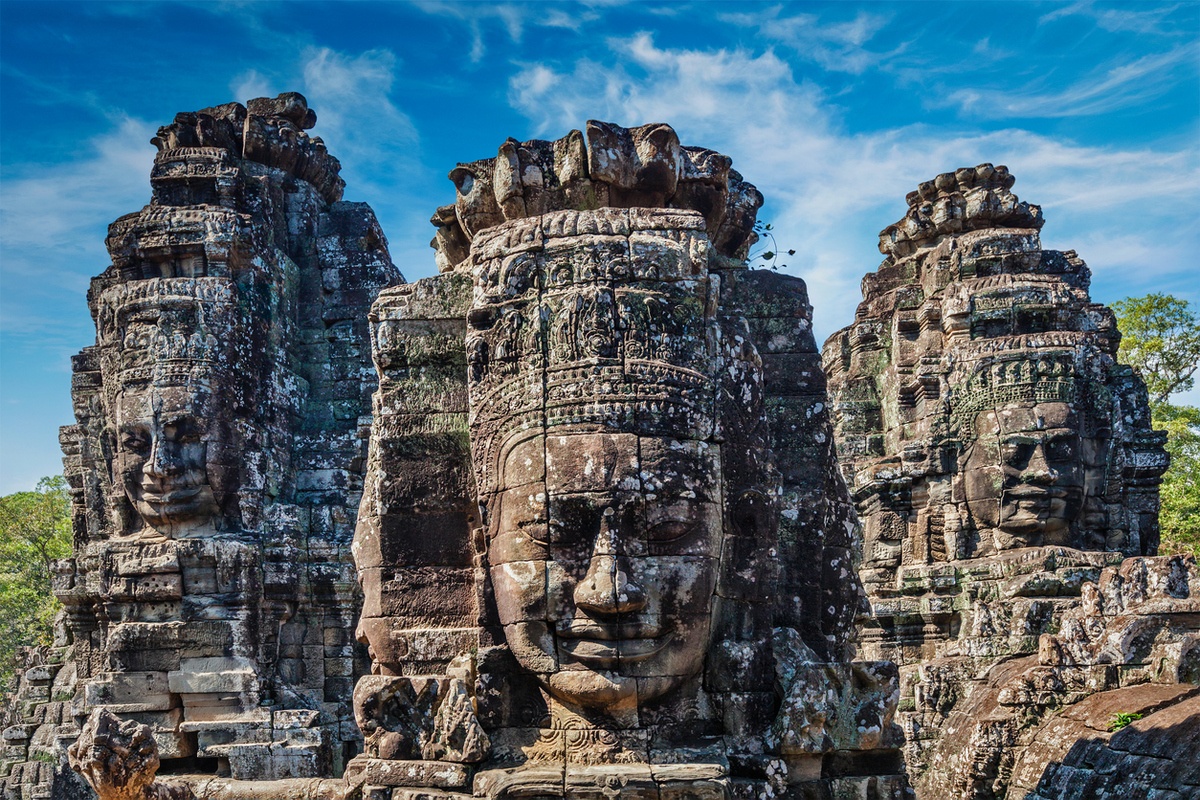
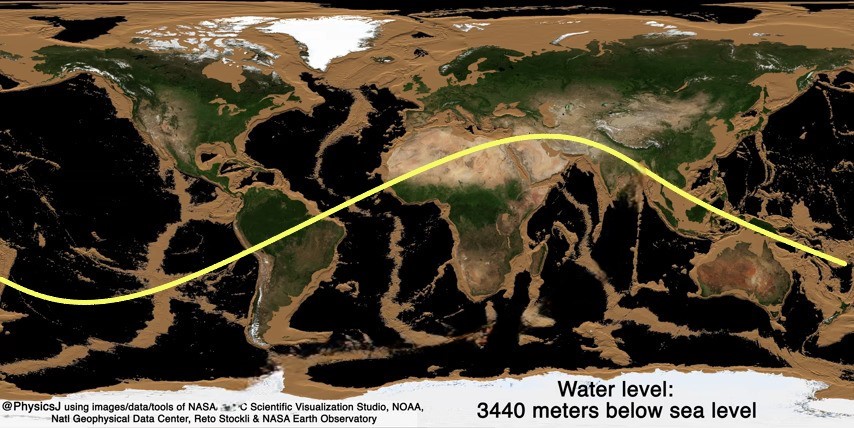
Eighteen of the most notable megalithic complexes, including the Giza Plateau, Petra, Mohenjo Daro, Machu Picchu, Easter Island and Angkor Watt, fall on a great circle around the globe. Not only do they fall on this great circle, they are positioned at the highest telluric energy centers, where the greatest rivers on Earth meet the sea. The Nile, Niger, Tigris, Euphrates, Indus, Ganges, Mekong, and Amazon; the cradles of civilization. These great river valleys were originally formed by discharges from Earth’s interior in a primordial stage of Earth’s development.

Why is this so? Why would electric current well from the Earth at these points along a great circle? Possibly because this circle corresponds to a specific orbit around our planet, called a “two-day orbit”. A two-day orbit is similar to a LaGrange Point orbit, only instead of being geo-stationary, the orbit returns a satellite in this orbit to the same position every second day along an unvarying great circle. The great circle of the megaliths and the great river valleys is the same great circle.

Roger G. Gilbertson is the independent researcher who discovered this, as he describes in the following TEDx talk: “The Unusual Earth Orbit Circling Above Our Ancient Past“. He makes a compelling presentation of facts that few people are aware of. One might, as he does, contemplate satellites, or alien motherships orbiting Earth in communication with the ancients along this two-day orbital path. But this is counting unicorns instead of looking for facts. The fact is the geology of the Earth will show this path was once the orbit of the Moon. At that time, someone who lived on this circle at say, Easter Island, experienced a moon every two days and no moon at all in the days between. In this orbit, Earth never eclipsed the Moon, leaving it always in bright sunlight.

It’s well established that the Moon is getting further from Earth, which implies it was once much closer. This two-day orbit was, I contend, it’s ancient orbit, and that is why the Earth blew out sparks along this path, creating the great river valleys. And that is apparently why the Ancients sought out this path for living quarters sometime after the event, after discharges between Earth and Moon had reduced the potential between them. It provided fertile valleys and a still simmering power source.

It’s the reason, I believe, the Moon is tidally locked, always presenting its scarified face to Earth, while it’s backside is mounded with regolith. Earth pulled this side of the lunar face off by plasma discharge, and tide-locked the Moon while in close orbit. The lunar craters are remnants of the event, as are Earth’s prime river valleys.

It is, I believe why lunar regolith and crust are chemically reduced, while Earth’s crust is oxidized. That is what happens between an anode and cathode. The Moon’s craters are cathode spots. It is also, I believe, why ancient texts and lore refer to specific gods associated with specific cities, and mountains. These were the anodes. They likely believed recurring storms every two days along this path were local gods sustaining magical power in these locations, energized by the lunar orbit.

Perhaps this continuous orbital path of the Moon was close enough to feel it’s gravity reduce weight and make big stones easier to move. A continuous path of colossal tidal pull, seismic unrest, hurricane and lightning generated by a vortex of energy leaving the Earth in a plasma umbilical chord attached to a tidally locked Moon would present an extreme electro-magnetic environment, where even the nature of Nature would seem foreign. Perhaps the stone itself changed character, impressed with a current that caused low melt-temperature components to change phase and soften the stone.

Planetary Ley Lines – 2-day Orbit in Red

The Electric Universe community knows the connection between plasma and archetypes from ancient times and we know the connection between plasma weather and geology. Rory Duff and like-minded people know the connections between megalithic sites and Earth’s energy flux, and have noted the electromagnetic signatures of past plasma events in the stones. Geoffrey Drumm presents hard evidence of the actual purpose of Megalithic stonework as energy collectors, conductors, capacitors, and aqueous chemical processing facilities. Put together it’s a lot of information.

Layered together this information may provide holistic answers for why Megaliths were built the way they were. Knowing they fit an obvious societal need subject to specific environmental conditions provides context for a re-examination that will provide clues to the environment on Earth at the time. Industry centered in fertile valleys around farming and mining resources really needs no further explanation, but the conditions that required megalithic specifications does. There also remains a big knowledge gap as to when this happened, who did it and what was the state of the Solar System at the time.

These are the fertile valleys, the cradles of civilization, of agriculture, of community. Ancient people built with stone and utilize Earth’s energy beneath a Moon that appeared every other day, bringing with it plasma storms, earthquakes and swelling seas. They used Nature’s raw material; granites, basalts, sandstones, and limestones as electrical conduits, insulators, batteries and heating elements. They used the rock at dual purpose for structure, containment and catalyst. They used the Sun, Moon and stars to precisely geo-locate facilities where Earth’s power flow could be accessed. It implies wisdom about how the planet works and a symbiotic relationship with it. It’s something we need to re-discover if we truly want to understand this planet and how to live here sustainably.

The evidence is out. The narrative we’ve been fed by academia continues to crumble. Truth will out the disinformation. As shocking truth, after shocking truth floods our consciousness this summer, make “The Land of Chem” one of your reads.

Cheers,

Egyptian Hieroglyphs – Are we missing something?

I want to state up-front that I have no training in Egyptology. I am an engineer, providing an engineer’s perspective on what we are about to discuss.

The topic is electricity, of course, and how it was used in ancient Egypt. We’ll look at evidence that’s been overlooked. I think it will enlighten our appreciation for the Egyptian’s engineering sophistication and refine our understanding of their spiritual beliefs and practices. This is not to suggest anyone else is wrong, simply that interpretations may be incomplete because of what has been overlooked.

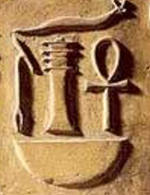
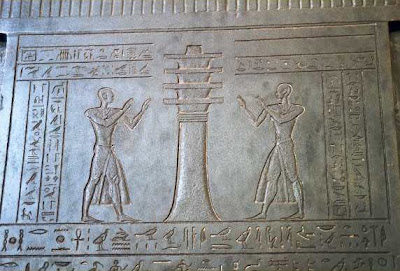
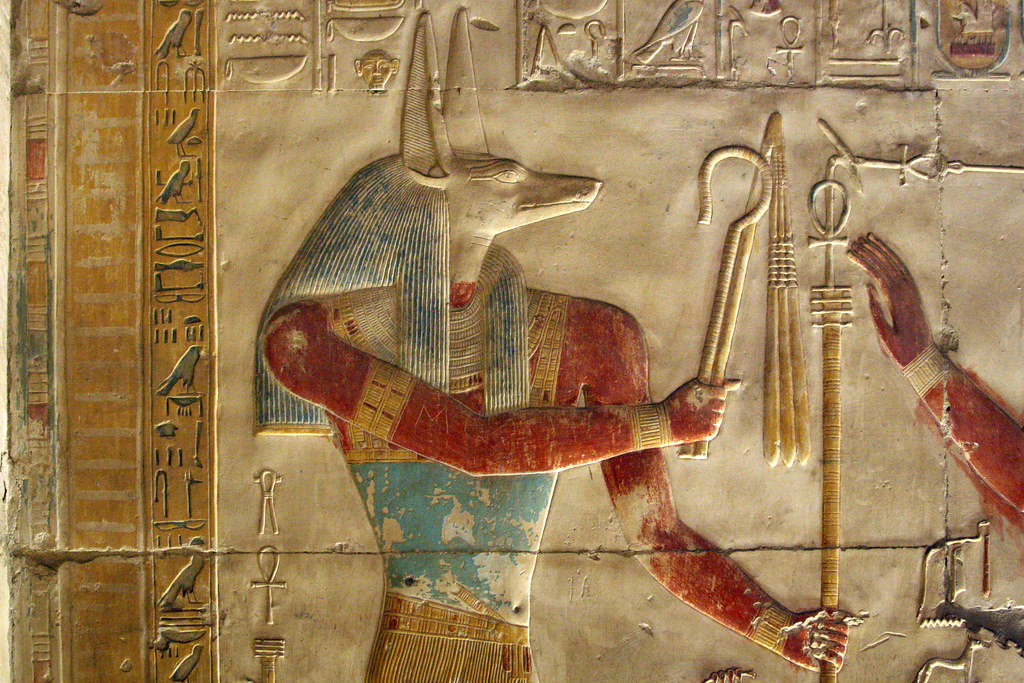
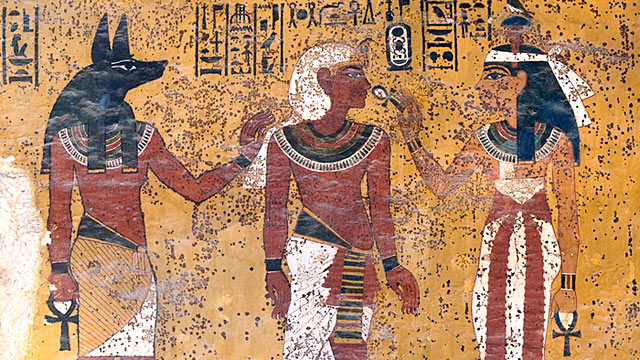
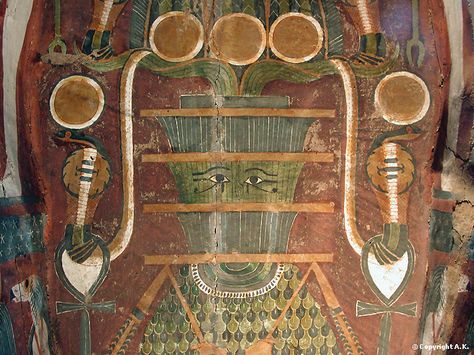
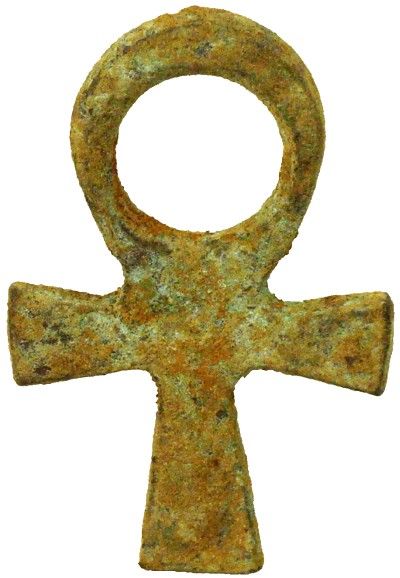
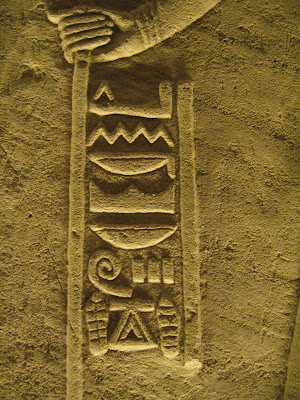
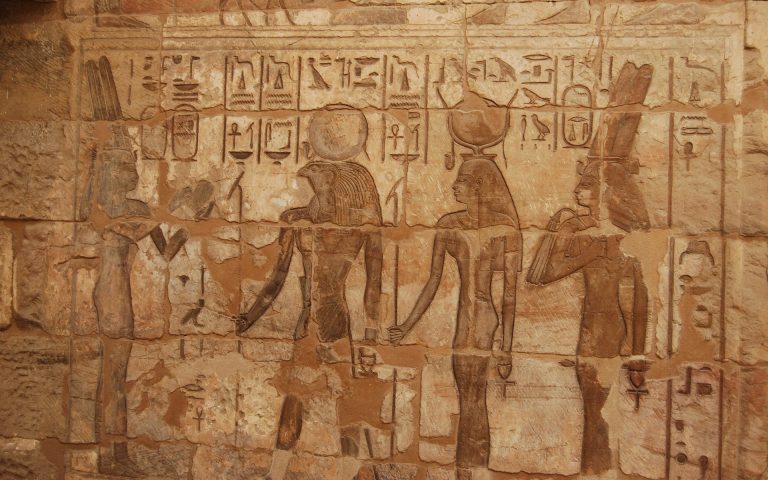
We’re going to focus on the tools being used by the characters in certain hieroglyphs. It’s the character’s tools and attire, and how they are portrayed being used that we are concerned with. This collage of images depicts some of the tools. They are the Was Staff, the Djed, the Ankh, the Crook and the Flail. A few others will be introduced later, but some combination of these appear to be employed in most of the depictions we’ll look at.

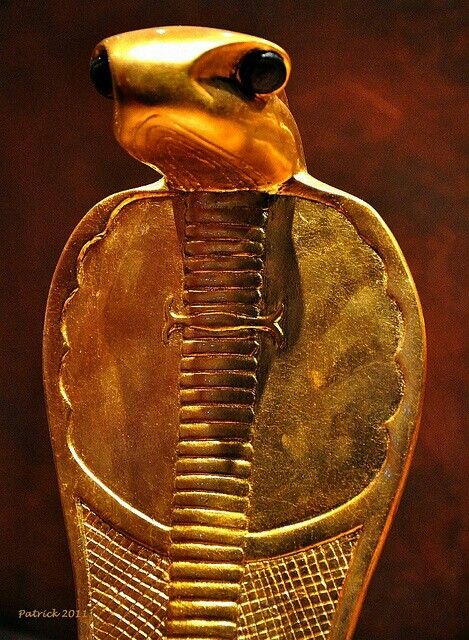
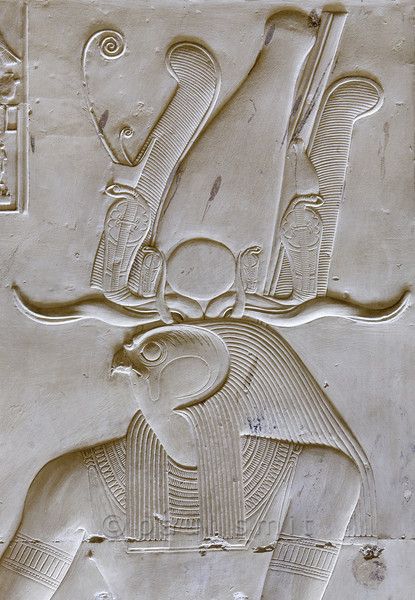
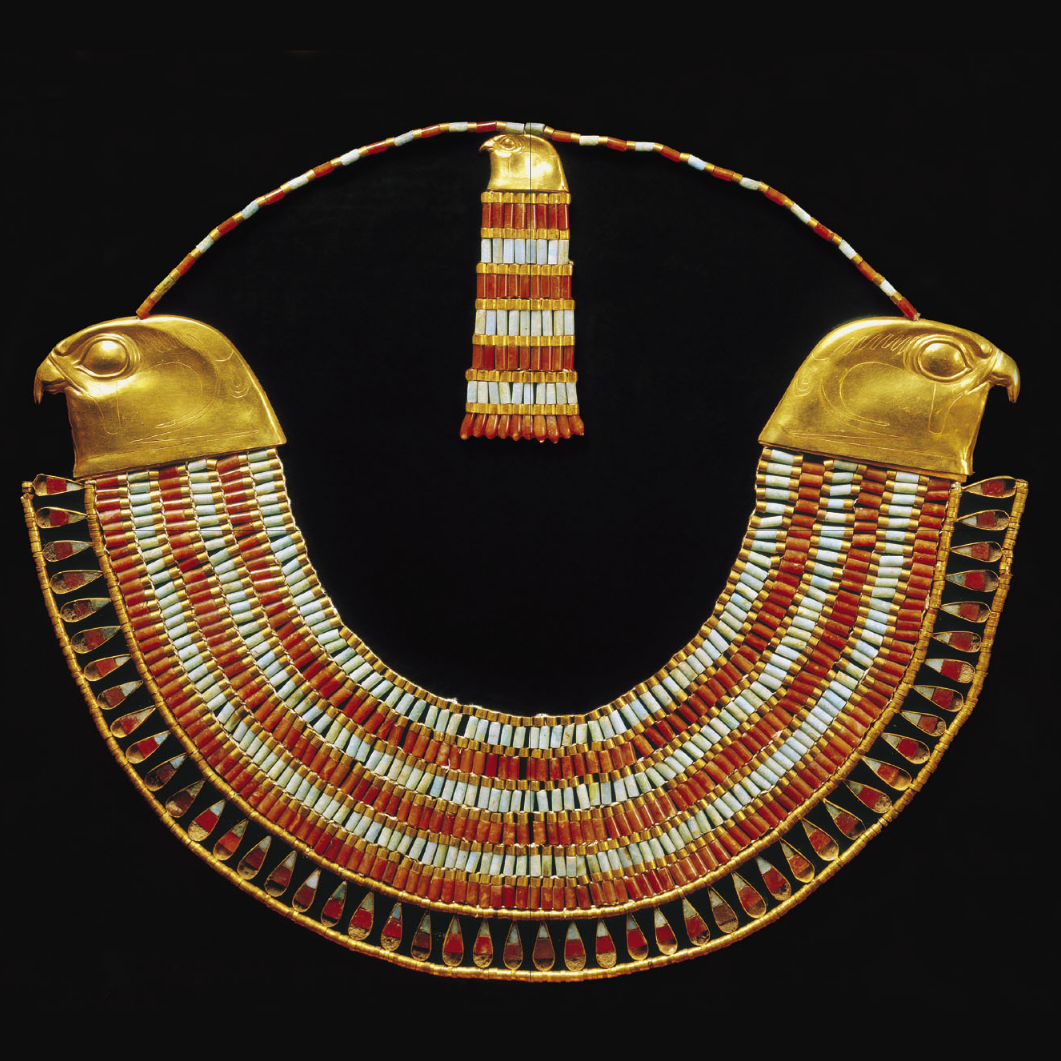
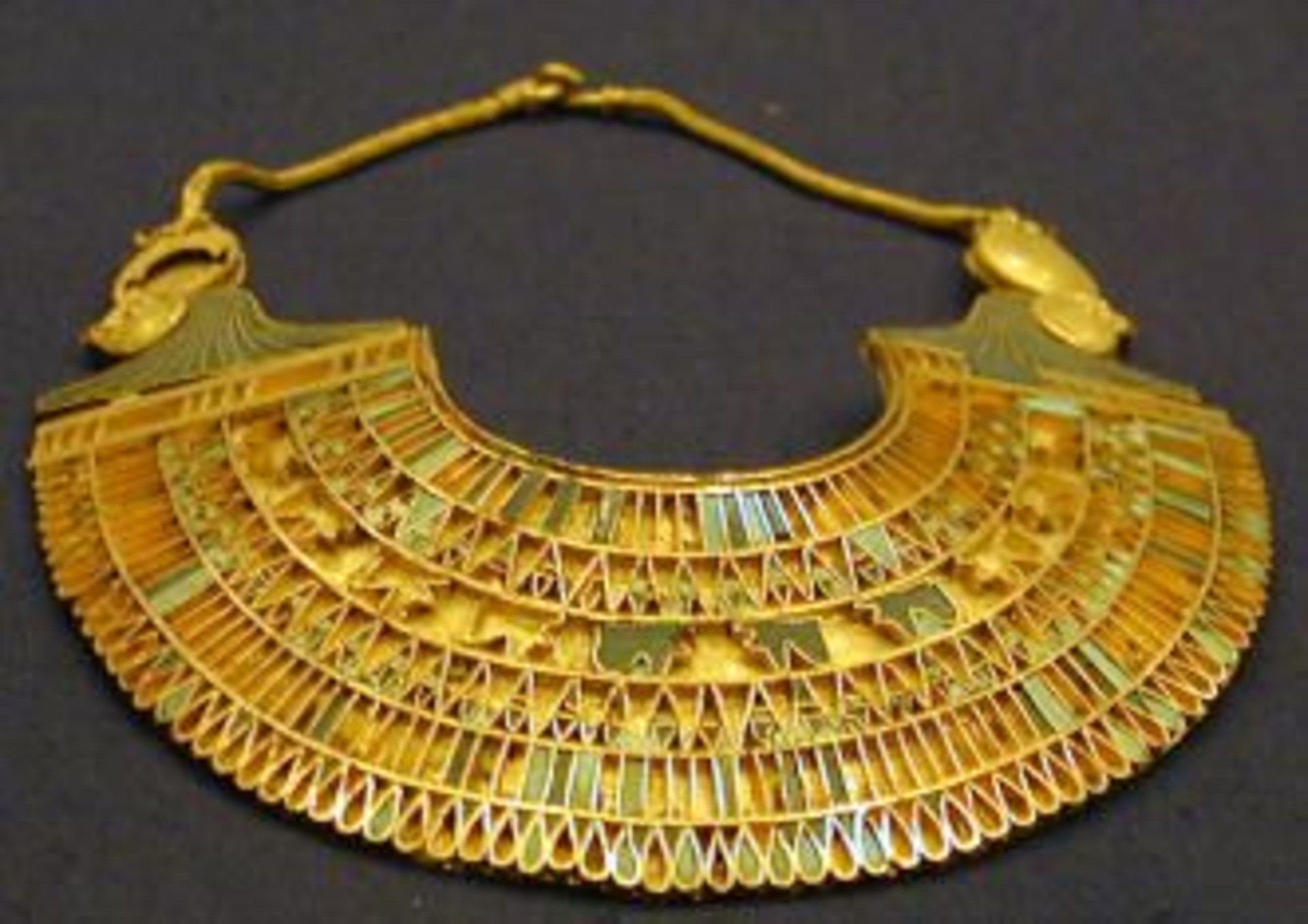
The common attire is the headgear and collar. The headgear varies widely, but common features are the protruding antennas, usually in the form of cobras at the forehead; and the shape, although variable, always forms an absurdly voluminous envelope about the head. The collar covers the chest, made of concentric rings of metals and beads of precious stones. Metals, especially gold, were used profusely, in both the attire and tools, as were minerals such as Lapis Lazuli.

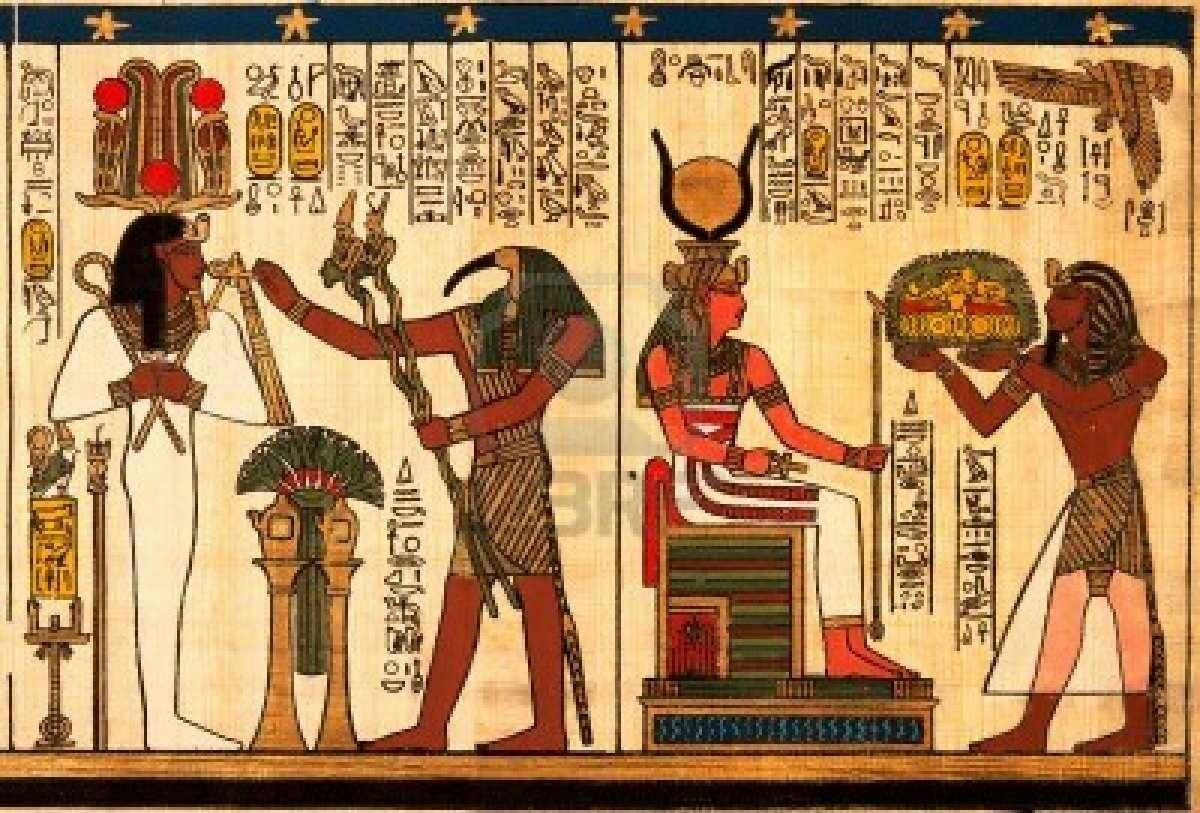
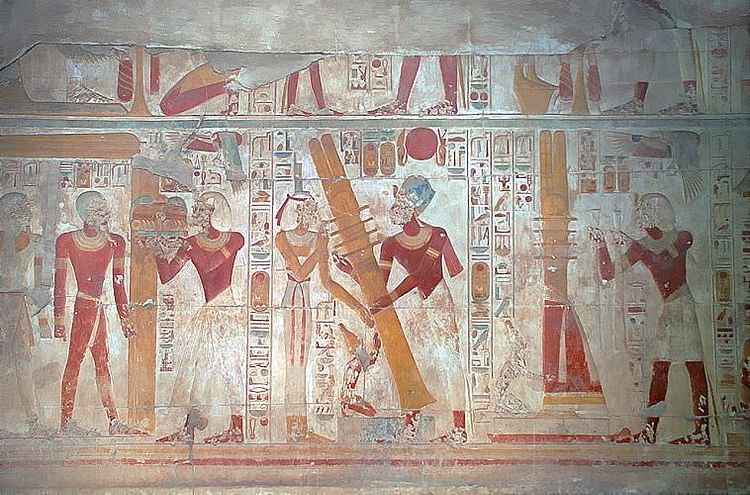
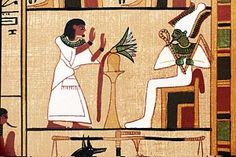
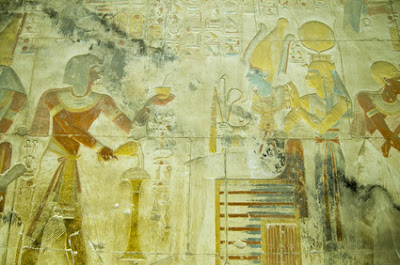
Notice the positioning of the tools in the next group of images. Notice how the flail is held brushing the shoulder. The crook is held to the neck. And the characters are in the act of touching each other using their hands, nose, staff and ankh. The Ankh is often depicted held a fraction of an inch from a character’s nose by the hand of another.

What I’m suggesting is they were shocking each other. They are depicted in these images passing electric currents through each other, using their hands and tools to make connections.

To my limited knowledge, no one has mentioned this before. There have been speculations about use of high technology concerning megalithic construction, and even that pyramids may be a type of electrical generator, but I’m not aware that anyone has suggested they were zapping themselves.

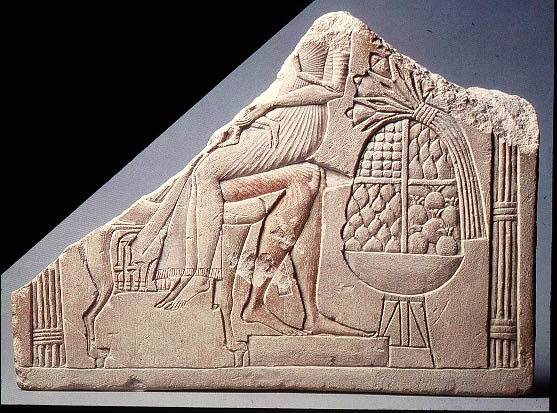
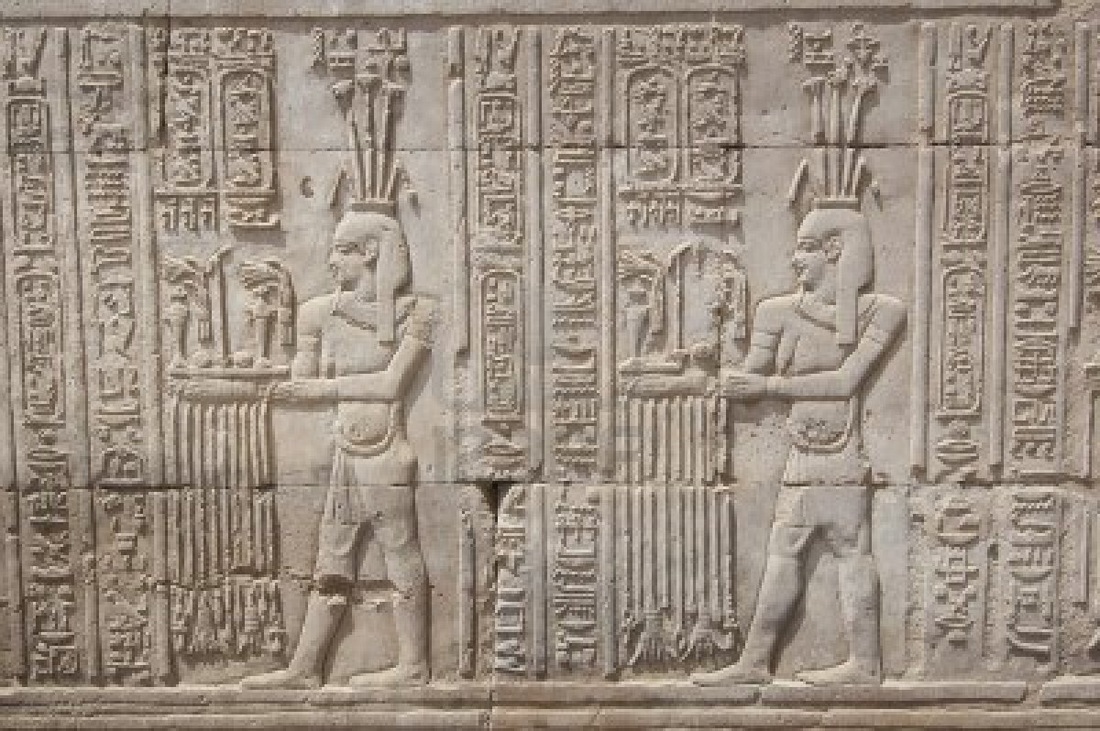
Yet, that is what is being depicted. It’s very simple really. In each of the images the characters are in the act of making connections between themselves, the floor, their headgear, and some brushy-looking implement using the tools. The brushy implements appear in grounded stands, bowls, or held in hands, like the flail, or a fan. The Pharaoh is often depicted being fanned by courtiers.

I know convention is they depict Lotus flowers, Nile Lilies and such, and perhaps they are. My observation is they are charge collectors. Like when one rubs a wool sock on a balloon, it builds static charge. The brushy implements may be fabric, stalks of dry rushes, animal furs, or feathers; that put in motion brushing another material, develop a very high-potential surface charge like a Van de Graff generator.

Brushy implements appear as part of the circuit, being connected by hand, or tool. The headgear and collar is also meant to collect charge, with the large surface areas enveloping the head and an antenna to collect and concentrate charge at the “third eye”.

They are using these implements to build a huge static charge, which is a very easy thing to do by just rubbing things together using the right materials. The headgear and neckwear must concentrate charge and shape an electric field around the individuals head. It appears in some cases constructed to produce St. Elmo’s fire, or a Jacob’s Ladder above the head. In all of these depictions, they are creating a circuit to experience electric fields, frequencies and currents around their heads.

Has anyone noticed this before? An awareness that Egyptians used electricity is not novel, but head zapping? It’s known they made batteries because there are artifacts. And they electroplated everything with gold, like it was powdered sugar. But has anyone ever suggested they were shocking their brains?

There are interpretations of these same implements as sonic frequency devices, which makes exceptionally good sense. However, for a good buzz, electric fields and discharge do the same thing, way better. Besides, holding a vibrator in the hand dampens the vibration unless it’s being fed energy. The depictions show circuitry between characters, the floor, furnishings and implements providing continuity between points of charge collection and generation.

Almost anyone outside of consensus science has concluded, by now, that the “Dendera Lightbulb” hieroglyph is depicting something electrical. With what we’ve just discovered, let’s take a closer look at that particular set of hieroglyphs.

The entire scenario depicts a circuit, with the Djed delivering capacitor charge to what appears to be a giant lightbulb. It clearly shows halos of plasma discharge between the characters and the bulb – into their heads. The bulb is a giant plasma ball being charged by a big-ass capacitor. There is circuitry, frequency and discharge into peoples heads taking place here.

The Djed appears to be a primitive plate capacitor, its plates likely made with a crystalline stone to store charge, separated by air gaps and a dielectric core, stood on an isolated, central pillar. It is portrayed as part of the circuit, often in context with characters using bare hands, or bladed connectors held to jump the plates.

The ankh, staff, or hand is used to deliver the spark and control continuity for the energy to flow through the individuals. We can confirm people in those times considered the staff a type of spiritual tool, used to convey magical power, because it is explicitly depicted that way not only in Egypt, but in the Bible and other works. Electricity would fill that bill.

The Ankh is considered “the Key of Life” by experts. A tool the gods used to deliver the spark of divine life to the Pharaoh – through his nose, for some reason. Spark of life indeed. Zap your sinus cavity and you’ll feel alive alright.

There is another type of tool that appears to be a lamp, or incense burner. In context with the other implements, I think these are tools that produce ionizing flames. Perhaps they contain reactions using carbon black, magnesium, oils or other reactive elements. Notice the tools in the images have two parts, one being a wand that contacts the flame, and the lamp itself. Perhaps the wand is a catalyst, or flux to generate ions when heated and the other tools are positioned near to accumulate charge. These look to be depictions of preparing the tools, by saturating, or de-saturating them of charge before use. De-saturating makes perfect sense as an act of purification, to exhume any lingering ‘spirits’ before the next use.

In the next painted image note the circuitry. Note that some characters are on pedestals and some not. Note the same pattern and color of dotted and hashed lines used for the hooked staffs are used to outline the headgear. It appears they are touching to flow current through their arms and headgear using staffs and other tools. The motif might represent how charge diffuses through the circuits.

Forming circuits.

It appears the central characters are about to transfer charge they have built-up to the Pharaoh’s hat, while standing on pedestals. The Pharaoh is grounded and his crown and flail are a different color, perhaps to indicate he’s ‘purified’ with the opposite charge and ready for a high voltage connection to the gods.

Text box, or grounded pedestal?

And there are three cartouche suspended at headgear-level, and two orbs above that, also bordered in this pattern. They look to represent physical objects present in the diagram, and not just bordered text. There are instances it is hard to tell if a glyph is showing a text box, a physical item, or both.

Perhaps we miss a layer of meaning and the cartouche represent prayer wheels that, when spun, generate an electric field with the grounded floor, enveloping the characters and amplifying voltage potential. The shockers are isolated on the pedestals to generate a step voltage between them and the Pharaoh, who is grounded.

Or, perhaps charge is generated in a dedicated room with batteries and capacitors and then delivered through the wall by an electrode.

It appears to me, the Pharaoh liked to get shocked. The bigger the better. Maybe this was how he proved his strength; his divine connection to the power of the cosmos, and his ability to share that energy with his people. It seems entirely consistent with established interpretations that they were using electricity this way, and even confirms why they considered these hats and tools so significant.

Ménage-a-zap.

They were celebrating “the spark of life” from the standpoint of people who used electricity in their lives and understood they were dealing with the cosmic force. I think it’s we who get lost in the centuries of layered dogmas about their many gods and underestimate the profound understanding of nature they possessed. I think this is true of other ancient cultures, and we, the linear reasoning, scientific reductionists have long ago accomplished the goal of reducing our awareness.

Another aspect to consider is these electric ceremonies are being conducted, one can assume, in temples constructed of megalithic stone. Several glyphs portray pedestals the characters sit on, or touch. Some appear to be inside some kind of chamber. These rituals may have been conducted in the bowels of the earth, inside granite chambers, or in the open air on platforms that amplified Earth’s natural electric field.

If they were in chambers, using ionized gases, they would necessarily be rarefying the air. This could enhance plasma activity tremendously, but might have consequences such as death by suffocation, or toxicity. Perhaps they generated a tolerable gas like helium. Or perhaps the exposure was limited to an anteroom where a brief purification ritual took place. It’s something to consider.

The floors are key to every circuit. We can assume they are stone, and likely conductive. Seated characters are often on isolating pillows, or pedestals, building potential before grounding their tool to the floor.

Characters are also seated on low thrones that appear grounded to the floor and layered in appearance, as if they could be a type of capacitor. That, I imagine would send a shock up their spine right through the top of their silly hat.

Passing current through the spine, sinuses and skull has some exotic effects. We know it works for lobotomy. Lightning victims generally have bad effects. On the other hand, there are “marital aides” made with plasma electrodes, so sparks can’t be all bad. Hopefully, the Egyptians knew how to get positive results.

I believe their use of granite, sandstone and limestone for temples, and all manner of subterranean vaults; their placement over aquifers and other water features; and their locations around the world were chosen strategically to make use of Earth’s electric field.

What I can say for sure, as an engineer, is that the little copper, bronze and iron connectors found in megalithic stone foundations all over the world have no structural purpose. Any force large enough to move several tons of stone would snap these pins in a heartbeat. The only rational purpose is to provide electrical continuity between stone blocks to distribute charge evenly and not cause unwanted sparks at the joints.

The same is true for why they meticulously mated stones together without mortar – to provide solid continuity. And the enigmatic nubs left on otherwise finished stones is not for lifting, or because the stone workers got lazy. They are positioned around gates, doorways and passageways to deflect discharges away from where people walked.

An energized stone, especially one being struck by lightning, will absorb and discharge current, and one doesn’t want that to happen across the doorway you are walking through. So the nubs are collector points for charge to accumulate and discharge safely, and help desaturate the stone near the seams, openings and walkways they are placed around.

There is no doubt in my mind that ancient Egypt was a different world than we know, with a different Earth potential, a different frequency, different energy, a more electrified environment compared to ours; and they used it in ways we must struggle to imagine, because it is a world foreign to us.

The article linked below sheds some light on ancient construction practices.

MIT Engineers create supercapacitor from ancient materials.

This article describes how MIT Engineers made a capacitor from cement, water and carbon black. Their experiments show a slight doping of carbon black with concrete allows it to hold a useful capacitor charge. The team calculated that a block of nanocarbon-black-doped concrete about 3.5 meters a-side can store about 10 kilowatt-hours of energy, enough for the average household’s daily use. In other words, your home’s foundation could be your energy storage device with this technology.

Likewise the Egyptians, and other megalithic builders, used granites and other stones with natural electrical properties. Granites are composed of silicates – silicon and oxygen compounds with a bit of other elements mixed in that form crystals and platelets that readily diffuse charge. Granite is highly conductive, and piezo-electric, which means if it’s vibrated it generates electric current.

Sonic vibration would be the easiest way to stimulate the stone and give it a frequency. It would generate a direct current, pulsed by the resonating, sonic frequency. It appears everything they did was based on static charge and discharge, obviously because Nicola Tesla hadn’t been born yet.

I can imagine, deep in the bowels of a temple, being surrounded by granite’s natural energy, enhanced by sonic vibrations delivered by trumpets and drums from the pageant outside the chambers. Waiting patiently for my spiritual awakening, while incense fills the room with dense aroma, and the only sound is a hum and crackle as priests turn tables of feathers against my skin, speaking incantations. These things fill my mind with hallucinations; charge my body with dry anticipation; and encase my head with a buzzing presence.

Then: Wham! Somebody pokes an ankh at my nose and fire shoots through my butt to the top of my head, energizing chakras I didn’t know I had. I could see someone doing that – not me – somebody who deserves it, like a Pharaoh. The Mayan Kings stabbed their penises, which sounds a lot worse.

Perhaps electric current stimulated a spiritual experience. Perhaps it enhanced psychic ability. Perhaps it stimulated psychedelic experiences. Perhaps all three. Maybe that’s why their gods have dog heads. If one thinks about it, head zapping might be considered for many ancient mysteries.

Do we really accept these monstrosities were caused by binding a baby’s head? Or did head zapping cause it to unnaturally grow this way? Did the Egyptians really make astronomically complex constructions from stone by pounding and cutting with copper saws? Or did they employ electric currents with the stone to make it disaggregate, and therefore be more malleable? These are the questions that I ponder when I look at the works of ancient Egypt. I’ll close with some more images where I see elements of electric circuitry. I encourage you to look with ‘electric eyes’ and see what you find. .

How To Control The Weather

Can it be done? Lot’s of people say no. They say Nature is too vast for us feeble humans to influence, too complex to ever understand. This is hogwash, of course. All it takes is energy. Enough energy introduced in the right way will change the climate.

CO2 doesn’t do that, by the way. CO2 theoretically captures a minor fraction more energy from the Sun than Earth would otherwise reflect, but it doesn’t amount to a hill of beans. Let’s talk about what really drives weather, and how to manipulate it. In order to do that, we have to look at the planet for what it fundamentally is.

The “planet” is more than the blue marble we stand on. Earth is an electromagnetic bubble with a blue marble held inside. At the very edge of our bubble is another tiny little bubble called the Moon.

Fundamentally, Earth is an electric circuit that matter is bound to in a geometry of spherical layers. The outermost layers are the electromagnetic fields that extend far into space surrounding the planet. The innermost layer is at the core. Earth’s crust is one layer in the stack.

Electrically, that makes Earth a spherical capacitor that stores energy, primarily in it’s crustal shell and atmosphere. It absorbs radiant energy from the sun, and emf that enters at the poles by induction along geomagnetic field lines. Consensus science only recognizes the radiant energy. They pretend the auroras aren’t a consequence of significant polar energy flow into the planet, however obvious that may be.

The consensus measures “cosmic rays” at the poles, but that is only part of the physics. There is magnetic induction within Earth’s layers generated by the polar currents. These aren’t being measured, or even recognized by consensus science. It’s these currents that are the primary drivers of weather in the atmosphere of the blue marble.

They are much more than that, of course. The fact of Earth’s crustal currents has been recognized since prehistory. For instance, crustal current patterns relate to “Ley lines”, also considered by some to be the geometry of Earth’s ‘subtle electromagnetic energies’. They ain’t that subtle, and the relation to Earth’s subsurface electric currents is profound, but we can’t boil the whole ocean in one article, so let’s stick to controlling weather. I want to be as quick and blunt as a solar flare, because something tells me this might be pertinent right now.

The planet’s circuit configuration is that of a plasmoid. A plasmoid’s geometry is a hyperboloid wrapped by a toroid. From the standpoint of thermodynamics, it is a standing wave of energy. When energy stands still, it becomes dielectric; that is, matter with mass.

Solar and cosmic energy feed the system (Energy In), while high energy discharge from thunderstorms dissipates it (Energy Out) and the crustal layers of the planet are the buffer (Energy Stored). Electrically, the planet acts as an electret, with an internal electric field and circuitry wrapped in it’s own magnetic cocoon, floating in the electric field of the Sun. The Solar field feeds and sustains the Earth’s internal field. A plasmoid’s internal field dies without an external electric field to sustain it.

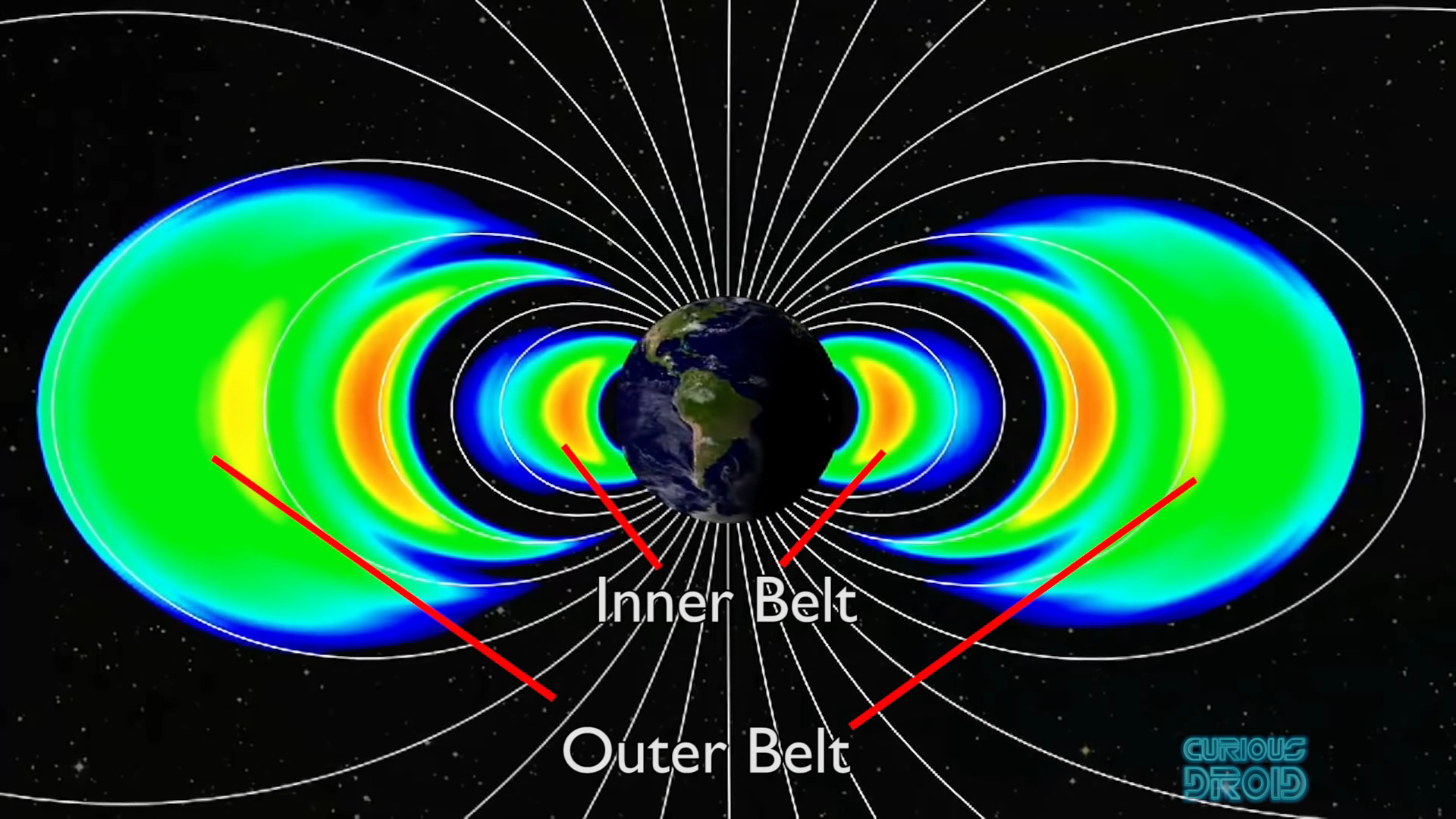
Plasmoid geometry

The outer shells seen in the figure above relate to Earth’s geomagnetic field and Van Allen belts. The blue marble is buried in the core of this entity, formed of layers of matter crunched into a sphere with electric currents coursing through it. It’s like a drop of condensate in a whirling, electric ‘vapor’ cloud.

The surface of the Earth, as on other planets is the neutral boundary layer. It’s almost the only place in the Universe where matter is considered “normal” – gas, water, or solid. Everywhere else there is plasma, the so-called fourth state of matter. If science were truly scientific, plasma should be called the first state of matter, and neutral matter a “special condition”.

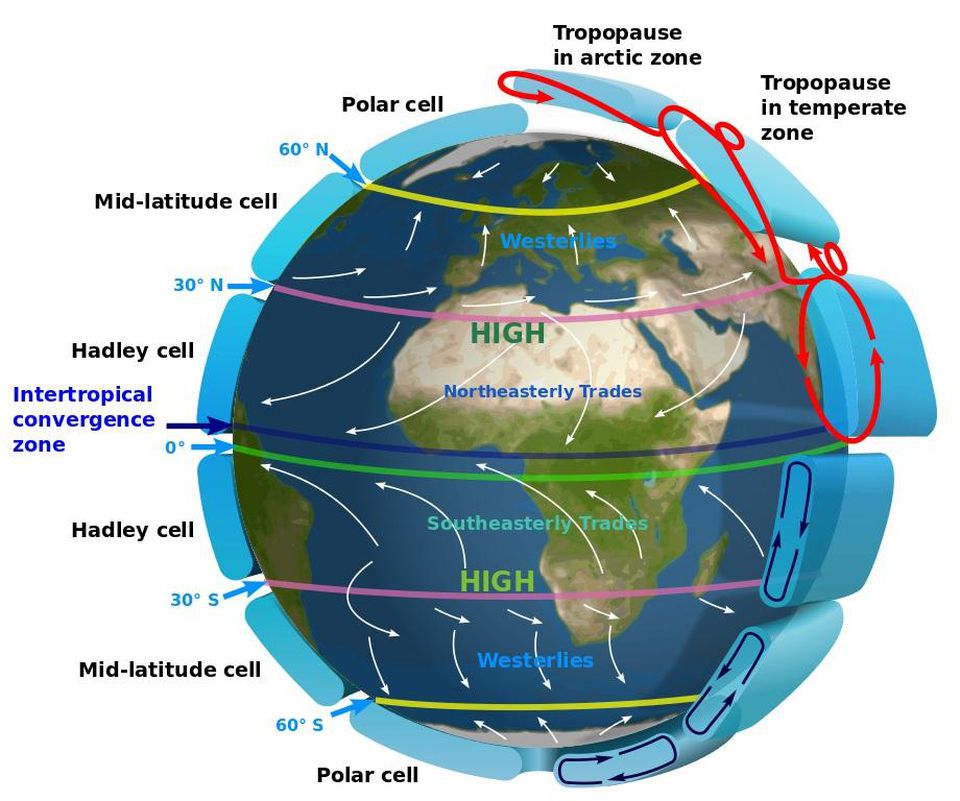
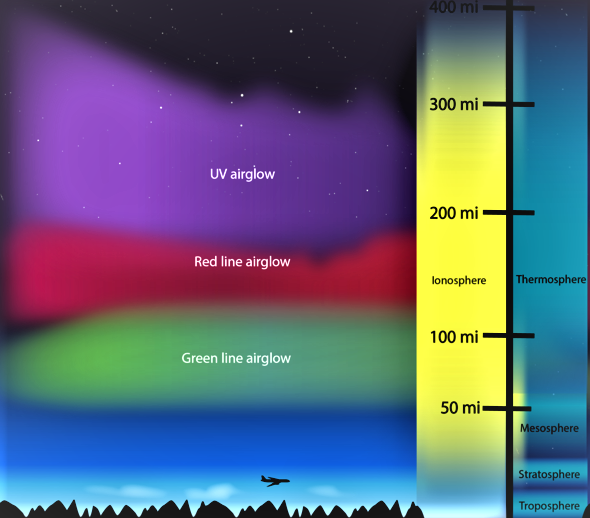
The atmosphere around Earth also divides into layers – the tropical air layer, the high thin stratosphere and the ionosphere. There is a step voltage and change in plasma strength at each layer interface. There is also thermodynamic change. There is mechanical shearing at the boundaries, changes in momentum, temperature and pressure. All of these macro effects are due to electrical effects at the atomic level.

Earth’s atmosphere is composed of dielectric layers.

This creates a local electric field within each layer, which accumulates additive to an overall electric field across the atmosphere. Electrically speaking, this layering is called spherical capacitance. The degree of ionization, or “strength” of the plasma, increases with altitude until it accumulates to a fully charged sheath. And then there is space.

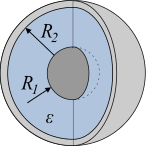
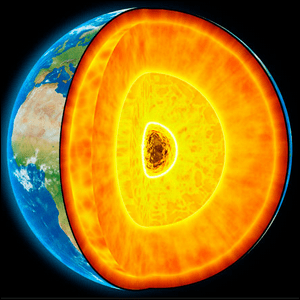
The same thing – layering, charge separation, step voltage, electric fields, changes in state – occur inside the Earth. The layers of hard crust, spongy athenosphere, outer core and inner core (assuming the conventional model) are the layers of the blue marble. The actions of capacitance and induced currents differ inside Earth in that they involve solid state circuitry in a complex, non-homogeneous matrix, but they still obey basic circuit behaviors.

But the structure of the bubble isn’t finished with the blue marble and it’s atmosphere. It is self contained in currents of magnetic induction along the geomagnetic field that loops far into “Space” (Space with a capital “S” is where astronauts hang), making this also part of Earth’s “space” (small “s”, meaning it’s volume).

The planetary circuit defines the true “volume” of the planet.

When the planetary bubble is exposed to a change in it’s environment, meaning the Solar environment, it has a feedback response. If the potential between the Solar environment and the planetary bubble increases, as in Solar Maximums, more energy is forced into the bubble by induction and it stores some of this energy in it’s capacitor shells.

If the potential decreases, as in a Solar Minimum, the bubble releases stored energy from it’s capacitor shells. Whether it is releasing energy, or storing energy, the change in state of the planet’s energy system induces current flow in the crust and atmosphere. Hence, it causes bad weather, volcanoes and earthquakes.

What stimulates the actions of severe weather, volcanism and earthquakes are the crustal currents – electric currents that flow within Earth’s crust. There are other currents in the system – the currents at the poles, currents inside the crust and currents outside the crust extending into space. But it is the crustal currents that directly affect the weather. Therefore, control of the weather can be achieved by influencing crustal currents.

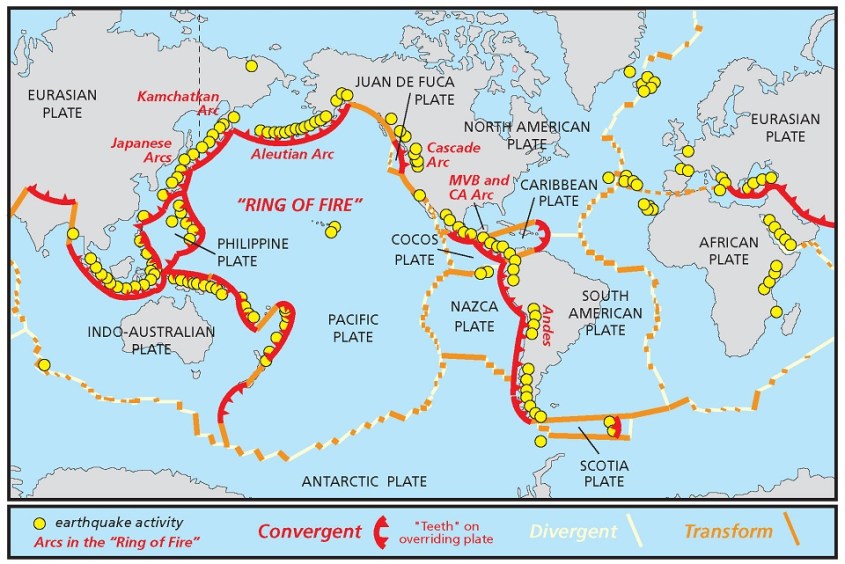
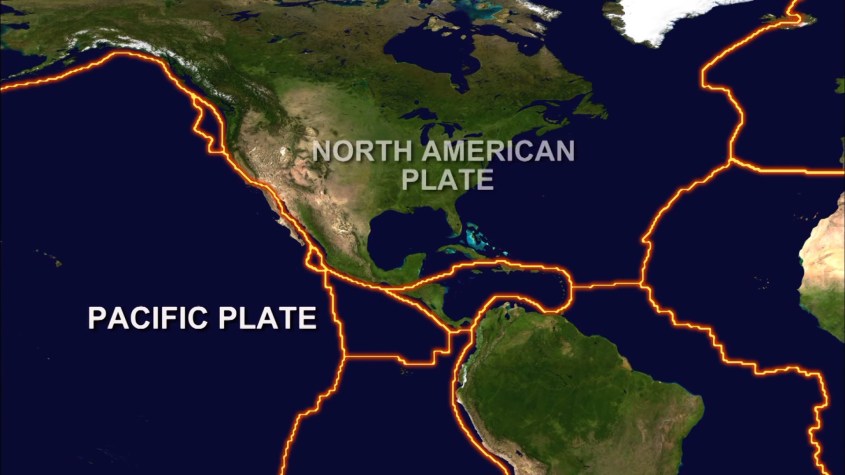
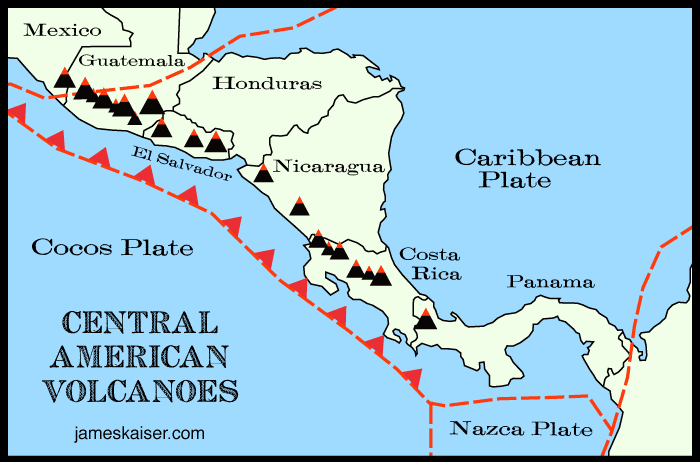
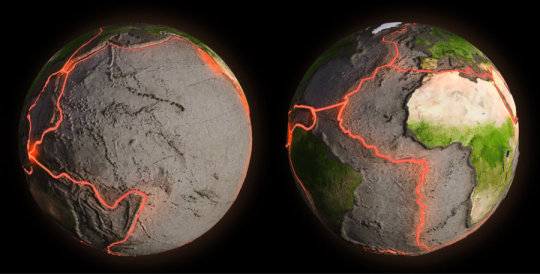
Crustal currents flow where the plate boundaries are. They form rows of volcanoes, coastal boundaries and fault lines in Earth’s crust. In other words, they are easy to find if you just look. They are the result of induction from polar, Berkeland currents and charge accumulation at the continental plate-fringing fields due to capacitance.

It’s the fringing effect at the edge of a capacitor plate that accumulates charge, and the Earth’s magnetic field that moves it, generating currents. A change in the system state caused by a change in input energy from the Sun generates a change in the charge accumulated by the capacitor plates, and therefore a change in the crustal currents. To artificially affect the weather, all one needs to do is introduce some extra energy into the system where it amps-up the crustal currents.

It wouldn’t take much energy, either. Just the right amount of energy, probably in the microwave frequency, so it is easily absorbed by water that saturates the crust. It just needs to be delivered at the right frequency and amplitude to resonate with the circuit’s natural frequency and amplify the signal. Volcanoes, earthquakes and severe weather should result.

Here’s why. Capacitance couples the action of the crustal currents to the atmosphere. If a crustal current amps-up, storms will brew overhead, or at some node on the system where charge accumulates. It is just capacitance and induction. A moving charge (current) in the ground will induce a current in the atmosphere. A charge accumulation in the ground will be mirrored by a charge accumulation on the opposite plate – the atmosphere – by capacitance.

The consensus will claim there is no such coupling, but that is physically impossible because there is a known electric field at all times between Earth and sky, and a continuous drift current. So it physically has to respond to the laws of induction and capacitance. The consensus is either lying, or stupid.

It’s the same thing that a solar flare does to Earth’s atmosphere because it amps-up the ground currents. If some diabolical scientists wanted to effect severe weather, they would wait for a natural solar storm to activate the crustal currents, and then push those currents at resonant frequency to amplify them. Nicolai Tesla figured this out many years ago.

The goal is to introduce a signal-to-noise ratio greater than 1, which forces runaway feedback. It is the same thing as when you place a microphone near a speaker and feedback squeal drowns out the intended signal. By waiting for a solar storm to introduce a major spike in the noise, all the diabolical one needs to do is add a little push to the solar impulse to get the system out of balance and generate exceptional weather conditions.

I would guess a few thousand, or perhaps only hundreds of MW generated by secret nuclear plants, pulsed into the ground at strategic locations at the right frequency, would produce severe tropical weather in parts of the world, and heat waves and drought in others. Nuclear submarines might be used for this. Volcanoes would spew along the affected circuits accompanied by earthquakes, fires and probably an increase in UFO sightings because of strange lights in the sky.

As we dip into the Solar Minimum, the Earth is experiencing amped-up ground currents. There has been a dramatic increase in volcanic eruption, drought, severe weather, earthquake and fire in the last couple of years as a result. But could it be getting a little help from DARPA, or some other malevolence? It’s not like the Deep State has an agenda, is it? They wouldn’t screw with the weather without telling us … would they?

Eye of the Storm – Part 6

Large Scale Ground Features

Telluric currents, or  simply ground currents, are electric currents that diffuse through the Earth’s crust, influencing what happens on the surface and in the atmosphere. They control where storms brew, the direction of jet streams and flood waters, even where mountains form.

It’s cause is capacitance, and the resultant effect of charge and magnetic fields in motion: inductance. Where current flows in conductive paths beneath Earth’s crust, the atmosphere ‘mirrors’ the pathways with currents of ionized wind – although, because of electromagnetic influence, it is a ‘fun house’ mirror effect. Just as we’ve traced the effects of winds on the landscape and mapped their turbulent route, we can also map major ground currents.

We can only speculate on the nature of subsurface currents, because we can’t see them, other than to say they are hot and electric. We don’t know the conductor they travel in, but we can say they are “surface conductive”, meaning the currents flow in a particular layer, or regime of layers under the crust.

Current flows in surface conductive layers where ionization occurs most readily. Capacitance induces charge to collect at the boundary between layers of different material, because each material has different properties. Surface tension has to form at the interface of layers, which places higher charge density at the interfaces to form a double layer of capacitance induced, opposing charge, and a voltage drop.

The troposphere is example of such a regime above our heads, where atmosphere ionizes, brewing thunderstorms and cyclones. Ground currents flow under the crust, deep in strata we can only imagine and decipher through sonic echo. But we can also infer their paths from surface expressions.

They express themselves where magnetic fields pierce the crustal layer, creating a path for current to discharge. These are volcanoes. So, briefly let’s look at how volcanoes form as a result of ground currents.

8126DDCB-963D-44C5-968E07AE4D51F396_source
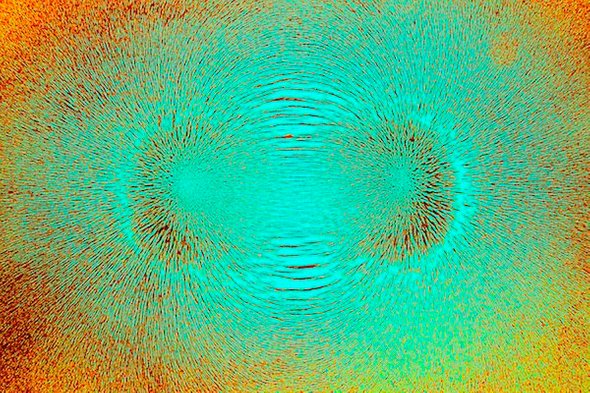
Static field of a magnet.

To understand the Electric Earth, one must understand that everything is in constant flux. Nothing in the electrical circuit is static.

Moving current in Nature generates magnetic fields that are dynamic, pulsing and undulating; contracting and expanding in feedback to charge density and momentum in the current that creates it.

snapshotvenus2
Nature’s invisible magnetic fields are mobile, responding to waves of current.

The magnetic flux of a moving current rings around the current according to the “right hand rule”. It also filaments, like electric current, forming tubes of magnetic flux.

Eddy current is induced to flow in a helical path along these tubes. Where these filaments penetrate the crust, a channel forms as heat builds from resistance to the induced current, melting and drawing up magma. A blister forms on Earth’s surface where current, heat and trapped gases push through and escape.

Study volcanic cinder cones, and you’ll find they often – not always – display a perceptible counter-clockwise twist to their form which is a result of the upward spiraling current induced along the magnetic line of flux.

Santa ana el salvador

So let’s define two types of ground currents:

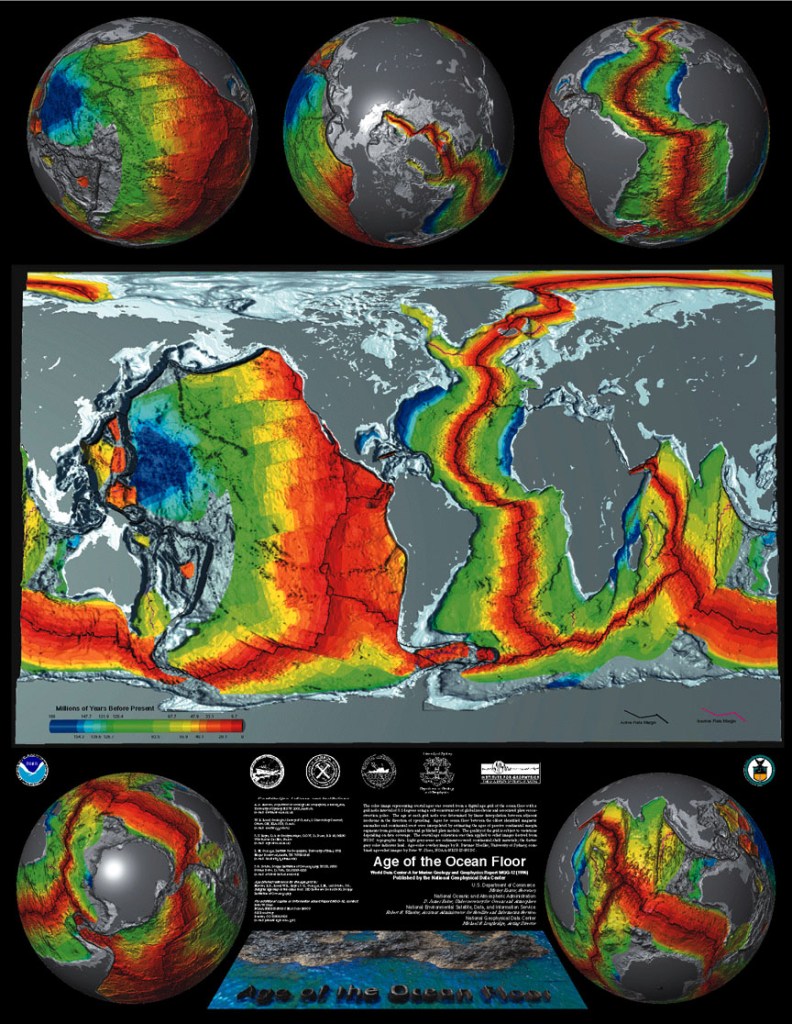
Primary Ground Currents – primary currents are large snaking veins of subsurface current flowing pole-to-pole, creating what is perceived as plate boundaries. Indeed, they form the continental plate boundaries, mid-ocean ridges and deep rift zones. But it’s not because the plates are broken and rolling over each other in the consensus theory of “subduction”. Ridges and rift zones, volcanic chains and islands are the magnetic signature of the primary subsurface currents, where the crust is broken, softened and hot.

crustageposter

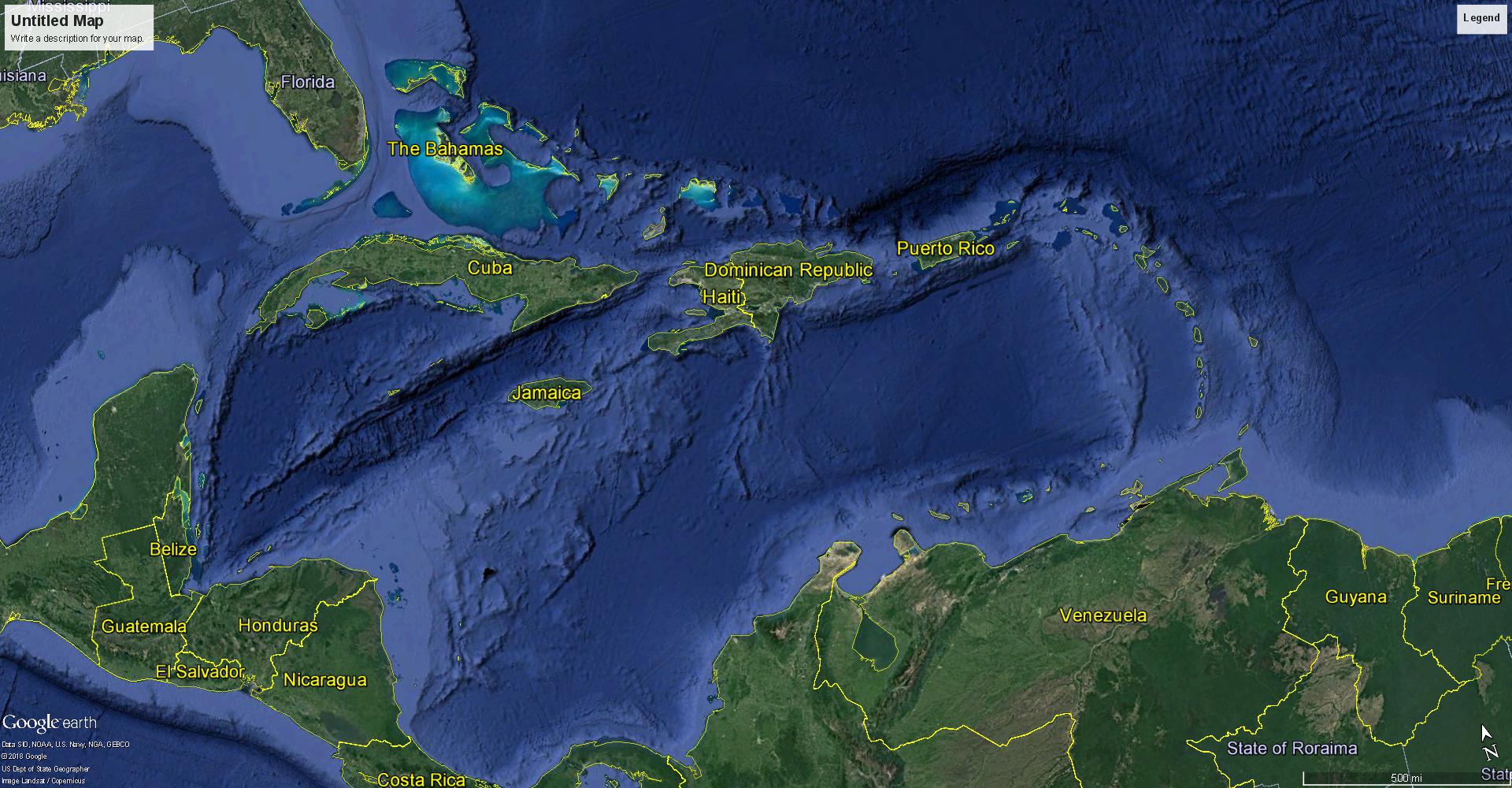
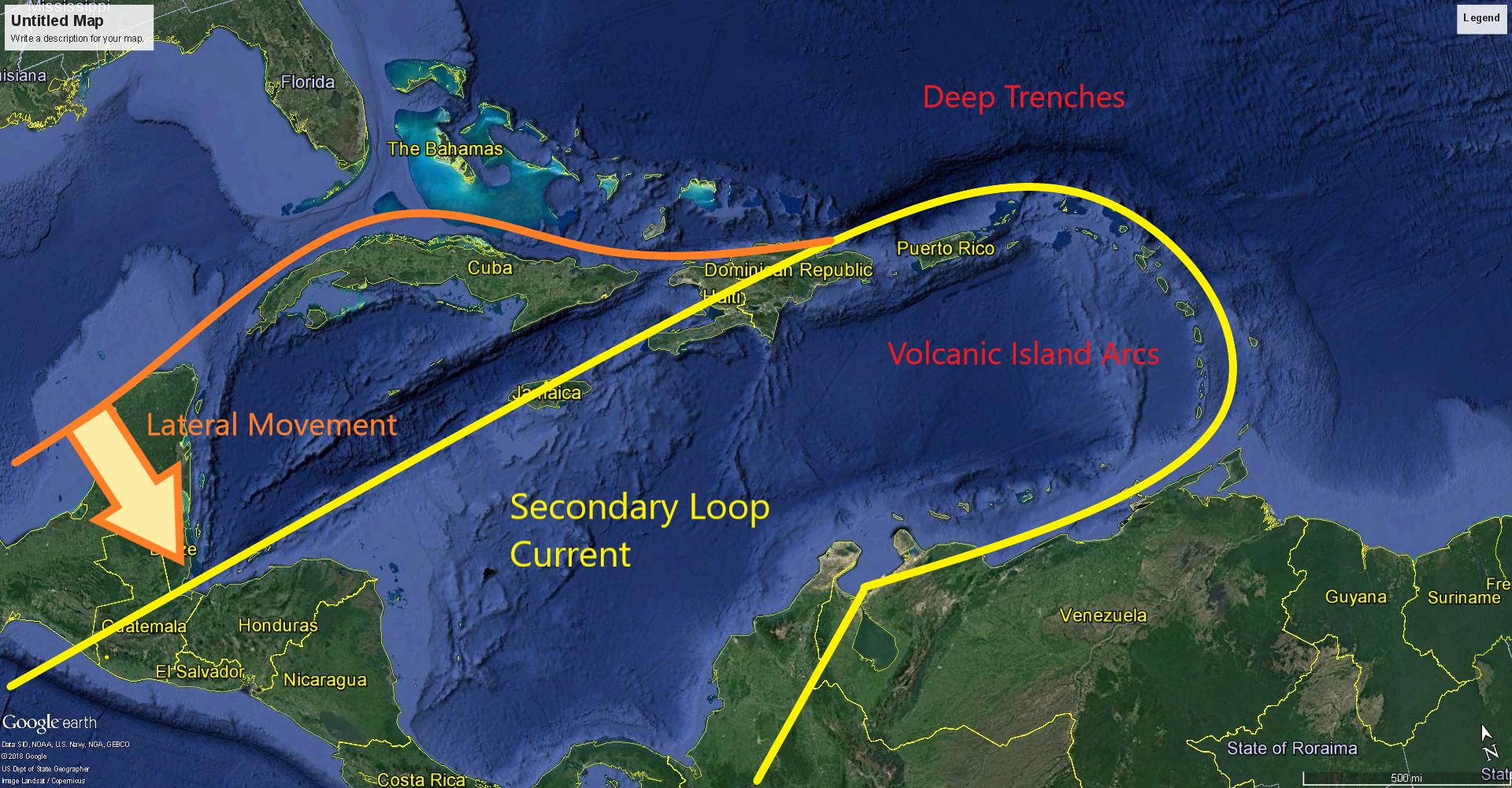
Then there are secondary current filaments that form ring currents that loop away, perpendicular from the primary current. One obvious secondary ring is on display in the deep ocean trenches and island chains in the Caribbean. This image shows the ring current that loops through the Caribbean from the Eastern Pacific Rise portion of the Ring of Fire.

444
Surface evidence of a ring current beneath the Caribbean Sea.

lateral28

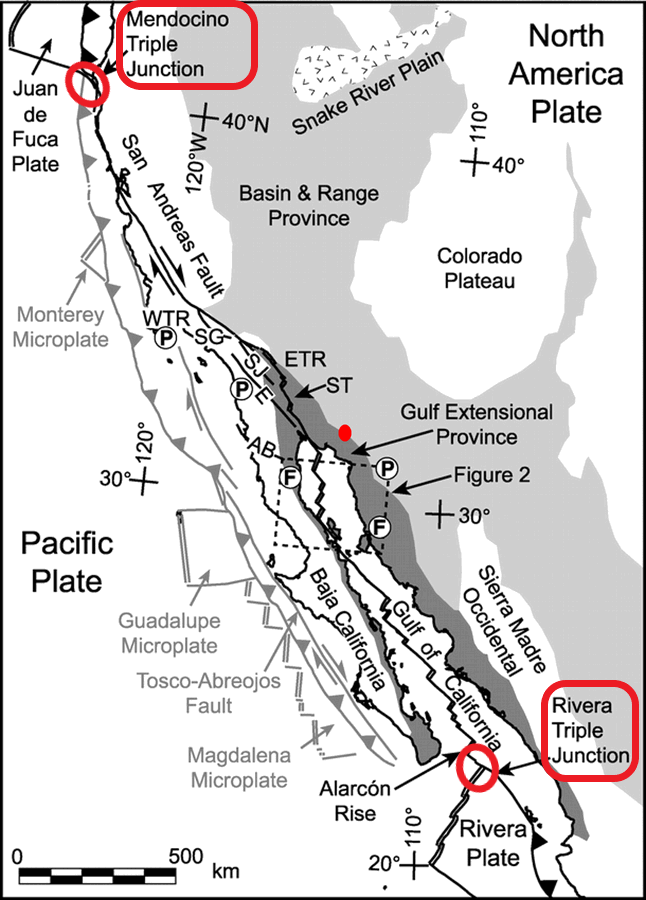
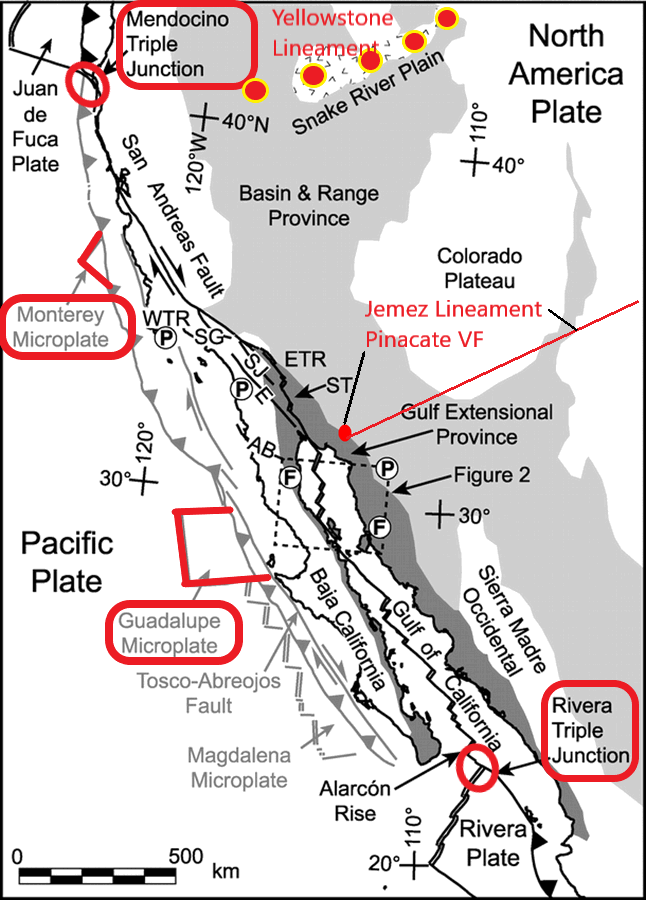
Where the secondary current connects to primary, the juncture is called a “triple junction”. Triple junctions occur at the plate boundaries. For instance, the Rivera Triple Junction is where the Rivera Plate meets the Eastern Pacific Rise (EPR). The Rivera Triple Junction is also where the Caribbean secondary loop connects to the primary. Triple junctions are known hot spots for volcanic and seismic activity, and magnetic anomalies.

The point is that there is correlation between secondary loops and fractures in the crust. Fractures are electro-mechanical signatures of the ground currents, and triple junctions indicate the juncture of secondary loops.

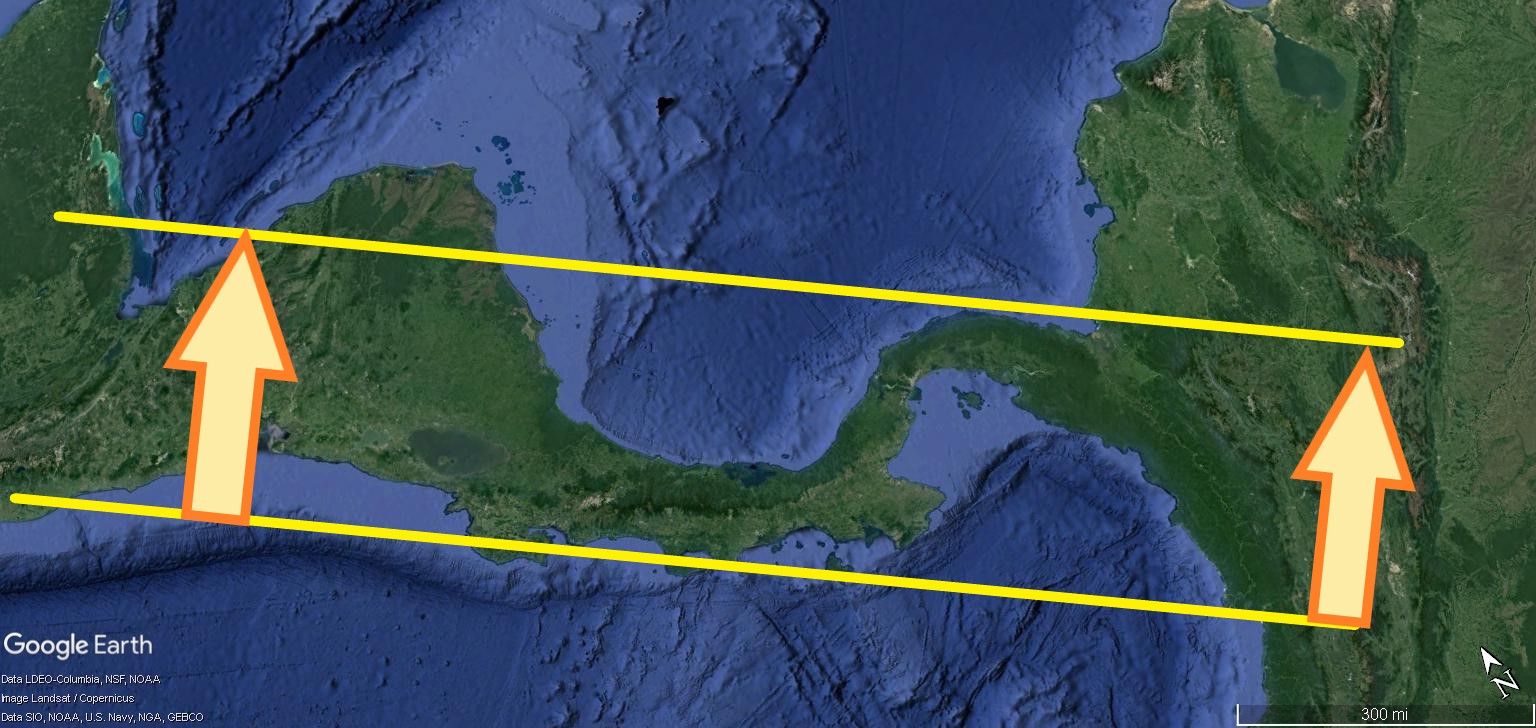
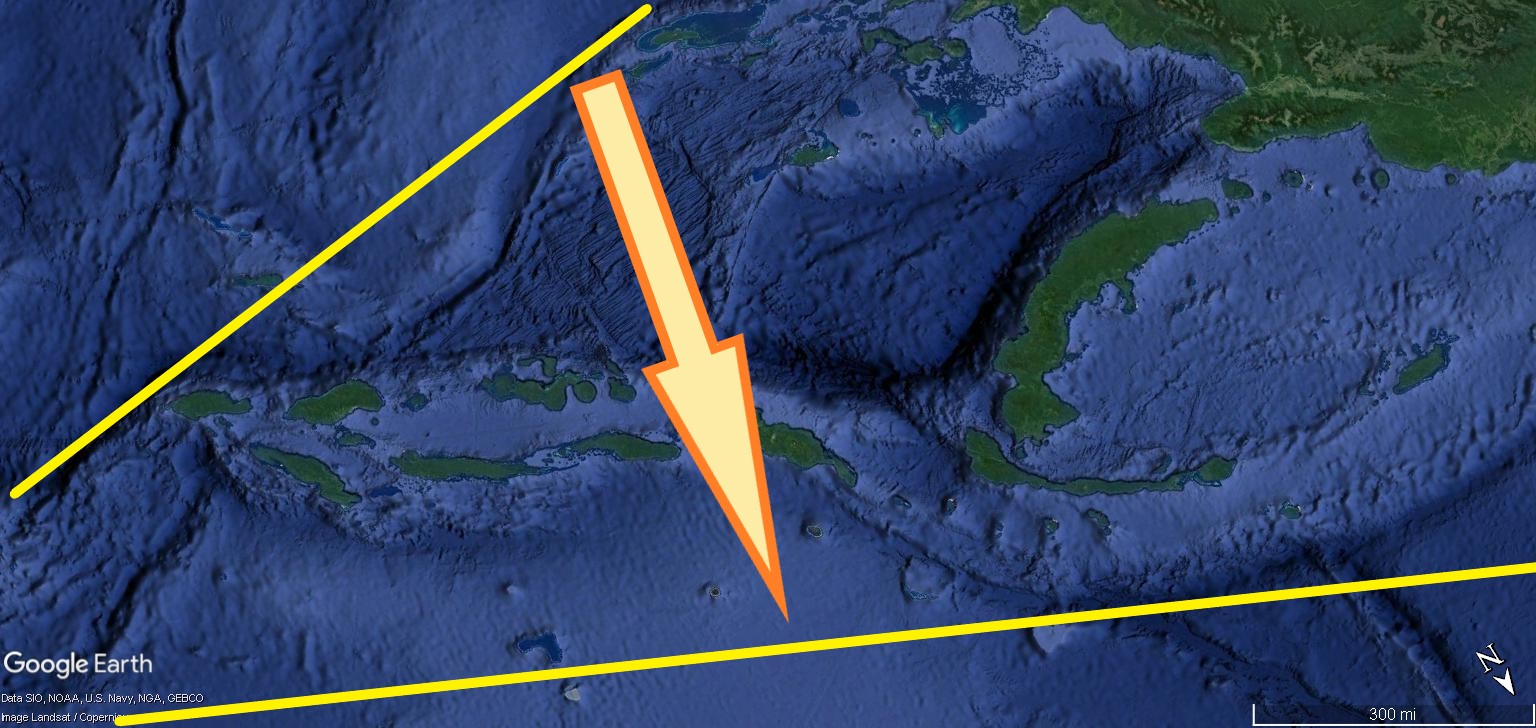
Another reason we can infer this ground current loop is the string of volcanoes along it. From Jamaica to where it hooks south to the coast of Venezuela, volcanic island chains are magnetic expressions of the Caribbean current loop. Islands appear to the inside of the loop, and deep trenches appear to the outside. The “right hand rule” tells us current direction is north in this loop, inducing hot current to well-up left of it’s path, and pulling down the sea-floor to it’s right.

loopcurrent22

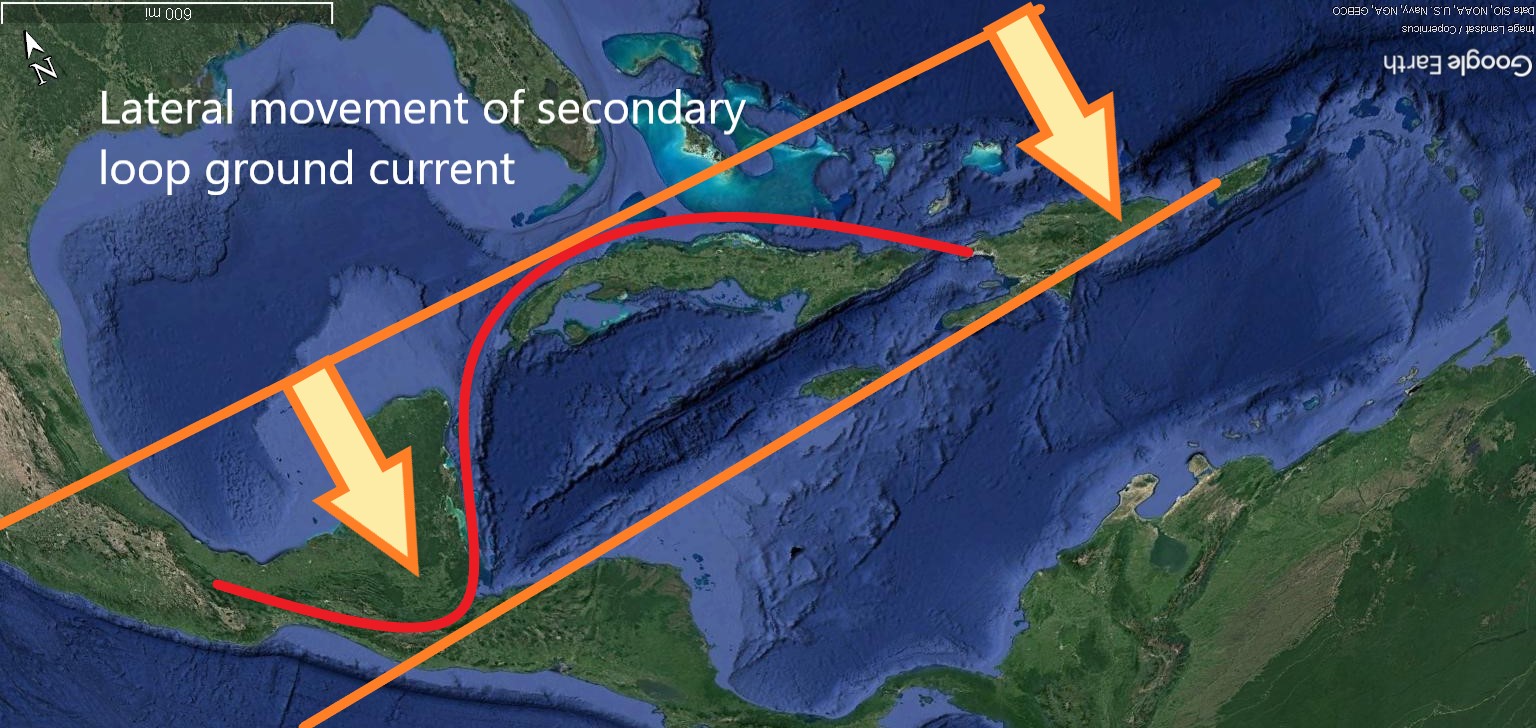
There is also evidence the current moved, snaking south to form the Cuban island chain before locking it’s position in a straight line. Where the current dives beneath Central America to the Rivera Plate in the Pacific, a volcanic lineament shows its path.

Mexico2Fig1_1000
Volcanic Lineament in Southern Mexico displays current loop.

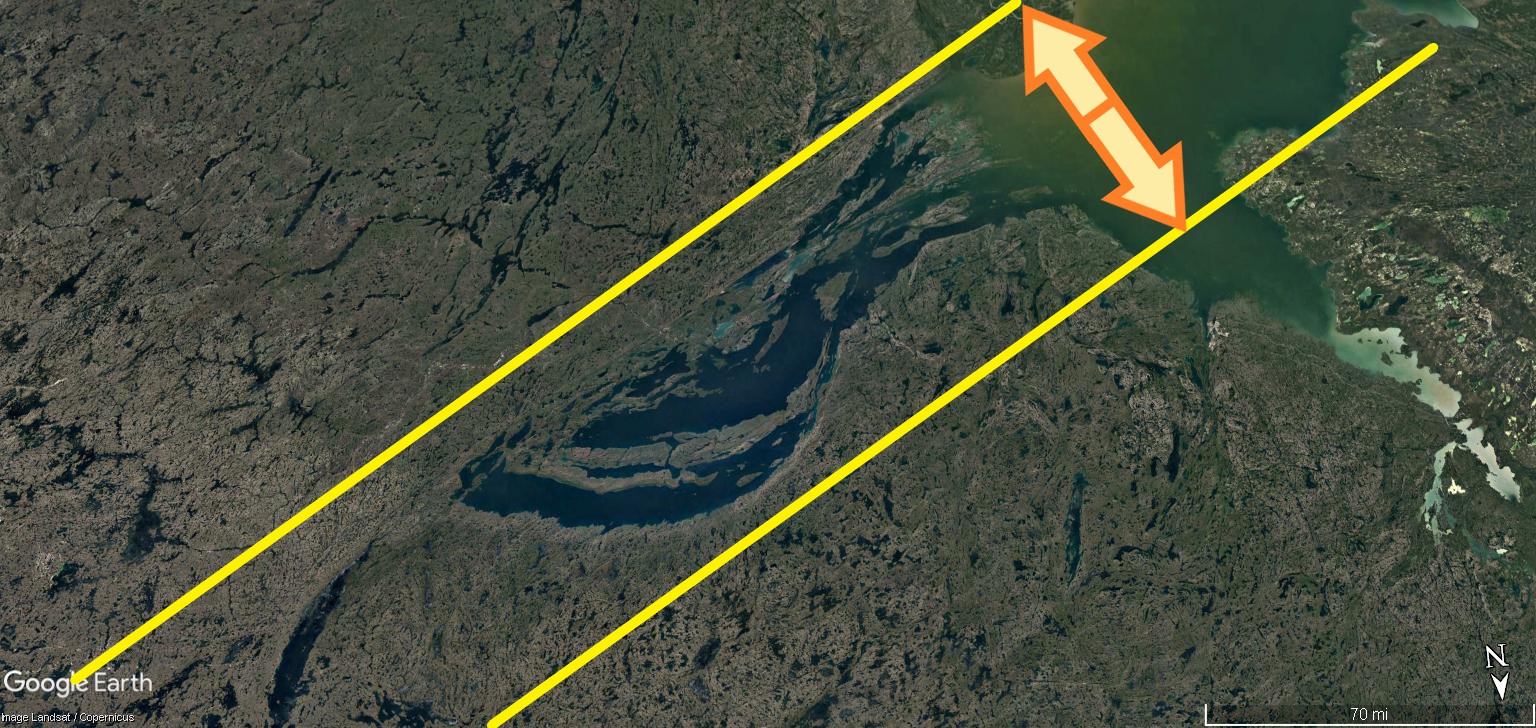
Lateral current movements of this type can be found all over the world, making ground current mapping fun. The momentum change in the current produces distinctive arcs of deep depressions, lakes, mountains and volcanic island chains, as the current first bends into sinuous paths before snapping straight. The sinuous curves show the resistance to compression, like a steel spring being squeezed.

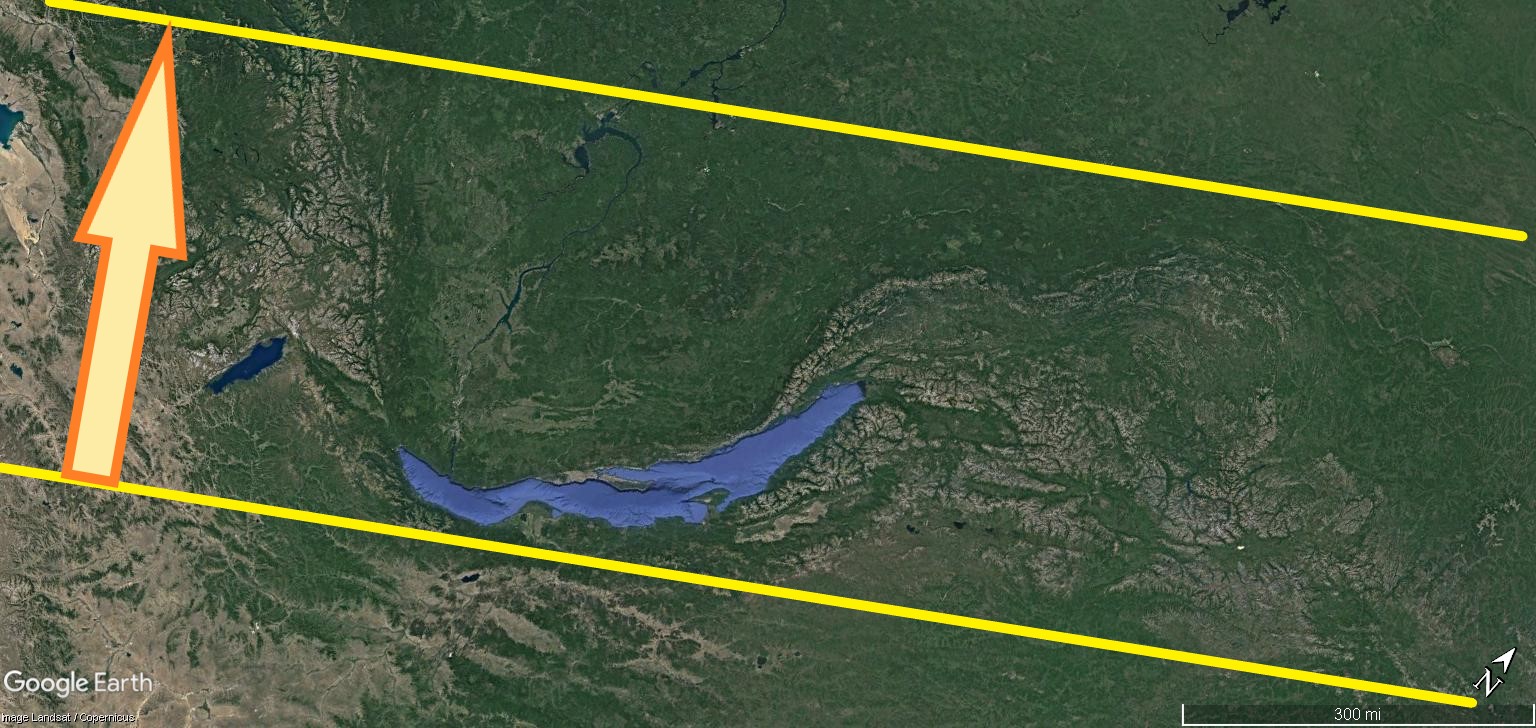
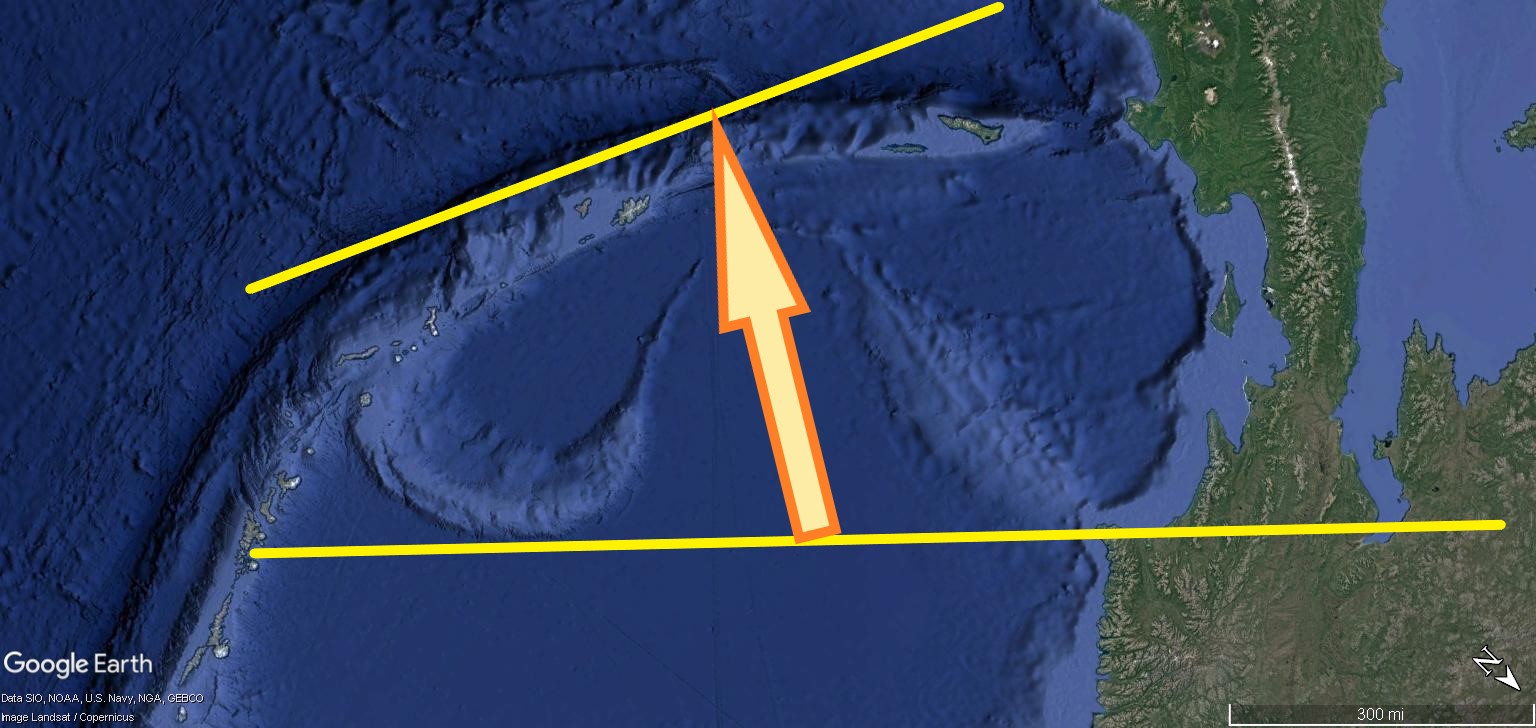
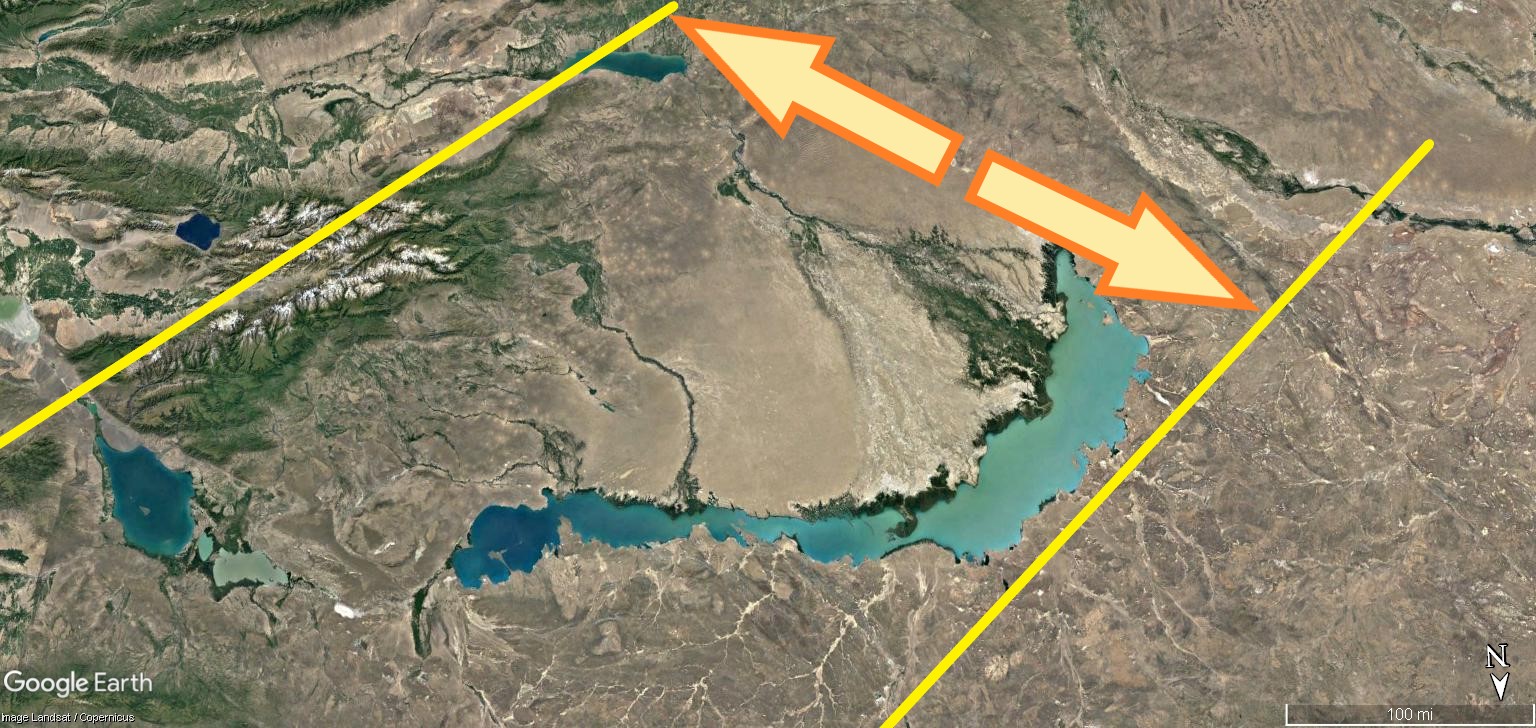
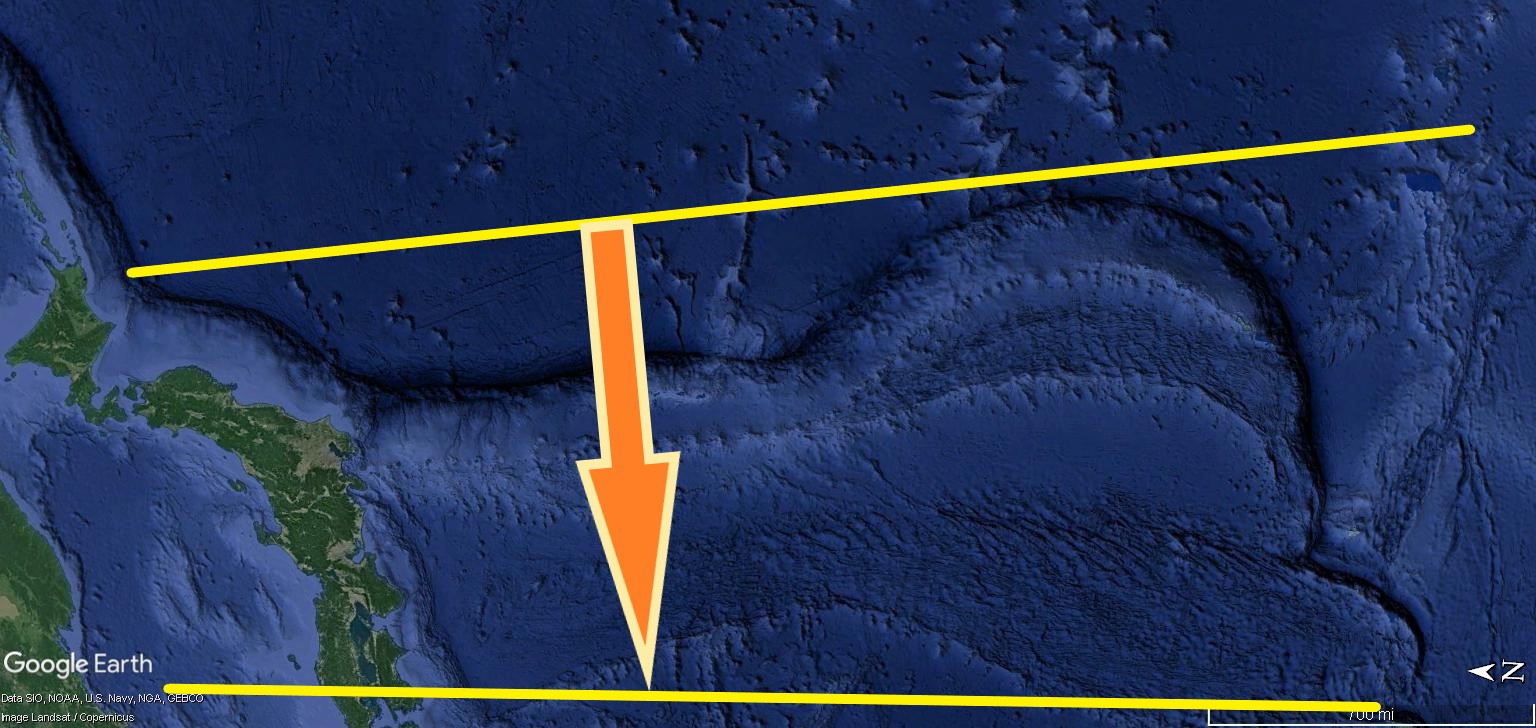
lateral1lateral3lateral7lateral6lateral4lateral8lateral2lateral9

The arrows in these images point the apparent direction of the lateral movement. Note there are a few arrows pointing both ways, meaning I’m not sure which way it went.

indexfils

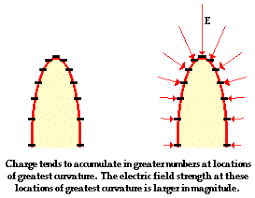
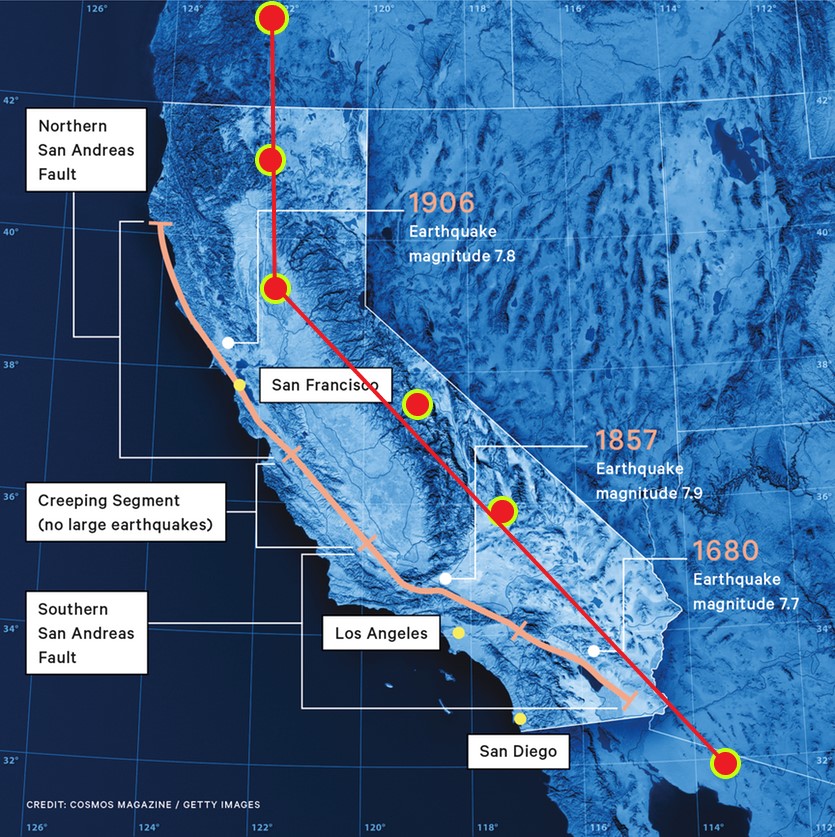
One of the reasons currents make these lateral moves is because each side of the loop flows in opposite directions, creating dipolar attraction that narrows the loop. Volcanic activity and faulting is greatest at the curvatures in the loop, because it is where charge density and change in momentum is greatest, producing the strongest electric fields.

If we apply this same basic morphology – that triple junctions are connections between primary and secondary currents, that secondary currents raise volcanoes and create depressions, and that lateral current movement occurs where these features are most prevalent, we can use this to infer a secondary current beneath North America.

The Great Attractors

Now let’s examine North America, and the epicenter of the storm over the Colorado Plateau. Thanks to Jupiter, we understand it’s wind patterns, how they correlate to the plateau, and we can now correlate those with the significant volcanic lineaments in North America, adding another layer of information to analyze.

LineamentEPR

The Ring of Fire is the most obvious path of a primary polar current. Along North America, this portion of the ‘Ring” defines the plate boundary and a lineament of strato-volcanoes from Alaska to Central America.

If you connect the volcanoes like dots, this portion of the Ring of Fire forms two lineaments, or straight line features down the west coast of North America.

The volcanic chains are the expression of induced current rising through the crust, and faulting is from electro-mechanical down force. The volcano lineaments are east of the faulting, implying a south directed current according to the “right hand rule”.

There are three other major lineaments in central North America’s interior. Yellowstone super-volcano is one end of a curving lineament of volcanoes in a trend that forms a part of the Snake River Valley across southern Idaho.

lavaplains

To the south, is a string of volcanic fields called the Jemez Lineament. The Jemez Lineament extends diagonally from the Pinacate Volcanic field in Sonora, Mexico, northeast across Arizona, to the border between Colorado and New Mexico.

tectvolmapNNM_LI

It’s bisected by a northwest-to-southeast lineament of volcanoes that include the San Francisco Peaks and the Uinkaret volcanoes on the North Rim of Grand Canyon.

SFField Quaternary fields_LI

With all of these plotted together on one map, a pattern begins to emerge that implies a secondary current loop beneath North America.

Consider volcanoes an electrode poking through the surface of the crust. Plotted, the Jemez and San Francisco Peak volcanic lineaments produce an almost perpendicular cross pattern, juxtaposed symmetrically across the Colorado Plateau from the volcanoes of the Yellowstone complex, and aligned with the Ring of Fire.

volcano_lines2_LI (4)

lateral29

The Jemez lineament aims directly to the Guadalupe micro-plate to the southwest, and to the arc of the Great Lakes to the Northeast

The loop appears to circle the Great Lakes and points back to the Black Hills in South Dakota, which appears to be an inflection point. From there it points to the Juan de Fuca plate in a direct line through Yellowstone.

It has a similar shape and size to the Caribbean current loop, with the base of the loop wider than the tip.

Similar to the Caribbean Loop, there is a significant depression at the tip. In this case the Great Lakes, but they reside on the inside of the loop, whereas ocean trenches are outside the Caribbean Loop.

loopcurrent

And where the Caribbean Loop has volcanic islands inside the curve of the loop, the North American Loop has maar craters (see “The Maars of Pinacate“), forming a series of circular lakes surrounding the arc of the Great Lakes. Only a few circular, or circular lake formations are highlighted here to show the trend.

lakes32

diatreme

Maars are volcanoes created by steam and other gases exploding from heat instead of spewing ash and lava. Smaller such expressions are known as karsts and breccia pipes. They are all forms of diatremes, and are often mined for uranium and precious metals, which the eruption leaves behind in the throat of the tube. The surface result is a crater instead of a cinder cone.

Further east there are long linear lakes, forming striations in the land normally attributed to glaciation. They may well be from glaciation, but the direction and orientation also suggest they could be from a contracting current loop passing below.

There is a large body of evidence for glaciation, and Electric Earth theories do not dispute, or conflict with the evidence. However several landscape features attributed to glaciation may be misinterpreted. These cuts are a possibility.

lakes27

The implication is that the loop current lies below aquifers that erupted in steam, creating the maars. And that the volcanic expression is to the outside of the loop, depressions to the inside, so current circulates north-to-south in this loop – opposite to the Caribbean Loop.

loopcurrent202

The shape of the Great Lakes, especially Lake Superior, show the sinuous shape of ground current movement. It appears the loop narrowed, or swung to the south, until the southern leg aligned to the Jemez Lineament.

lateralgrweatlakes2

The Yellowstone volcano lineament is a half circle, and also appears to be from ground current movement. In this case, the movement is north from the Monterrey Micro-plate, to the Juan de Fuca triple junction. This widened the base of the loop, with the pivot point of the shift at the Black Hills of South Dakota.

lateralyellowstone2

Tertiary Ground Currents and Surface Dipoles

Image990
Two like charge electrodes – either cathode or anode, have electric fields in opposition.

Since we regard volcanoes as electrodes poking through the crust, they should also be considered anodic, as they expel ionic matter. This charged matter is current in a circuit, and electric field lines between two anodes don’t connect – they repel each other. A circuit has to go somewhere, so there also must be cathodes to provide a sink for the currents.

The volcanic anodes spit ions into the atmosphere, so the circuit has to complete through the atmosphere, back to ground. We know how this happens. It’s called lightning. Specifically, “negative lightning”, which you may wish to review in “Nature’s Electrode“.

Where negative lightning strikes, it burns and blasts the land, initially causing a crater. But the return stroke draws positive ionic matter to it, leaving a mound. So a volcano is an anode spitting matter into the atmosphere, necessarily connected to a cathode, which is a lightning spitting thunderstorm drawing in-flow winds and matter to it.

Slide1

Negative lightning gathers positive surface ions to it, piling-up a mountain. It often produces winds in excess of Mach speed, producing tetrahedral shock features on the flanks. They come in a variety of forms, depending on the severity of the discharge and the material on the ground it affects.

Two prominent lightning fulgamites are juxtaposed, either side of Yellowstone, creating dipolar alignments. The Black Hills to the east, and Sacajawea Peak, in Eastern Oregon. The ground current runs straight through this alignment to the Juan de Fuca plate.

lyellowstoone dipoles1

lblackhills
Black Hills, S. Dakota

Asacajewea
Sacajawea Mountain Complex, Oregon

Note that both are very large mountain complexes, with multiple peaks. They form roughly circular mountain lobes surrounded by river valleys, like a moat around a castle.

dipole
Two opposite charge electrodes form a dipole, and the electric field is strongest in a straight line between them.

There are several more of these large fulgamites throughout the Colorado Plateau. Actually, there are millions of them, but most are small and are in proximity to the largest. Mapping the most prominent, along with the most prominent volcanoes, yields a picture of where tertiary ground currents flow.

Remember we have Primary and Secondary ground currents. Now there is a Tertiary current flowing close beneath the ground between anode and cathode spots.

Since we know an electric field between an anode and a cathode – a dipole – produces a field pattern with the maximum voltage gradient directly between them, we can connect volcanoes and their most proximate fulgamites with straight lines and get an approximation of the electric field at ground level.

Plateau complex6
Volcanoes (red), Fulgamites (blue), Dipolar Alignments (violet).

ldipoles2
Major dipole alignments (violet), primary and secondary ground currents (green).

If you’re having trouble picturing this, think of the electric field as a blanket held in the hands of firemen. The anodes and cathodes are where their hands hold the blanket. Presumably, they are going to catch a victim of a fire jumping from a high window, so they hold the blanket very tight. All the tension in the blanket is between their hands – single lines of tension, like ropes. The rest of the blanket is slack. So, just by knowing where the “hands are” – the anodes and cathodes – you know the basic topology of the blanket.

Now, consider that each of these lines of tension in the ground is just the bottom half of a loop that arches through the atmosphere. One leg of the loop is a volcano spewing, and the other is a raging thunderstorm of biblical proportion, it’s lightning and inflow winds building a mountain beneath.

Through the center of the loops flow jet-streams of induced current plasma. It is simple electromagnetic induction for a current loop to draw a plasma wind through it. So ground-level, horizontal jet streams pour through at ninety degrees to the loop. Consequently, we can draw ground winds perpendicular to the violet lines denoting major dipoles and create a wind map.

Plateau complex8_LI (2)
Wind map from electric field lines on the ground inducing current paths in the atmosphere.

And this wind map is eerily similar to the wind map generated from the pattern of tetrahedrons on wind-blown mountains and up-draft dome/down-draft crater pairs mapped in “Eye of the Storm – Part 4“.

updraftdowndraftrain_li (6)
Wind map from physical features on landscape indicating wind direction.

In fact, they produce virtually identical wind maps, except for the fact the electric field model cannot show high level winds. It only shows ground hugging jet-streams.

Mapping up-draft domes and down-draft craters with a true understanding of thunderstorms and cyclones is the only way to find vertical winds and understand the full, three dimensional current path.

So what does this mean? It means the firmament was formed by volcano, wind, lightning and electric fields due to Earth’s capacitance.

The wind is displayed by physical features, such as shock wave patterns that cannot have been formed seismically, or by erosion.

Jupiter_Great_Red_Spot_Animation
The Laboratory

The wind is displayed by ground current paths that produce dipolar nodes of volcanoes and fulgamites.

The wind is displayed by the footprints of up-draft domes and down-draft craters that portray the vertical dimension.

And we have an ongoing, observable laboratory experiment to compare with right here in this Solar system.


Thank you. Please hit the “like” button, if you liked it. Leave a comment, if you dare. Leave some money, regardless.

Quick Tip

The Daily Plasma is free to read, but the cost of publishing isn’t. Please leave a tip to show appreciation, and help defray expenses.

$5.00

Lightning Scarred Earth – Part 1

Originally Published in Thunderbolts. info

The blue-white arc of a lightning bolt stuns the senses. Blinding radiance, elemental beauty, awesome power and primordial danger flash into existence from thin air, and vanish before the mind catches-up. We stare, immobile, unthinking and awestruck.

In that moment, a channel of air the diameter of a quarter heats fifty thousand degrees, as trillions of electrons cascade to Earth. The volume of air blows-up, radiating energy across the spectrum, sending sonic booms across the sky.

Lightning also pummels the land, creating pressure waves exceeding seventy-thousand atmospheres  – that’s one-million psi. It can create a layer of shocked quartz and vitrify surrounding rock into glass.

Lightning is an interaction between Earth and sky. It’s cause is an electric field between the electric storm above and the ground beneath our feet. ‘Ground’ is also a technical term, meaning the ambient voltage potential of the soil.

Earth is a negatively charged body in space, and current flows up from ground to atmosphere, normally in a drift of ions and electrons that is invisible. Storms reverse the current flow, causing electrons to avalanche back to Earth.

The Earth and sky are part of a circuit. Storms result from capacitance in the circuit. The atmosphere stores energy in the form of ionic charge, and releases it through lightning, among other effects.

animation_16a The ground is one plate of the capacitor where positive charge collects. As negative charge builds in the cloud, it is repulsed from the ground below, and positive ions are drawn in.

The ground reaches up with plasma tendrils. They collect especially around tall structures, pooling densely at sharp projections, surrounding them with a halo of charge the cascading electrons target for connection.

When connection is made, the arc touches Earth, spreading current in horizontal arcs across the surface as much as twenty meters away. This is a death zone. If you are in it, you are part of a 200,000 amp circuit.

The horizontal arcing is a side flash – a scatter of arc tendrils that follow surface conduction across the ground, radially away from the point of impact. The ground potential, type and shape of surface influences the character of the side flash.

Dry sand acquires charge very easily. Lightning attracts charged particles, and will sweep sand to it leaving a display of the entire strike zone. Sand in the strike zone, where current surges across the surface, pulls inward leaving a shallow crater with a cone of sand in the center. It’s like grabbing a bedspread in the center, pulling it up and dropping it in a pile.

The following photos were taken near Kayenta, Arizona on desert plains to the south of Comb Ridge.

SAM_0403SAM_0405SAM_0404SAM_0407SAM_0402The form is like an anthill, but these are not anthills. Ants dig rock from below ground and pile it outside the hole. These are built the opposite. The sand is swept-up from the surroundings, leaving a pile at the center of a crater. Besides, these don’t have ants, or ant-holes.

SAM_0408
Darkened, fused sand pebbles dust the surface of the mound of powder. No ants, no hole.

The mounds of sand are composed of fine, almost powder sand. But the tops of the mounds are dusted with pebbles. The pebbles are sand drawn into the lightning channel that fused and fell back to Earth when the flame extinguished, falling to cover the mound, like candy sprinkles on an ice cream cone.

anthill
This is an anthill

Nothing grows inside the craters, or on the mounds. It’s as if the soil is sterilized. PH tests show the soil to be highly alkaline.

What meager growth there is are low, ground covering grasses and weeds around the perimeter of the craters.

arizonaThe desert in this region of Northern Arizona is carpeted with lightning strikes that left crater and mound features like these. The land is on the Colorado Plateau, just south of Monument Valley. They form what some call fairy rings when seen from the air.

The next images show clusters of them. The craters vary in size from fifteen to thirty feet in diameter, or larger. The size of the central cone is proportionate to the size of the crater, ranging from about eight, to eighteen inches tall.

LightningK1anno

0016
Fairy rings are lightning strikes that made shallow craters with central peaks. Nothing grows inside the strike zone. The darkest areas are covered in broken rock, except where lightning has excavated the craters.

The strikes especially cluster where black rock crusts over the sand. The lightning seems to have punched through, scattering rock and leaving the craters bare, where nothing grows.

Lightningk4Lightningk5

Whether the lightning is attracted to the rock, or the rock was made with the lightning isn’t known, but the rock provides a clue. It appears the lightning came in a coherent event that peppered the land, punching through and shattering the rock. That, at least, is how it appears. It’s as if there were two events. One that torched and melted the surface of the land, creating the cap rock, and a subsequent one that shattered the rock with lightning.

What amazes is the number of them clustered in particular areas. They rarely overlap, spaced fairly even, but randomly apart. There are hundreds of thousands, if not millions of them scarring the land just south of Comb Ridge.

Lightningk3Lightningk2

There are regions around the world where features like these carpet the land for hundreds of square miles. They are seen in desert lands especially, since there is little undergrowth to obscure them. The next image is from Namibia. Here the features connect with filaments of stream beds. But note how they connect in linear arrays, and branch radially like little stars. They are electrical discharge patterns.

Lightningnamibia1Lightningnamibia3Lightningnamibia2

Each feature seems to be a shallow basin, or spring where water collects. Map resolution doesn’t allow better detail. These features are larger than the Arizona features. Many cover several acres.

Much of the country of Uzbekistan is carpeted with similar features, as the following images from a small portion of eastern Uzbekistan show.

Lightninguzbekistan6Lightninguzbekistan2Lightninguzbekistan5Lightninguzbekistan4

The Uzbekistan features are larger and more numerous still. They also appear to be shallow basins where the geology is distinctly changed, and there appears to be a source of water. In the last image, there appears to be a home, or ranch with a livestock tank, well, or catchment at the center.

It makes sense that water is found where lightning has struck. Subsurface water is a source of ionization that intensifies charge density, and therefore the electric field, attracting lightning to it’s location. Standing surface water won’t do that because ions have no point to collect – they spread evenly over the surface of the water. But subterranean water is trapped in the earth, where ions collect and build concentration, locally intensifying the electric field. Pits, craters and rilles formed by lightning leave depressions over aquifers that are natural for springs and wells.

But what about larger features – bigger than pits and piles of sand. Can lightning make a mountain?

Volcanoes form mountains by extruding molten rock to the surface from hot pools of magma beneath the crust. This is conventional understanding, and it isn’t in dispute in the Electric Universe. After all, volcanoes can be witnessed doing this in real time. The resulting strato-volcanoes, cinder cones, lava flows, ash deposits and lahars are seen across the globe.

What creates magma chambers and causes them to erupt is not understood. Consensus science has a number of speculative theories based on conventional beliefs about the make-up and dynamics of the interior of the earth. It’s these theories EU has a problem with. EU theory proposes the mechanism for heating and erupting volcanoes is electrical discharge beneath Earth’s crust. But our theories are also speculative because there is no way to look inside the Earth to be sure.

One type of geologic feature attributed to volcanism can be challenged by EU Theory however. These are buttes believed by the consensus to be the ancient throats of volcanoes, where a magma plug froze in the throat, and later erosion exposed them leaving a hardened pinnacle.

280px-Shiprock.snodgrass3
Shiprock – made by Star People

Archetypal is Shiprock, a tall butte that lies near Four Corners, where the U.S. States of Arizona, Utah, Colorado and New Mexico meet. It lies in the heart of Navajo lands.

Some Navajo traditionalists argue Shiprock is the work of the ‘star people’. Could it be they know more about it than our consensus scientists do.

We can use this butte and the surrounding landscape to discuss how such features were actually formed by lightning in the distant past, when lightning was a thunderbolt of the Gods.  But first, let’s look at some of the absurdities in consensus theory concerning its formation.

Shiprock does sit near a region of true volcanic activity. Northern Arizona has volcanoes along the Mogollon Rim that lie to the South and West of the four corners region. This is part of a super-volcanic complex much like Yellowstone.

Yet Shiprock itself, and a number of similar formations are well removed from those volcanic fields, standing alone on the high desert plains. They are attributed to an ancient volcanic complex called the Navajo volcanic field, but are not surrounded by lava flows, ash deposits, or any other features provably volcanic in origin.

In fact, for these to be considered the throats of ancient volcanoes, the consensus assumes it formed 2,500–3,000 feet below Earth’s surface, and became exposed after millions of years of erosion. In other words, 3,000 vertical feet of surrounding lands had to be completely eroded away, leaving just the butte poking out of the flat, sandstone desert floor.

Shiprock is 1,500 feet of broken rock, meaning 1,500 feet of surrounding plateau washed away, in addition to the 3000 feet of overburden, along with the lava fields, ash deposits and other traces of the volcanic field, without washing away the butte.

Let’s just say that it’s hard to conceive how wind and water could have washed across the land carrying away trillions of tons of other rock, but left this shard standing. It’s not made of kryptonite. It’s no harder that the surrounding sandstone. Exposed to millions of years of such abuse, it would have dissolved like a pop-sickle in an Arizona summer.

Nor is there evidence of how, or where all this material disappeared to. There is no deposit of silts, or remains of past river channels anywhere in the western hemisphere to provide evidence of this. How any river, or inland sea could have washed the land away without a trace, leaving these ‘volcanic plugs’ is a mystery that the consensus can only explain by invoking billions of years. It’s the only excuse they know, and they feel it’s safe as long as they ignore the Electric Universe.

Shiprock and its neighboring buttes are made of sandstone and a similar material called minette. Minette is chemically the same as the surrounding stone except it is highly potassic and apparently fused together by heat. The composition of the rock is not hard, highly compressed, or consolidated such that it could withstand the kind of flood waters required to wash away the surrounding land. Nor is it like any rock we can witness being produced by volcanoes today. A more plausible and responsible theory is that they were made the way the Navajo say it was made.

In Part 2 of Lightning Scarred Earth, we’ll look closer at Shiprock and other features caused by lightning, and their role in mountain building.

Quick Tip

Please help support The Daily Plasma.

$2.00

Cannibal Bigfoot

That’s the rumor, you know. It’s been around for centuries. Though Native American’s often relate Bigfoot as a nocturnal, petty trickster who steals salmon, there are also legends of hairy devils with evil intent.

http_a.amz.mshcdn.com_wp-content_uploads_2015_11_curtis4x5-6
Photo By Edward S. Curtis – Library of Congress

The Shampe of Choctaw fable,  Ts’el’eni, the woodman of Athabaskan’s in Alaska, the Boqs of the Bella Coola, and Tsiatko, Stick Indians of Salish legend in the Pacific Northwest are a few examples. These big hairy creatures were known for stealing women and children, and eating people.

The Windigo, known to many tribes, is associated with evil. In times of famine, it ate human flesh and forever has a taste for it. There are also the Teihiihan, the little cannibals of Cheyenne and other tribal lore, described as something like a dwarf Bigfoot that entices children to play – and eats them.

Hopi believe Bigfoot is a harbinger of strife and doom. He shows himself to fellow man as a message that human behavior has strayed from the creator’s plan, and an accounting is coming due.

http_a.amz.mshcdn.com_wp-content_uploads_2015_11_curtis-6
Photo by Edward S. Curtis – Library of Congress

It’s not a cannibal unless it’s human. Otherwise it’s just another predator. Cannibal means a particular type of predator far more chilling to contemplate. The fact Native Americans call it cannibal betrays their belief in what it is. It’s the hairy man of the forest, a brother tribe of people.

Everyone has opinions, including a majority who outright deny its existence. But if you believe in the creature, you’re probably on a spectrum of opinion that runs from a big, relic ape, to a close cousin of mankind. Perhaps an archaic race similar to Neanderthal, or even a hybrid race that interbred with us.

Personally, I suspect they are relic hominids evolved from the same branch of genetic tree we are from. Shave Patty, the Bigfoot in the famous Patterson-Gimlin film, put lipstick and a dress on, and she’d have luck getting picked-up at the Bashful Bandit, my local biker bar.

2222
Photo by Roger Patterson

That seems to be the way Native Americans think about Sasquatch. They are the wild people of the woods, not another animal. They are feared and respected, and not to be allowed near children. They are not something to go looking for.

Enter the ancestors of mad Englishmen. Have you noticed Bigfoot hunters are usually white people? Non-believers account this to the ignorance of white trailer-trash folk, like me, who prefer a walk in Nature to working off the Mercedes payment all day.

This makes no sense to me. I’ll believe an outdoors man about the woods, no matter what the armchair people say. I think it’s because I belong to the only race in denial about Bigfoot.

Genetics experts say non-African people carry around 4% Neanderthal DNA, whereas Africans have hardly any. Maybe there is something dark in the Caucasian past we’re still dealing with. Perhaps that is why it’s existence is so vehemently denied by urbane people who consider themselves the pinnacle of civilization. The realities of the past are too uncomfortable to think about.

One reason Bigfoot fascinates many people is the idea humans and Neanderthal coupled in Europe in the distant past. And in Asia and Melanesia, DNA shows that people slept with Denisovan’s. The term ‘slept with’ is probably not accurate. Rape in the woods is more likely.

It points to a past when catastrophe decimated the population. There have been planet-wide catastrophes that nearly wiped life away, and the human race was reduced to small groups of survivors.

For life to go on, there had to be compromises. Brutal as it seems, there had to be cross-breeding. Perhaps forcibly and uninvited, but necessary nevertheless. It’s even believed cross-breeding bolstered the human immune system, giving us immunity to some disease.

So if there is the remnant of Neanderthal and Denisovan in the gene pool, that means at one time there were people born of interbreeding that had a fifty-fifty blend. Over time those individuals bred with other humans and the gene pool became diluted. Now there is a remnant of their DNA still carried in our blood.

But the corollary must also be true. Some of those hybrid babies were raised by surviving Neanderthal and Denisovan tribes. They would have bred in those communities, diluting the human gene. There must have been a hybrid being whose race was much less human. A feral race with more DNA of the ‘other thing.’

One can imagine they would be smart enough to survive. Smart enough to use rudimentary tools and even communicate.  They could have come from Europe and Asia to populate the New World alongside human beings.

One could also imagine they were hunted mercilessly for indiscretions in the past. Nothing puts a man into fight mode faster than someone stealing his wife and eating his children. They would have been attacked and chased into hiding, like so many Hollywood bigwigs. They would have been the Harvey Weinstein of the time, rightfully shunned for predatory sexual behavior. Harvey even looks Neanderthal, come to think of it.

They got away with it for awhile, when calamitous weather, pestilence and famine decimated life. Survival meant taking what was needed wherever it was available, and the bigger and stronger hominids had the upper hand. Humans didn’t choose to be the wives, or the dinner for their ‘brother’ tribe. But humans had to wake-up at some point and say, “enough!” The Neanderthal and Denisovan would have been hunted down and made to account.

Feared, hunted and killed, and smart enough to understand their persecution, the remnants of those races hid from the enemy. Now they watch and keep track of us when we enter their territory, but like pedophiles and creeps, know better than to show themselves. Except when opportunity allows instinct to take over and satisfy a nasty, old habit.

Native people aren’t the only ones to have these legends, We all do, regardless of race. My people have just sanitized the stories and called them fairy tales to discredit them, but like all stories they begin from a grain of truth. Werewolves and boogeymen, giants and little people have origins of truth in the distant past. Horrible truths.

What happens in the mountains seems to bear this out. People go missing, without rhyme, or reason, never to be seen again. These disappearances have a pattern that is disturbing. David Paulides is an ex-cop and writer who documents strange and inexplicable disappearances in the National Forests.

 The pattern repeats time and again. People go missing without a trace. If a trace is found, or even a body, they are found far from where they disappeared, sometimes in areas nearly impossible to reach.

Small children are found miles from where they vanish, across rugged, mountain country. People disappear while companions are just a few feet away. Experienced outdoors men take a walk and never come home. The typical profile is the last person on the trail, a child who wanders out of sight, or a solo hiker.

The disappearances often occur near a boulder field, rocky pinnacle, or cliff. As I’ve experienced myself, these are hangouts for Bigfoot. They also occur just prior to storms. Maybe an impending storm is a trigger. The blood rises with electricity in the air. A storm also provides cover – a better opportunity to get away.

Dogs trained for tracking can’t find them. Whatever scent they pick-up seems to create fear, and they refuse to track. Some lay down and whimper.

The mountain ranges I frequent have occurrences recorded that fit the profile. The camp host at one of my favorites called it “the last mountain in Arizona,” meaning it’s not overrun by anybody. Well it is, because there are billions of dollars worth of telescopes up there, but the astronomers keep to themselves, fenced inside the observatory. Otherwise, locals go there to hunt and camp, there are a few backpacking trails, and a smattering of cabins, but that’s all.

Many of the locals who go there, both Native American and otherwise, know of the presence of Bigfoot. Reports of intimidation are disturbing. People hear trees snapped in anger in the darkness at the edge of their campsites. Campers get pounded awake with blows that leave dents in the walls of their travel trailers. They hear guttural, unintelligible talking in some jabberwolky language. And there is howling at night.

I listened to howling that sounded like a cage of monkeys fighting a lion. Deep growls and grunts accompanied chimp-like squealing. It was a night of full moon at an elevation far above coyote country. It wasn’t coyote’s.

A few years ago, a woman reported to be mentally disabled walked just a hundred yards behind her family near a campsite in an adjacent mountain range. She disappeared without a trace within sight of her family, who were watchful because of her handicap. She vanished in a brief moment when they turned their attention away. And not a trace could be found. There was no trail, or track to follow.

The prior year, another woman, middle aged, camped with a group of people she didn’t know well. She’d been invited by a friend, but she wasn’t a regular in the group. As they partied around the campfire one evening, she left on her own to watch the sunset from rocky cliffs about a quarter-mile away. The cliffs overlooked a canyon named Hell’s Hole.

This is another common theme. Sightings and disappearances happen in locations with demonic names. One has to wonder why these places were named that way in the first place.

Of course, she was never seen again. Her belongings were left in her tent and no sign of her could be found. The searchers used cadaver dogs, lowered by rope to find her body in the cliffs below, because it seemed that was the only way she could have gone. They found nothing and the mystery remains.

yeti
Bigfoot of the Urals – Menk filmed by the Dyatlov Party before they died.

From those same mountains, another story may shed light on what happens. It comes from an elderly woman who camped there with her parents as a little girl. She says she was six years old at the time, so this occurred in the sixties.

She sat on a log in the woods in sight of her parents when she heard something behind her. She turned around to see a big, black creature behind a tree. It was creeping up on her, she said, crawling from tree to tree and hiding behind logs. She thought it was a bear, until it stood up and she saw its face looked human. She ran to her parents and got away, her parents unaware of anything.

I came upon the trunk of a large tree hung upside down, cradled in the branches of another, with other trees leaned against it tee-pee fashion. I studied it trying to fathom if it could have happened naturally. It didn’t seem plausible.

As I scouted around the area, a path, or game trail led through brush, and I followed it a few yards to where it came to a boulder outcrop. As I reached the outcrop, I heard children playing, and realized it overlooked a campsite. The campsite was down the canyon, maybe five hundred feet below.

DSCI0023
Typical tree structures mark a Bigfoot Trail

When I climbed onto the rocks, I was met with rock clacks. Something began tapping a substantial rock against another, warning me away. It tapped repeatedly, and not with a little pebble that a squirrel, or bird could pick up. It was a rock I’d gauge as big as my hand. I turned around and left, with the creepy realization that whatever clacked the rock was sitting in that boulder outcrop watching the kids play below.

In every instance I’ve seen, their trails lead uphill to natural lookout sites, usually at large granite outcrops. A ridge, or mountain top with a cap of rock that overlooks a campsite, or roadway is a likely spot.

When I have approached such areas, I have several times heard whoops. On one occasion, crossing a meadow towards an outcropping of boulders, there was a distinct whoop from the treeline to my right, and an answering whoop from the boulders. They were communicating a warning I was coming.

The interesting thing is that I parked my truck and fiddled around next to it for several minutes before I started walking towards the boulders. The whoops came only after I’d left the road and committed across the field. I’m sure the lookout could see me the whole time, but didn’t alarm until I started their way.

They watch us. They hang out in the rocks and trees and watch every move we make. They see us coming as soon as we start. They stay hidden and keep their distance. If we approach they fall back. Only if you keep invading their area do they start clacking rocks, or throwing them. To my knowledge, I’ve never had a rock thrown at me, although a pine cone did hit the car from a clear blue sky once.

Sightings of Bigfoot most often occur on roadways. It’s their biggest vulnerability. We’ve criss-crossed the land with big swaths naked of trees. Where there are trees, the Mountain Devil can’t be seen, except for the occasional glimpse, or surprise encounter. It’s rare they are surprised, but they have to cross roads.

Away from the trails and roads, in areas overgrown with underbrush, beneath peaks and ridges, where dead trees lean against each other, and there are rocky outcrops, and boulder fields – that is where they live. To enter is to experience them watching you, hear their whistles, whoops and clacks, and find their scuffs and footprints.

I filmed the following clip at Hell’s Hole, the location where the woman vanished. You’ll see several things in the video.

First, the trail was blocked every hundred yards, or so with broken trees. I was entering an area that had been closed all winter, and just reopened. I knew from the prior year it was a hot spot, where campsites coincide with access to a creek and one of their trails.

The further I went down the trail, the more trees I found felled, and the more obstacles blocked my way. It was as if, after the roads were closed and people had left for the season, they went-off on the campsite and road, tearing down trees in the hope maybe it would keep people from coming back.

At first, I maintained skepticism. The snows and winds of winter could have knocked the trees down. The further I went, however, the more apparent it became there was more than wind and snow pack at work.

On the way, I found a footprint. The toes impressed perfectly in the mud, but the heel landed in foliage making it hard to judge its length. It was at least twelve inches, but might have been as much as fourteen. It’s width was half-again the width of my bare foot – five inches, or more, in an area I had trouble walking in high boots. The ground was covered in brambles and broken trees. You can watch the video and judge for yourself if a human would walk barefoot in that country.

footprint2anno
The footprint is bound by the arrows, toes to the left.

footprint1anno
The cap rests just inside the print.

I followed what I suspected was a track they’d made. The ground was covered in fallen trees, browning ferns and broken twigs. Through it all, there was a distinct trail of steps, like post-holes in the dry ferns that left them broken down. The footprint appeared along the track in a rare patch of bare soil.

I had no plaster, which is a shame because I think it would have cast very well. I placed a water bottle along the edge of the print with the cap resting inside for scale. The print was flat, with a hint of a rise just left of the bottle cap that may have been at the mid-tarsal break. The toes prints are seen, with the big toe splayed away from the others.

A mid-tarsal break, and the ability to splay toes for balance, is characteristic of Bigfoot prints according to Dr. Grover Krantz, and Dr. Jeff Meldrum, both qualified experts in the subject. The pictures I took are not good as the mid-day sun beat straight down, making it impossible to keep shadows away, or see what I was framing.

The tracks led to the boulders above Hell’s Hole, the very place I was I was heading. The same place searchers lowered cadaver dogs to look for the missing woman. I had Ginger with me. She almost never barks, and only growls when she means business. She started growling almost the moment we reached the boulders. At the same time I heard a repetitive knock on wood. Knock-knock…knock-knock-knock. Knock-knock…knock-knock-knock.

This is on film in Part 2, but the knocking isn’t picked-up by the camera. It wasn’t the machine-gun rata-tat-tat of a woodpecker, but a slow and precise rhythm, like keeping time with a tune. Ginger refused to follow me any further in that direction. She stood her ground and growled.

I don’t know any normal forest animal that makes a knock like that. I had the feeling the playful sound was meant to entice me. Part of me wanted to go find the source, even though Ginger was growling. I couldn’t put the leash on and drag her, because there were too many trees broken down. I had to let her free to run her own obstacle course, but she refused to follow me.

We stayed long enough to take some film and left. I didn’t feel threatened. In fact, after a few minutes I felt whatever was making the knocks was gone. On the way out, though, I heard a solid wood-knock from a different direction.

It’s at this point I generally turn around, anyway. If I hear knocking, or whoops, I don’t go further. I know that won’t get me a photo op, but there is something about intruding where you’re not wanted. To be a paparazzi, even a Bigfoot paparazzi, is to be a cad, intruding on others privacy for the hope of a photo to sell.

Besides, I don’t want my head torn-off.

Interesting Resources:

Rise of the Warrior Apes … new perspective on our not-so-nice cousins, the chimpanzee.

From Discovery UK

Tolkien’s World – Cousin Species…

Update: They are smarter than you think…Can Great Apes Read Your Mind? from “The Conversation

We shared the planet with pre-modern humans…Science DailyRed Deer Cave People…less than 14,000 years ago.

Homo Floresiensis…17,000 years ago – hobbits!

NeanderthalDenisovan…30,000 to 70,000 years ago. “The Truth Behind the Neanderthal Case“…a good documentary. Professor Tom Higham…”When Neanderthals and Modern Humans Meet” lecture at University of Oxford.

New genetic data on aboriginal  Australian’s…Mystery ancient human ancestor found in Australasian family tree

What were they like…Super Predators?

What are they like…1967…”Patterson-Gimlin“…the full Munn’s Report.

apattfullclr

Documentary: Stranger than Fiction – “The Patterson Film”

bigfoot
Most recent sighting.

For the price of covfefe…

Please leave a tip to support The Daily Plasma.

$2.00

Lightning and Megaliths – The Connection

Lightning…

The blue-white arc of a lightning bolt stuns the senses. Blinding radiance, elemental beauty, awesome power and primordial danger flash into existence from thin air, and vanish before the mind catches-up. We stare, immobile, unthinking and awestruck.

In that moment, a channel of air the diameter of a quarter heats fifty thousand degrees, as trillions of electrons cascade to Earth. The volume of air blows-up, radiating shock-waves to peel and boom across the sky.

Lightning also pummels the land, creating pressure waves exceeding seventy-thousand atmospheres  – that’s one-million psi. It can create a layer of shocked quartz and vitrify surrounding rock into glass.

Lightning is an interaction between Earth and sky. It’s cause is an electric field between the electric storm above and the ground beneath our feet. ‘Ground’ is also a technical term, meaning the ambient voltage potential of the soil.

Earth is a negatively charged body in space, and current flows up from ground to atmosphere, normally in a drift of ions and electrons that is invisible. Storms reverse the current flow, causing electrons to avalanche back to Earth.

The Earth and sky are part of a circuit. Storms are capacitors in the circuit. They store energy in the form of ionic charge, and release it through dielectric breakdown of the atmosphere, causing lightning, among other effects.

animation_16a The ground is one plate of the capacitor where positive charge collects. As negative charge builds in the cloud, it is repulsed from the ground below, and positive ions are drawn in.

The ground reaches up with plasma tendrils. They collect especially around tall structures, pooling densely at sharp projections, surrounding them with a halo of charge the cascading electrons target for connection.

When connection is made, the arc touches Earth, spreading current in horizontal arcs across the surface as much as twenty meters away. This is a death zone. If you are in it, you are part of a 200,000 amp circuit.

The horizontal arcing is a side flash – a scatter of arc tendrils that follow surface conduction across the ground, radially away from the point of impact. The ground potential, type and shape of surface influences the character of the side flash.

Dry sand acquires charge very easily. Lightning attracts charged particles, and will sweep sand to it leaving a display of the entire strike zone. Sand in the strike zone, where current surges across the surface, pulls inward leaving a shallow crater with a cone of sand in the center. It’s like grabbing a bedspread in the center, pulling it up and dropping it in a pile.

The following photos were taken near Kayenta, Arizona on desert plains to the south of Comb Ridge.

The form is like an anthill, but these are not anthills. Ants dig rock from below ground and pile it outside the hole. These are built the opposite. The sand is swept-up from the surroundings, leaving a pile at the center of a crater. Besides, these don’t have ants, or ant-holes.

SAM_0408
Darkened, fused sand pebbles dust the surface of the mound of powder. No ants, no hole.

The mounds of sand are composed of fine, almost powder sand. But the tops of the mounds are dusted with pebbles. The pebbles are sand drawn into the lightning channel that fused and fell back to Earth when the flame extinguished, falling to cover the mound, like candy sprinkles on an ice cream cone.

anthill
This is an anthill

Nothing grows inside the craters, or on the mounds. It’s as if the soil is sterilized. PH tests show the soil to be highly alkaline.

What meager growth there is are low, ground covering grasses and weeds around the perimeter of the craters.

arizonaThe desert in this region of Northern Arizona is carpeted with lightning strikes that left crater and mound features like these. The land is on the Colorado Plateau, just south of Monument Valley. They form what some call fairy rings when seen from the air.

The next images show clusters of them. The craters vary in size from fifteen to thirty feet in diameter, or larger. The size of the central cone is proportionate to the size of the crater, ranging from about eight, to eighteen inches tall.

LightningK1anno

0016
Fairy rings are lightning strikes that made shallow craters with central peaks. Nothing grows inside the strike zone. The darkest areas are covered in broken rock, except where lightning has excavated the craters.

The strikes especially cluster where black rock crusts over the sand. The lightning seems to have punched through, scattering rock and leaving the craters bare, where nothing grows.

Lightningk4Lightningk5

Whether the lightning is attracted to the rock, or the rock was made with the lightning isn’t known, but the rock provides a clue. It appears the lightning came in a coherent event that peppered the land, punching through and shattering the rock. That, at least, is how it appears.

What amazes is the number of them clustered in particular areas. They rarely overlap, spaced fairly even, but randomly apart. There are hundreds of thousands, if not millions of them scarring the land just south of Comb Ridge.

Lightningk3Lightningk2

There are regions around the world where features like these carpet the land for hundreds of square miles. They are seen in desert lands especially, since there is little undergrowth to obscure them. The next image is from Namibia. Here the features connect with filaments of stream beds. But note how they connect in linear arrays, and branch radially like little stars. They are electrical discharge patterns.

Lightningnamibia1Lightningnamibia3Lightningnamibia2

Each feature seems to be a shallow basin, or spring where water collects. Map resolution doesn’t allow better detail. These features are larger than the Arizona features. Many cover several acres.

Much of the country of Uzbekistan is carpeted with similar features, as the following images from a small portion of eastern Uzbekistan show.

Lightninguzbekistan6Lightninguzbekistan2Lightninguzbekistan5Lightninguzbekistan4

The Uzbekistan features are larger and more numerous still. They also appear to be shallow basins where the geology is distinctly changed, and there appears to be a source of water. In the last image, there appears to be a home, or ranch with a livestock tank, well, or catchment at the center.

It makes sense that water is found where lightning has struck. Subsurface water is a source of ionization that intensifies charge density, and therefore the electric field, attracting lightning to it’s location. Standing surface water won’t do that because ions have no point to collect – they spread evenly over the surface of the water. But subterranean water is trapped in the earth, where ions collect and build concentration, locally intensifying the electric field. Pits, craters and rilles formed by lightning leave depressions over aquifers that are natural for springs and wells.

Megaliths…

There have been times in the past when electric storms were far more severe than we experience today. That is one cornerstone of Electric Universe cosmology – that cataclysms in the past have an electrical cause due to events in the Solar System. Mythology records Thor’s Hammer, Neptune’s Trident and Zeus’ Thunderbolt, along with stories of the heavens in chaos.

To understand enigmas of the past requires first understanding what the environment was like. Are these carpets of lightning evidence of what the ancients experienced? And if so, is there other evidence besides stories from past epochs?

The only way to protect against a storm so intense is to get below Earth, or shelter beneath something that will serve as a lightning rod to route current to ground safely.

A lightning rod is a conductive path for current to reach Earth. It channels current to ground so it doesn’t spread out and reach you, and the things you want to protect. It provides a Faraday cage, or zone of protection, because it is more conductive the current flows through it instead of you.

So consider the function of standing stones. The megalithic stones erected thousands of years ago in circles and causeways. Or erected in dolmen formations with roof stones, as if refuge from demons. Never mind the mystery of how they were built with such gargantuan blocks of stone – that will be the subject of another post some day – but why were they built. That is the enigma we need to solve.
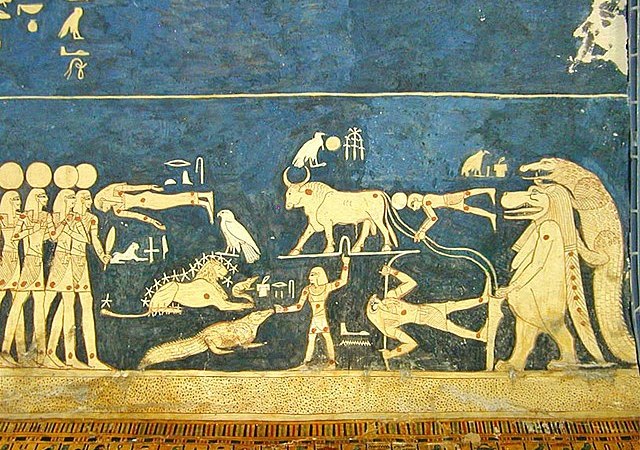
 I believe they did it for protection, and we need to take heed of that.

They are usually made of granite. Granite is an excellent conductor, more robust than a metal rod. Granite is a blend of quarts and other silica crystals. Crystal is more than a passive conductor, it’s piezoelectric, so actively creates charged pathways for current to flow.

Standing stones and megaliths would glow with St. Elmo’s fire under intense electrical stress. They would send active plasma streamers to draw current from a sky turned electric, attracting lightning and connecting it to ground.

Dsc00087

So, perhaps Dolmens, megaliths and standing stones actually were protection from demons in the sky. Perhaps this explains why megalithic structures are so closely fitted of giant stone to make positive contact everywhere. Maybe it’s why copper and bronze connectors were set between stones, not for structure, but for electrical continuity.

Tiwanaku-Interlocking-Piece-between-stones-Pumapunku-200x200If there is no low resistance path offered by a lightning protection system the high voltage current from a strike will divide to follow every conductive path to ground it can find. Currents will pass through materials normally considered insulators, instantly generating heat. Porous material can shatter violently as air inside expands with super sonic speed. Material containing moisture can explode more violently as water is flashed to steam. Other materials melt, or burst into flames.

Stone, and in particular granite, is well suited for the task of lightning rod. Seamless continuity would be the most critical factor in using them for that purpose.

29004057283_7bdd40937c_b
Nicolas Rénac – Walls of Sacsayhuaman

That seems to be the case. Ancient megalithic structures are typically unadorned. Unlike temples, or tombs, they are not covered in symbolism, or art. They appear functional, purposeful, like something with industrial intent.

And they required the utmost care to construct, with tolerances that go far beyond cosmetic appearance. Walls and ramparts are often built of stones with beveled edges, perfectly fitted to prevent water from seeping into cracks. They were made that way to provide a current path, prevent side flashes from the walls, and to prevent water getting into cracks to cause arcing and blasts.

The close fitting of stone in jigsaw puzzle shapes isn’t really required for any other reason. It is believed they are constructed that way to withstand earthquakes. But why? To avoid death from an earthquake, one should stay away from standing stones in the first place. It makes far more sense the stones were constructed that way to protect from lightning.

Another clue may be a strange feature shared by megalithic structures around the world – knobs. Knobs are odd protrusions of rock on some megalithic stones.

It’s easy to understand how they got there. As stones were excavated from a quarry, they were left attached at the side, or bottom for support until rough shaping was complete. Then the attachment point would be broken to remove the stone, leaving a knob jutting out.

Companion knobs – the other side of the attachment point, can be found in the quarries. Unfinished works still have attachments in place, proving their original purpose.

Some also speculate the knobs were left in place to aid in lifting and maneuvering the stones. No doubt they provided an easy grip, or attachment point for a loop of rope, and were no doubt used that way. But for such master stone cutters, who fit stones so closely a knife blade can’t find a crease, it seems odd they would leave knobs jutting out of the finished work.

At the end of this article is a video from vlad9vt which shows photos of many megalithic sites and quarries which displays evidence of the knobs function as attachment points. Watch his film and you will see many examples, but finish the article first so you can judge my new theory.

It is curious to me why they were left on some stones, but not all stones. In some they have been ground away, and on others left protruding. Sometimes they protrude in seemingly random places, and sometimes in a pattern that might be considered decorative. They seem to be more prevalent around passageways and gates. They also seem to be on the lowest, or next to lowest course on stone walls; or the upper course, overhead, particularly in passageways.

I’m thinking they were left purposely to create side flashes, directing excess current away from the doors to flash harmlessly to ground without snaking through the passage itself. Or to divert side flash away from the foundation, or passage, to prevent current finding it’s way to occupied areas.

The Connection…

Megalithic structures were built in a time we only know through mythology. They were built to withstand the great wars of gods that legend tells of. They were built to withstand screaming winds, tidal waves and quaking earth. But electrical storms were the primary reason for megaliths. They carried current to ground from layers of electrified plasma pressing down against Earth.

Archaic storms would have been immense compared to a hurricane today. Caused by a Solar System awash in energy, the Earth responded with induced currents. The atmosphere stacked into layers of differing plasma properties, as dust, soil and water ionized on the ground. Giant currents connected Earth and sky to generate thunderstorms that evoked gods and demons.

Wooded areas would have erupted in firestorms. Volcanoes and earthquakes would have rattled the land. Winds would have screamed at Mach speeds, billowing smoke and ash to intensify arcing, like grain enclosed in an elevator. And lightning would have intensified, building in proportion to the electric field, creating currents that machine-gunned Earth in megaton blasts.

Atmospheric ionization was held at bay by standing stones migrating the flow of electricity through them. They acted like tent poles, holding back the lowering sky, the way mountains hold storms above a valley.

That’s why storms on the plains and low lying islands are so low to the ground, where the clouds seem just above tree-tops. There are no mountains to raise the ground voltage gradient high into the atmosphere to attract current, so the clouds close the gap by lowering closer to the ground.

Crops, stored grain, or animals sheltered beneath stones would have found protection from electrocution, and the winds and heat of the electrified plasma coursing above. Megaliths around the world show evidence of magnetic and electrical flux, charring and even vitrification. Many appear to have exploded.

7868243390_c2aca589ea_nWhere possible people would have taken refuge underground, hiding beneath cliffs, in caverns, or in shelters they dug.
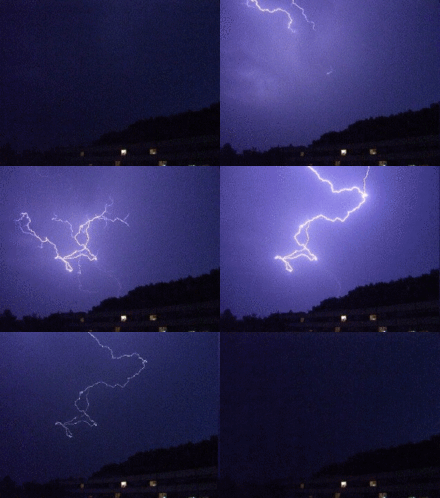
Stones and megaliths were set to protect precious lands, crops, water sources, food stores and huddles of animals they couldn’t take to the caves with them. They had to place them so there would be something to come back to – to carry on life after the storm.

They set them in fields and on hilltops, where they could work with the landscape to protect the area from obliteration. They provided a degree of refuge from storms bearing down with blistering peels of lightning and electric winds.

Or at least that’s what I think. Enjoy the video and resources below to learn more about lightning and megaliths. See if you discern a pattern to prove the purpose of the stones. See if you see what I see.

From vlad9vt

Lightning – it’s more powerful than you think…

Don’t forget the like button below! And please share with your friends.

220px-Lightnings_sequence_2_animation

Thanks!

Gila Bigfoot – The Long Road Home

Episode 4 – The Long Road Home

Ginger and I camp at the lake after a day of Bigfoot hunting. Along the way we stop to check-out a likely granite outcrop in a meadow. As we leave the truck to cross the meadow, I hear an unmistakable whoop from the tree-line, and an answering whoop from the rocks. We change our mind about crossing the meadow.

It’s late season, so we are alone at the campsite. I’m playing a CD while filming, which isn’t appropriate, but the publisher notified me they were okay taking the advertising revenue. I don’t think they will get rich from it.

The next day we head home. This is the last trip for the year. I stop to look at one last tree structure and leave the truck in drive, nearly getting run-over as it rolls backwards while I’m at the tailgate.

Gila Bigfoot – Stench in the Air

Episode 3 – Stench in the Air

Ginger and I continue exploring a hilltop we climbed following tree-leans. On the reverse side of the hilltop, we find teepees of broken trees and a wallow with large tree structures. The trees are woven together in a fashion that defies wind, or snow-load. X’s surround the area.

I keep getting whiffs of bad odor, until Ginger alarms and I get the distinct smell of shit. It wasn’t either of us. I didn’t step in anything. We were at least a mile from the roads and trails. The scent was strong, like someone took a crap right next to us.