Electric Universe theory has long argued that large meteors striking Earth is a rare thing. It’s not that rocks don’t fall to Earth, it’s just that something has to happen first. That something is electrical discharge.
Because the electrical charge of a body in space is not the same as Earth’s, something has to give when they come together. Electrical potential has to equalize. That occurs when the meteor makes electrical contact with Earth, not when it actually impacts.
Craters everywhere; the Moon, Mar’s, Mercury and beyond, as well as other-otherworldly terrain features, display the earmarks of electrical discharge more predominately than impacts. In fact, EU theory suggests the asteroids and comets themselves are a result of electrical discharge between planets. They are debris from discharges that made the craters – not the cause of the craters.
The larger the meteor’s mass, the larger the potential difference will be. Electrical discharge is likely to blow a big meteor to pieces further from Earth than a small one. Damage is caused by the shock wave from the meteor, not the left-over pieces of meteor impacting Earth.
That is the case with the two largest meteor events in modern history: Tunguska and Chelyabinsk. Chelyabinsk exploded in an air-burst, as witnessed by thousands of people. It’s long been suspected Tunguska did too, since no pieces of meteor were found. By all evidence, Tunguska appears to have been a shock wave from an exploding air-burst meteor entering the atmosphere at supersonic speeds.
Since the Chelyabinsk event was witnessed and filmed by so many, there is evidence of how the air-burst occurred, and how it is predicted by Arc Blast theory.
Arc Blast proposes certain geologic features are the result of shock waves created by supersonic winds. It is predicated on the fact shock waves are conduits of electric current. A shock wave suddenly spikes the density, pressure and temperature of the medium it travels in. It also spikes ionization, creating a charged wave-front of voltage higher than the surroundings.
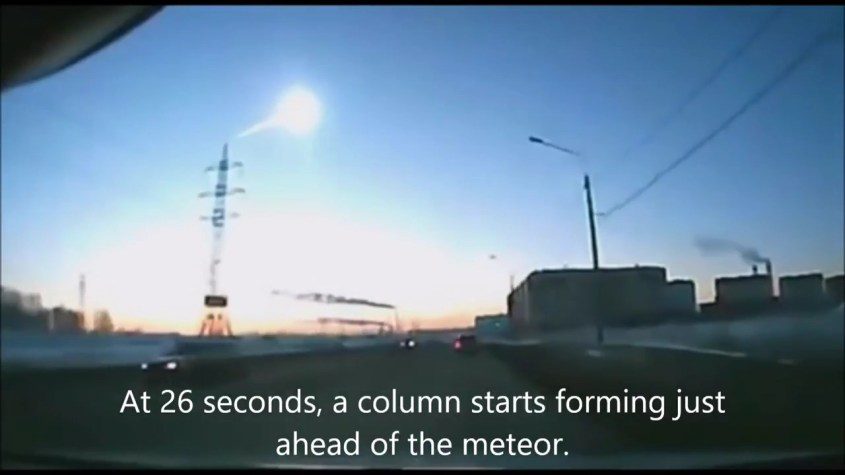
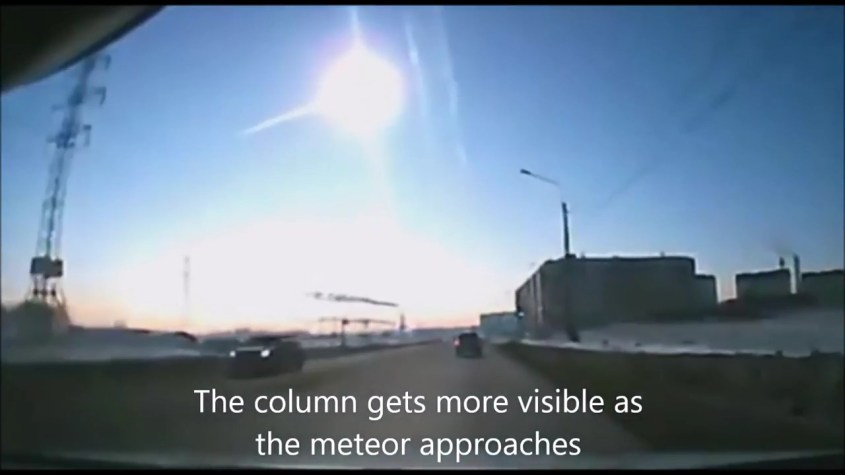
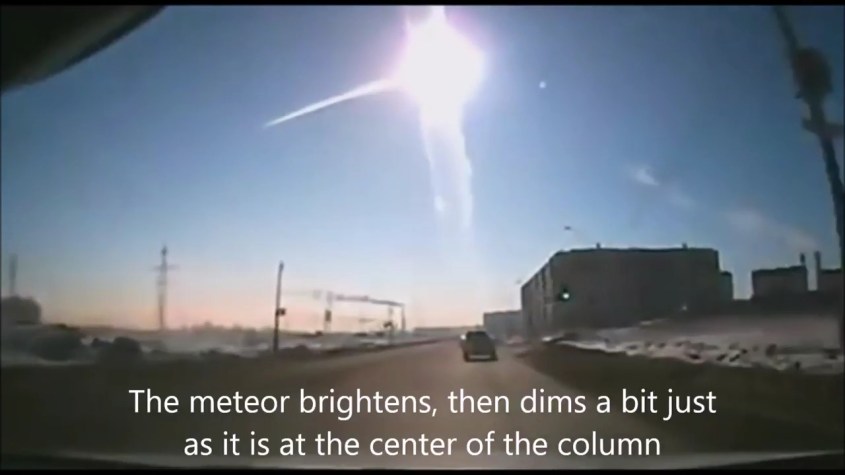
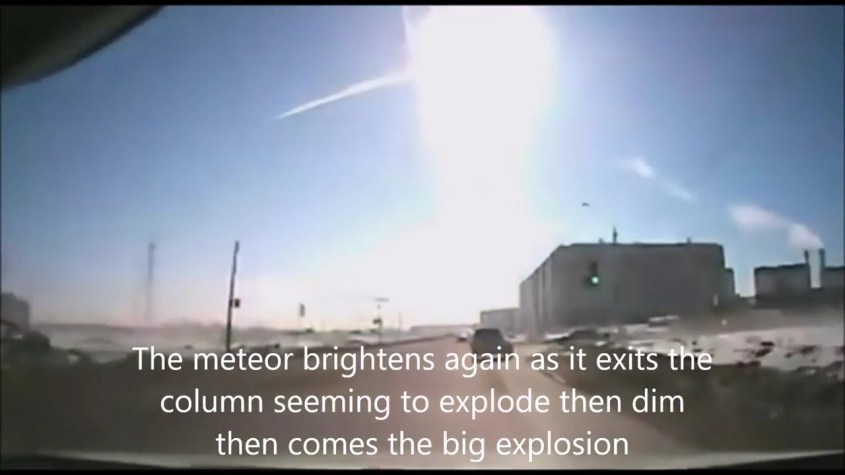
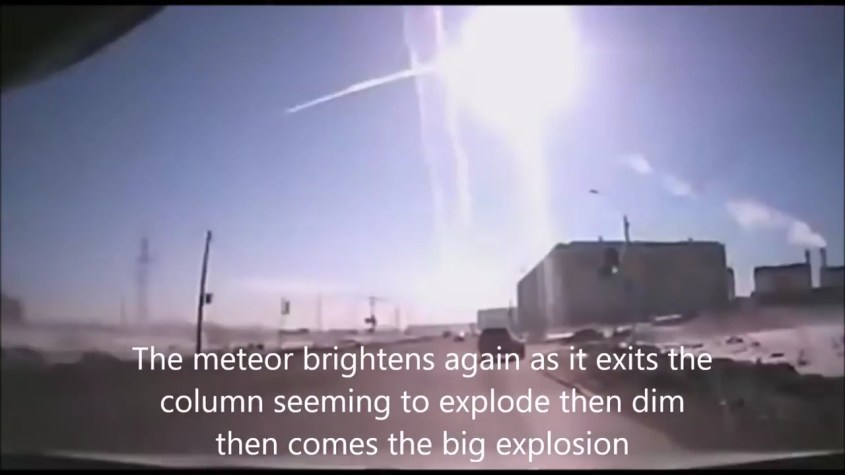
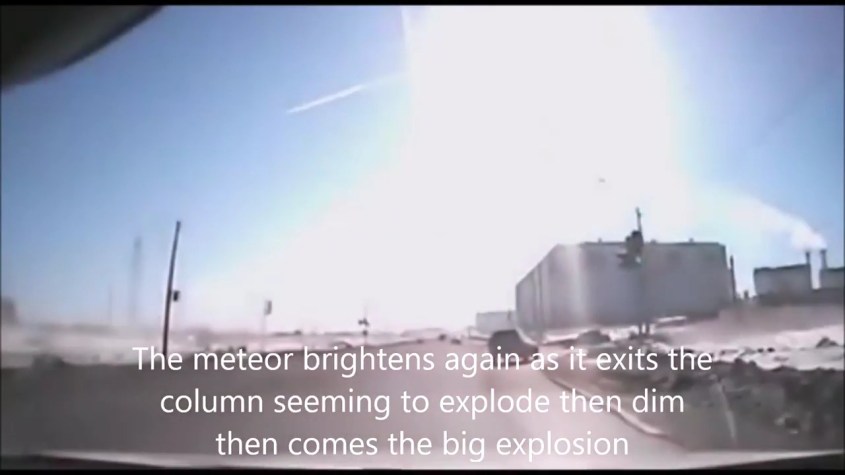
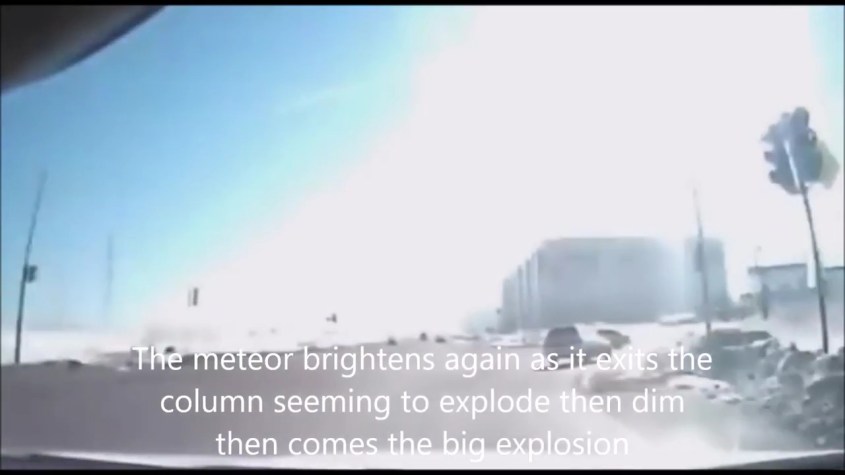
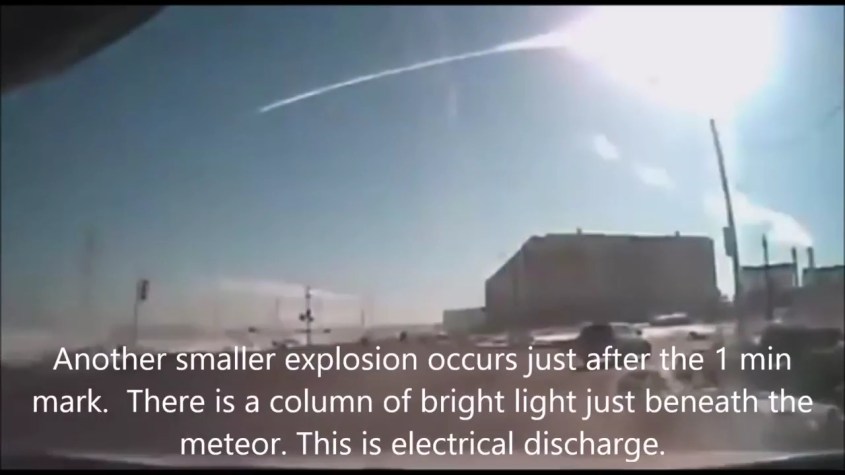
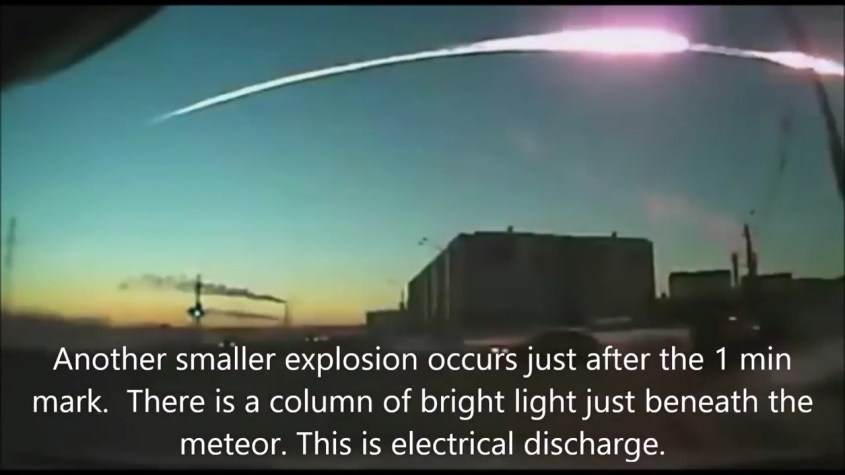
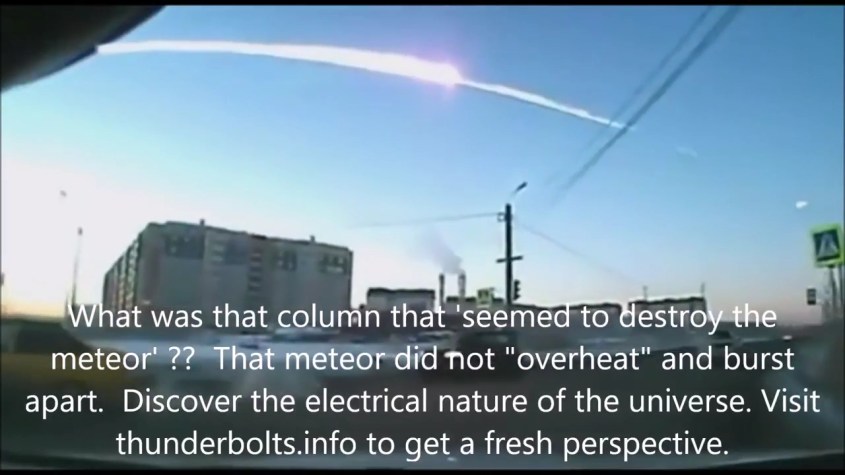
The charged shock-wave is what causes the meteor to explode in mid-air, as this slow-motion film has captured. First, look at these still frames to see what’s happening.
Chelyabinsk meteor streaking through Siberian skies…A vertical sheet of condensation appears ahead of the meteor – it’s not a camera effect.As the meteor enters the column of condensation, both meteor and column brighten,Then brighten again all the way to the ground – it’s discharging electricity.Again it brightens with its tail still in the glowing condensation column. See the columns bottom is almost as bright as the meteor.Then it explodes, sending a bright triangular flash down the column to Earth. Note the flash is behind foreground buildings where the condensation column was in previous images.The shock of the discharge raises dust, but the foreground buildings can still be seen.The meteor flashes a final time with a bright column beneath it, as the first column vanishes in the dust cloud.And then it’s goneA few small pieces of rock were found.
So what happened here?
That column of condensation was the shock wave – the bow shock ahead of the meteor, making contact with the ground and reflecting to form a standing, reflected wave.
Because the wave carried temperature, density and charge, it ionized the air creating the condensation column through the standing wave to ground. When the meteor struck the column, it made direct connection to ground through the conductive standing wave-form and began to discharge. The discharge flashed several times through the column, and perhaps established a second path to ground, before the charge neutralized with the meteor fully vaporized.
This film of the Chelyabinsk meteor is visual evidence of Electric Universe theories. The dynamics of comets and meteors bear this out in every other respect, as well. Look deep into the Tunguska mystery, and the evidence and eye-witness accounts support a shock wave/electrical discharge event.
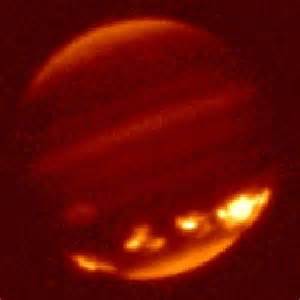
Shoemaker-Levy 9 strikes Jupiter
The same can be said of the Shoemaker-Levy 9 comet that struck Jupiter. The explosions occurred in Jupiter’s ionosphere due to electrical discharge. So concludes Wal Thornhill who discusses the many points of evidence in the linked video. He describes how the comet fragments glowed bright as they approached the planet, how the planet’s polar aurora brightened when the comet made contact, how radio emissions were received from Jupiter during the event, and he provides visual evidence and an explanation how and why the explosions occurred in the ionosphere due to electrical discharge.
As quackademia’s grip on the theory of uniform evolution is eroded by overwhelming evidence of catastrophic upheaval in Earth’s past, it’s become fashionable for roguish scientists to look at meteors as a cause. Data from geologic strata, ice cores, sea level and fossil remains tell of periods when extreme environmental conditions prevailed. There is evidence of floods, winds, earthquakes and volcanoes – huge compared to anything in modern times.
That the demise of Cretaceous dinosaurs is attributed to the Chicxulub meteor is accepted wisdom, simply because there is a hole in the ocean floor. As ‘Climate Science’ is recognized a failure, and geologists find more holes in the ground, I fear scientists will stop attempting to correlate every climate hiccup in the record with carbon emissions, and begin to correlate with the holes in the ground.
But it’s a bit too convenient to jump to the conclusion meteors cause every catastrophic event. There is physics to consider, and physics says two sufficiently large and differently charged bodies are going to discharge when they make electrical contact, not when they impact. How discharge occurs is an arc blast through the standing waves made by the bow shock reflecting from Earth. You just saw visual proof, unless there is a better interpretation.
The physical consequences are different. Kinetic impact will have different secondary consequences than an electric shock-wave impact. Knowing this doesn’t mean a big meteor won’t destroy a city, or a hemisphere one day. Death by electric shock-wave is still death. But it may clue us how to protect ourselves. It may be easier to survive than what is believed an impact will do.
It also may clue us how to protect Earth from a large meteor in the first place. Give it something to discharge to – before it reaches Earth. Place a minefield of asteroids in it’s path – pre-loaded with ionic charge and long wire antennas to ensure contact.
The Chelyabinsk film follows, with special thanks to Don Kress for providing it.
A three part examination of electricity and it’s role in severe weather.
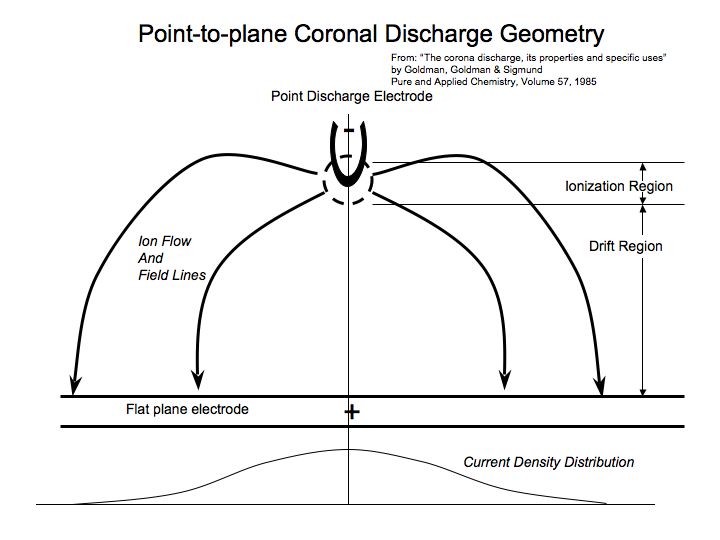
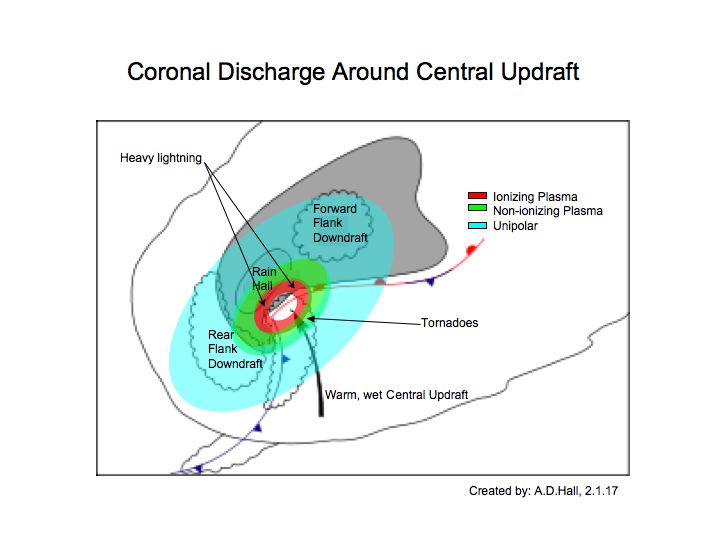
Thunderstorms exhibit precisely the attributes of plasma discharge between an electrode and ground. I show that laboratory produced coronal emissions from a point electrode, through an air gap, to a flat plate electrode, produce the same effects as a thunderstorm. I correlate these effects with the morphology of a super-cell and the lightning, rain, downdrafts and vortex winds they produce.
A two part discussion of volcanoes and electricity. I explore the Pinacate shield volcano in Sonora, Mexico. It lies near the border, at the tip of the Sea of Cortez. It is an especially pristine and striking volcanic field.
It’s best known for huge maar craters, which appear to involve electrical discharge. The maar’s have rim craters, which is a feature that seems out of place in consensus theories. The crater rims appear to be sucked inward from the rising eruption, rather than blown outward as typically believed.
There are many electrical features in the Pinacate reminiscent of what is seen on the Moon, Mars and Mercury. Of course, Electric Universe believes these to be electric, too.
I contend these are from electrical discharge from beneath the surface of the Earth.
Here is a three part presentation on Arc Blast. It’s a theory on mountain formation based on evidence of coherent, harmonic shock-wave features found on mountains everywhere. Mainstream science contends these are features created by water erosion. Take a look at what I present and decide for yourself. Consider how water can erode rock into layered, harmonic forms.
This is my first “Space News” presentation. This link is to the related Thunderblog.
When I began writing for Thunderbolts I didn’t have any theory of my own. I was simply learning and trying to understand whether Electric Universe theory could stand on it’s own, and if mainstream theories could be wrong when they claim so much ‘evidence’.
Gravitational lensing was the first confirmation of Einsteins theory of General Relativity. Sir Eddington showed that light from deep space objects bends around foreground objects. But is it because of gravity? I present the work of Dr. Gupta, and others who demonstrate the effect of lensing may just be the result of diffraction through matter in space. No gravity is required.
Like all consensus theories, other explanations can be found in classical physics. The consensus won’t tell you this, however, which is why they shouldn’t be taken as fact, and alternatives must be considered.
Presentation at the EU 2016 conference in Phoenix.
This is my first EU conference, where I present Arc Blast, my theory of how electrically generated winds create mountains. I show evidence in mountain features that display coherent, harmonic wave forms produced by supersonic shock waves, and theorize how they were created.
I provide a new presentation in 2017 that somewhat modifies and expands the theory of how such winds and shock waves were generated. Like all scientific inquiry, new data brings new meaning. The 2017 presentation is available at Thunderbolts.info.
Following the 2017 conference, several of us decided to see the Grand Canyon. We left for Flagstaff as the Solar eclipse ended. We made several hikes over the following days. This film was taken by Andrew Fitts at a cinder cone in the San Francisco peak volcanic field, called Red Mountain. An article on the conference is here.
Ginger and I look for ‘squatter man’ in a variety of locations near Tucson, Arizona … without much luck.
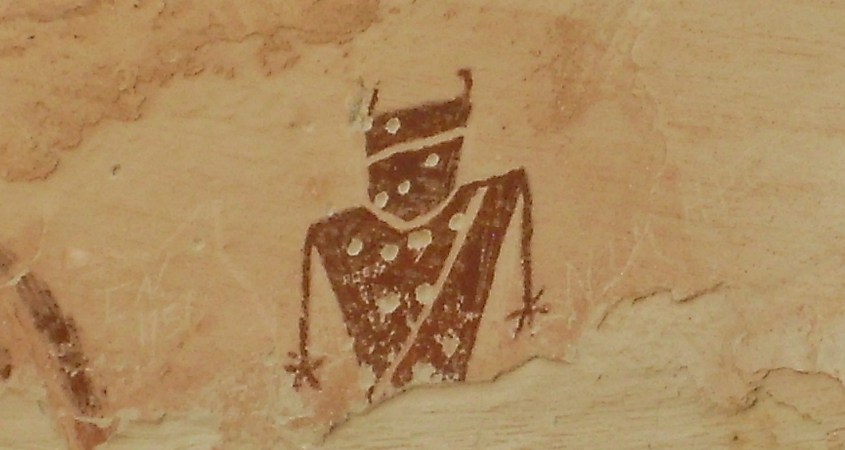
‘Squatter man’
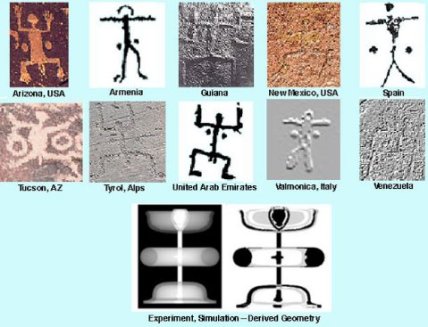
Archaic petroglyphs are found on every continent except Antarctica. They are figures pecked into rock. Typically they are found on rocks that have a patina of dark glaze called desert varnish, and the artist created the figures by pecking away the varnish to expose the lighter, native rock beneath.
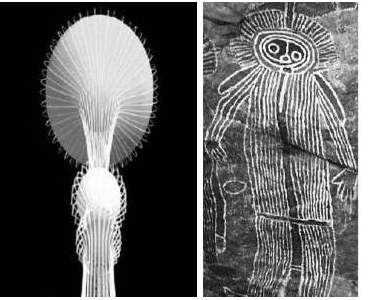
Similar figures are also found in intaglios, like those at Nazca, Peru, and on other forms of carved art, like the ‘Rongu Rongu’ text of Easter Island, and even totems found in Siberia.
They were made by stone age people. Although when they were made can’t be dated by the rock itself, some have been found in association with campfires, or crusted with lake sediments that can be. They indicate some were made as long ago as 10,000 BCE.
What is remarkable is they depict the same variety of patterns – squiggly lines, concentric circles, spirals and other geometric shapes. Also animals, ladders, oddly elongated alien-looking figures, and of course squatter man – a stick-man figure with arms and legs spread in a variety of “hands-up, don’t shoot” postures.
Peratt Column
Actually, squatter man comes in several forms, sometime with a bird’s head, sometimes a fat belly. Yet these figures are consistently found everywhere, as if ancient people around the world had exactly the same idea.
How do the consensus scientists explain this? Some speculate that ancient man lacked imagination. Their emerging artistic abilities only allowed them to create these stick-like figures to represent people dancing and cavorting around the rocks, the animals they hunted, and simple geometric shapes that pleased them.
Others speculate that shamans made them after eating hallucinogenic plants, and the shapes are similar because their visions were created by the drug. I can tell you, these shapes are not what one sees with any magic mushroom, hallucinogenic cactus, DMT, or even LSD. I can speak with authority on that.
Alternative theories abound with the ‘Ancient Aliens’ community and UFO crowd. Of course they see evidence of aliens and UFO’s in every enigma from the past. Like the consensus scientists, they have a belief system to satisfy.
What they really are was discovered by a PhD., plasma physicist at Los Alamos Laboratories; Anthony Peratt, in association with Dave Talbott, one of the founders and principal researchers behind the Thunderbolts Project. Talbott showed Peratt one of these figures and he immediately recognized it depicted an extremely high energy ‘plasma instability’ like those created at Los Alamos for nuclear research. In other words, they depict plasma aurora like the Northern Lights, except at extremely high energy unlike we see today.
Squatter Man
Peratt performed an extensive investigation, engaging volunteers from around the world to document over one million of the figures. They documented the shapes, locations and orientation with respect to what direction the creators must have looked in the sky to see the glowing apparitions. His work is documented in a peer reviewed paper published by IEEE, the largest professional science journal in the world. This link will take you to Plasma Universe, his website, where you can find the paper and many more details about the phenomena.
The implications are enormous. For one, it explains why the same figures appear around the world – because people in the distant past witnessed them in near-earth space. It explains the enigma of such features as the Nazca Lines. Also, it means ancient people were experiencing an extreme event in the solar system, possibly from huge solar flares, or a large passing comet. Something energized earth’s magnetosphere with electricity that caused these auroral patterns to appear.
The event would have been catastrophic, because it means Earth would have been washed in deadly radiation. They point to a time in the past when catastrophic events occurred – a lost chapter in our past we don’t fully understand.
One would think archaeologists, historians and paleontologists would be thrilled about this discovery. One would think … but not so. They have totally ignored it because of scientific jealousy and because it doesn’t fit their paradigm. Who does this electrical engineer, Peratt think he is?
I talked to one “expert”, a PhD who actually studies southwest rock art for a living. He asked if Peratt had his silly paper peer reviewed by a proper archaeologist. I said no, because archaeologists don’t know diddly about plasma. I doubt one could be found who studied algebra, let alone quantum physics. It’s unfortunate, but consensus science shows less real curiosity about the cosmos than they do a need to protect their own theories and belief system. Science for many has become a pseudo-religion, not a method of inquiry.
Rocks in the deserts of North America have thousands of these petroglyphs. In this Electric Earth video, I’ll take Ginger on adventures to find some. It isn’t easy.
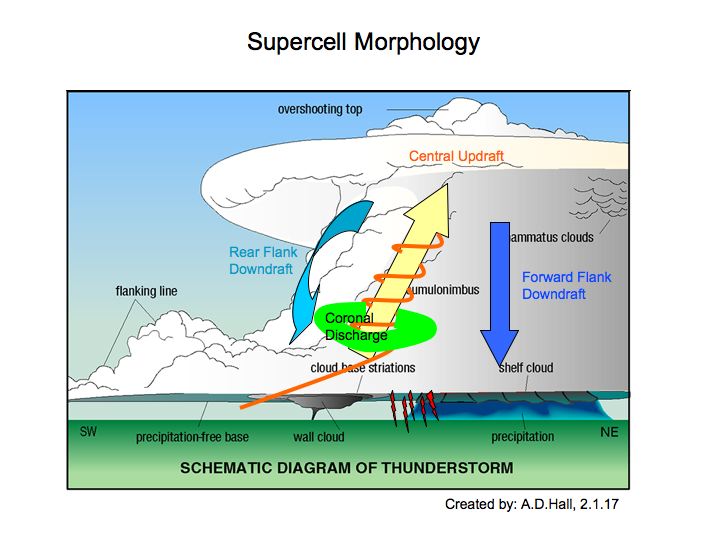
Previously, in Nature’s Electrode, we looked at an Electric Earth model for lightning genesis driven by a plasma corona formed from condensing and freezing water vapor in the central updraft of the thunderhead. We also looked at the thunderstorm itself, and an electrical model for the circuit that drives it, in The Summer Thermopile. Now let’s consider the most dramatic weather event of all, the tornado, and how these massively destructive whirlwinds are also formed by a plasma corona in a thunderstorm.
For air to become plasma and carry current, the air has to be partially ionized. A plasma state can be defined by “plasma density” – the number of free electrons per unit volume, and the “degree of ionization” – the proportion of atoms ionized by loss, or gain of an electron.
A gas with as little as 1% of the particles ionized is a plasma, responding to magnetic fields and displaying high electrical conductivity. A partially ionized plasma is often referred to as a “cold plasma”, and highly ionized plasma is referred to as “hot”. Discharge from a corona is predominately a cold, dark current, invisible to the eye.
Cloud-to-ground arcs come from high charge density regions of the corona, surrounding the central updraft where current from the updraft generates ions. Ground charge builds below this region in response, and the electric field strengthens, magnifying and focusing electron avalanche the way a lens focuses light, into a continuous plasma channel. When the channel connects with ground and discharges a hot current, it wraps tightly in it’s own magnetic field, in what is called a ‘”Z” pinch’.
Moving away from this self ionizing/high electromagnetic field region of the corona, free electrons spit at the ground, but lack the energy and focus to avalanche all the way, creating instead a mobile cloud of ionized gas that follows the field gradient to ground, generating a dark current. The current is said to “drift” in this region, yet the electric field still organizes the drifting ions into a columnar channel.
In the image, the center of the coronal discharge is focused and imparts more energy to cascading electrons, creating the potential for arcs (see the current density distribution at the bottom of the diagram). Closer to the outer edge of the corona, weaker reactions manifest in transfer of momentum and heat with ions and neutrals. Downdraft and down-burst winds are the common result.
Momentum transfer manifests as downdraft winds by the process of electrokinesis, which is neutral species attracted to, and mobilized by, the charged particles zooming down the electric field gradient towards ground, creating an ‘electric wind’ that moves the bulk fluid along the electric field gradient.
If the ionization rate exceeds the rate of recombination, the plasma will build a streamer, a tendril of plasma from cloud to earth, pushing a plasma generating ionization region ahead of it, and drawing behind it a cloud of cold plasma. When this plasma hits ground, a cathode spot is produced, and the electromagnetic field redistributes along the plasma channel, focusing it.
The cathode spot on the ground draws positive charge to it, dragging neutrals, again by electrokinesis, and creating the in-flowing winds that generate a ground vortex. This is the moment of tornado touchdown, as charged air and dust flow in and spiral upwards around the invisible plasma tendril.
The action is analogous to the lightning bolt leader and positive ground streamer that meet to create a channel for lightning discharge – two seemingly separate events, organized into one coherent structure by the electric field.
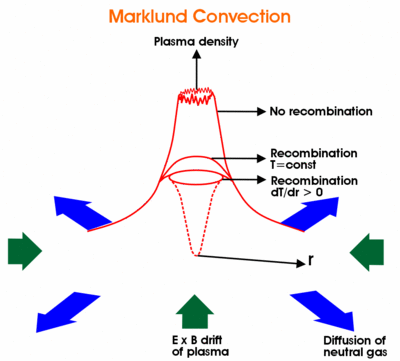
The plasma current thus created is a complete circuit to ground, only it’s partially ionized, diffused with predominately neutral species. Its energy and charge densities are too low to make an arc, so it forms a complex plasma channel called a Marklund Convection.
Marklund convection, showing diffusion of neutral air away from current tendril (blue arrows) creating low pressure. Plasma drift (green arrows) draw positive ions at ground level, creating inflowing winds to the point of contact with the plate electrode.
Rotation is a natural consequence of the circuit. Neutral air is diffused away from the Marklund current creating low pressure. But positive ions near the ground drag air, dust and debris to the ground contact and create in-flowing winds and a sudden change in direction up, and around the tendril. The meeting of these opposing winds is the ground vortex.
The current flow in the plasma will itself rotate, taking a helical path as it interacts with the magnetic field around it. The appearance of a tornado is precisely the expected morphology of a Marklund current. Increasing current flow “spins up” the tornado.
It forms an inner, spiraling, negative current to ground and an outer spiral of positive ionic wind flowing up to the source of coronal discharge in the cloud.
Because the tornado is a cold, partial plasma current exchanging charge between ground and atmosphere, it can be pushed by winds to create a slanted, or kinked path, and travel away from it’s point of origin.
Evidence…
There are several tell-tale signs the electric model of tornado genesis is correct.
Wall clouds…
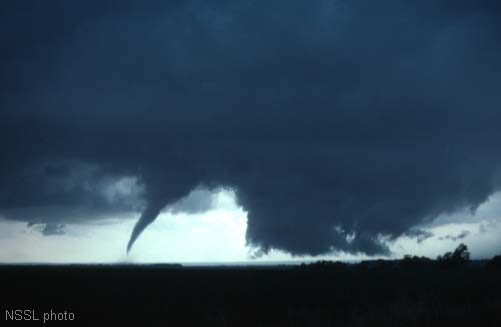
One evidence is the wall cloud. Wall clouds form before a tornado in a typical storm evolution. It develops rotation and sometimes its clouds can be seen to rise and fall in an agitated manner. Puffs of low level clouds are drawn to it below the main cloud base.
The wall cloud is a physical expression of the corona. As the corona gathers charge, it creates a lowering, vertical wall of cloud as ionization condenses moisture in the column of air below that is incongruous to the general slant and motion of the storm clouds and in-flowing winds. It’s visual evidence of a region where the electric field is strengthening and the corona is increasing charge density prior to establishing a current to ground with a tornado.
The funnel cloud doesn’t always emerge from the center of the wall cloud. The funnel often appears along the edges of the wall cloud, or from the surrounding clouds.
This is because the region of charge density is mobile and can wander. They can also multiply, creating several tornadoes.
Characteristic of parallel currents, multiple tornadoes stand off from each other as if repulsed like two parallel wires flowing current in the same direction. Rare occasions when tornadoes seem to merge, it may be that one simply dies as the other steals it’s current.
The sudden disappearance and reappearance of tornadoes, and the reported skipping, or lifting they seem to portray, are likely caused by pulsating current from an unstable coronal discharge that weakens until recombination steals the current, and then revives when the rate of ionization again overcomes the rate of recombination and a complete circuit to ground is reestablished.
Tornadoes and lightning…
As discussed in Nature’s Electrode and The Summer Thermopile, lightning frequency is highest around the central updraft and increases in frequency with the strength of the updraft wind. When a tornado forms, cloud-to-ground lightning frequency diminishes until the tornado dies, and then picks-up again to the previous baseline. It’s also found that positive lightning is more common in tornadic storms.
The latter is evidence the corona in the storm’s anvil, that spits positive lightning, is instrumental in creating the electric field strength necessary for a tornado. It amplifies the field strength affecting the negative corona in the cloud base, below, creating conditions necessary for tornadoes.
The fact that cloud-to-ground lightning dissipates as a tornado spins-up is evidence the corona is part of a coherent electric circuit, where current in one region robs current from another.
Sights, smells and sounds…
Storms that produce tornadoes are often characterized by a greenish tint in the clouds. The green tint is excused by many scientists as a reflection of city lights. While their search for green-tinted city lights continues, the dim glow of a coronal discharge internal to the cloud formation explains the green tint.
Luminosity in the clouds and the funnel are also reported. Consensus science blames this on misidentified sources of light from lightning, city lights, or flashes from downed power lines. Some of it no doubt is, but some of it is likely the effect of coronal discharge. Lightning flashes don’t make a continuous glow.
Ionized oxygen can recombine to produce ozone, which has a distinctive chlorine-like “gassy smell”. This smell is often reported by witnesses.
So are hissing sounds from the base of the funnel. Funnel clouds and small tornadoes are known to produce harmonic sounds of whistling, whining, humming, or buzzing bees. As ozone is liberated it produces such a hissing sound.
Energized transmission lines subject to over-voltage conditions produce all of these same effects: faint luminescent glow, ozone production and it’s accompanying hiss and smell. It’s cause is coronal discharge.
Tornadoes also produce identifiable infra-sound. It’s inaudible to the human ear, but it can be felt. It will produce nausea, agitation and body heat, effects often felt in the presence of tornadoes – although fear might do that, too.
Lightning has been reported internal to the funnel. These may be a form of cloud-to-cloud discharge, between the counter-flowing positive and negative currents in the Marklund convection.
Tornadoes are seen to have an inner and outer column, although this is disputed by consensus scientists as an illusion. The inner column, however, is seen if the outer dusty sheath dissipates, or is blown away. This is consistent with the double wall formed in a Marklund convection.
Double wall – an inner tube with an outer sheath of dust can be seen.
Tornadoes emit on the electromagnetic spectrum as measured by researchers. Tornadoes emit sferics, the same type of broadband radio noise lightning discharges produce.
Non-super-cell tornadoes…
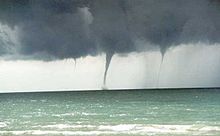
So what if there is no super-cell? How do all the other vortex phenomena form – landspouts, waterspouts, gustnadoes and dust devils, and how are they related.
By the same mechanism proposed here for the super-cell tornado, only in lower energy form.
Funnel clouds, which never result in a touchdown are a tendril of Marklund convection current that begins to recombine faster than it generates ions, and it dies.
Landspouts, gustnadoes and waterspouts all begin with a surface disturbance – a vortex without a cloud, or at least not one showing a wall cloud, or rotation. These are instances of stronger ionic accumulation at ground level, creating a strong ground vortex first in easily ionized sand, or water, whereas the corona above is weak and diffuse.
This comports with observations of twisters of all kinds, including dust devils and spouts which are seen to begin on the ground. Or water – in the case of a waterspout – where documented evolution begins with a mysterious “dark spot” on the water.
Thunderstorms, lightning and tornadoes – all products of the same weather event – can be perfectly modeled electrically. Electromagnetic fields, ionization, current, capacitance and induction rule nature. It is evident in Nature’s every aspect, because the fractal, self-same patterns always appear.
Consensus science adheres to a gravity model that ignores this fundamental causation and instead feverishly dissects the emergent thermodynamic and fluid dynamic interactions looking for answers, like trying to tell time by taking apart the clock. They continually come up short, as a result.



 The funnel cloud doesn’t always emerge from the center of the wall cloud. The funnel often appears along the edges of the wall cloud, or from the surrounding clouds.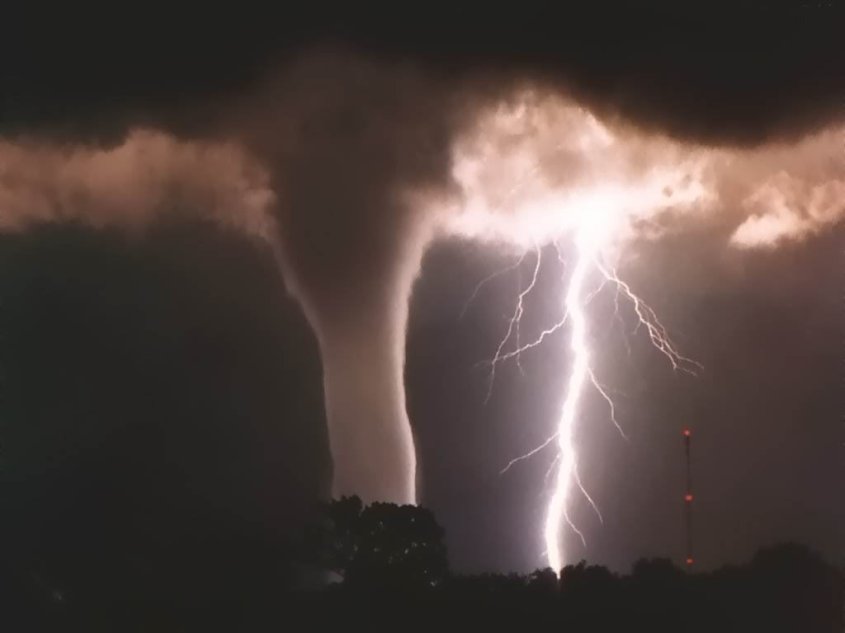
 So are hissing sounds from the base of the funnel. Funnel clouds and small tornadoes are known to produce harmonic sounds of whistling, whining, humming, or buzzing bees. As ozone is liberated it produces such a hissing sound.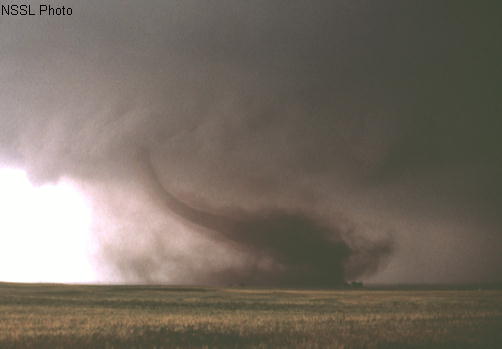
 So what if there is no super-cell? How do all the other vortex phenomena form – landspouts, waterspouts, gustnadoes and dust devils, and how are they related.
 The Daily Plasma