Tag: Non-fiction

Eleven Years Looking For Nada

Nada is Spanish for nothing. It’s also the number of gravitational waves found after an eleven year study, as reported by Australia’s Commonwealth Scientific and Industrial Research Organization (CSIRO) and the International Centre for Radio Astronomy Research (ICRAR) this week in the journal Science.

The study, led by Dr. Ryan Shannon of ICRAR, and conducted with CSIRO’s Parkes telescope, was designed to monitor radio waves from millisecond pulsars and record the arrival time to an accuracy of ten billionths of a second. By doing so, they expected to detect gravitational waves generated by colliding galaxies.

0105-4x5color.ai
Image credit NASA. Pay no attention to the Black Hole hiding in there.

According to Big Bang cosmology, and the General Theory of Relativity, super massive black holes inhabit the core of spiral galaxies. Colliding galaxies should produce gravitational waves as the black holes merge. Gravitational waves rippling across the universe should then compress space-time between the earth and the pulsar by approximately ten meters, delaying the pulsar signal a few billionths of a second…or so the story goes.

Unfortunately for Big Bang cosmologists, the pulsars never skipped a beat, pulsing on-time for the entire eleven year study. As stated by Dr. Shannon, “In terms of gravitational waves it seems to be all quiet on the cosmic front. However by pushing our telescopes to the limits required for this sort of cosmic search we’re moving into new frontiers, forcing ourselves to understand how galaxies and black holes work.”

Researchers on the team are optimistic, speculating the gravitational waves may be at higher frequencies than they anticipated, in spite of theoretical predictions. Or the energy was absorbed by intervening dust.

That is very elegant face-saving after eleven years searching without luck – the dust ate my gravity wave. The General Theory of Relativity predicts gravitational waves, yet they have never been detected. They are one of several, as yet, undetected entities posed by Big Bang cosmology.

There is another study underway by the Advanced Laser Interferometer Gravitational-Wave Observatory (LIGO) to detect higher frequency gravitational waves thought to be generated by colliding neutron stars. This work has just begun, so will not yield results for some time. Another gravitational wave dedicated project called the  Square Kilometer Array telescope, is planned for construction in 2018.

Let’s not hold our breath. While those scientists spend their lives looking for black holes and gravitational waves, let’s review what this all means in an Electric Universe.

Absolutely nothing, except a huge and needless expense. Electric Universe does not recognize General Relativity as anything more than a concept unhinged from reality. It is like a topographical map one uses to describe the shape of a mountain. It may seem to describe the shape, but it tells you nothing about where the mountain is, what lives on it, what it’s made of, or how it got there.

The General Theory of Relativity cannot even explain what gravity is. The theory is predicated on the notion that time is a scalar dimension, but how likely is this exotic guess? Time is not a “fourth dimension” to be added to the three spacial dimensions we experience. We cannot revisit the past, or zoom to the future in a souped-up Delorean.

Some people assume General Relativity and the Big Bang have been proven just because well publicized news releases say it is so. But science is only “proven” when a theory predicts an outcome that can be detected reliably and repeatedly, and alternative explanations have failed, or simply do not exist.

Nothing General Relativity predicts meets those criteria. Critics say the claimed successes of the theory can be explained by simpler means. The “discoveries” reported, such as super massive black holes at the center of galaxies, are not based on direct observation. Their existence is predicated on mathematics, but the math is that of General Relativity (circular reasoning), and the theory itself is contradicted by nuclear physics and quantum mechanics.

The subject of this image is NGC 6861, a galaxy discovered in 1826 by the Scottish astronomer James Dunlop. Almost two centuries later we now know that NGC 6861 is the second brightest member of a group of at least a dozen galaxies called the Telescopium Group — otherwise known as the NGC 6868 Group — in the small constellation of Telescopium (The Telescope). This NASA/ESA Hubble Space Telescope view shows some important details of NGC 6861. One of the most prominent features is the disc of dark bands circling the centre of the galaxy. These dust lanes are a result of large clouds of dust particles obscuring the light emitted by the stars behind them. Dust lanes are very useful for working out whether we are seeing the galaxy disc edge-on, face-on or, as is the case for NGC 6861, somewhat in the middle. Dust lanes like these are typical of a spiral galaxy. The dust lanes are embedded in a white oval shape, which is made up of huge numbers of stars orbiting the centre of the galaxy. This oval is, rather puzzlingly, typical of an elliptical galaxy. So which is it — spiral or elliptical? The answer is neither! NGC 6861 does not belong to either the spiral or the elliptical family of galaxies. It is a lenticular galaxy, a family which has features of both spirals and ellipticals. The relationships between these three kinds of galaxies are not yet well understood. A lenticular galaxy could be a faded spiral that has run out of gas and lost its arms, or the result of two galaxies merging. Being part of a group increases the chances for galactic mergers, so this could be the case for NGC 6861. A version of this image was entered into the Hubble’s Hidden Treasures image processing competition by contestant Josh Barrington.
Image credit NASA. Do you see Waldo – I mean dark matter?

General Relativity predicts a galaxy’s mass is largely constituted of “dark matter” that surrounds it, yet dark matter has never been detected in any galaxy. It is only assumed to exist. Likewise, the theory predicts that “dark energy” expands our universe, yet dark energy has never been detected.  That is not a small issue, since we live in an age of super-sophisticated instruments. If the stuff is powerful enough to expand the entire universe, we should be awash in it. But no one knows how, or where to find it. It is just assumed to be there.

In fact, Big Bang theory predicts that we can only detect 4% of the universe – the other 96% is undetectable dark energy, dark matter and black holes. This self admission of Big Bang cosmology is telling.

Typically, when people insist they know of cosmic entities no one can see, or even comprehend, we call it faith-based religion, not science. Cosmologists have taken the practice of prophets, and declared it science.

Perhaps ‘prophet’ should be spelled ‘profit’ given the money cosmologists spend to look for invisible things.

Cosmologists need funding to build detectors for the undetectable things they insist are there, but can never find. It is a multi-billion dollar gravy-train that never ends, funded by duped politicians who dupe us into paying the bill.

Courtesy of NASA
Courtesy of NASA. Plasma at work in an Electric Universe.

The Electric Universe makes no predictions of undetectable forces, or entities, or Gods. It explains the things we see exactly as they are, which is plasma under the influence of an energy we understand and detect – electromagnetism. This is not an issue even disputed – the universe we see is plasma.

The stars, like our sun, are energized balls of plasma. So are the galaxies the stars reside in and the filaments that connect the galaxies. It’s as if a herd of elephants walked in the room and cosmologists didn’t notice, expecting a unicorn instead.

Electric Universe sees the elephants. All one needs is curiosity and common sense to comprehend the universe described by EU. Electric Universe explains precisely those things we actually see in the cosmos with known physics, and it predicts nothing magically strange and undetectable.

General Relativity is a failed theory. We need to move-on and pursue scientific inquiries that lead to more than science fiction. We need answers, which EU Theory proves time and again to provide.

For an overview of why General Relativity is lacking the explanations the Electric Universe can explain, see “Does Gravity Alone Rule the Cosmos,” with Physicist Eugene Bagashov.

To see an extended discussion of how Electric Universe views gravity, watch Wal Thornhill explain in, “The Long Path to Understanding Gravity.”

To understand why General Relativity doesn’t “add up”, watch this video, “Failures of Big Bang Cosmology,” by mathematician Stephen J. Crothers.

To get a comprehensive view of the role of electricity in space see, “Filamentary Networks of Electric Current Pervade Space,” presented by Donald Scott.

In conclusion, there is nothing to fear about knowing. The only demon to vanquish is ignorance.

Andrew Hall
https://andrewdhall.wordpress.com/

Breaking news for EU Theory – cosmic scale structure largest yet detected in the Universe. Presents quandary for ‘Big Bangers.’

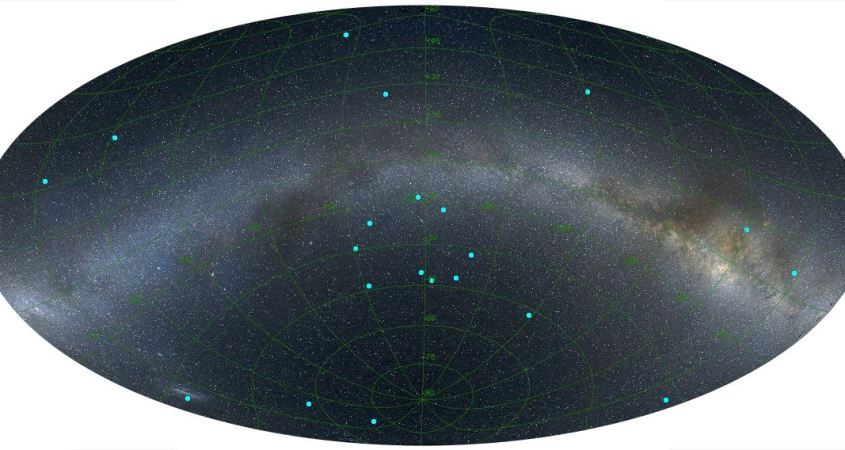
The result of a gamma ray burst detection survey is shown in the featured image from JPL. Each blue dot represents a gamma ray burst (GRB) detected by the team as observed relative to the Milky Way. The discovery team of Hungarian and U.S. astronomers are calling the structure a “ring.”

The nine GRB’s at center of the photo appear to form a spiral, not a ring. Regardless, that ‘ring’ is measured at 1,720 Mega-parsecs – that’s five billion light years. The ring is believed to be 2,770 Mpc distant, in the 0.78 < z < 0.86 range for red shift.

Statistical analysis indicates a one in 20,000 probability this complex formation isn’t chance. The findings were published on July 27 in the Monthly Notices of the Royal Astronomical Society.

Team leader, Lajos Balazs of Konkoly Observatory in Budapest, told Phys.org, “Until now, GRBs are the only objects for which we know the spatial distribution in the whole observable universe. All other objects are complete only in a restricted part of the sky. Our discovery has revealed a large-scale regular feature not known before. Large scale objects like GRB groups have been known already, but such a regular circular structure was a surprise.”

The findings claim a ring, but the astronomers told Phys.org they believe the shape to be a visual impression, and may actually be a spheroid seen head-on. They speculate it may be caused by a spatial harmonic of large-scale matter density distribution.

GRB’s are the brightest events seen in the Universe, thought to result from hyper-nova of massive stars collapsing into back holes, or two neutron stars coalescing. They are extremely rare, transient phenomena. Neutron stars coalescing are a class of GRB that last less than two seconds. Long GRB’s, considered stellar hyper-nova, last from seconds to hours. The article did not state whether these were long, or short GRB’s.

Either way, it makes the pattern all the more remarkable – they caught nine in a structure blinking, which suggests not only spatial, but temporal relationship. The article did not give the time frame, or duration of the GRB’s detected, but said the astronomers seek to collect more GRB’s to study the temporal framework of such events.

They seek to explain a gravity induced “harmonic” that causes massive stars separated by billions of light-years to go hyper-nova, like bullets in a revolver. Good luck.

This can’t be explained by standard theory. It violates the basic mainstream assumptions for CP and the Big Bang.

The Cosmological Principle (CP) sets a theoretical upper limit to large-scale structure of 1.2 billion light years. According to Big Bang theory, the universe is homogeneous and isotropic, so matter should evenly distribute in all directions.

Large-scale structure is detected in the cosmic filaments that string galaxies together, but such structures are under 150 Mpc. This is five times as large according to the astronomer’s findings. If confirmed, the researchers themselves say, their findings refute CP theory.

The scale they estimate is based on gravity model assumptions about red shift. The findings suggest a) theory of red-shift is wrong, and therefore estimates of size and distance are wrong, b) the theory of CP is wrong, c) the theory of GRB’s is wrong, or d) all of the above.

Electric Universe picks, d) all of the above.

Red shift – The researchers’ estimate of scale is dependent of the notion of cosmological red shift caused by an expanding Universe. Halton Arp, the most respected and prolific astronomer of his day, proposed a mechanism for intrinsic red shift based on observations of quasars imbedded in galaxies – a mechanism not related to distance. He describes his theory, and its vehement dismissal by mainstream science in his book, “Seeing Red.” For more information, see Halton Arp present his findings on unusual galaxies.

Mainstream science refused to acknowledge his observations, instead convincing themselves the presence of high red-shift quasars in low red-shift galaxies to be a visual illusion caused by gravitational lensing. With astonishing dishonesty, they claimed to be unable to reproduce observation of filamentary connections between galaxies and quasars found by Arp, even though amateur astronomers with home-based telescopes have done so quite easily.

GRB – EU suggests GRB’s are the result of double layer explosions in plasma filaments. Double layers were described in 1929 by plasma pioneer and Nobel laureate Irving Langmuir. They form when electric charge flows through plasma. They are the cell-like walls of a plasma conduit, formed by counter-rotating, wrapped magnetic fields that give structure to the Berkeland current, capable of carrying and accelerating charge across vast distance in space.

EU concept of GRB’s is described more fully in these articles by Stephen Smith. Instability in the double wall will cause a discharge – a cosmic scale lightning arc. Lightning produces gamma rays, as detected in terrestrial lightning. You can read more on terrestrial gamma ray flashes at NASA.

That gamma rays are commonly produced by known electrical phenomena is significant to understanding how well EU predicts such events with known physics, and how far Big Bang theory must reach beyond known physics to invent theoretical, but unobserved phenomena such as hyper-nova, black holes, dark energy, dark matter and neutron stars to explain the observable universe.

CP theory – EU theory assumes a steady state universe not dependent on assumptions of isotropic, homogeneous creation-from-nothing, as described by Big Bang.

Nevertheless, it also predicts large-scale structure, as seen in cosmic filaments and the collimated “jets” of active galaxies that extend thousands of light years. Even if the spiral feature is much closer, it still covers 43 degrees of sky, suggesting it is enormous even if it is very close.

At whatever size and distance, plasma phenomena are scalable to accommodate. For a comprehensive description of large-scale phenomena and Birkeland currents, see Donald Scott present “Modeling Birkeland Currents, Parts 1 and 2,” in his 2015 EU Workshop.

My observation – The spiral appears very much like observations made by Halton Arp, who theorized quasars are birthed from active galactic nuclei through spiral arms.

Spiral GRB.'sThe Whirlpool galaxy exhibits spiral structure in this NASA Hubble photo, to which I overlaid a trace of the GRB pattern to compare geometry. A tenth outlier GRB from the survey (yellow) is included that appears to belong to the spiral suggested.

Perhaps we are looking down the throat of a cosmic scale z-pinch, producing a new family of galaxies.

Perhaps it is evidence of the current that gave life to our own family of galaxies long ago – it seems pointed in the right direction.

Or perhaps, these are instabilities in the double wall of the heliosphere, where galactic current feeds our Sun.

The findings should stimulate lively discussion in the EU Community. This is certainly evidence in its favor. Please make your thoughts known by giving feedback to Thunderbolts.info.

Andrew Hall

hallad1257@gmail.com

https://andrewdhall.wordpress.com

Craters – Impact or Electric – Hard To Tell.

Star_formation_and_magnetic_turbulence_in_the_Orion_Molecular_Cloud_node_full_image_2Did Van Gogh paint this?

This image shows electromagnetic forces in the Orion Nebula. The dark red areas indicate high energy in the star forming regions.

It’s hard to believe, but mainstream science still does not acknowledge these forces have anything to do with making stars or planets. It’s all gravity to them.

That leaves planetary scientists with some hard questions to deal with. Every planet they fly past shows features they struggle to explain. Let’s examine some of them to understand the problem.

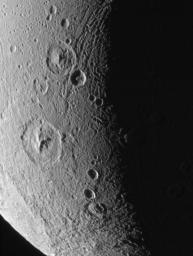
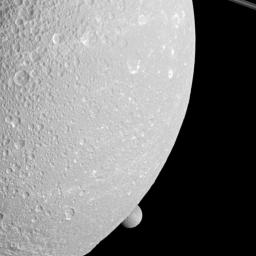
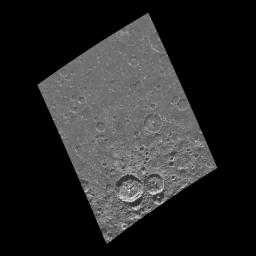
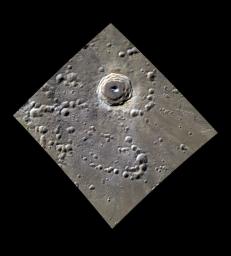
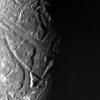
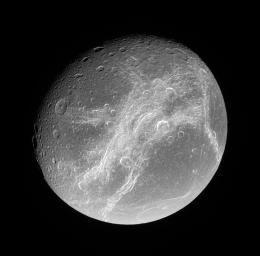
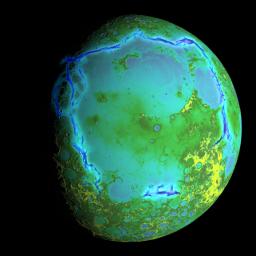
Craters… they just don’t look like they should.   (All images courtesy of NASA and JPL)

The standard theory says there was a period of crazy pinball during the solar system’s history when the planets and moons were bombed with asteroids.

According to physics 101, asteroids had to slam into the planets and moons from all angles, with an average impact angle around 45 degrees. But look – the craters all seem to be symmetric, like the asteroids came straight down.

90
Dione
Ceres90
Ceres
Mimas90
Mimas

In fact, it’s hard to find a crater in the entire solar system that looks like it hit at an oblique angle. It’s as if every meteorite hit a bull’s eye.

This may seem odd, but a high-energy impact will generally form a circular crater at almost any angle due to shock waves. In fact, the crater is typically on the order of ten times the diameter of the meteor, so the shape of the crater is almost wholly a relic of the shock waves. The meteor itself may only penetrate as far as its diameter before it shatters and much of it is vaporized by the shock of the impact.

I sometimes see ‘circular-direct hit improbability’ claimed as evidence for electrical discharge formed craters in support of EU Theory. On this point it would be wrong. It is well established even in laboratory tests that impact shock waves produces a circular form, as well as many other features that can also be formed by electrical discharge.

The differences are subtle. Let’s take a look at the current understanding of the morphology of an impact crater.

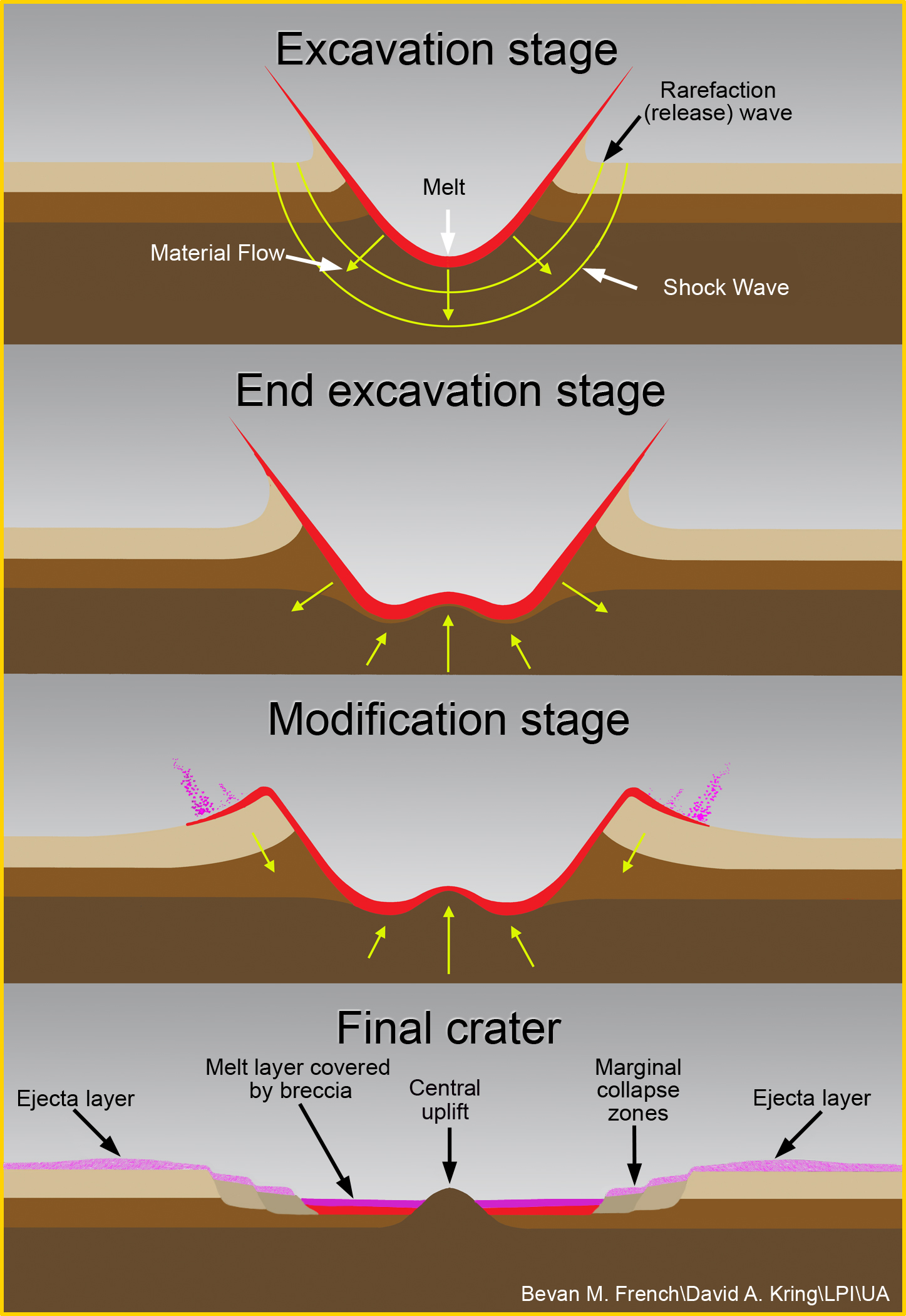
Impact craters are primarily excavated by shock waves created in the enormous impact as the waves rebound from the deeper substrate and interact with the free surface. Essentially, the planetary surface is spauled by the shock waves.

Craters are classified as simple or complex. The complex patterns are associated with larger craters and the simple for smaller – the diameter of the transition to complex varies with planetary size and morphology. Distinguishing features of complex craters include central uplift hills and rings, and concentric collapse zones. The diagrams below describe the impact crater formation for both simple and complex.

_Figure4
simple crater formation
complex crater formation

Images Credit: David A. Kring, NASA Univ. of Arizona Space Imagery Center, 2006.

There is much debate about the formation of these features in impact craters. What geologists know about them has primarily been learned by examining ancient craters here on Earth, where eons of erosion and geological transformations have confused the evidence. The most studied crater is the simple structured, mile wide Barrington crater in Northern Arizona, which is believed to arrive a mere fifty thousand years ago.

The reigning theory for complex craters suggests liquefaction in the shock region is responsible for the formation of the central peak and other features. In simple terms, the ground deforms like it was made of pudding. The impacted ground deforms to the impact plastically at first, until pressures force it into a liquid flow which results in the rebounding central peak and assists in the slumping and collapse of concentric rings.

One distinguishing feature of a true impact crater is best seen in the bottom frame of the ‘Formation of a simple crater’ diagram above. Below the crater bottom fill, called the Breccias lens, is fractured substrate.

This is due to impact. Electrical discharge cleanly removes material from a crater without compressing and fracturing the substrate. So evidence of a discharge crater may require cores to be drilled below the crater to make that case, which has not been done anywhere except on Earth.

The Barrington crater shows such substrate disturbance. It also shows other compelling evidence of impact – the remnants of the meteor that created it, the iron pieces of which have been picked up for years from the debris field around the hole.

Two excellent articles on impact craters can be found here:

Lpi.usra.edu – 1

Lpi.usra.edu – 2

Spark machining experiments show the same features – central peaks, central rings, raised rim and others, naturally formed from electrical discharge. Therefore, telling the difference is difficult. There are features that are more easily explained by discharge than impact however.

For instance, many are hexagonal and some take other polygonal shapes. This is seen throughout the solar system. Hexagons appear in craters of all size, both simple and complex. The phenomena have not been demonstrated in a test impact that I could find.

1
Ceres
Mooncolor2
Moon
Ganymede2
Ganymede

The favored theory seems to be these shapes are the response of pre-existing lines of faults to the impact. Again, Barrington crater is the model, since it has a distinctly square shape. Geological studies of the crater bear out the shape to be aligned with natural faults, supporting this idea.Another theory proposes it is caused in the right circumstances by resonant interaction of reflected shock waves.

But hexagons? I would expect natural faults to be in random alignments. Perhaps the shock wave resonance is a better theory for impacts to so often produce a hexagon. Electrical discharge however has been demonstrated to produce hexagonal craters naturally due to the tornadic motion of twin Birkeland currents excavating the hole. There are several other features to examine that are also more easily explained by electrical discharge than impact.

Lets look at crater formation from the EU perspective.

The plasma discharge, in paired Birkeland currents will swirl about etching the crater to a more or less level bottom and pushing debris up to form a typically sharp edged, or pinched rim. The crater bottom is left molten and solidifies to a more or less flat, or bowled bottom.

The twisting currents and their forking, snapping ends produce the hexagonal rims and sometimes carves terraces on the crater ring. As the charge weakens, the last tendril snaps away, often leaving a small pile of debris in the center – the central peak, or central ring.

Because lightning sticks when it makes a connection, it doesn’t always snap away clean, but sometimes wanders and re-connects. This causes characteristic features like rim craters, twin craters, crater tracks, and rilles. The region of large craters is often a field of smaller simple craters, many having a wide domed central peak, looking like a round cinder cone inside the crater. Mainstream theory doesn’t say much about these.

Current also surges through the ground, furrowing dendrite patterned crazing and in or around the crater and in the erosions at the crater lip. These can appear very much like water erosion, but that is an explanation hard to prove on a place like the Moon or Mercury.

Rilles are a feature of endless concern from a traditional geologic perspective. In different cases, they are attributed to collapsed lava tubes, sub-glacial melt zones, or particularly on Mars, past water-flows.

In spite of the differing explanations from planet to moon where they are found, they all look the same. Rilles appear to be scooped from the ground with no evidence of collapsed lava tube debris, or lava bed; no water inflow channels, or outflow deltas. They are found often radiating away from craters, in crater floors and near other features thought to be electrical discharge features.

Twin craters are another difficult to explain phenomena. Split perfectly by an organized section of rim with no evidence of one covering the other with debris, they appear to be a certain indicator of electric discharge. However this is also the expected result of a doublet asteroid or comet. Expected in impact theory, not proven.

We know from EU Theory itself, comet-like bodies often come in twos, or are dipole shaped. The doublet impact theory for twins seems improbable given the number of organized examples seen all over the solar system. But again, if impact theory of a pudding-like impact zone responding to refracting shock waves is correct, it could produce some strange effects.

There are other types of craters not easily explained by impact or volcanism, such as Platform and Rampart craters. Platforms rise above the surrounding land and Ramparts have a moat like low area ‘etched’ around them. For more information on the EU Theory of crater formations, see: The Craters Are Electric, published on Thunderblogs on 12/07/2007, by Michael Goodspeed.

No doubt, many features we see in the solar system are impact craters, lava flows, volcanoes, and perhaps on Mars, some water erosion. No doubt, proper use of Occams Razor would lead to the consideration of features caused by electrical discharge since they more comprehensively explain the anomalies.

Look at these examples of rims and doubles:
CalistoDouble
Callisto
CalistoRim
Callisto
CeresDoubleRim
Ceres
VenusRim
Venus
MercuryDoubleRim
Mercury
These are Tracks and Rilles:
GanymedeTracks
Ganymede
MarsR1
Mars
MarsR3
Mars
MercuryR1
Mercury
VenusR3
Venus
MercuryTracks3
Mercury
MoonTracks
Moon
TitaniaR1
Titania
It may be planetary scientists will be the first mainstream scientists to recognize the validity of Electric Universe Theory.

They have to. It’s become a real problem. The explanations are different, but the craters still look the same.

The entire solar system is sizzling with electricity. The evidence is right in the photographs. Look at the active electrical discharges in these photos:

PIA19568
Ceres
Uranuslight-150x150
Uranus

The evidence is also seen in:

  • The comet-like tails trailing planets like Pluto.
  • The lopsided crusts of planets where anodic scrubbing of one hemisphere is cathodically deposited on the other.
  • The electrical discharges seen from Saturn’s moons as they skirt the great ring.
  • The energized explosions of comets lit by the sun outside the orbit of Jupiter.
  • The weather of Jupiter, Venus, Saturn, and Earth.
The really scary thing – it’s in these photos of planet wide scars.
MarsPS2
Mars
DionePS2
Dione
MoonPS
Moon
TitaniaPS
Titania

There is no question our solar system experienced an electrical maelstrom. It looks like it happened many times. When two electrically charged bodies come close, with different potentials, an arc takes place. This shouldn’t come as a surprise.

If a wet ball of air can generate enough charge to zap the ground the way storm clouds do on earth, think what a planet spinning in the solar wind can do.

And that brings us to the issue of most immediate importance. The sun.

SunThe sun blows this energy all around us, the earth’s magnetic field shields us from its blast. Now, the sun is heading into a quiet period that will chill our planet. But it is also an unstable cycle.

Low solar activity does not mean large CME’s won’t happen. The Carrington event occurred during a lull in solar activity. Life as we know it is more at risk from a CME than we want to acknowledge.

Our magnetic field is weakening. It is ready to flip. The earth’s magnetic field is our protection. It may not withstand a heavy blow from the Sun. We don’t even know how big the Sun can blow. We haven’t been watching that long.

And our power grid is like a catcher’s mitt for a CME. A big one can happen any time – we are overdue. When it does, we are likely to revisit the Bronze Age for a while. Maybe there will be jobs shaping rocks to warn future generations to pay attention.

We have watched new, violent storms brew on the gas giants. We see the plumes and electric fires respond on their moons. Yet it is not understood by the mainstream.

As we learn more about the influence of electricity in our solar system, we also learn more about the connectivity between the earth and sun. As the sun’s discharge waxes and wanes, so too the response from the Earth. That response is electrical, and it flows through the crust and core of the Earth. Watch as more findings confirm the Sun drives not just the Earth’s climate, but its storms, its earthquakes and volcanoes, too.

It would be better, wiser and intellectually honest if our planet and earth scientists would get on with understanding all of this. They have a responsibility. We need to focus our resources on protecting ourselves from things that will someday happen with catastrophic results.

It isn’t controversial that it will happen. It’s a certainty – just as sure as there will be very ugly earthquakes in the Pacific Northwest and California some day – a mega-quake is overdue. Just as sure as hurricanes will flood the low lands of the Atlantic and Gulf coasts time-and-again, we will have CME’s. It could happen tomorrow. It is time we prepare.

A.D. Hall….

My Encounter

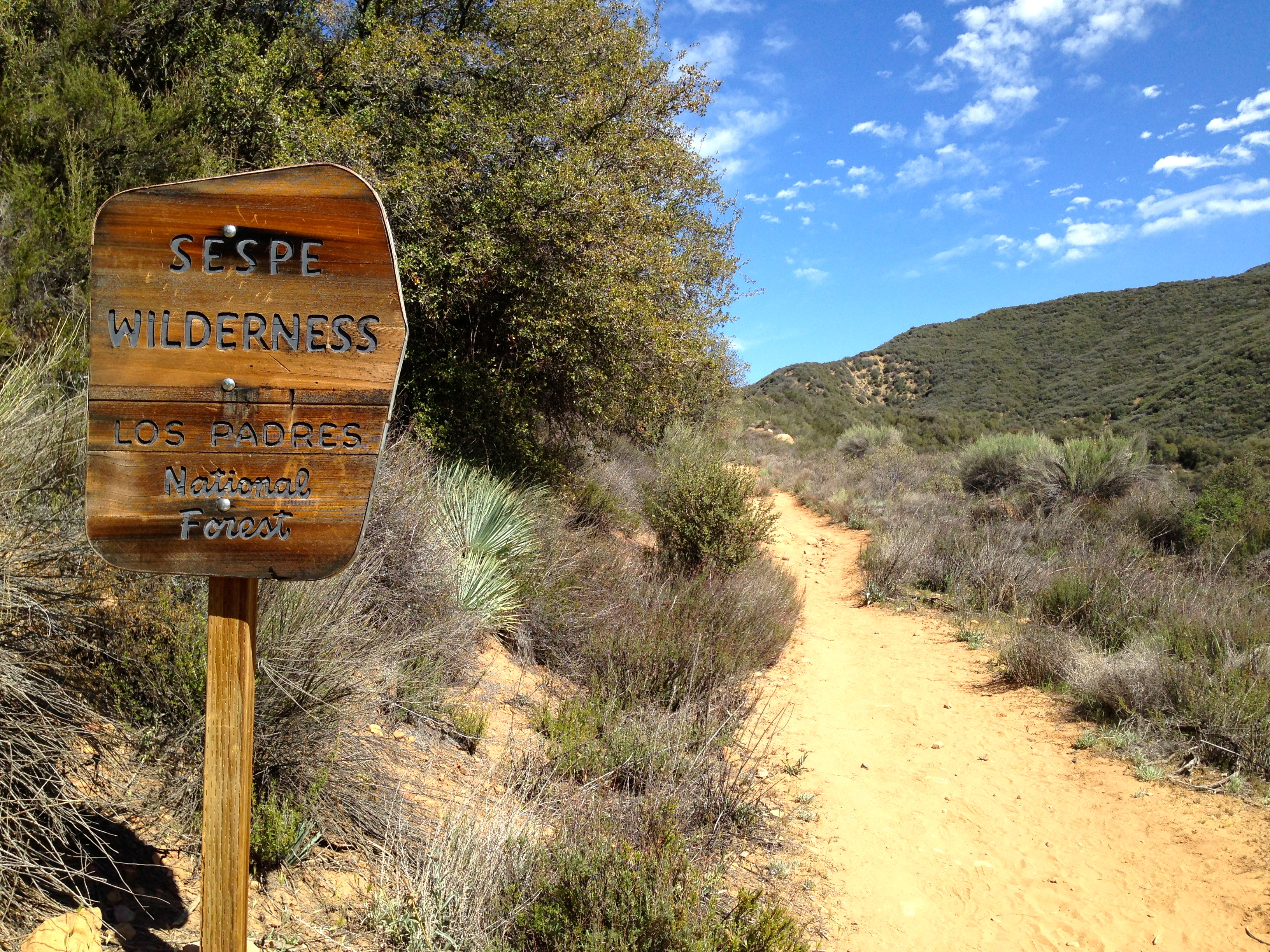
forest_by_YassmineLocation: Sespe Wilderness Area of Los Padres National Forest; GPS coordinates 34 deg, 32’.36” North; 118 deg, 52’.42” West

Nearest Town: Fillmore, California

Time: Spring, 2004

Event: Bigfoot Encounter


The Sespe is the longest remaining undammed river in California. It’s also home to the endangered California Condor. The condor’s Sanctuary lies within the Sespe Wilderness Area, which lies within Los Padres National Forest.

Sespe_Wilderness_in_the_Los_Padres_National_ForestAlthough the Wilderness lies at the edge of modern civilization – the coastal mountains it protects stretch from Los Angeles to Monterey – it is the fourth largest acreage of roadless Wilderness Area in the lower 48 states. Within the Wilderness Area, no roads, or vehicles are allowed. Within the Sanctuary, additional protections apply for the condors. It’s one of the most protected pieces of land on the planet.

Fillmore sits at the edge of the National Forest, at the mouth of Sespe Canyon. East of town, a rugged forest road leads 20 miles to a place called Doughnut Flat. At Doughnut Flat, the road ends on the edge of the Wilderness Area, and it’s the beginning of the Alder Trail. There were no other cars at the trail-head when I arrived.

At the time, I lived in Fillmore. This is an area I’d been to before, since it’s almost my old backyard. From Doughnut Flat, Alder trail follows a meandering creek at an elevation of about 4,000 feet, before it drops down a steep canyon to join with a longer trail that follows the upper reaches of the river.

Sespe_Wilderness_Topography_4A mile in, the trail passes a cluster of trees. A big oak in the center has a campsite beneath. I hiked alone this day, and didn’t intend to go far, carrying only water and a walking stick. I stopped to survey the campsite thinking I might one day bring the kids, since it’s such an easy hike from the car.

I was disappointed to find the site trashy with beer cans and broken glass – being a mile from the trail-head, it evidently got heavy use.

As I poked around beneath the oaks, I heard heavy steps, and glimpsed the knee and lower leg of a man bolting from a brush-filled ravine not twenty yards away.

The knee and leg thrust forward in a run. The foot was obscured by grass, and the body was obscured by the branches of the tree I stood beneath. The leg was a uniform, dark grey color. I saw no cuff, or sock, or other feature, and he was gone up the canyon before I could think to move.

This disturbed me. He apparently bolted because I was there. Why was he hiding? I concluded the man must have an illegal camp, or pot growing back in the canyon – up to something he didn’t want known.  I immediately gathered my things and left, hiking to my truck.

ManzanaI returned a week later. Again, by myself, thinking whoever lurked in that canyon ought to be gone. I wanted to survey the situation – like I said, this is a trail I used a lot, a place I wanted to bring the kids. I might add, I am always very aware in the wild, especially by myself. But on this occasion, I half expected to run into someone, so was particularly aware. That’s one reason my memory is clear.

I walked beyond the trees to where I saw the man run and found a path. The path led up the shallow canyon towards an unusual blue-gray cut in the mountain that looked like a small mining operation from a time in the past. I found an old fallen windmill near the cut, and some rusted sections of a water tank confirming my suspicion.

I found no campsite, or trash, or other evidence of recent activity. I explored the artifacts and then continued up the draw, which led to a shallow saddle on a ridge. I had to scrabble up a rocky cleft to gain the ridge.

When I topped the ridge, I looked down into a lush green pocket valley, enclosed by cliffs on the opposite side; and on my side, a sandy slope covered in Manzanita. This verdant valley looked untouched and inviting – I could see no roads, or trails. The slope into it was bowl-like and negotiable, so I continued on, skirting the hillside looking for the best way down.

The path ended at the ridge, so I continued on game trails that wove through the chaparral. The Manzanita grew five feet tall, spaced such that I could wend my way through it, but not in a straight line. I could see over the top, but I couldn’t see through. The day was calm, clear, sunny and warm. I’d worked-up a good sweat climbing the ridge, hearing nothing but the sound of my own heavy breathing.

IMG_0581“EEAAAAAAHHHH” – a shriek filled the valley – I stopped in my tracks. The sound came from below, and was directed right at me. So sudden, so loud, and so…unknown was this sound that it startled me witless.

It’s perplexing to hear something you can’t identify – especially in the wild, without warning, where there shouldn’t be such a sound.

No living thing I know in those woods could make that ripping scream; no lion, bobcat, or condor could have carried that volume, or pitch. What entered my mind was T-Rex … from “Jurassic Park.”

The shriek gave me chills, but I knew there had to be a rational answer. My mind ticked through possibilities and came up with the best similarity – there must be heavy equipment in the canyon. Only the screech of metal-on-metal made any sense. I imagined a giant, rusty gate hinge. Only it wasn’t quite like that.

I listened for other sounds. I looked. Nothing moved. There was no sound, or sight of anything – nothing but a pristine valley overgrown with oak and pine along the narrow stream below. There were not supposed to be machines in the Wilderness Area.

The sound didn’t waft up to me, bouncing and distorting off the canyon walls. It hit my face, so to speak, like standing in front of a loudspeaker. Nevertheless, I rationalized the sound must have come from somewhere around a dog-leg in the canyon where I could not see. If I could see down there, I was sure there would be a backhoe, or bulldozer doing heavy work.

I continued across the slope to a rise that promised a view past the dog-leg. As I topped the rise the ground became steep and sandy and I had to dig in my boots to get a stance, which occupied my attention. When I looked – I had a perfect view. I saw the entire length past the dog-leg and the slopes all around. There was nothing there.

I stood for only a moment surveying the scene. Not a fly buzzed it was so still. And then a feeling came over me – I did not belong there.

IMG_0023This was far more than a feeling of being watched, or a case of heebie-jeebies – I’ve had those before. Some thing didn’t want me there. I struggled with this feeling – trying to swallow it. It made no sense, but it kept building almost to a feeling of panic. I turned and retraced my steps towards the ridge.

As I neared the ridge, I heard what sounded like footfalls behind me, in time with my own. I told myself it was my imagination, until I stopped at the ridge top, where I had to climb down the cleft, and I heard one more footfall that wasn’t mine.

I hurtled down the cleft in two bounds, and ran a good fifty yards. Then I heard another sound. It came from the ridge. I turned, thinking I would see whatever was coming down the cleft. There was nothing, except one branch swaying among some brush below the cleft. Just one branch.

I turned and made double time all the way to the Land Rover, roughly three miles, got in and locked the doors. Even inside, with the doors locked, I had the willies driving down the long road.

About five miles from Doughnut Flat, outside the wilderness area at a considerably lower elevation, there is an oilfield with active drilling and production work. As I passed through this area, I thought, what I heard was oil-field equipment. They must be drilling near the Wilderness close to where I was. Convinced I’d found the answer, I forgot about the incident … for ten years.

BF2I am not prone to apprehension in the wilderness. I generally feel quite safe and competent on my own. I’ve spent many days and nights backpacking alone in remote areas, including several trips in this Wilderness. I have experienced weird feelings, like being watched, or that a place feels spooky on occasion. It isn’t unusual in lonely, remote places where creatures roam. But I have never been scared, even confronted by bears, and I’ve never felt compelled to leave a place before, or since this experience.

I never connected the sound with Bigfoot. In my mind Bigfoot – well, if he even exists – lives in rainforests far north, not down in the coastal mountains fifty miles from LA. It wasn’t until my interest in Bigfoot got sparked by someone I admire that the connection finally came.

I’m a fan of Survivorman, and think Les Stroud is an honest, sober guy with a whole lot of back country experience. So when he started looking for Bigfoot, I took it seriously.

Intrigued by his show, I looked through You-Tube for other info, where I ran across various alleged recordings of Bigfoot vocals. That’s when I recognized the sound.

I heard the same blood curdling screech of a rusty hinge, chorused with a resonant, guttural growl. It’s been described as many voices screaming, or many dogs barking in unison. Bigfoot researchers speculate it is a warning.

IMG_1683That is certainly what I felt. The memory of the event is quite clear. I had to look for one more thing.

I found the place on Google Earth. I found views from the same time frame. There is no road, no nearby oil field. Not even a trail in that canyon, or anywhere for miles around. I looked up sightings for the area on the BFRO web-site. There have been several in the Sespe, going back decades.

I also discovered a wealth of information about that one credible Patterson-Gimlin film that has been enhanced and analyzed with digital technology not available at the time it was filmed. There is incredible detail of body proportion and movement that cannot be human.

Whatever drove me out of that canyon made a hell of a noise I cannot associate with anything but a Bigfoot vocalization. Now that I’ve heard it, I can’t ignore it. I’m going back to that canyon, once I find somebody who’ll go with me..

The Galapagos of the Southwest

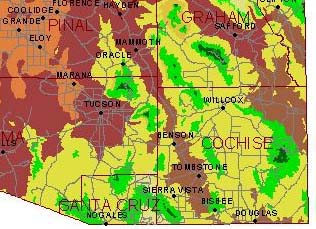
North America’s Western Cordillera, from Alaska to Southern Mexico, is a wall of mountain. Except for a low point called the Deming gap, between the Rocky Mountain’s end at the Mogollon Rim, and the Sierra Madre Occidental in Mexico.

Chihuahua Desert grasslands spill west through the gap to mingle with cactus in the Sonora Desert. Both deserts span the area between Rockies and Sierra Madres, including southeast Arizona and northern Mexico.

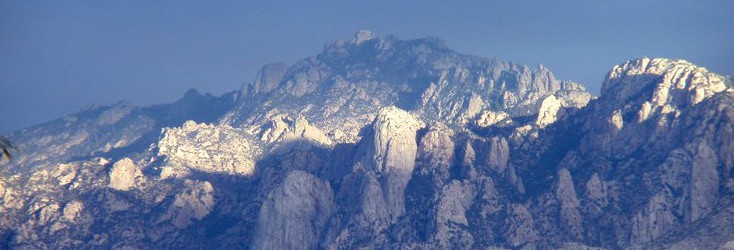
nitro.biosci.arizona.eduPuncturing the desert are mountains ten thousand feet high, where rainfall doubles, snow falls in winter, and alpine forests thrive. This confluence of temperate and tropic, grassland and cactus, dry desert and pine-capped mountain creates one of the most amazing places on the planet.

It is the Madrean Archipelago. ‘Madrean’ is the floristic region’s name, derived from Sierra Madre. ‘Archipelago’ because forty distinct mountains poke through a sea of desert, each an environment of unique complexity. These are the Sky Islands of the Madrean Archipelago. Here’s ten amazing facts.

Northern Canada’s Southern Border

Their names, Penaleño, Galieuro, Huachuca, Chiricahua, Santa Catalina, Rincon and Santa Rita evoke the Spanish influence on the region. They rise abruptly from the valley floor. Piles of granite extrusion, caverned limestone and volcanic flow – wrinkled, faulted, folded earth. Each is an ecology of it’s own, or more precisely, several.

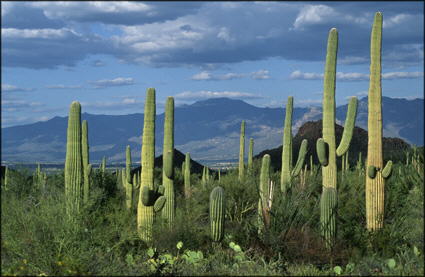
saguarosDrive Mount Lemmon Highway to the 9,157-foot summit of the Santa Catalina’s for a bio-tour from Mexico to Northern Canada – in just twenty-five miles.

Leaving Tucson, you begin in creosote chaparral, typical of Sonora. It’s so dense with plants you wouldn’t think desert if there weren’t needles to remind you. Barrel cactus, prickly pear and cholla grow thick, and thermometers read triple digits the entire summer.

A forest of Saguaro and occotillo blanket the slopes as you begin to climb. Within minutes, these yield to grasses, juniper, yucca and cooler breeze. It’s like Chihuahua.

A few miles farther are pine-oak woodlands. Pine-oak woodlands cover every Sky Island in the Madrean Archipelago; they come from Mexico’s Sierra Madre.

Above seven thousand feet are forests of ponderosa pine, denizens of the Colorado Plateau that marched down the Continental Divide.

Chiricahua

On the tallest sky islands are glades of fern, forests of aspen, spruce and fir, and temperatures thirty degrees cooler than the desert below – just like Canada.

Steeply gorged canyons collect snowmelt and rain into riparian ecosystems. Sycamore, willow and cottonwood fill the lower reaches, and streams tumble down cataracts to pool in box canyons, creating enchanting microclimates.

One can experience eight of the worlds twelve bioregions in a single day’s hike, and walk past a thousand different plants. This vertical variety of ecosystems is compared to the Galapagos Islands for its diversity.

The Most Critters In The U.S.

Twice as many mammal species than Yellowstone Park inhabit the region – 104 at last count. From common black bear to boar-like javalina, black-tailed prairie dog to tropical coati mundi, the region is one of the most diverse in the world.

There are 29 species of bat, alone. The International Union for Conservation of Nature (IUCN) recognizes the Sierra Madre and Madrean Archipelago as one of three biological “mega diversity” centers on the planet.

jaguarMany species are threatened. One hundred and fifty-three are listed as vulnerable. Man eradicated grizzly bear, but Mexican grey wolf, reintroduced decades ago has returned to some Sky Islands. Bighorn sheep have also been reintroduced to replace lost herds.

In 2013, a jaguar, largest cat of the America’s, and third largest of the worlds big cats, was photographed in Arizona’s Santa Rita’s. Ocelots have been photographed in Arizona, too. Both cats retreated far into Mexico, it was thought. These have come back, or perhaps they never left.

ocelotWhich raises a significant issue with a border fence. Many Sky Islands are in Mexico. The greatest diversity of creatures on the continent migrate hopscotch between them, and the border cuts their path. It is a significant issue in debate about the border to ensure protection of their migratory routes. The critters can’t apply for visas.

But Even More Birds

There are places on every birder’s bucket list. The Chiricahua Mountains are at the top, because half of all avian species in North America are found there.

The San Pedro River flows north from Mexico, to join the Gila. It is the most significant free flowing stream in the southwest. Flanked by the Dragoon’s and Chiricahua’s on the east, and the Huachuca’s on the west, it forms a corridor birds fly in migration, which makes the Dragoons, Huachuca’s, Chiricahuas, and the valleys between, their home every year.

Arizona-Sonoran-Desert-Museum-BirdSome birding hot spots:

  • Miller, Carr and Ramsey Canyons in the Huachuca’s. Thirteen species of Hummingbird are documented every year inRamsey Canyon. Birders can witness the Elegant Tanager, Eared Quetzal, Rufus-capped Warbler, Aztec Thrush, Brown-backed Solitaire, and others rarely, if ever seen elsewhere in the U.S.
  • Cave Creek Canyon in the Chiricahuas is famous the world over. Of special interest are wintering raptors. It is not uncommon to check 100 birds of prey off your list in a day, including the rare Ferruginous Hawk, Northern Harrier, Harris’s Hawk, Prairie Falcon, Bald Eagle, Golden Eagle, and Red-tailed Hawk.
  • The San Pedro Riparian National Conservation Area, managed by the Bureau of Land Management, is a 56,000-acre preserve along the upper San Pedro River. An estimated 4 million migrating birds travel there each year. It is home to over 100 indigenous species, including forty percent of all Gray Hawks in the U.S.

Needless To Say…

gila_thumb_0The area has the most reptiles, bees and ant species in the U.S. There are 135 types of snake, lizard, toad, and turtle living there.

The finest place to see and learn about the diversity and splendor of plants, reptiles, birds, mammals and insects that inhabit the region, is the Arizona Sonora Desert Museum. It’s located in the natural desert environment, next to Saguaro National Park, west of Tucson.

It’s ranked one of the Top 10 Museums in the country by TripAdvisor.com and contains 98 acres of zoo, aquarium, aviary, botanical garden, art gallery, mineral exhibit, and natural history museum.

Famous For Rocks

It’s not just plants and animals that define Madrean diversity; it’s the rocks too. The Sky Islands exhibit more mixed geological composition than any other place on the planet. Formed 13 million years ago from continental rifting, the mountains did not rise so much as the valleys sank away, leaving the hard rock standing.

roock The Chiricahua Range is a single massive volcano, whereas the Santa Catalina’s, Rincon’s, Penaleño’s and Dragoon’s have metamorphic cores of gneiss and granite. The other Sky islands are predominately limestone. This mixed composition presents a variety of soils types, which contributes to the wide diversity in plants.

No wonder Tucson is home to the largest Gem and Mineral convention in the world, with over forty show arenas throughout town, anchored by the prestigious Tucson Gem and Mineral Show held each year in February.

Its Where The Anasazi Disappeared.

The region is a crossroads for people as well as flora and fauna. It is the scene of one of the greatest mysteries of antiquity – the Anasazi, who left castles and cliff dwellings, roads, farms and kivas in the Four Corners area in apparent hurry in 1,300 A.D.

We may not know why they left, but we know where they went. They came here.

The Anasazi were only one group of Pueblo Indian. Puebloan culture extended from southern Utah and Colorado, throughout Arizona, New Mexico and Mexico. Cultural cousins to the Anasazi were the Mogollon, Salado, Paquime, Hohokam and other Puebloan people.

When the Anasazi departed Mesa Verde, Kayenta, Canyon de Chelly and other Four Corners pueblos, they fled south and joined these groups. Some followed the Rio Grande, or joined clans on the Mogollon Rim. Others passed through and found a home in Paquime, in Mexico. But many came to reside with the Hohokam, who lived along the rich riparian canyons of Sky Islands, and built sophisticated catchments and irrigation canals to water their crops.

Coronado’s Conquistadors Arrived

Portal_Peak_in_the_Chiricahua_MountainsThe San Pedro River Valley was a causeway for trade and travel to the Pueblo Indians, who traded with the Aztec. Artifacts spanning centuries from Chaco Canyon to Kayenta include Macaw feathers, obsidian mirrors and hammered copper that came from Aztec culture deep in Mexico.

When the Spanish arrived, they took the same trail. In 1540, Francisco Vasquez de Coronado and his conquistadors entered what is now the United States in the San Pedro Valley, near the Huachuca Mountains. They traveled north in search of “seven cities of gold” and found one hundred Indian pueblos, the Grand Canyon and Kansas before giving up on gold.

Today, several Sky Islands compose the Coronado National Forest.

Home For Eskimos

Before Spaniards arrived, Eskimo’s came to the Sky Islands. Navajo and Apache are of Athabascan origin. They migrated from Canada, like the spruce and fir that populate the mountains, and are genetically linked to today’s Eskimo.

GeronimoBands collectively known as the Chiricahua Apache made the Sky Islands home, and fought 150 years of war to stay there. The most seminal event of the Apache Wars occurred when Mexicans killed the wife and children of a man named Goyathlay. Today we call him Geronimo.

The crime fostered his vicious guerilla approach to warfare that had Mexican and American soldiers scouring the entire region. The complexity of the geography aided Geronimo, making his renegade band impossible to find.

General Nelson Miles, who captured Geronimo in 1886, built a heliograph station in the Penaleño Mountains to signal troops in search of the Apache. The place is still called Heliograph Peak. At one time, 5,000 troops hunted Geronimo and his band of a few dozen warriors.

Geronimo lobbied to the end of his life to allow his people to return to the Chiricahuas. President Theodore Roosevelt denied him, saying it would raise fear in the “local” people.

Astronomy Capital Of The World

NOAO_AURA_NSF
Kitt Peak. Credit NOAO/AURA/NSF.

Today, Sky Islands are home to more peaceful pursuits. There are twenty-five active observatories located on their peaks. Clear, dry desert air, low light pollution and peaks that reach seven to eleven thousand feet above sea level make this place tops for astronomers. That’s why the University of Arizona in Tucson is a renowned institution for optics and astronomy.

The Santa Catalina Mountains, north of Tucson are home for the Mount Lemmon Observatory, and the Mount Lemmon Sky Center, affiliated with the University. South of Tucson, in the Santa Rita Mountains is 8,550-foot Mt. Hopkins and the Fred Lawrence Whipple Observatory, operated by the Smithsonian Astrophysical Observatory.

Above the town of Safford brood the Penaleño range, tallest of the Sky Islands, where several observatories reside atop 10,720-foot Mt. Graham, including the Vatican Advanced Technology Telescope, the Large Binocular Telescope and the Mount Graham International Observatory.

Most famous of all, and the largest collection of optical telescopes in the world, is Kitt Peak National Observatory, at 6,875 feet in the Quinlan Mountains southwest of Tucson.

These connect the Sky Islands with researchers around the world, bringing the entire universe into focus, making it the greatest crossroads on the planet.

Here are some handy links:

 http://www.terrain.org/articles/21/skroch.htm

[Ref 2] http://www.fs.fed.us/rm/pubs_rm/rm_gtr264/rm_gtr264_006_018.pdf

[Ref 3] http://www.fs.fed.us/rm/pubs_rm/rm_gtr264/rm_gtr264_036_059.pdf

[Ref 4] http://www.cbsnews.com/news/rare-jaguar-seen-roaming-southern-arizona-mountains/

[Ref 5] http://wildsonora.com/content/ocelots-arizona

[Ref 6] http://www.fs.fed.us/rm/pubs_rm/rm_gtr264/rm_gtr264_036_059.pdf

[Ref 7] http://sabo.org/

[Ref 8] http://www.checklist.org.br/getpdf?SL122-08

[Ref 9] https://www.desertmuseum.org/about/

[Ref 10] http://www.fs.fed.us/rm/pubs_rm/rm_gtr264/rm_gtr264_006_018.pdf

[Ref 11] http://www.tgms.org/show-2015/

[Ref 12] http://www.desertusa.com/ind1/ind_new/ind11.html

[Ref 13] http://arizonaexperience.org/remember/coronado-expedition

[Ref 14] http://www.indians.org/welker/geronimo.htm

[Ref 15] http://www.go-astronomy.com/observatories