In Part One of this series, we looked at how arc blast creates a mountain. We examined triangular buttresses on mountainsides and how they conform precisely with the characteristics of reflected shock waves. In particular, we looked at layering, compression and expansion of the wave-forms.
In Part Two we looked at evidence of harmonics, wave-form instabilities and boundary layer effects that are imprinted on the landscape.
In this article, we’ll take a closer look at layering and electromagnetic influences.
Electromagnetic Effects…
The sock waves are energized with current. The shock wave is a highly stressed region – a dramatic shear zone of pressure, density and temperature the ionized winds can’t penetrate. The shock wave itself is a conduit for current.
Current coursing through thin shock waves molds the electromagnetic fields in the coherent form of the reflected shock and sorts material according to its dielectric properties. The stratified layers of triangular buttresses are segregated by mineral composition. An current in the shock wave necessarily has a magnetic field surrounding it.
Blowouts…Another dramatic signature of an electrical nature is a feature we’ll call a blowout. Blowout occurs when the arcing current makes direct contact with the ground.The arc flash follows the most conductive path available. It travels in the ionized atmosphere, especially in arid regions where soils are dry and non-conductive compared to the ionized atmosphere above ground. When a conductive surface feature is available the arc will fork to ground.The conductive feature may be a mineral deposit, or water in a stream, aquifer or wetland. The result is a crater that blasts away a portion of the mountain being formed. The images below show a blowouts in the center of a mountain. It is apparent the crater significantly modified the form of the mountain.
Expansion Fans…The images to follow are from a complex formation of astroblemes in Iran. They are on the outside, or convex bend in a large mountain arc.One unusual crater shows shock effects as the apparent arc trajectory changes. The feature annotated is an example of an expansion fan, which is a set of reflected waves that occur on the outside of a bend (convex) when the source of the shock makes a change in direction. The fanning shock waves have produced linear hills that radiate from the bend.
Ejecta and Ablation Zones…Material ablated from the blast forms layered hills and pressure ridges on the surrounding area. Layering indicates material was blown away from the blast, instead of being drawn toward it by the suction of the mushroom cloud. Evidence of high speed winds is seen where they form fingers of conical flow, dunes and pressure ridges.
Summary…Let’s recap what we have seen:
Triangular buttresses form on the sides of mountains in the shape of reflected supersonic shock waves,
They are layered onto the mountain, so they are not caused by seismic waves,
They are not layered sediments from an ancient beach, or waterway since the sharply angled triangles are a consistent feature around the world and do not conform to any motion of random water waves,
They are formed in all types of rock, including granite, so they are not formed by eons of normal winds,
The triangular wave-forms exhibit compression and expansion from superimposed longitudinal and transverse waves,
The triangular wave forms exhibit harmonic repetition consistent with reflected shock waves,
The triangular wave-forms exhibit super-positioning and cancellation under compression consistent with reflected shock waves,
The triangular wave-forms are parallel to the primary shock pattern, consistent with reflected shock waves and perpendicular to the wind direction, consistent with supersonic winds created by a shock wave,
The triangular wave-forms exhibit less energy and more transient effects on softer substrates, and higher energy and sharper, more defined angles on hard substrates,
Triangular wave-forms exhibit transient reflections, normal shocks and features of density variation consistent with supersonic reflected shock waves,
The blast zones show concentric rings of pressure ridges, layered in the direction of the winds,
The winds within the blast zone are directed normal to the central mountain, or crater (outward blown winds), as indicated by surface layering on pressure ridges and buttresses,
Boundary layer features of reflected waves can be found in the substrate of the blast zone, as seen in the road cut in Iran,
Land surrounding the blast zone is blanketed with ejecta that exhibits flow patterns from high speed winds.
This concludes the Arc Blast series of articles on reflected shock waves and their significance. Future articles will examine more evidence for the effects of arc flash on the landscape:
The ‘rooster tail’ and how big mountains are built,
Following winds and how Kelvin-Hemholtz instability can modify a mountain ridge,
Complex mountain forms and mountain arcs,
The interrelation between volcanoes and mountains,
The connection between shock waves, fractals and Lichtenburg landscapes,
How rocks form,
The cause and nature of an arc flash,
Sub-sea canyons, trenches and rifts,
Examples from the archeological and mythological records of mankind.
What is proposed here can be verified. In fact, mountains are the most tangible evidence for the Electric Universe model available. The evidence is under our feet. There are already reams of geologic data waiting to be re-interpreted.
Geophysics, applied to evaluate geology as the consequence of electromagnetic and hydro-dynamic forces, will some day bear this out. You may even have the ability to bring that day closer. Your comments are invited.The End – Part Three.The proposed theory of arc flash and arc blast and their effects on the landscape are the sole ideas of the author, as a result of observation and deductive reasoning. Dr. Mark Boslough’s simulation of an air burst meteor provided significant insight into the mechanism of a shock wave. His simulation can be viewed on YouTube: Mark Boslough.
In “Arc Blast – Part One” we looked at how arc blast from current in the atmosphere could produce supersonic shock and wind effects that create a mountain. We examined triangular buttresses on mountainsides that exhibit the characteristic standing wave-form of a reflected shock wave. In particular, we looked at how they are layered perpendicular to the wind direction, and exhibit compression and expansion from superimposed longitudinal and transverse waves that came from a source above.
We now examine more, compelling evidence.
Harmonics…
The images below are color enhanced Schlieren photographs of reflected shock waves in a wind tunnel.Wind tunnels typically show supersonic flow between two surfaces. The initial shock reflects from both walls, creating two triangular wave-forms adjacent to each other. The diamond patterns that form between the triangles are often called ‘shock diamonds’.In the case where a supersonic shock wave is created in the air, it is unbounded above, so the only surface reflecting it is the ground, and it creates a row of triangles instead of two opposing rows.
The initial wind speed in the first frame (top left) is Mach 2. It shows the shock wave producing one and a half diamonds. The wind tunnel is charged with gas in a pressure vessel, so as the gas flow progresses, the pressure and mass flow decrease from the pressure vessel, lowering the Mach speed of the wind.
The subsequent frames shows instability in the shock waves as the winds slow. The wave-forms compress and the angles of the primary and reflected waves grow less acute.Vertical shock waves form, called normal shocks, which travel through the triangles, distorting their shape where the normal wave crosses the reflected wave, causing more reflections. New smaller triangles form and replace the original standing wave. This is harmonic reflection of the primary shock wave.
In the final frame (bottom, right) the wind speed has slowed, the triangular wave-forms are smaller and higher frequency. There are seven shock diamonds where there were initially one and one half.This sequence of harmonic reflection as the energy of the shock wave dissipates is evident on the triangular buttresses stacked on the sides of mountains. As seen in the images below, triangles are stacked upon triangles in harmonic multiples as the successive layers of material were deposited by supersonic winds, tunneled by the reflected shock waves.The first image in this group is most instructive. In it, the lower-most layers of harmonic waveform can be seen to have begun to form at the outer edge of the preceding layer.
Instability, Interference and Cancellation…Transients in wind speed, Mach angle and multiple reflections create instabilities in the wave-forms. Unstable waves segregate and fan away from each other under expansion, fragmenting the wave-forms.
Or they bunch together in compression, pressing waves against each other. Shock waves don’t cross, but fold against each other, like magnetic fields interfering.
As wave-fronts compress, the wave-form can be squeezed and cancelled-out. In this image of a mountain in Iran, three wave-forms compress, distorting into curves where the waves, pressed against each other, bend the center wave-form almost circular. In the following layers, the pinched wave has cancelled altogether and the surrounding wave-forms have joined, stretching wavelengths to close the gap.
A similar wave cancellation has occurred in the next image. Here the center wave-form is cancelled by neighboring wave-forms, and they have expanded to fill the wavelength. A diagonal shock line appears cutting the mountain where the cancellation occurs. It crosses in a step-wise fashion, a few layers at a time, causing it to zig-zag. Note the ruler straight shock lines that divide the adjacent triangular buttresses.
Complex Wave-forms…Complexity is found within the shock fronts, inside the triangles themselves, as pressure and density variations.
Note the density variations form a circular feature near the top of this Schlieren image. The same feature is on the distorted triangular buttress found in Northern Arizona, shown below.Also, note how the edges of the triangle draw in towards the circle, just as the waves near the top in the Schlieren image do. The three small buttresses below the hole show a striking similarity to the size and location as those on the wave-forms in the same position in the Schlieren image.
Here is another hole created in a triangular buttress. This one is in Iran.
The Lambda Foot…
This road cut is in Iran and is sometimes described as the slip fault that created the ‘horst-graben’ or basin and range region where this is found.That isn’t the case. This slice in the ground was left by the primary, or incident shock (left side of the ‘V’) and its reflected shock (right side of the ‘V’).
This is the boundary region where the initial shock meets and reflects from the ground. The incident shock curves sharply downward, and the reflected shock is nearly straight. Where the reflected shock and incident shock meet, there is a feature called the lambda foot.
Note, the incident shock curvature and the particular dip of the sedimentary layers within the ‘V’. They are similar to the angled transmitted shocks shown in the ‘V’ of the diagram. Here is another image with a broader view. In this view, the lambda foot is easier to discern.
Also, a feature not originally shown on the diagram, the cut in the center top of the ‘V’ which results from a shock that curves downward, normal to the expanding corner of the reflected shock, annotated in red on the diagram.
This shock feature is along the side of a hill that can be seen stacking in layers to the left. It should define the outer boundary of the initial shock wave. If so, it should form a ring around the mountain. A similar ‘V’ shaped cut should be found on the opposite side of the hill. If true, the incidence angles, and distance between this ‘V’ and the predicted ‘V’ on the opposite side, hold information about the height of the apex of the passing wave.
Conclusions…Harmonic repetition is undeniably evident on triangular buttresses – proof they resulted from a sonic shock event. It’s proof they were created in a single, coherent event, and could not possibly be the result of time and erosion.The other effects we’ve examined are particular to sonic shock waves, as well. In Part Three we’ll look into evidence for electromagnetic effects of the arc blast.
One of the most compelling aspects of Electric Universe cosmology is that it is visually apparent. A person can see a Peratt column in a petroglyph and reasonably conclude that our ancestors viewed a different sky than we do.
Or look at a telescope image of planetary nebula and recognize the hourglass shape of plasma current contracting to form a star.
Or view the red-shifted quasars inside Halton Arp’s “unusual galaxies” and determine for yourself if they are really the distant objects we’re told by conventional astronomy.
In fact, through Electric Universe eyes, you can see that patterns in nature, from galactic to nuclear, are coherent, fractal, and electric.
The planets and moons of our own solar system provide some of the most accessible and compelling visual evidence of all. Hexagonal craters, rilles and the odd distribution of these features, often concentrated near the poles, or in one hemisphere, attest to an electrical formation. One can imagine the vortex of discharging plasma that carved them.
The central pillar of Mt. Fitzroy
Earth should also show electrical scarring – in an Electric Universe it has to be the case. But it’s not intuitively apparent.
Unlike the Moon, or Mercury, Earth doesn’t display a carpet of hexagonal craters. There are some craters we know that are ancient and eroded, but their formation remains controversial.
There does exist proof of electrical scarring on Earth, however, and it’s in abundance. You can say it’s staring us in the face. This article will discuss how to recognize it.
First however, recognize that what distinguishes Earth from a planet like Mercury, or the Moon, is its atmosphere and geomagnetic field. This changes the electrical character of the Earth entirely. It doesn’t respond like a bald, rocky planet in an electric current, drawing lightning bolts from a region of space that carries a different electrical potential.
Earth acts like a gas giant, integral to the circuitry, with current flowing through, as well as around it. But Earth’s current flows in a liquid plasma – the molten magma below the crust. In the event the system is energized, current discharges from within.
The evidence is in the extensive volcanism on Earth. Volcanoes straddle subduction zones at the edges of continental plates, rift zones and mid-ocean ridges. They betray the flow of current beneath the crust.
Surface evidence is in the mountains. Basin and range, mountain arcs, and mountain cordilleras are all proof of electrical discharge. To understand the visual evidence, however, requires looking beyond the simple concept of a lightning bolt from space. The reason is the Earth’s atmosphere.
When electrical discharge occurs in an atmosphere, it creates sonic-hydrodynamic effects. We experience the effect when we hear thunder – the sonic boom of a lighting bolt. It’s the sonic and hydrodynamic effects, in a dense, viscous atmosphere, that leave their mark on the landscape at the grandest scale.
In a previous article, “Surface Conductive Faults”, we discussed the concept of a surface conductive double layer providing a path for arc flash. The surface conductive path is the cloud layer, where we can see that ions collect to produce thunderstorms.
Imagine a lightning bolt of immense proportions, sheets of lightning, in fact, arcing horizontally in this region that is roughly five, to fifty thousand feet above the land. The focus of this article is the hydrodynamic effects of the resulting arc blast. Arc blast is the consequence of arc flash in a surface conductive current discharge.
Four Steps to Build a Mountain…
The following image (annotated by the author) from Los Alamos Laboratories shows a shock wave being created by a supersonic projectile passing over water. The colors display density; highest in the red, lowest in the blue. Purple is the baseline of the atmosphere. It provides a very good analogy for the way a mountain is built.
The result of the arcs passing is embossed on the land by shock waves that act almost precisely as those made by the projectile.
The difference being the shock wave is plowing land, not water, and it has the hyper-sonic velocity, heat and power of an arcing current – much more energy than a simple projectile.
The bow shock is an anvil of many thousands of psi, at a temperature many times that of the sun, carrying charged electric fields. In a dense, viscous environment, fluid mechanics, shock effects and electromagnetism align in phase and frequency with the arc that creates them.
In Region 1, the bow shock vaporizes, and melts the ground, plowing an oblong crater.Region 2 is a reflected shock wave blasting into the atmosphere, pushing an exploding cloud of vaporized debris into a Richtmeyer-Meshkov instability, more commonly known as a mushroom cloud.
The cloud is not shown in the projectile over water because that simulation did not involve the explosive effects of expanding gases heated instantaneously by an arc flash.The mushroom cloud rises behind the shock wave with a supersonic vacuum at its core. The updraft of expanding gases generates in-flowing ground winds that scream like banshees across the ablated surface of the blast zone, attaining supersonic speeds as they funnel to the core of the updraft, dragging clouds of molten rock and dust.
The ground winds are directed perpendicular to the primary shock wave. Keep this in mind, because it is very important evidence in the geometry of mountains.
In Region 3, a low pressure updraft forms, like the rooster tail behind a speedboat. The rooster tail pulls ablated melt from the crater. It forms the core of the mountain.
In Region 4, multiple shock reflections form triangular wave-forms. Note, the reflected wave bounces from the surface. The base of the triangle forms on the surface that reflects it.
The multiple shock reflections in Region 4 are standing waves. Standing waves don’t travel. The wave-form stays in place with the energy coursing though it. Reflected waves multiply, like in a hall of mirrors, repeating harmonic wave-forms to the nth degree, until the energy of the shock dissipates.
The reflected shock waves are rigid and stable when the energy is high, creating a shock ‘envelop’ over the ablated land. The energy does not dissipate quickly, because the vacuum of the mushroom cloud above is punching a hole through the atmosphere, drawing supersonic winds through the shock envelope like a cosmic vacuum. This is a source of free energy to the shock wave that keeps it alive.
Shock waves are highly energetic. They are razor thin sheets of pure energy, entire tsunamis in a sheet of glass. Like steel plates animated with resonate energy that derives from the original bow shock.
The incoming ground winds funnel through triangular plenums formed by reflected shock waves. The entire envelop of reflected waves acts as a coherent entity, with structural stiffness, resonating with the vibrations of the parent shock and the supersonic winds screaming through it.
It rides on the surface of the land, spread across the entire impact zone of the bow shock, like a multi-manifold vacuum cleaner, hosed to a hole in the sky above.
The winds plaster the mountain core with layered triangular buttresses.
Supersonic Wind Effects…
Shock reflections form at 90 degrees to the path of the shock wave that made them, so they emanate radially from the impact as seen in the Schlieren image of a bullet impact.
Reflected shock waves from a bullet impactHence, the orientation of triangular wave-forms holds information on the path of the initial shock.
It also vectors the supersonic wind flow, which layers the buttress in place. Therefore, wind direction is perpendicular to the stratified layers of the buttress and can be determined.
Examination of the coherent orientation of triangular buttresses dispels any notion they were made by random influences of wind and rain over the eons. The non-random, radial orientation of wave-forms is, in fact, impossible to explain except as the result of a single shock event that produced winds unlike anything we experience today.
When a shock wave dissipates, the inflow of winds doesn’t necessarily stop, but they slow down and are no longer constrained to the path formed by the shock fronts. The final layers of material deposited often lose coherence and exhibit sub-sonic flow patterns.
The layered material on buttresses is deposited in a hot, molten state. Patterns of deposition display evidence of molten fluidity at the time they were made.
Reflected Shock Waves…
Supersonic shock waves display particular behaviors that have been studied by aerospace engineers since the beginning of the jet age. These characteristics must be understood to design airplanes, missiles and rockets. We know a great deal about their behavior.
The angle that the initial shock wave makes is directly related to the Mach speed of the wave, so it is called the Mach angle. Hence, the Mach angle holds information on the speed of the shock wave that made it.
The triangular reflected wave form is an inevitability of supersonic flow. It forms when the initial shock wave hits a surface and reflects.
The reflected wave will have an equal, but opposite angle incident to the surface from the shock wave that made it, assuming the plane of the surface and trajectory of the wave front are parallel.
When the incident angle between the shock trajectory and the reflecting surface change, more reflected waves are created in predictable ways. Hence, the reflected angle holds information on the trajectory of the shock wave that made it.
The amplitude and wavelength of the reflected waves diminish over time as the energy dissipates. Hence, reflected waves hold information on the energy of the event that made them.
The shock wave travels on a transverse carrier wave called the “propagating wave”. This vibrates the land, seismically, from the hammer blow of the shock wave.
The land will reflects some of the shock and absorb some of the shock, as a function of its modulus of elasticity.
Hard rock will reflect better than sandstone, because the sandstone will absorb much more of the shock. Uneven surfaces will also modify the wave-form. This contributes to the variety of wave-forms we see.
Supersonic shock waves are longitudinal waves. Instead of vibrating up and down in a sinusoidal vibration, longitudinal waves compress and expand back and forth, like an accordian.
Transverse waves, like the propagating wave, travel up and down.
The result is longitudinal and transverse waves super-positioning. Except inverted to the super-positioned wave shown below, with the fixed boundary above, fixed to the point in space the shock originated from, and wave motion amplified near the ground.
The static image in pink shows the standing waveform that results. Compression results in a higher frequency of small amplitude, short wavelengths, and expansion results in low frequency, high amplitude, long wavelengths. Triangular buttresses are the molded product of these shock waves, frozen in time as supersonic winds fused them in place on the mountain core.
Take a look:
These wave-forms had to be created from above. A wave needs a surface – an interface – with a medium of higher density to reflect. Pure seismic waves shaking and rolling the ground from below are unbounded above. The atmosphere can’t reflect a seismic shock and create a reflected wave-form on a mountain side. The shock waves came from above.
Our ancestors had a name for them… Dragons.
Conclusions…
Triangular buttresses form on the sides of mountains in the shape of reflected supersonic shock waves.
They are layered onto the mountain, so they are not caused by seismic waves.
They are layered perpendicular to the wind direction, consistent with supersonic winds created by shock waves.
The triangular wave-forms are parallel to the primary shock pattern, consistent with reflected shock waves.
The triangular wave-forms exhibit less energy and more transient effects on softer substrates; and higher energy, sharper angles on hard substrates.
They are not layered sediments from an ancient beach, or waterway since triangles are a consistent feature around the world and do not conform to any motion of random water waves.
They are formed in all types of rock, including granite, so they are not formed by eons of normal winds.
The triangular wave-forms exhibit compression and expansion from superimposed longitudinal and transverse waves that came from a source above.
Triangular buttresses are an imprint of the Dragon’s teeth, formed by supersonic winds and shock waves caused by an arcing current in the atmosphere. In Part Two of Arc Blast, we’ll examine more evidence of the hydrodynamic forces that shaped our planet.
Evidence of harmonic resonance,
Effects of wave super-positioning and cancellation,
Normal shocks and features of density variation and expansion fans,
Boundary layer features of reflected waves in the substrate of the blast zone.
When high voltage electrical circuitry is sufficiently overloaded, or damaged, the current will seek alternative conductive paths to discharge to ground. It causes a dangerous event called an arc flash. Arc flash occurs when the current discharges in an arc through the atmosphere.
The result is explosive. Arc heat far exceeds the surface temperature of the Sun, in excess of 35,000 °F (19,400 °C). It’s hot enough to vaporize copper conductors, producing an expanding plasma with supersonic shock-wave pressures over 1000 psi. It releases radiation across the spectrum with such energy, it will vaporize, melt and ablate materials far from the arc itself. No contact is required with an arc burn. Damage occurs from the searing hot blast.
An arcing fault discharges to ground along the path of least resistance the same way a lightning bolt does. It is conducted through plasma formed by ionized air. Like a lightning bolt, it can be a single spark, or it can fork into a sheet of filaments that jump across gaps and craze across surfaces. The reason arcs tend to craze a surface has to do with a thing called surface conductivity.
Surface conductivity is a highly conductive path, where, in a charged environment, solids collect a layer of counter ions around them. The ions build-up near current flows and highly conductive materials, such as minerals and water, due to a phenomena called the Corona Effect. The layer of ionic concentration that results, surrounds the solid surface in a plasma double layer, providing a pathway for arcing currents.
Arcing, surface conductive currents can be shown to be a significant influence in Earth’s geology. But one must imagine an arc of truly colossal size…
Earth bears the scars of many surface conductive fault events. This article presents evidence that astroblemes caused by surface conductive faults are found around the world and are easily identified once it is understood how they form.
Astrobleme is a term for an ancient crater. Typically, craters are recognized as round depressions with raised rims and central peaks, commonly thought to be caused by meteorite impacts. Another type of astrobleme can be created by an air-burst meteor, when no rocky meteorite material actually impacts the ground. Instead, the meteor explodes in the upper atmosphere and its solid matter atomizes to form a bolide of plasma.
The plasma fireball carries the same speed, trajectory and energy as the original meteor, and essentially blow-torches the earth, creating the astrobleme. The “crater” in this case is typically a teardrop, or butterfly blast zone of ablated material with a hogback hill down the center. The long hogback is analogous to the central peak in a round crater, and is thought to be formed by blast melt sucked inward by supersonic winds in a central updraft, like those in the ‘stem’ of a thermonuclear mushroom cloud. This central hill, or blister, defines the path of the plasma bolide as it streaks down at an oblique angle.
Meteor researchers, Dr. Mark Boslough, and team at Sandia National Laboratory, have simulated the effects of an air-burst meteor. Dr. Boslough is a noted expert on air-burst meteors, having researched events such as Chelyabinsk and Tunguska. At 21 seconds into this video, their simulation records the fireball’s downward blast of hot plasma, pushing a shock wave with heat and pressure that melts and ablates the ground below.
When the shock-wave rebounds violently upward, rising winds shear a column of updraft opposite to the downward blast. This supersonic updraft, Dr. Boslough theorizes, vacuums molten ejecta into the strike zone, leaving a characteristic air-burst astrobleme – a linear hill with a sharply peaked ridge and distinctive triangular buttresses on the flanks, surrounded by an outwardly blasted zone of molten ejecta.
The astrobleme characteristics, and in particular, the distinctive triangular buttress features that distinguish them, is explained by rogue geophisicist, “Craterhunter,” in this well written article, A Catastrophe of Comets.
The Sandia simulations show how a bolide, screaming into the atmosphere at a low angle, can blister a mountain in a searing instant. These mountains are seen all over the world. It is a bold and unconventional theory that realistically describes these types of hills much better than conventional geology.
The Surface Conductive Fault Theory…
The defining feature of the astrobleme is the repeating pattern of triangular buttresses that display harmonic repetition in shape, size and frequency. They flank linear hillsides all over the world, across slopes from near horizontal to vertical, and across rock types from sandstone sediments to schist and granite, yet they display the same harmonic patterns.
Harmonics are evident where multiple wave-forms are “nested” within larger wave-forms. When nesting waves occur in whole integer multiples of the larger wave-length they are nested within, it is a signature of harmonic resonance. The triangular buttresses appear to be harmonic waves similar to the patterns of reflected waves a linear resonator would make. No Uniformitarian process of random faulting, subsidence, uplift, slumping, and eons of wind and rain can account for harmonics.
Look close and try to count how many octaves are present on these mountain sides:
Triangular buttresses are a consequence of reflected shock waves – interference patterns of super-positioning pressure ridges formed by shock waves from the passing bolide. The chevron pattern of the reflected waves can be discerned in the atmosphere trailing the F-18 in the photo below. Shock waves travel in any medium; gas, liquid, or solid, as well as, electromagnetic fields and plasma. Supersonic ionic-winds, heavily clouded with molten rock and dust, form a plasma medium that is molded by the reflected waves. The shock waves fuse these buttresses to the mountain as it’s built by the supersonic in-flowing winds.
Conventional theory of seismic shock-waves can’t explain…
Earthquakes produce shock waves, too. So, there is a conventional theory of how triangular buttresses can be formed by surface waves from an earthquake. The “Love Wave” and similar models could theoretically cause faulting that produce a triangular buttress. It’s a simplistic model that is inadequate to explain the complexity of features actually seen in nature, however.
Surface wave theory – USGS
Reflected shock waves from a bullet impact
For one thing, the type of faulting predicted by surface waves is not evident on many buttress formations. Instead, they have a melted, layered appearance, as if consecutive layers of molten material were molded to the flanks of the mountains by supersonic winds – which is exactly what we theorize happens to form an astrobleme.
Seismic surface waves radiate from an earthquake. This suggests a surface wave would have to roll beneath the mountain to create triangular features. But triangular buttresses are found oriented radially from the center-line of the hill, indicating that is the direction of the shock wave’s source. Buttresses are found curving around the ends of hills and craters, vectored away from the local blast zone, not from a rolling seismic surface wave.
Nor does any conventional theory explain the surrounding areas of ablated ejecta blown away from the astrobleme crater. Ejecta blankets also show the evidence of supersonic winds, displaying conical flow patterns oriented away from the blast zone.
Each of these features; triangular buttresses of layered melt, radially vectored buttresses, and surrounding regions of molten ejecta, are highlighted in the following Google Earth images:
Dr. Boslough’s work demonstrates how a plasma bolide can sear the Earth, leaving an astrobleme with these features. It falls short however, in providing a complete explanation. The idea they are created by meteors from space doesn’t hold-up. Surface conductive fault currents complete the picture of how these astroblemes were formed.
A rain of bolides from comet fragments, or an asteroid, will travel in a specific trajectory – that’s physics – they can’t land at odd angles to each other, or follow sinuous paths across hundreds of miles of terrain. Yet that is what is seen:
These scars are not produced by fragments of comets, or asteroids. Surface conductive fault currents made these blisters. In some cataclysmic geomagnetic event, Earth’s normal current discharge through the atmosphere – the constant flow of energy through hurricanes, thunderstorms, earthquakes and volcanoes – overloaded, and essentially, short circuited. Sheets of lightning and plasma bolides, arcing through surface conductive paths above the ground, left these blisters.
Ground level inflow carries material to form linear hills. Reflected shock waves mold harmonic patterns of triangular buttresses – A. D. Hall.
Unlike a meteor bolide, electrical current doesn’t fly straight, yet it has the extreme energy to create the same temperatures and pressures as a bolide created by an air-burst meteor from space.
As it arcs across the land it is drawn to conductive soils; minerals and moist regions, to skip, branch and gouge divots. Ionized material it carries fires-off as bolides that strike land and leave teardrop astroblemes.
Magnetic fields around the plasma current induce rotation along the horizontal axis of its flight, modifying the speed of the winds. This effect causes some hills to be pushed over, shallower on one side and steeper, with more distinct triangular buttresses on the other. It blows the ejecta blanket asymmetrically, and it may carve a valley longitudinally down the center of the hill. These are all features typically seen and are the result of violent electromagnetic, supersonic blast events.
To understand more about how the Earth’s internal currents are induced by the electromagnetic environment of the solar system, see EU 2015 speakers Bruce Leybourne and Ben Davidson explain theories of our electromagnetic environment and the hot spots of current welling inside the Earth. Now imagine those currents amped-up until they short circuit and produce surface conductive faults. The consequences are apparent in the features of astroblemes. But astroblemes only scratch the surface in the story of surface conductive currents. Other startling evidence will be explored in future articles. Your questions, comments and ideas concerning how surface conductive faults can help re-define our understanding of geology are welcome.
Re-posted courtesy of Thunderbolts.info. Unless otherwise captioned, all images courtesy of NASA, JPL and ESA.
Science has puzzled over the moon more than any other body in space. It’s the only place mankind has walked, and brought back a ton of rocks, so we know a lot about it. Yet, some of it’s features puzzle science as much today, as the day they discovered it wasn’t made of cheese.
The biggest question is, why are the near and far-sides so different.
The moon is tidally locked to Earth, so presents one side to Earth at all times. The near-side is dominated by the smooth, dark maria that appear to be the result of enormous impacts that left seas of magma. The far side, however, has little maria, and is pockmarked with many more craters.
NASA/Tufts University
The near-side crust is only 60 km thick, overlain with 3 to 5 km of regolith – the pulverized concrete-like dust and rock of the lunar topsoil.
The far-side is much thicker; so much so, it is believed to be the cause of a significant offset to the Moon’s center of mass.
The far-side crust is 100 km thick, covered in 10 to 15 km of regolith, and so extensively carpeted with craters they often overlap.
Also of note, the moon exhibits remanent magnetism that portrays the exact same pattern of antipodal contrast from the near, to far-side. The areas of highest contrast in crustal thickness and magnetism are skewed far to the north on the near-side, and far to the south on the far-side. They directly oppose each other.
Standard theory has changed over the years attempting to explain the moon’s antipodal nature. At one time, theory was that Earth protected the earth facing side of the Moon from impact. That theory held until statistical analysis showed the tiny diameter of Earth, in relation to the orbiting Moon, could not have blocked more than 1 percent of incoming asteroids… hardly enough to notice, let alone explain the difference in crater density.
Moon’s Eastern Hemisphere. Near-side on left.
Current theory maintains the moon was created when a Mars-sized body collided with the Earth, dislodging debris that coalesced into the Moon in Earth’s orbit over 4.5 billion years ago. A period of heavy bombardment then left the majority of impact craters and a molten interior about 3.9 billion years ago.
Volcanism subsequently filled the impact basins on the near-side with lava, through cracks in the thinner crust, to solidify into the maria around 3.2 billion years ago. The far-side, having a thicker crust, experienced far less lava flow, therefore, preserving it’s craters.
Another popular theory proposes that, because Earth was a molten mass of rock at the time of the early bombardment, its infrared glow and tidal forces heated the near-side of the Moon sufficiently to delay it’s freezing into solid rock. The far-side cooled much faster and preserved the craters left by the early bombardment.
Each of these theories attempts to explain the difference in crater density using gravity, but fails to address why the far-side crust is thicker in the first place. A gravity model would predict the center of the moon’s mass should face Earth. Some have speculated the moon got turned around between bombardment and the end of lunar volcanism, but no mechanism has been accepted that would cause that to occur.
The EU community also has theories to explain the Moon’s dichotomies.
The approach it uses starts by asking more questions to get perspective on the problem – some of these questions seem to be ignored in the mainstream community.
First, the density of cratering on near and far-sides is not nearly as curious as the crater density at the poles. The following slides show the north and south poles, and the near and far-sides for comparison.
This slideshow requires JavaScript.
Not only are the poles more heavily cratered, some see a hint of swirling pattern at the north pole.
There is little to acknowledge these anomalies even exist in standard theories, let alone explain them. The practice is to work ad hoc theories for one thing at a time, and apparently they haven’t gotten around to these, being still stuck on the first problems.
Another way to progress, is to look at a more holistic picture. For instance, how do other planets and moons look. Mars, for example, also has spiral features at the poles, as highlighted by the polar ice caps on the north pole (right) and the south (left). Although the swirl is evident in the ice, it is a feature deeply sculpted in the underlying rock.
A look at Mars’ crustal thickness and crater density also shows similarities. Crater density is antipodal, too, as seen alternating from smooth to cratered hemispheres in these four views of Mars.
This slideshow requires JavaScript.
Crustal density and remanent magnetism on Mars also follow the same patterns.
Crustal Thickness
Remanant Magnetism
It’s also apparent the remanent magnetism matches the dark, swirling deposits in the southern hemisphere, similar to how the moon’s magnetism matches it’s surface features. Like the Moon, the antipodal features of Mars are in direct opposition.
Although there is less data to go on, other planets and moons show similar traits. The following slides show Mercury, Callisto, Enceladus, Tritan and Pluto, all of which have one side smooth and one side with heavily cratered highlands.
This slideshow requires JavaScript.
The demarcation is often stark, as exemplified in the photo below of a crater trail crossing boundaries on Ganymede.
A scientific approach should attempt to address these similarities in a holistic fashion, looking for commonality of cause and effect.
Running a crater stop sign on Ganymede.
Planetary scientists apparently don’t do this. The standard methodology is to explain any anomaly by conjuring a large body of mass to put some catalytic gravity into the explanation.
The antipodal crustal thickness on Mars is, according to current standard theory, the result of an oblique impact that blasted away crust from the northern hemisphere early in Mars’ history. Because the impact struck Mars a glancing blow, the whole crust didn’t melt leaving the northern crust thinner than the southern crust.
But the impact theories still leave geophysicists with the problem of explaining why both the Moon and Mars are magnetized on only one hemisphere. According to the most recent theory, the remanent magnetism is the result of past dynamo current from molten interiors. Neither the Moon, or Mars have an active core dynamo today.
On the moon, the dynamo theory is based on a circulating molten core after the Moon’s formation. It left a magnetic imprint that was subsequently wiped away on one hemisphere, when it re-melted after the heavy bombardment.
Unfortunately, the age of the magnetized rock implies that the lunar dynamo had to still be going some 3.7 billion years ago, about 800 million years after the moon’s formation. That is longer than expected for natural circulation to cool the molten interior. The moon’s small core should have cooled off within a few hundred million years. So now, more gravitational forces are being looked for to have kept the dynamo going.
In the case of Mars, it’s never been understood why Mars’ northern hemisphere has virtually no magnetic field. Evidence suggests that the effect is an ancient feature that should have formed before the dynamo shut down, and well after the assumed impact event, so it should be magnetized.
Several ad hoc theories have been considered. Maybe the north lost its magnetism in the presence of water, or maybe there were impacts after the dynamo shut down that wiped out the north’s magnetism. Most recently, a theory proposes that impacts created differential temperatures, allowing a single-hemisphere dynamo to form that magnetized only the southern half of the planet.
We shall hear further ad hoc theories with unknown massive bodies involved, as mainstream science tries to explain these scars found on Venus, Ganymede, Europa, Charon and Dione. Perhaps a gravitational paint brush…
This slideshow requires JavaScript.
Electric Universe submits that the evidence shows all of these planets and moons experienced severe electrical discharges from close contact with neighboring moons and planets during their creation, or when the solar system’s orbital dynamics were different.
The polar regions experienced cyclonic current events, similar to the polar aurora we have on Earth – but many orders of magnitude more energetic – from a disimilarly charged body in proximity.
The cratering and swirls are the result of electrical discharge and cathodic erosion at one pole, etching away the surface. The opposite pole experienced electrical discharge with anodic accumulation of material, forming a dome, drawing in matter from the nearby planet, as well as sweeping-in dust from the eroding pole.
As the current between bodies built at the poles, it coursed across the surface and through the interior, seeking conductive channels to short-circuit. Ionized dust created a thick plasma atmosphere, and flash-overs occurred, coursing across the mid-latitudes, scarring the face of the planet.
We see the same effect today on a far more subtle scale here on Earth – the polar aurora is where solar current streams in, and the continuous belt of thunderstorms across the equatorial latitudes are where charge differentials build and discharge in violent lightning. Our climate, seismic and volcanic effects wax and wane with the solar current.
Mars crustal relief
Natural electromagnetic forces in arcing current sheets differentiate charge potentials, eroding one hemisphere cathodically, while anodically depositing magnetized material on the other. It sorts material and preferentially deposits it in the kind of bewildering array that is actually seen correlating to these features.
These energetic currents built mountains, raised volcanic blisters and tornadic electrical winds; melted bedrock and left craters, lava flows, rilles and canyons – the scars of tremendous thunderbolts. Dust and debris that blanketed one hemisphere trapped gases that burst through the layers of dust, adding simple craters and cones to an already bewildering array of lightning scars and impacts from falling debris.
These processes continue even today. Mercury, Mars, the Moon, comets and even distant asteroids like Ceres exhibit ongoing electrical etching, spurts of glowing discharge and tails of ionic material in response to the solar current.
The evidence is not only in these macro features, but at every level of detail we can look. Here are several examples of anomalous planetary features that EU theory can explain, without tripping into contradictions, or stretching the probabilities, the physics, or the imagination.
This slideshow requires JavaScript.
EU theorists have much work remaining to understand the physics of solar system formation, its temporal context and the orbital dynamics that caused events resulting in the types of morphology we see. It is understanding cause and effect that comes first. Building models and equations to better define first causes is the devil in the detail we still seek.
Because EU theory is a holistic approach, there is more evidence to rely on. Events of electrical planetary exchange is recorded in the history of mankind. Witnessed events of Mars and Venus in an electromagnetic embrace, and the consequences here on Earth, are recorded in the mythology that is collectively referred to as Thunderbolts of the Gods. Dave Talbott explains this aspect of EU theory in the series, Discourses on an Alien Sky.
Antipodal is a consistent theme in planet morphology for all of the rocky planets and moons. It’s because of the inherent dipolar nature of electromagnetism, from the subatomic scale to the cosmic, that it produces forces so immense. It creates not only planets and moons, but stars, galaxies and the entire Electric Universe.
Continents…no continents…continents…
For more reading on planetary features and EU theory on their formation, follow these links to related Thunderblogs and Presentations:
Hubble looks for dark matter in colliding galactic clusters using theory of gravitational lensing. Image credit: X-ray: NASA/CXC/CfA/M.Markevitch et al.; Lensing Map: NASA/STScI; ESO WFI; Magellan/U.Arizona/D.Clowe et al.; Optical: NASA/STScI; Magellan/U.Arizona/D.Clowe et al., of the Bullet Cluster.
Big Bang cosmology has it’s challenges – it also has it’s challengers.
Re-posted courtesy of Thunderbolts.info.
The EU community is a challenger to the standard gravitational model, believing space-time to be a misinterpretation of the Universe. The things we see in the Universe – from large scale filamentary structures connecting galactic clusters, to Earth’s climate and meteorology – are plasma phenomena driven by electromagnetic forces. In fact, as discussed by Wal Thornhill in his EU2015 conference presentation, “The Long Path to Understanding Gravity” , even gravity can be seen as a manifestation of electromagnetic forces.
EU Theory is not the only challenger to standard gravity theories, however. Many gravity-based theories also challenge the mainstream from within their community. It is unfortunate we have a separation of communities at all, since it is scientific progress that suffers. Nevertheless, alternative ideas still abound and the theories often comport more with EU Theory than with their parent gravitational model.
Professor R. C. Gupta at the Institute of Engineering & Technology in Lucknow, India has presented such a theory in a paper entitled,
The paper asserts that the theory behind gravitational lensing – one of the evidentiary “proofs” of General Relativity – is wrong, and that the lensing effect is caused by refraction through the “atmospheres” of stars and galaxies.
The paper also presents the mathematical basis for refraction, and shows refraction closely predicts the same lensing effect as attributed to gravity.
It is a plausible theory based on the presence of plasma atmospheres that we know pervade stellar and galactic formations at every scale. The paper shows that a stellar, or galactic atmosphere will bend light, just as it is refracted by crystal, or water as the light passes from low density medium to a higher density medium.
It is the kind of simple answer based on classical physics and the known behavior of electromagnetism that EU Theory rigorously requires, unlike the General Relativity concepts that require magical unseen mass and energy.
The idea that refraction causes the lensing effect traditionally attributed to Relativity has also been proposed by Dr. Edward Dowdye, Jr., a physicist and laser optics engineer formerly with the NASA Goddard Space Flight Center. Dr. Dowdye derived the mathematical solution for lensing using refraction instead of gravity, as he presented at the EU2012 conference.
Ed Dowdye points to the fact that observations of solar lensing are in the plasma ionized atmosphere of the Sun, as predicted by refraction, and not at varying elevations from the mass of the Sun as predicted for gravitational lensing. He also points to the lack of gravitational lensing observed in the stars rapidly orbiting the Milky Way’s galactic center. He writes, “..evidence of gravitational light bending at the site of Sagittarius A*, as is predicted by the light bending rule of General Relativity, is yet to be observed.”
The standard model theory predicts a massive black hole at the galactic center. Astronomers have observed stars in fast elliptical orbits around the galactic center for over a year, some having completed entire orbits. Although the stellar orbits are cited as indirect evidence of a black hole, and the validity of General Relativity, they do not exhibit the predicted optical distortion to indicate gravitational lensing.
To test for refraction as the cause of lensing, Dr. Gupta’s paper suggests no lensing effect will be seen near a body without an atmosphere. This may be difficult to observe given plasma pervades space to a greater degree than often recognized. Even our distant planet Pluto has been found to have a substantial atmosphere and a cometary tail of plasma streaming from it.
Another test is to look for chromatic aberration in the light bent through refraction. Diffraction is a natural consequence of refractive lensing, spreading the colors, as in a prism. General Relativity predicts no diffraction with gravitational lensing, since gravity warped space-time should bend all wavelengths equally. General Relativity theorists suggests the lack of diffraction in lensing is evidence their theory is correct. Yet Einstein Rings are blue.
An Einstein Ring is a special case of lensing when the focal point of distant light is directed at the observer to create a ring of light around the intervening galaxy. The blue color is an indication of diffraction.
Predictably, instead of looking at classical physics for answers, General Relativity theorists are developing ad-hoc theories to explain how light is diffracted by gravity to make the Einstein Rings blue. At the same time, of course, they maintain no diffraction as evidence lensing is gravitational, and not refractive. How contradictory. But that is what happens when a theory relies on math instead of observation.
Dr. Gupta asserts we don’t know the refractive index, or the density of the matter light passes through, so may not be measuring the small diffusion that results in all cases. Let’s hope Dr. Gupta gets the attention he deserves to test his theory.
Remarkably, the paper goes on to postulates that gravitational attraction is only between material bodies – bodies with mass – and that light waves have no mass, so cannot be affected by gravity.
The long held assumption of General Relativity, that the speed of light, c is constant, is also challenged by his theory, as is the cause of gravitational red/blue shift in light witnessed from distant galaxies.
These ideas are also predicated on refraction, because the energy of light is not changed by refraction.
Max Planc’s equation for quantum energy is,
E = hν
Where E is the quantum energy of light, h is the Planck constant and ν is the frequency of light.
Frequency ν is expressed in terms of the speed of light c, as ν = c/λ, where λ is the wavelength of light.
Hence, E can be expressed as,
E = hc/λ
General Relativity assumes c to be constant, and red/blue shifts occurs because light gains gravitational energy from a body as it passes through its gravitational influence (E goes up). With c constant, and the total energy of the light rising, the wavelength of light must go down (blue shift). Conversely, the energy is reduced as light escapes a gravitational field and the wavelength goes up (red shift). Wavelength varies inversely with frequency if c is constant, because ν = c/λ.
What this paper postulates, is that no energy is gained from gravitational forces by a mass-less light wave. So E remains constant, and no change in frequency occurs; and E = hν stays constant as light passes a massive body in space.
Instead, c, the speed of light is slowed by the medium it passes through, and hence wavelength, λ decreases (blue shift) since λ = hc/E. Conversely, red shift occurs when light leaves a dense medium into the vacuum of space, because c increases, so λ increases.
That’s an easy concept to grasp. General Relativity does not like to use such simple and classical explanations. It requires mind-bending concepts of things we can’t see, or explain – like gravitational distortions in space-time.
General Relativity is the stalwart theory behind almost all theoretical astro-physics. Einstein proposed gravitational lensing as one of three tests. The standard interpretation of red-shift as a measure of recessional velocity is another. Refraction theory could pull both of these legs out from the old, rickety three-legged stool.
EU Theory can agree with refraction as a cause for lensing. It suggests, however, that the “atmosphere” for refraction is the classic ether of James Clerk Maxwell’s field theory, as derived by Oliver Heaviside.
As Wal Thornhill explains in “Towards a Real Cosmology in the 21st Century”, the Electric Universe theorizes neutrinos form the ether and provide the mechanical substrate of the universe. Neutrinos have mass, albeit infinitesimally small, and envelop stars and galaxies in a density gradient which causes refractive lensing.
At the time Einstein developed the theory of General Relativity, the pervasiveness of plasma was not known, nor had neutrinos been observed. It was thought there was no medium to cause refraction in the vacuum of space. Now, we know about the electromagnetic plasma environments of stars and galaxies. We know neutrinos pervade space. It is inconceivable, in accordance with the classic physics of light and optics, that light passing through a medium does not experience refraction.
Gravitational lensing is used to study the presence of “dark matter” in galactic clusters. If refraction is the actual cause of lensing, a major assumption driving the dark matter search would be swept away. Critics suggest it is because of such assumptions, that after decades of searching, dark matter remains dark – because it does not exist.
This issue matters to all of us, as pointed out by John Moffat, an eminent doubter of dark matter and the concept of a constant speed of light, within the mainstream community.
“It may be that ultimately the search for dark matter will turn out to be the most expensive and largest null result experiment since the Michelson-Morley experiment, which failed to detect the ether.” – John Moffat
The search for dark matter is more than 80 years old. The presence of all the known, observable, detectable, normal matter — the stuff in the standard model — cannot account for the gravitation “observed” according to General Relativity. Despite abject failure to find dark matter, General Relativity theorists are convinced it is out there.
If the gravitational model theorists would consider the neutrino as the normal matter that pervades space and provides the structure for field theory to act upon, and that charge separation is the driving force shaping our Universe – they might explain the things they keep scratching their heads over without the invention of stuff that is not known, observable, detectable, normal matter.
Likewise, a listen to Dr. Gupta’s refraction theories might lead to successful experiments that would enlighten our understanding of the Electric Universe, as well.
In the words of one of the great philosophers of Saturday Night Live, Roseanne Roseannadana, “Let me tell ya Jane, it’s always something. It’s just one thing, after another…”
Rarely is any phenomena the result of any one thing. Lensing is an optical phenomena that can be arrived at from many different angles – no pun intended. That one can derive it’s effect with an equation based on the gravity of a body light passes, per General Relativity, or through the known optical effect of refraction through changing densities of the medium it passes through, whether that medium is an atmosphere of ionic material, or an ether of neutrinos, points to the fact that we are missing something at the fundamental level in the relationships of gravity, mass and matter.
It also points to the maleability of mathematics to describe anything – even dark matter, black holes and square pegs in round holes.
As Dr. Gupta has shown similarly with known optical science, answers are found with classical physics. We just need a science community to look at it.
Their research is published in the January 1, 2015 issue of Geomorphology. Their findings contradict the standard belief that ice and heat are the main forces shattering rocks on the Drakenberg summits.
Lightning can generate temperatures over 52,000 ºF (30,000 ºC.) Hot enough to create an explosion, instantly melting basalt and vaporizing water in rock pores and fissures.
Lightning may be positive, or negative in polarity, depending on where it originates in the cloud to ground discharge. Negative strikes are from the negatively charged cloud-bottom to ground, whereas positive strikes connect the anvil cloud-tops to ground. Positive lightning occurs only five percent of the time, but carries five to six times the current and voltage of a negative strike.
Lightning leaves behind an indelible magnetic signature.
Which makes finding past strikes fairly easy. Even paleo-lightning strikes have been identified by archeologists.
One group in Nevada found a lightning bolt petroglyph thousands of years old, and used a magnetometer to ascertain the rock had actually been struck, and that the paleo-indian who witnessed it faithfully recorded it’s shape. Ironically, lightning is also believed to deposit manganese and other minerals on rock surfaces, producing the patina rock artists chipped away to form petroglyphs of the type Dr. Anthony Peratt recognized as depictions of aurora plasma discharge.
Lightning-zapped rock exhibits vitrification from heat and can be covered in natural glass called lechatelierite. Lacherelierite is melted quartz that forms the foamy, glassy interior of fulgurites. In a new study, researchers found “shock lamellae” beneath the glassy quartz – a thin layer of warped quartz crystals – induced by the high pressure of the strike. The warped layer consists of parallel straight fractures revealed under intense magnification.
To create these shock lamellae, researchers calculate a force of 10 gigapascals. The only other event that creates such force, and leaves shock lamellae is believed to be a large meteorite impact. This is another similarity between an electrical event and a meteor, or comet impact that makes them hard to distinguish.
Not only does lightning shape mountains, but it shows preference where it strikes. H. Roice Nelson of the American Association of Petroleum Geologists (AAPG) and colleagues have discovered strikes cluster in patterns that repeat over time. He correlated strike patterns obtained from the National Lightning Detection Network with geologic and mineral exploration maps, and found compelling correlations with Telluric, or natural currents Earth and the presence of conductive materials.
Magnetometers are typically used to find a lightning strike.
NASA/JPL – Houston, where is the long extension cord?
It will show a dipole anomaly, usually at higher strength than remanent magnetism from other causes.
Next year, NASA intends to send the Insight mission to Mars for geologic and tectonic evaluation of the planet’s structure and formation. It will carry a magnetometer to investigate patterns of lightning activity. This provides an opportunity for EU theorists to make predictions.
Imagine the surprise when data comes in. Will there be a giant swirling dipole surrounding Valles Marinaris? The polarity pattern around Olympus and the Tharsis Mons might be similar to a washing machine plug – because that is what they look like.
If the formation of the surface of Mars is the result of electrical events, as EU theory suggests, there should be a significant magnetic signature for it.
Magnetic anomalies are sometimes used as a prospecting tool to find mineral deposits.
Breccia pipes exist by the hundreds on the lower Colorado Plateau, from the Arizona strip north of Grand Canyon, to the edge of the Mogollon Rim. Originally interpreted as volcanic artifacts, the breccia pipes are now considered to be solution-collapse formations – essentially, sinkholes caused by water dissolving a deep layer of subsurface limestone. Overburden collapses leaving a vertical pipe, filled with broken rock.
USGS – Coconino Plateau Breccia Pipe
Some are as deep as 1,800 feet and 200 to 400 feet in diameter at the surface. They appear as a round surface feature of reduced vegetation, discoloration, and either a slight mound, or hollow over the actual pipe. Around the pipe, the ground is typically slumped in concentric circles enclosed with a raised rim, although some are flat ground and hard to detect at all.
Three types of sinkhole exist in the region, differentiated by the type of karst formation that formed them, producing different depths, ages and other properties. Of interest to these researchers were mineral bearing formations in breccia pipes thought to be the result of solution-collapse of the Mississippian Redwall Limestone.
These have potentially commercial ore deposits of high grade uranium, copper, zinc and other minerals. The Breccia pipes of Northern Arizona yield the most compact source of high grade Uranium in the U.S. and are extensively mined.
The thrust of the article however, was on the use of magnetometers to find them, since they were found to have dipole anomalies at the surface of the pipes. The magnetic anomaly is typically at the surface, over the cemented breccia chimney itself, and can extend into the pipe fifty feet or more in depth. They did not perform extensive below ground testing.
All of this brings to mind the work of Micheal Steinbacher and some of his theories about the geology of the Four Corners region. In particular, the Grand Canyon. Breccia pipes appear in clusters and alignments. Many of them are concentrated along the canyon walls, especially on the South Rim, where some are exposed – sliced open on one side by the canyon – providing a vertical cross section of the entire pipe.
There is nothing implausible in the idea these are karst formations – water will dissolve limestone and create a sinkhole, and these pipes are apparently filled with what sloughed off the walls. What is curious is how they cluster on the South Rim, where the plateau dips away from the canyon. Pipes should cluster farther south where the water flows.
Breccia Pipe exposed in Grand Canyon
The other concern is the minerals. High grade uranium, and varying amounts of a wide range of commercial metals. The breccia contains bitumen in pores and fissures. They exhibit extensive oxidation deep below ground. They have concentric rings surrounded by a raised rim like a crater. And there is the magnetic dipole. All of these features imply an electric formation.
The researchers speculated that the magnetic anomaly was from breccia fill from the Moenkopi formation, which has a slightly higher natural magnetism than the surrounding rock. In some cases, they felt the mineral deposits themselves might also contribute to the anomaly.
The notion these could be artifacts of thunderbolts would almost have to be in Micheal Steinbacher’s theory of canyon formation. He postulated a plasma discharge locked to the bedrock of the river below, while the plateau built around it, leaving the canyon behind.
In that scenario, the breccia pipes may be the artifact of huge ground currents from the discharge in the canyon that followed the Redwall, and looped upward to atmosphere, cleaving side canyons, and exiting the ground, leaving these giant holes.
If so, a study of the morphology of the breccia pipes could yield features particular to such an event that would inform future investigations. If the canyon was formed electrically, these pipes were likely formed electrically too, which may tell us something about the current that made them.
For more on Lightning and the role it plays in the Electric Universe, see these articles by Stephen Smith:
Nada is Spanish for nothing. It’s also the number of gravitational waves found after an eleven year study, as reported by Australia’s Commonwealth Scientific and Industrial Research Organization (CSIRO) and the International Centre for Radio Astronomy Research (ICRAR) this week in the journal Science.
The study, led by Dr. Ryan Shannon of ICRAR, and conducted with CSIRO’s Parkes telescope, was designed to monitor radio waves from millisecond pulsars and record the arrival time to an accuracy of ten billionths of a second. By doing so, they expected to detect gravitational waves generated by colliding galaxies.
Image credit NASA. Pay no attention to the Black Hole hiding in there.
According to Big Bang cosmology, and the General Theory of Relativity, super massive black holes inhabit the core of spiral galaxies. Colliding galaxies should produce gravitational waves as the black holes merge. Gravitational waves rippling across the universe should then compress space-time between the earth and the pulsar by approximately ten meters, delaying the pulsar signal a few billionths of a second…or so the story goes.
Unfortunately for Big Bang cosmologists, the pulsars never skipped a beat, pulsing on-time for the entire eleven year study. As stated by Dr. Shannon, “In terms of gravitational waves it seems to be all quiet on the cosmic front. However by pushing our telescopes to the limits required for this sort of cosmic search we’re moving into new frontiers, forcing ourselves to understand how galaxies and black holes work.”
Researchers on the team are optimistic, speculating the gravitational waves may be at higher frequencies than they anticipated, in spite of theoretical predictions. Or the energy was absorbed by intervening dust.
That is very elegant face-saving after eleven years searching without luck – the dust ate my gravity wave. The General Theory of Relativity predicts gravitational waves, yet they have never been detected. They are one of several, as yet, undetected entities posed by Big Bang cosmology.
There is another study underway by the Advanced Laser Interferometer Gravitational-Wave Observatory (LIGO) to detect higher frequency gravitational waves thought to be generated by colliding neutron stars. This work has just begun, so will not yield results for some time. Another gravitational wave dedicated project called the Square Kilometer Array telescope, is planned for construction in 2018.
Let’s not hold our breath. While those scientists spend their lives looking for black holes and gravitational waves, let’s review what this all means in an Electric Universe.
Absolutely nothing, except a huge and needless expense. Electric Universe does not recognize General Relativity as anything more than a concept unhinged from reality. It is like a topographical map one uses to describe the shape of a mountain. It may seem to describe the shape, but it tells you nothing about where the mountain is, what lives on it, what it’s made of, or how it got there.
The General Theory of Relativity cannot even explain what gravity is. The theory is predicated on the notion that time is a scalar dimension, but how likely is this exotic guess? Time is not a “fourth dimension” to be added to the three spacial dimensions we experience. We cannot revisit the past, or zoom to the future in a souped-up Delorean.
Some people assume General Relativity and the Big Bang have been proven just because well publicized news releases say it is so. But science is only “proven” when a theory predicts an outcome that can be detected reliably and repeatedly, and alternative explanations have failed, or simply do not exist.
Nothing General Relativity predicts meets those criteria. Critics say the claimed successes of the theory can be explained by simpler means. The “discoveries” reported, such as super massive black holes at the center of galaxies, are not based on direct observation. Their existence is predicated on mathematics, but the math is that of General Relativity (circular reasoning), and the theory itself is contradicted by nuclear physics and quantum mechanics.
Image credit NASA. Do you see Waldo – I mean dark matter?
General Relativity predicts a galaxy’s mass is largely constituted of “dark matter” that surrounds it, yet dark matter has never been detected in any galaxy. It is only assumed to exist. Likewise, the theory predicts that “dark energy” expands our universe, yet dark energy has never been detected. That is not a small issue, since we live in an age of super-sophisticated instruments. If the stuff is powerful enough to expand the entire universe, we should be awash in it. But no one knows how, or where to find it. It is just assumed to be there.
In fact, Big Bang theory predicts that we can only detect 4% of the universe – the other 96% is undetectable dark energy, dark matter and black holes. This self admission of Big Bang cosmology is telling.
Typically, when people insist they know of cosmic entities no one can see, or even comprehend, we call it faith-based religion, not science. Cosmologists have taken the practice of prophets, and declared it science.
Perhaps ‘prophet’ should be spelled ‘profit’ given the money cosmologists spend to look for invisible things.
Cosmologists need funding to build detectors for the undetectable things they insist are there, but can never find. It is a multi-billion dollar gravy-train that never ends, funded by duped politicians who dupe us into paying the bill.
Courtesy of NASA. Plasma at work in an Electric Universe.
The Electric Universe makes no predictions of undetectable forces, or entities, or Gods. It explains the things we see exactly as they are, which is plasma under the influence of an energy we understand and detect – electromagnetism. This is not an issue even disputed – the universe we see is plasma.
The stars, like our sun, are energized balls of plasma. So are the galaxies the stars reside in and the filaments that connect the galaxies. It’s as if a herd of elephants walked in the room and cosmologists didn’t notice, expecting a unicorn instead.
Electric Universe sees the elephants. All one needs is curiosity and common sense to comprehend the universe described by EU. Electric Universe explains precisely those things we actually see in the cosmos with known physics, and it predicts nothing magically strange and undetectable.
General Relativity is a failed theory. We need to move-on and pursue scientific inquiries that lead to more than science fiction. We need answers, which EU Theory proves time and again to provide.
For an overview of why General Relativity is lacking the explanations the Electric Universe can explain, see “Does Gravity Alone Rule the Cosmos,” with Physicist Eugene Bagashov.
The result of a gamma ray burst detection survey is shown in the featured image from JPL. Each blue dot represents a gamma ray burst (GRB) detected by the team as observed relative to the Milky Way. The discovery team of Hungarian and U.S. astronomers are calling the structure a “ring.”
The nine GRB’s at center of the photo appear to form a spiral, not a ring. Regardless, that ‘ring’ is measured at 1,720 Mega-parsecs – that’s five billion light years. The ring is believed to be 2,770 Mpc distant, in the 0.78 < z < 0.86 range for red shift.
Statistical analysis indicates a one in 20,000 probability this complex formation isn’t chance. The findings were published on July 27 in the Monthly Notices of the Royal Astronomical Society.
Team leader, Lajos Balazs of Konkoly Observatory in Budapest, told Phys.org,“Until now, GRBs are the only objects for which we know the spatial distribution in the whole observable universe. All other objects are complete only in a restricted part of the sky. Our discovery has revealed a large-scale regular feature not known before. Large scale objects like GRB groups have been known already, but such a regular circular structure was a surprise.”
The findings claim a ring, but the astronomers told Phys.org they believe the shape to be a visual impression, and may actually be a spheroid seen head-on. They speculate it may be caused by a spatial harmonic of large-scale matter density distribution.
GRB’s are the brightest events seen in the Universe, thought to result from hyper-nova of massive stars collapsing into back holes, or two neutron stars coalescing. They are extremely rare, transient phenomena. Neutron stars coalescing are a class of GRB that last less than two seconds. Long GRB’s, considered stellar hyper-nova, last from seconds to hours. The article did not state whether these were long, or short GRB’s.
Either way, it makes the pattern all the more remarkable – they caught nine in a structure blinking, which suggests not only spatial, but temporal relationship. The article did not give the time frame, or duration of the GRB’s detected, but said the astronomers seek to collect more GRB’s to study the temporal framework of such events.
They seek to explain a gravity induced “harmonic” that causes massive stars separated by billions of light-years to go hyper-nova, like bullets in a revolver. Good luck.
This can’t be explained by standard theory. It violates the basic mainstream assumptions for CP and the Big Bang.
The Cosmological Principle (CP) sets a theoretical upper limit to large-scale structure of 1.2 billion light years. According to Big Bang theory, the universe is homogeneous and isotropic, so matter should evenly distribute in all directions.
Large-scale structure is detected in the cosmic filaments that string galaxies together, but such structures are under 150 Mpc. This is five times as large according to the astronomer’s findings. If confirmed, the researchers themselves say, their findings refute CP theory.
The scale they estimate is based on gravity model assumptions about red shift. The findings suggest a) theory of red-shift is wrong, and therefore estimates of size and distance are wrong, b) the theory of CP is wrong, c) the theory of GRB’s is wrong, or d) all of the above.
Electric Universe picks, d) all of the above.
Red shift – The researchers’ estimate of scale is dependent of the notion of cosmological red shift caused by an expanding Universe. Halton Arp, the most respected and prolific astronomer of his day, proposed a mechanism for intrinsic red shift based on observations of quasars imbedded in galaxies – a mechanism not related to distance. He describes his theory, and its vehement dismissal by mainstream science in his book, “Seeing Red.” For more information, see Halton Arp present his findings on unusual galaxies.
Mainstream science refused to acknowledge his observations, instead convincing themselves the presence of high red-shift quasars in low red-shift galaxies to be a visual illusion caused by gravitational lensing. With astonishing dishonesty, they claimed to be unable to reproduce observation of filamentary connections between galaxies and quasars found by Arp, even though amateur astronomers with home-based telescopes have done so quite easily.
GRB – EU suggests GRB’s are the result of double layer explosions in plasma filaments. Double layers were described in 1929 by plasma pioneer and Nobel laureate Irving Langmuir. They form when electric charge flows through plasma. They are the cell-like walls of a plasma conduit, formed by counter-rotating, wrapped magnetic fields that give structure to the Berkeland current, capable of carrying and accelerating charge across vast distance in space.
EU concept of GRB’s is described more fully in these articles by Stephen Smith. Instability in the double wall will cause a discharge – a cosmic scale lightning arc. Lightning produces gamma rays, as detected in terrestrial lightning. You can read more on terrestrial gamma ray flashes at NASA.
That gamma rays are commonly produced by known electrical phenomena is significant to understanding how well EU predicts such events with known physics, and how far Big Bang theory must reach beyond known physics to invent theoretical, but unobserved phenomena such as hyper-nova, black holes, dark energy, dark matter and neutron stars to explain the observable universe.
CP theory – EU theory assumes a steady state universe not dependent on assumptions of isotropic, homogeneous creation-from-nothing, as described by Big Bang.
Nevertheless, it also predicts large-scale structure, as seen in cosmic filaments and the collimated “jets” of active galaxies that extend thousands of light years. Even if the spiral feature is much closer, it still covers 43 degrees of sky, suggesting it is enormous even if it is very close.
At whatever size and distance, plasma phenomena are scalable to accommodate. For a comprehensive description of large-scale phenomena and Birkeland currents, see Donald Scott present “Modeling Birkeland Currents, Parts 1 and 2,” in his 2015 EU Workshop.
My observation – The spiral appears very much like observations made by Halton Arp, who theorized quasars are birthed from active galactic nuclei through spiral arms.
The Whirlpool galaxy exhibits spiral structure in this NASA Hubble photo, to which I overlaid a trace of the GRB pattern to compare geometry. A tenth outlier GRB from the survey (yellow) is included that appears to belong to the spiral suggested.
Perhaps we are looking down the throat of a cosmic scale z-pinch, producing a new family of galaxies.
Perhaps it is evidence of the current that gave life to our own family of galaxies long ago – it seems pointed in the right direction.
Or perhaps, these are instabilities in the double wall of the heliosphere, where galactic current feeds our Sun.
The findings should stimulate lively discussion in the EU Community. This is certainly evidence in its favor. Please make your thoughts known by giving feedback to Thunderbolts.info.
This image shows electromagnetic forces in the Orion Nebula. The dark red areas indicate high energy in the star forming regions.
It’s hard to believe, but mainstream science still does not acknowledge these forces have anything to do with making stars or planets. It’s all gravity to them.
That leaves planetary scientists with some hard questions to deal with. Every planet they fly past shows features they struggle to explain. Let’s examine some of them to understand the problem.
Craters… they just don’t look like they should. (All images courtesy of NASA and JPL)
The standard theory says there was a period of crazy pinball during the solar system’s history when the planets and moons were bombed with asteroids.
According to physics 101, asteroids had to slam into the planets and moons from all angles, with an average impact angle around 45 degrees. But look – the craters all seem to be symmetric, like the asteroids came straight down.
DioneCeresMimas
In fact, it’s hard to find a crater in the entire solar system that looks like it hit at an oblique angle. It’s as if every meteorite hit a bull’s eye.
This may seem odd, but a high-energy impact will generally form a circular crater at almost any angle due to shock waves. In fact, the crater is typically on the order of ten times the diameter of the meteor, so the shape of the crater is almost wholly a relic of the shock waves. The meteor itself may only penetrate as far as its diameter before it shatters and much of it is vaporized by the shock of the impact.
I sometimes see ‘circular-direct hit improbability’ claimed as evidence for electrical discharge formed craters in support of EU Theory. On this point it would be wrong. It is well established even in laboratory tests that impact shock waves produces a circular form, as well as many other features that can also be formed by electrical discharge.
The differences are subtle. Let’s take a look at the current understanding of the morphology of an impact crater.
Impact craters are primarily excavated by shock waves created in the enormous impact as the waves rebound from the deeper substrate and interact with the free surface. Essentially, the planetary surface is spauled by the shock waves.
Craters are classified as simple or complex. The complex patterns are associated with larger craters and the simple for smaller – the diameter of the transition to complex varies with planetary size and morphology. Distinguishing features of complex craters include central uplift hills and rings, and concentric collapse zones. The diagrams below describe the impact crater formation for both simple and complex.
simple crater formationcomplex crater formation
Images Credit: David A. Kring, NASA Univ. of Arizona Space Imagery Center, 2006.
There is much debate about the formation of these features in impact craters. What geologists know about them has primarily been learned by examining ancient craters here on Earth, where eons of erosion and geological transformations have confused the evidence. The most studied crater is the simple structured, mile wide Barrington crater in Northern Arizona, which is believed to arrive a mere fifty thousand years ago.
The reigning theory for complex craters suggests liquefaction in the shock region is responsible for the formation of the central peak and other features. In simple terms, the ground deforms like it was made of pudding. The impacted ground deforms to the impact plastically at first, until pressures force it into a liquid flow which results in the rebounding central peak and assists in the slumping and collapse of concentric rings.
One distinguishing feature of a true impact crater is best seen in the bottom frame of the ‘Formation of a simple crater’ diagram above. Below the crater bottom fill, called the Breccias lens, is fractured substrate.
This is due to impact. Electrical discharge cleanly removes material from a crater without compressing and fracturing the substrate. So evidence of a discharge crater may require cores to be drilled below the crater to make that case, which has not been done anywhere except on Earth.
The Barrington crater shows such substrate disturbance. It also shows other compelling evidence of impact – the remnants of the meteor that created it, the iron pieces of which have been picked up for years from the debris field around the hole.
Two excellent articles on impact craters can be found here:
Spark machining experiments show the same features – central peaks, central rings, raised rim and others, naturally formed from electrical discharge. Therefore, telling the difference is difficult. There are features that are more easily explained by discharge than impact however.
For instance, many are hexagonal and some take other polygonal shapes. This is seen throughout the solar system. Hexagons appear in craters of all size, both simple and complex. The phenomena have not been demonstrated in a test impact that I could find.
CeresMoonGanymede
The favored theory seems to be these shapes are the response of pre-existing lines of faults to the impact. Again, Barrington crater is the model, since it has a distinctly square shape. Geological studies of the crater bear out the shape to be aligned with natural faults, supporting this idea.Another theory proposes it is caused in the right circumstances by resonant interaction of reflected shock waves.
But hexagons? I would expect natural faults to be in random alignments. Perhaps the shock wave resonance is a better theory for impacts to so often produce a hexagon. Electrical discharge however has been demonstrated to produce hexagonal craters naturally due to the tornadic motion of twin Birkeland currents excavating the hole. There are several other features to examine that are also more easily explained by electrical discharge than impact.
Lets look at crater formation from the EU perspective.
The plasma discharge, in paired Birkeland currents will swirl about etching the crater to a more or less level bottom and pushing debris up to form a typically sharp edged, or pinched rim. The crater bottom is left molten and solidifies to a more or less flat, or bowled bottom.
The twisting currents and their forking, snapping ends produce the hexagonal rims and sometimes carves terraces on the crater ring. As the charge weakens, the last tendril snaps away, often leaving a small pile of debris in the center – the central peak, or central ring.
Because lightning sticks when it makes a connection, it doesn’t always snap away clean, but sometimes wanders and re-connects. This causes characteristic features like rim craters, twin craters, crater tracks, and rilles. The region of large craters is often a field of smaller simple craters, many having a wide domed central peak, looking like a round cinder cone inside the crater. Mainstream theory doesn’t say much about these.
Current also surges through the ground, furrowing dendrite patterned crazing and in or around the crater and in the erosions at the crater lip. These can appear very much like water erosion, but that is an explanation hard to prove on a place like the Moon or Mercury.
Rilles are a feature of endless concern from a traditional geologic perspective. In different cases, they are attributed to collapsed lava tubes, sub-glacial melt zones, or particularly on Mars, past water-flows.
In spite of the differing explanations from planet to moon where they are found, they all look the same. Rilles appear to be scooped from the ground with no evidence of collapsed lava tube debris, or lava bed; no water inflow channels, or outflow deltas. They are found often radiating away from craters, in crater floors and near other features thought to be electrical discharge features.
Twin craters are another difficult to explain phenomena. Split perfectly by an organized section of rim with no evidence of one covering the other with debris, they appear to be a certain indicator of electric discharge. However this is also the expected result of a doublet asteroid or comet. Expected in impact theory, not proven.
We know from EU Theory itself, comet-like bodies often come in twos, or are dipole shaped. The doublet impact theory for twins seems improbable given the number of organized examples seen all over the solar system. But again, if impact theory of a pudding-like impact zone responding to refracting shock waves is correct, it could produce some strange effects.
There are other types of craters not easily explained by impact or volcanism, such as Platform and Rampart craters. Platforms rise above the surrounding land and Ramparts have a moat like low area ‘etched’ around them. For more information on the EU Theory of crater formations, see: The Craters Are Electric, published on Thunderblogs on 12/07/2007, by Michael Goodspeed.
No doubt, many features we see in the solar system are impact craters, lava flows, volcanoes, and perhaps on Mars, some water erosion. No doubt, proper use of Occams Razor would lead to the consideration of features caused by electrical discharge since they more comprehensively explain the anomalies.
Look at these examples of rims and doubles:
CallistoCallistoCeresVenusMercury
These are Tracks and Rilles:
GanymedeMarsMarsMercuryVenusMercuryMoonTitania
It may be planetary scientists will be the first mainstream scientists to recognize the validity of Electric Universe Theory.
They have to. It’s become a real problem. The explanations are different, but the craters still look the same.
The entire solar system is sizzling with electricity. The evidence is right in the photographs. Look at the active electrical discharges in these photos:
CeresUranus
The evidence is also seen in:
The comet-like tails trailing planets like Pluto.
The lopsided crusts of planets where anodic scrubbing of one hemisphere is cathodically deposited on the other.
The electrical discharges seen from Saturn’s moons as they skirt the great ring.
The energized explosions of comets lit by the sun outside the orbit of Jupiter.
The weather of Jupiter, Venus, Saturn, and Earth.
The really scary thing – it’s in these photos of planet wide scars.
MarsDioneMoonTitania
There is no question our solar system experienced an electrical maelstrom. It looks like it happened many times. When two electrically charged bodies come close, with different potentials, an arc takes place. This shouldn’t come as a surprise.
If a wet ball of air can generate enough charge to zap the ground the way storm clouds do on earth, think what a planet spinning in the solar wind can do.
And that brings us to the issue of most immediate importance. The sun.
The sun blows this energy all around us, the earth’s magnetic field shields us from its blast. Now, the sun is heading into a quiet period that will chill our planet. But it is also an unstable cycle.
Low solar activity does not mean large CME’s won’t happen. The Carrington event occurred during a lull in solar activity. Life as we know it is more at risk from a CME than we want to acknowledge.
Our magnetic field is weakening. It is ready to flip. The earth’s magnetic field is our protection. It may not withstand a heavy blow from the Sun. We don’t even know how big the Sun can blow. We haven’t been watching that long.
And our power grid is like a catcher’s mitt for a CME. A big one can happen any time – we are overdue. When it does, we are likely to revisit the Bronze Age for a while. Maybe there will be jobs shaping rocks to warn future generations to pay attention.
We have watched new, violent storms brew on the gas giants. We see the plumes and electric fires respond on their moons. Yet it is not understood by the mainstream.
As we learn more about the influence of electricity in our solar system, we also learn more about the connectivity between the earth and sun. As the sun’s discharge waxes and wanes, so too the response from the Earth. That response is electrical, and it flows through the crust and core of the Earth. Watch as more findings confirm the Sun drives not just the Earth’s climate, but its storms, its earthquakes and volcanoes, too.
It would be better, wiser and intellectually honest if our planet and earth scientists would get on with understanding all of this. They have a responsibility. We need to focus our resources on protecting ourselves from things that will someday happen with catastrophic results.
It isn’t controversial that it will happen. It’s a certainty – just as sure as there will be very ugly earthquakes in the Pacific Northwest and California some day – a mega-quake is overdue. Just as sure as hurricanes will flood the low lands of the Atlantic and Gulf coasts time-and-again, we will have CME’s. It could happen tomorrow. It is time we prepare.
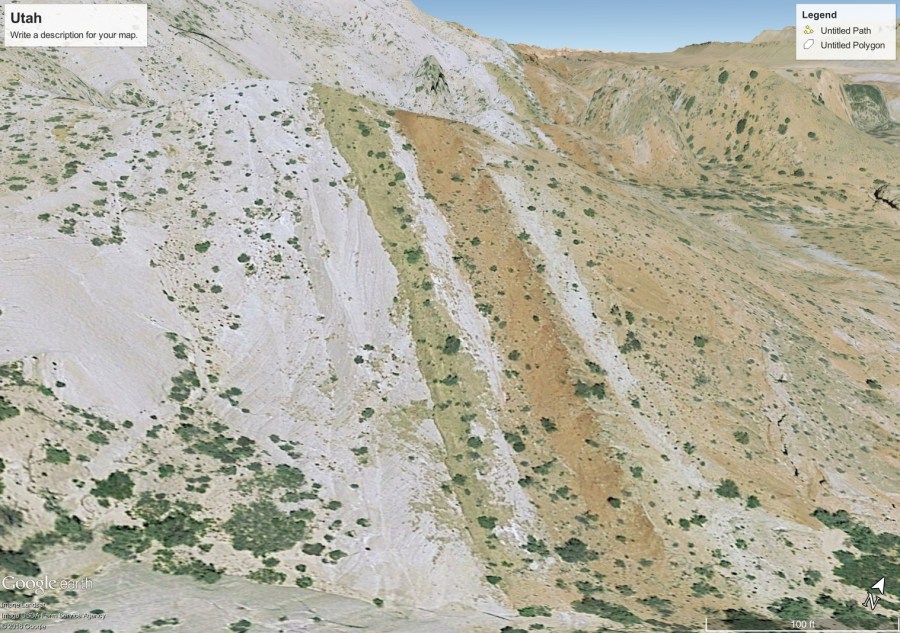


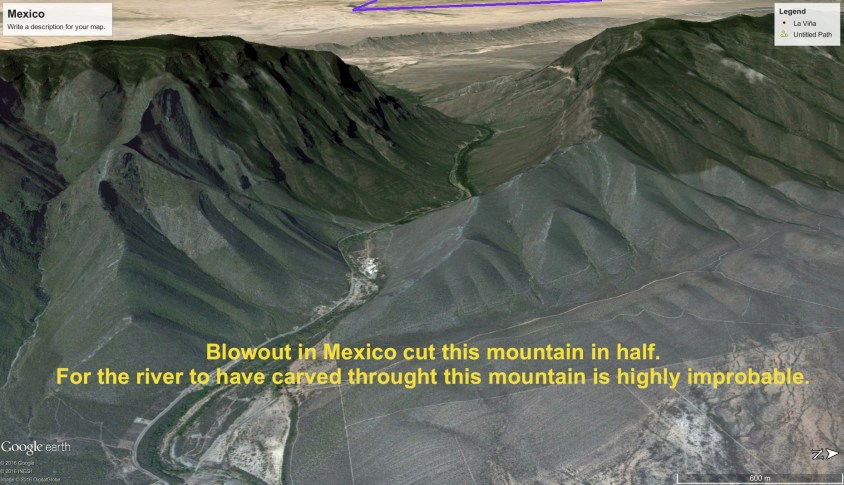
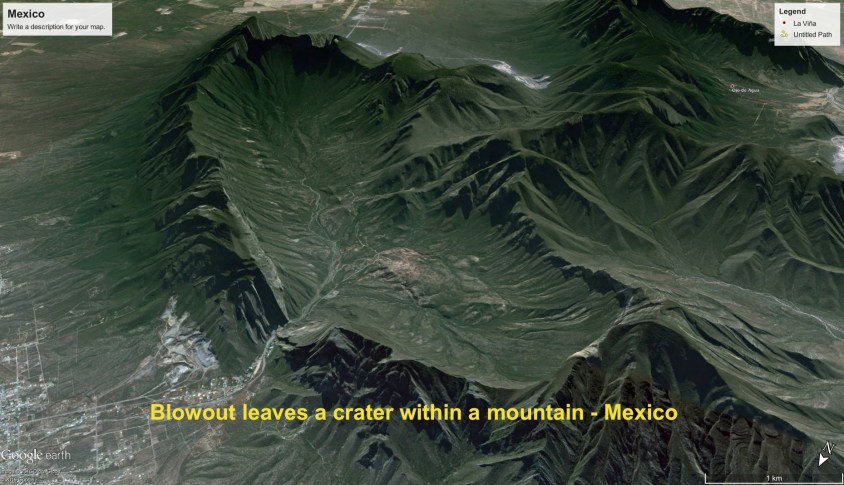
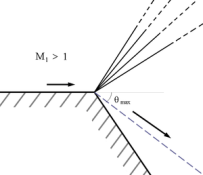
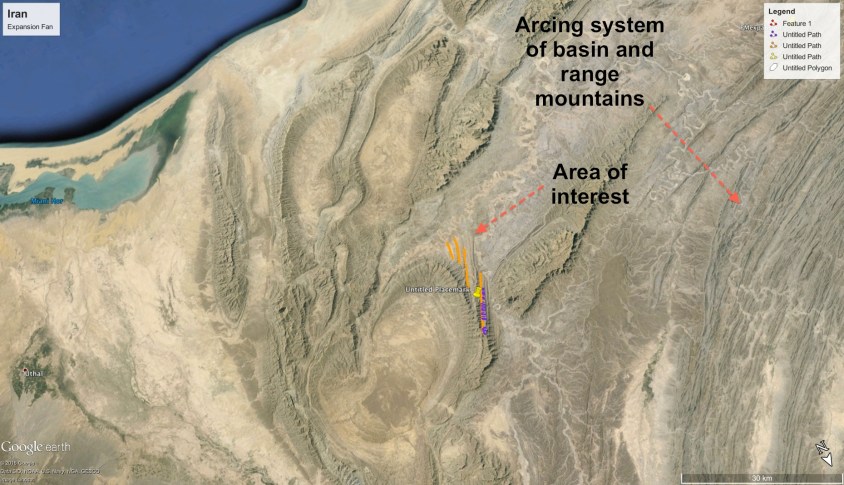
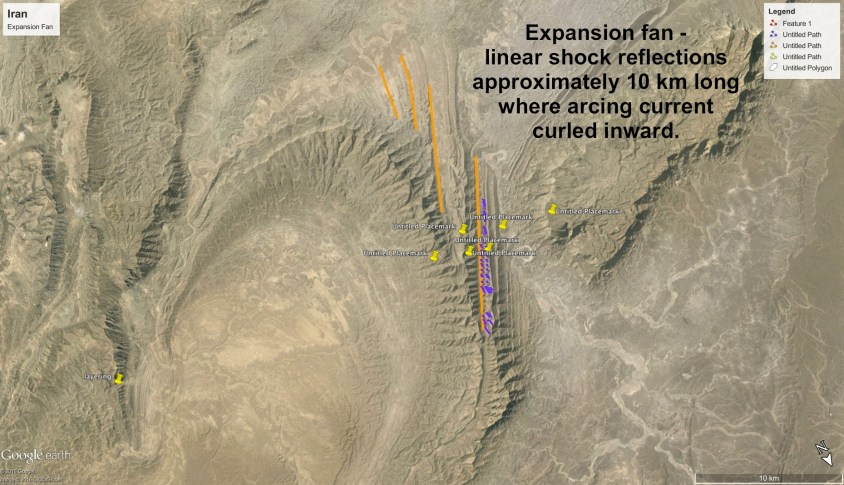
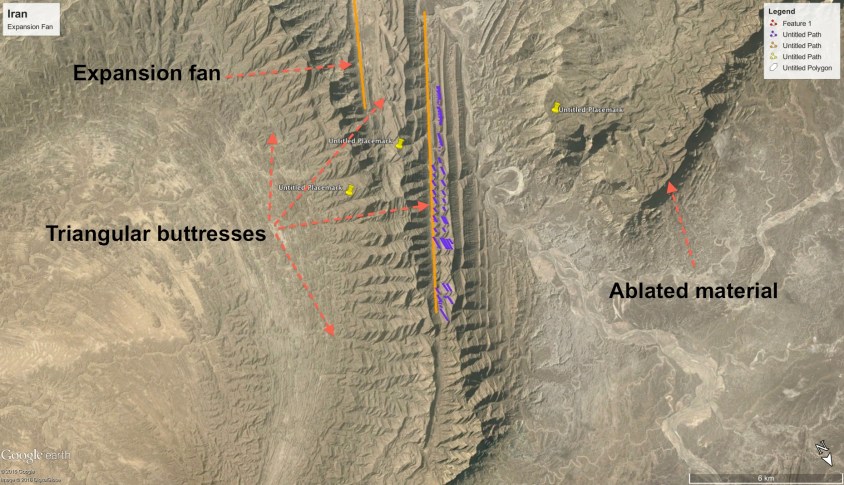
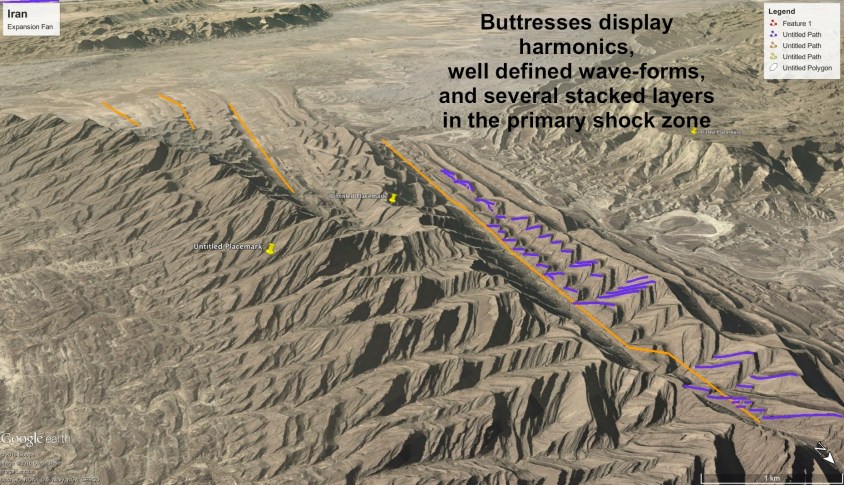

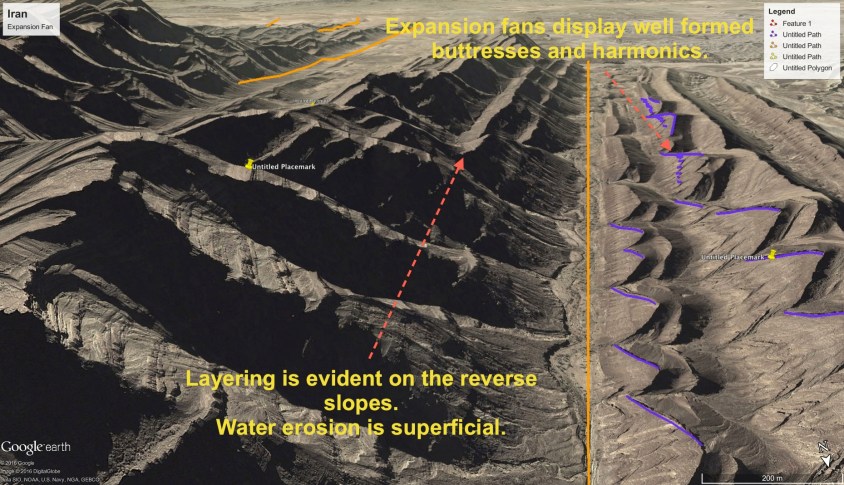
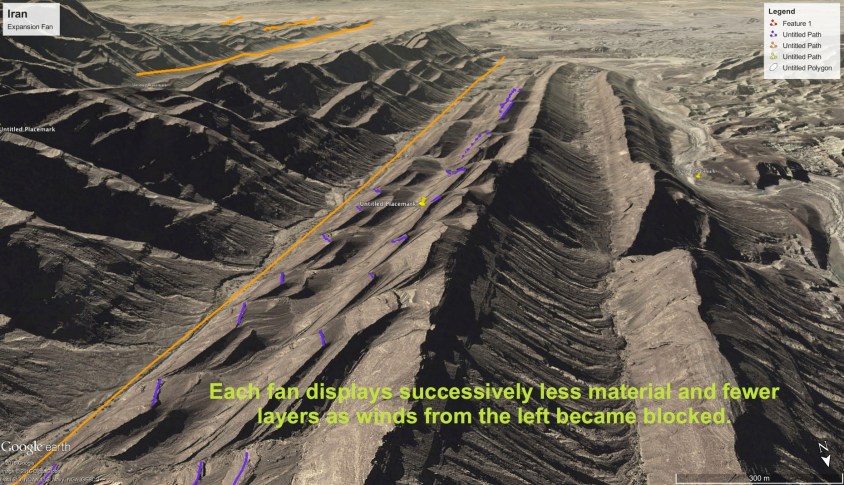
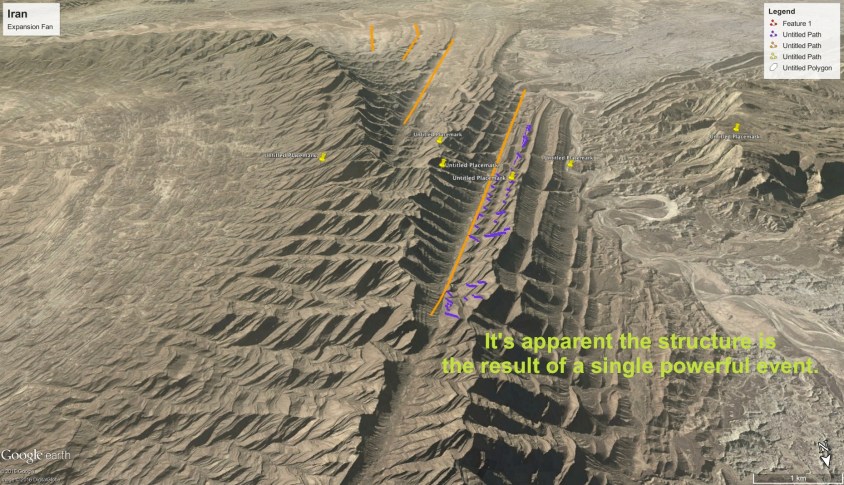
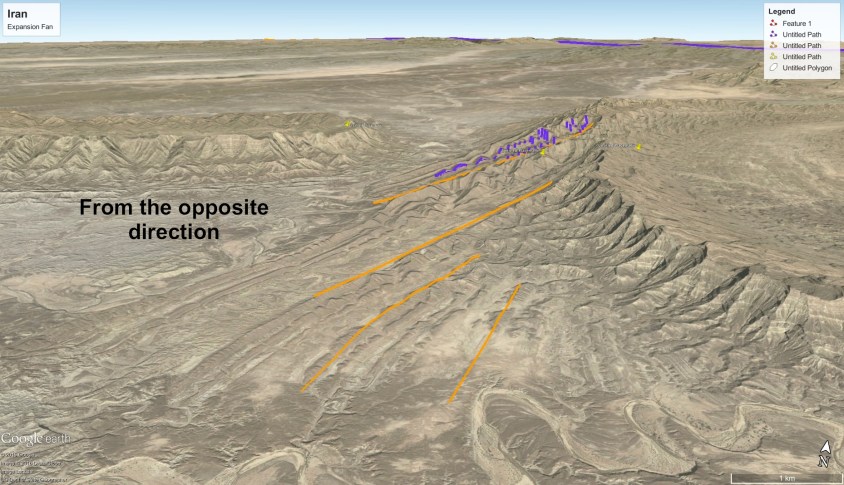

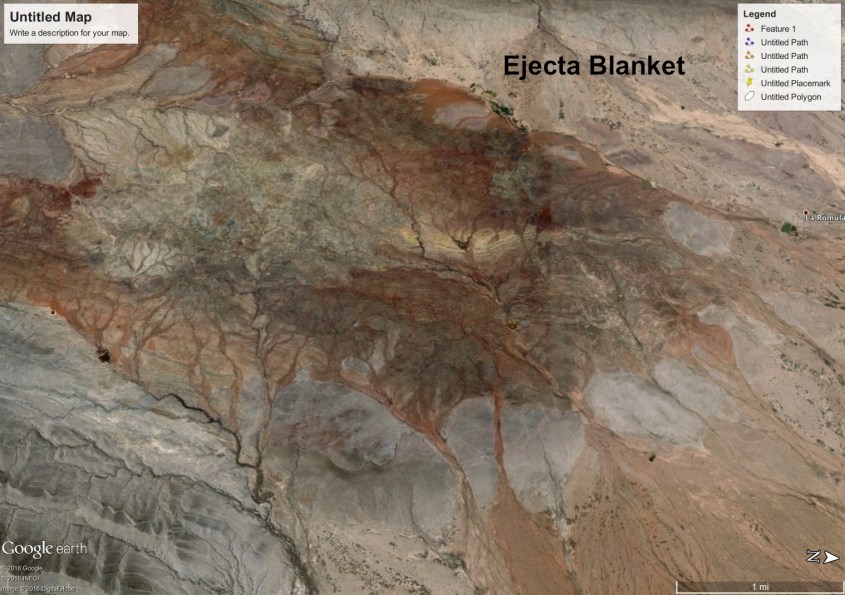
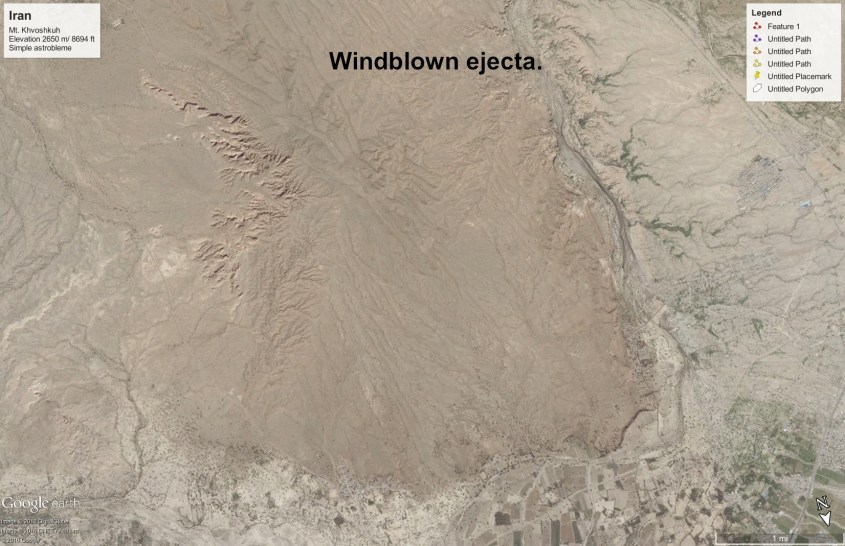
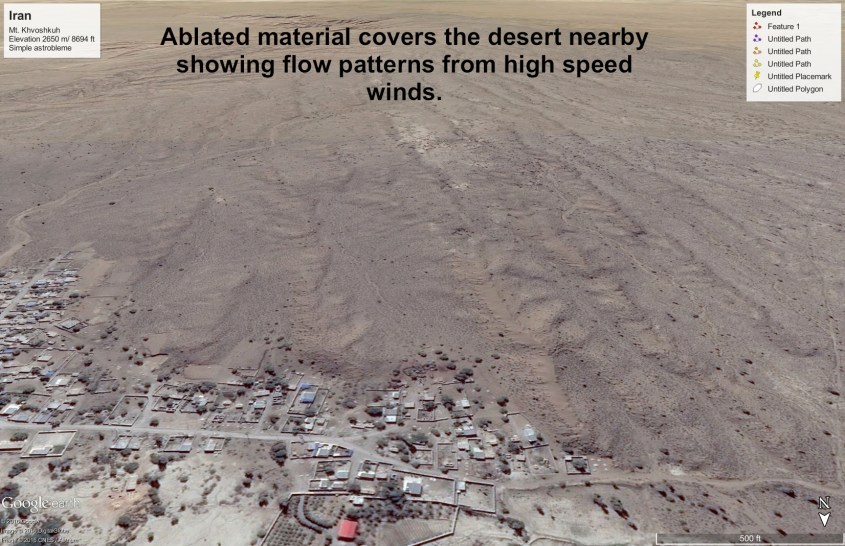

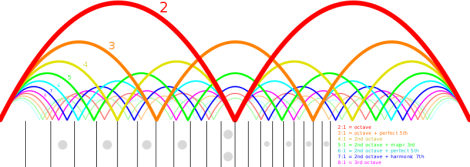
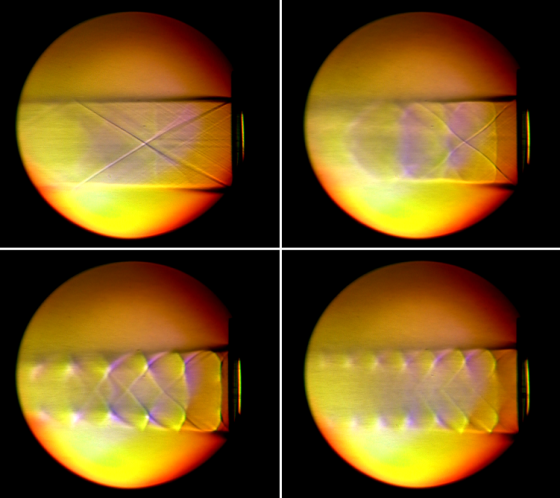
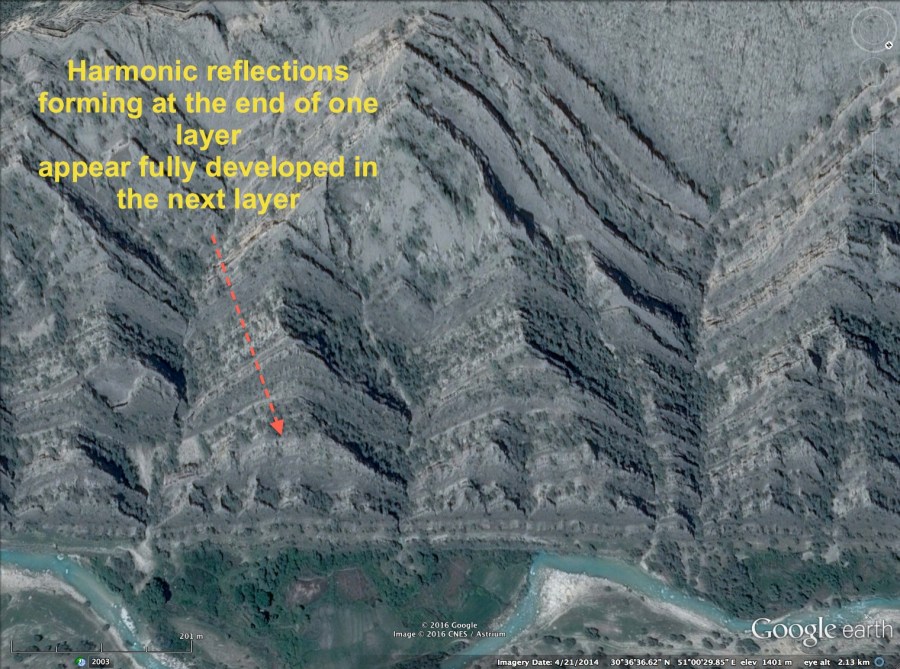
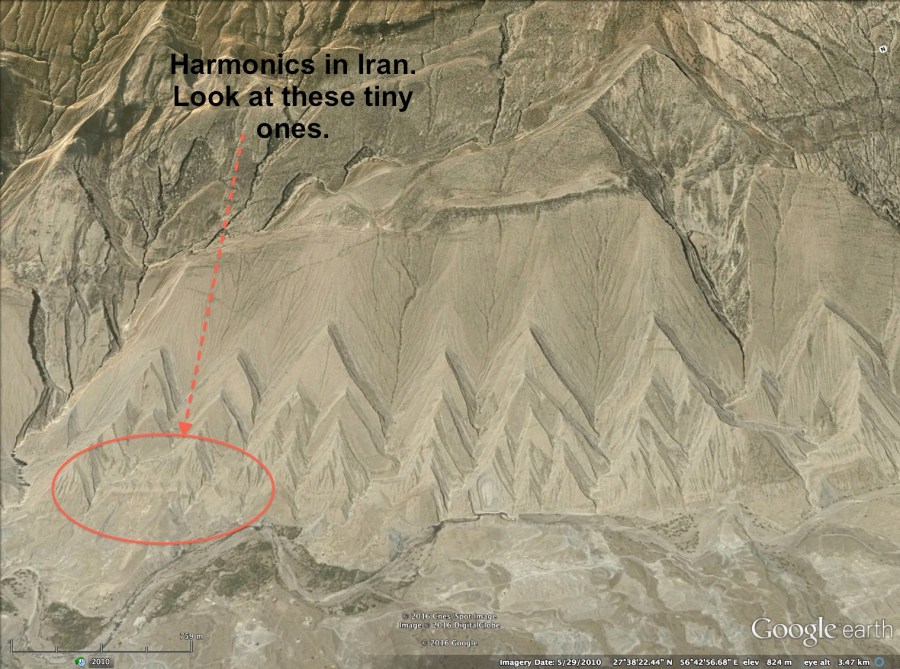
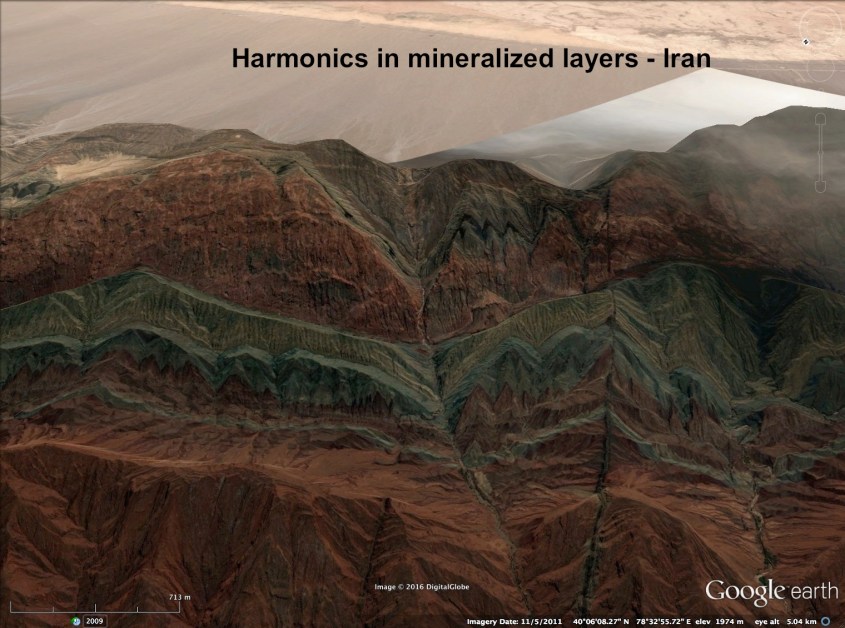
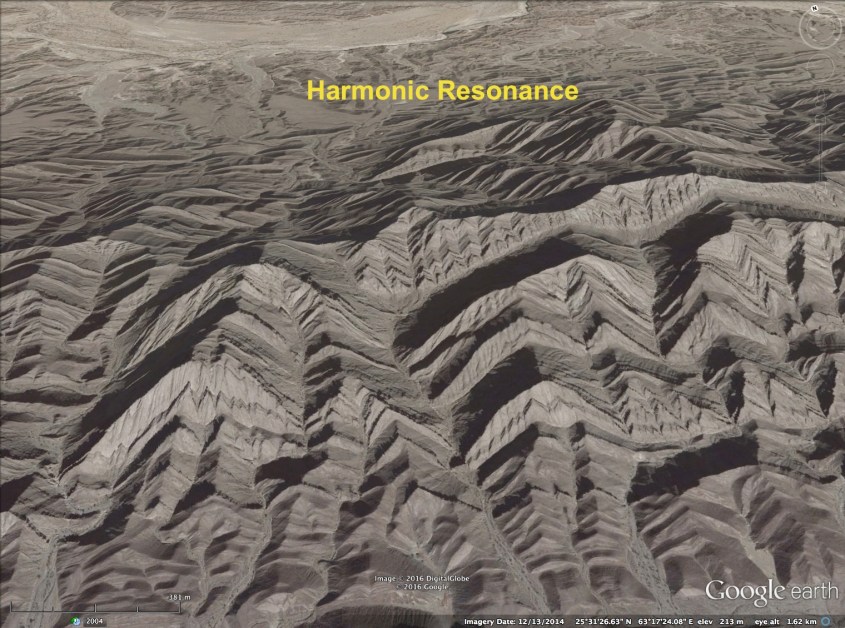
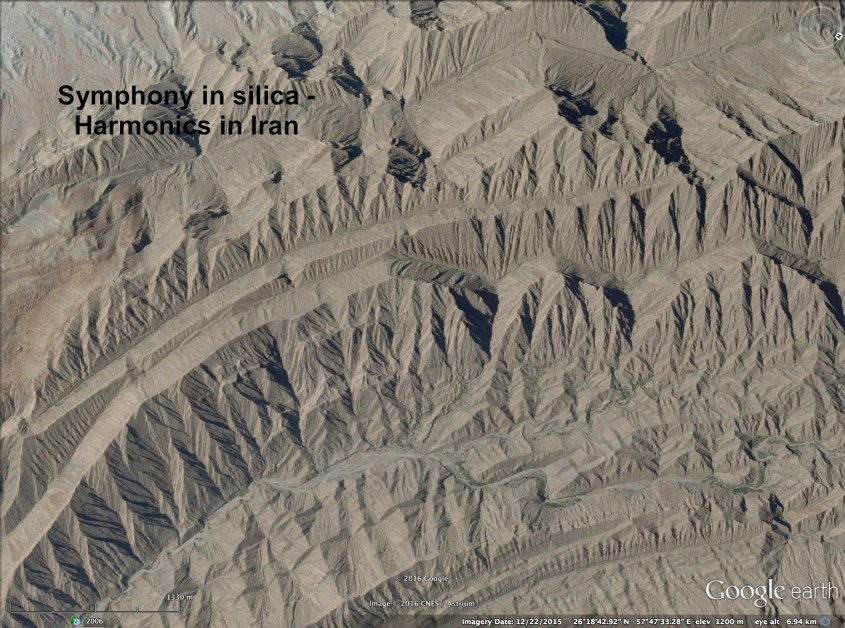
 Transients in wind speed, Mach angle and multiple reflections create instabilities in the wave-forms. Unstable waves segregate and fan away from each other under expansion, fragmenting the wave-forms.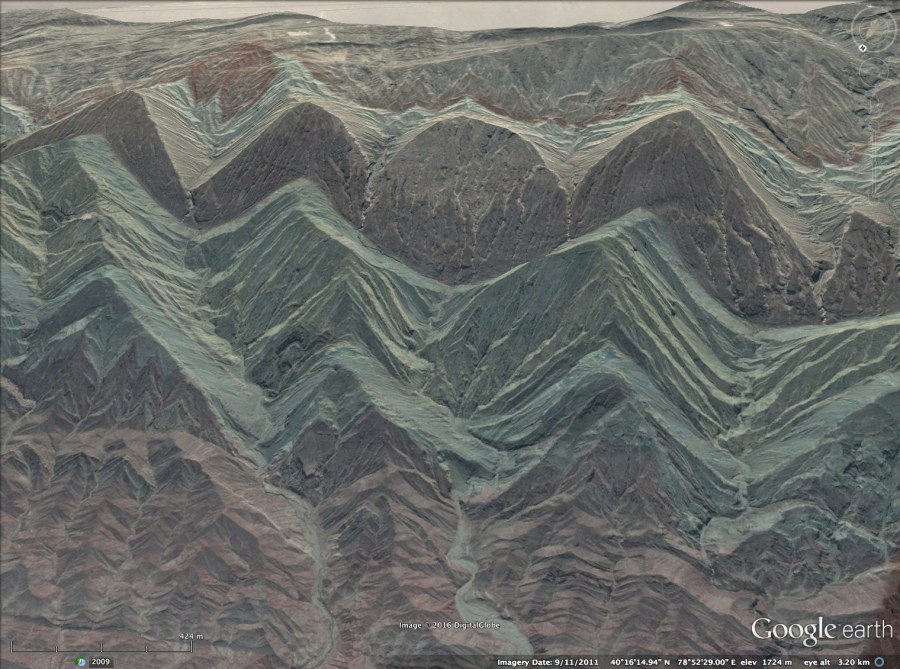
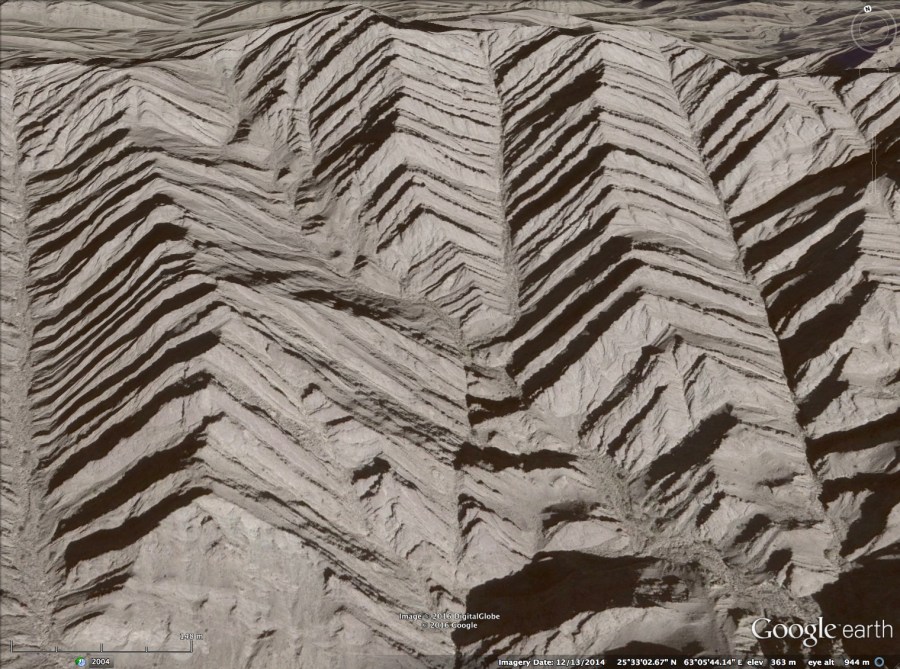

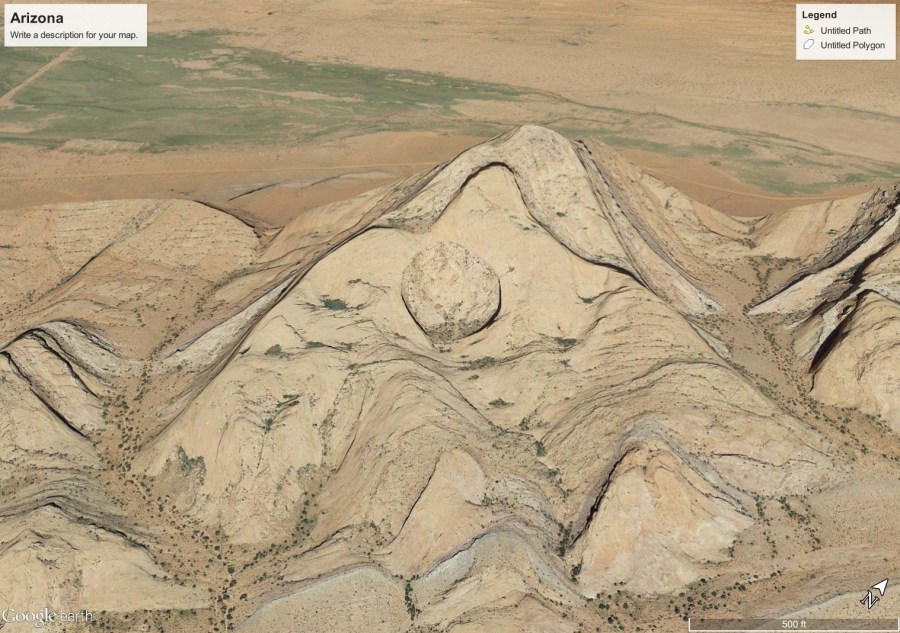
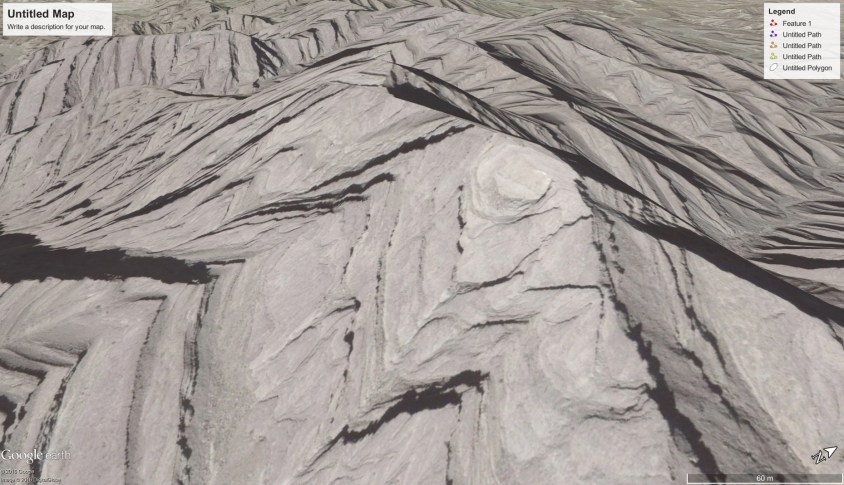

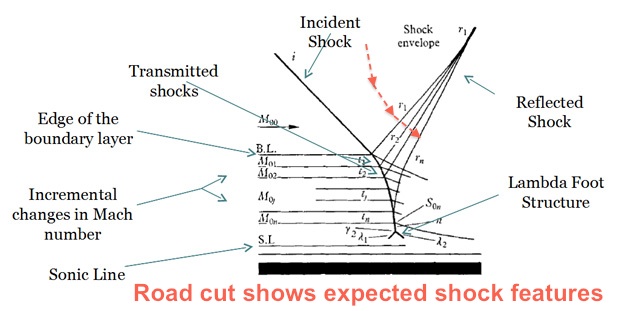
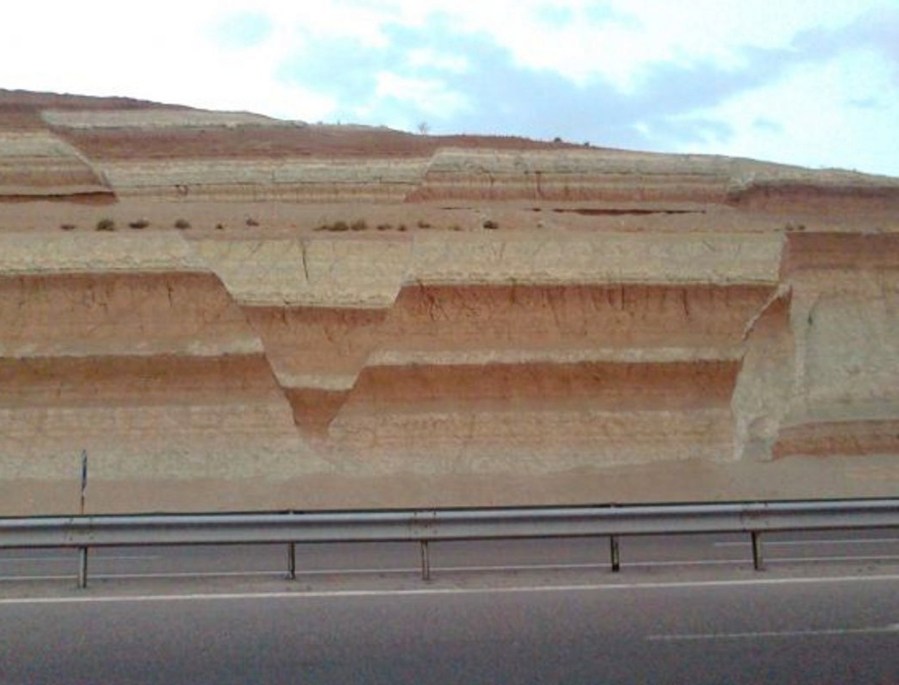
 planetary nebula and recognize the hourglass shape of plasma current contracting to form a star.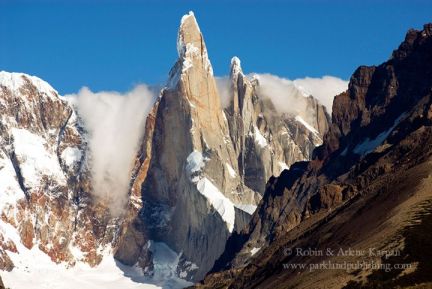
 When electrical discharge occurs in an atmosphere, it creates sonic-hydrodynamic effects. We experience the effect when we hear thunder – the sonic boom of a lighting bolt. It’s the sonic and hydrodynamic effects, in a dense, viscous atmosphere, that leave their mark on the landscape at the grandest scale.
 Region 2 is a reflected shock wave blasting into the atmosphere, pushing an exploding cloud of vaporized debris into a
  The reflected shock waves are rigid and stable when the energy is high, creating a shock ‘envelop’ over the ablated land. The energy does not dissipate quickly, because the vacuum of the mushroom cloud above is punching a hole through the atmosphere, drawing supersonic winds through the shock envelope like a cosmic vacuum. This is a source of free energy to the shock wave that keeps it alive.


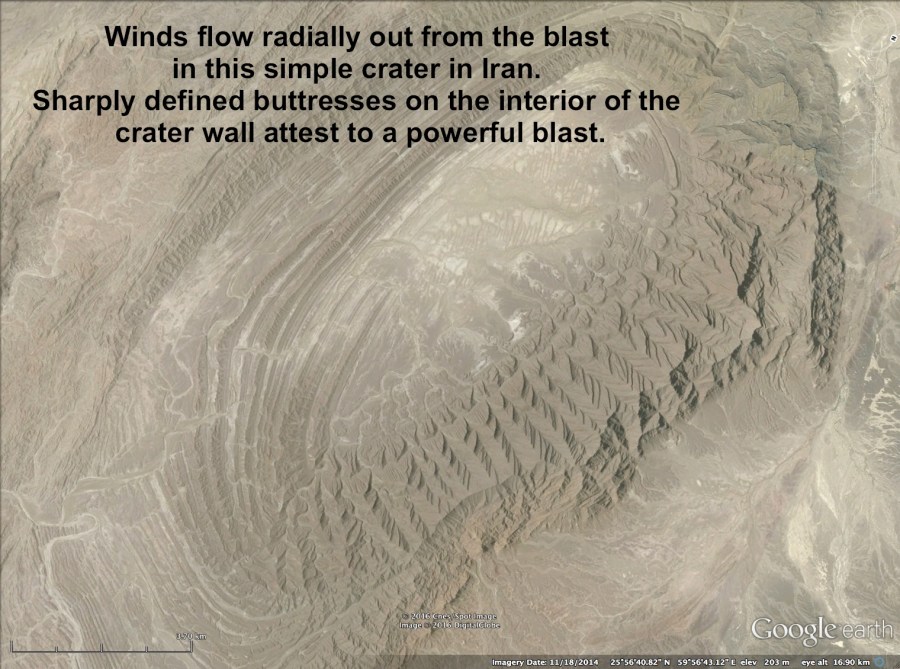


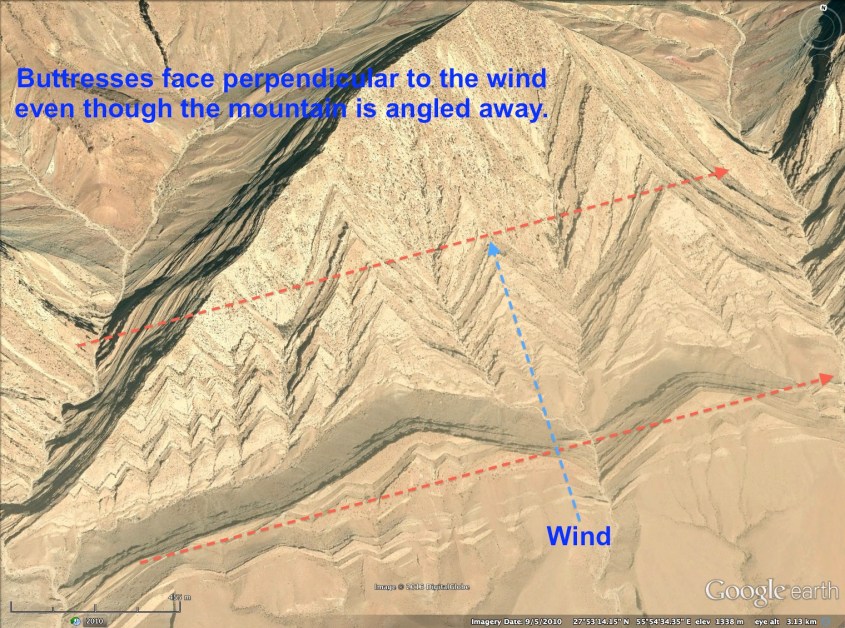
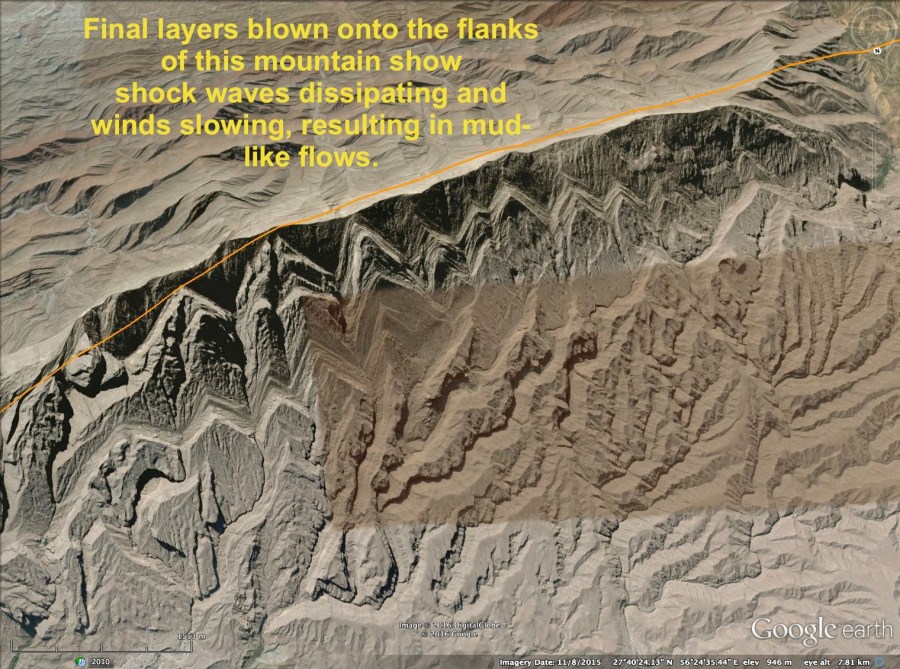
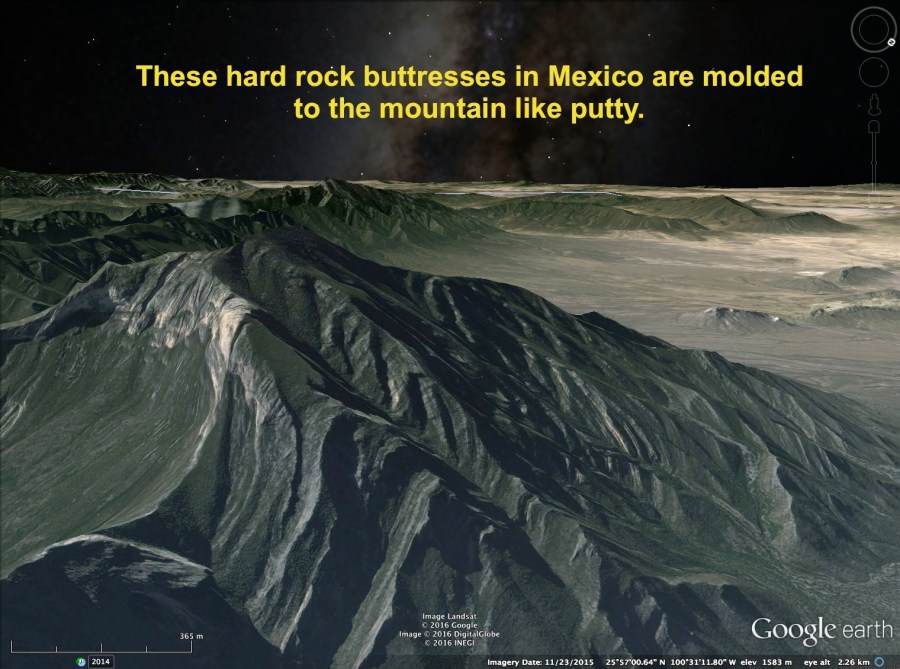
 it is called the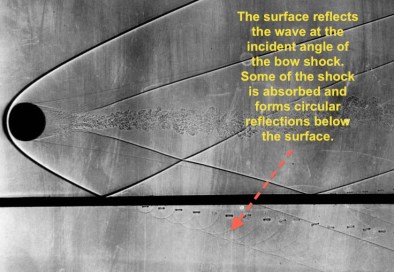
 reflects some of the shock and absorb some of the shock, as a function of its

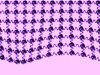
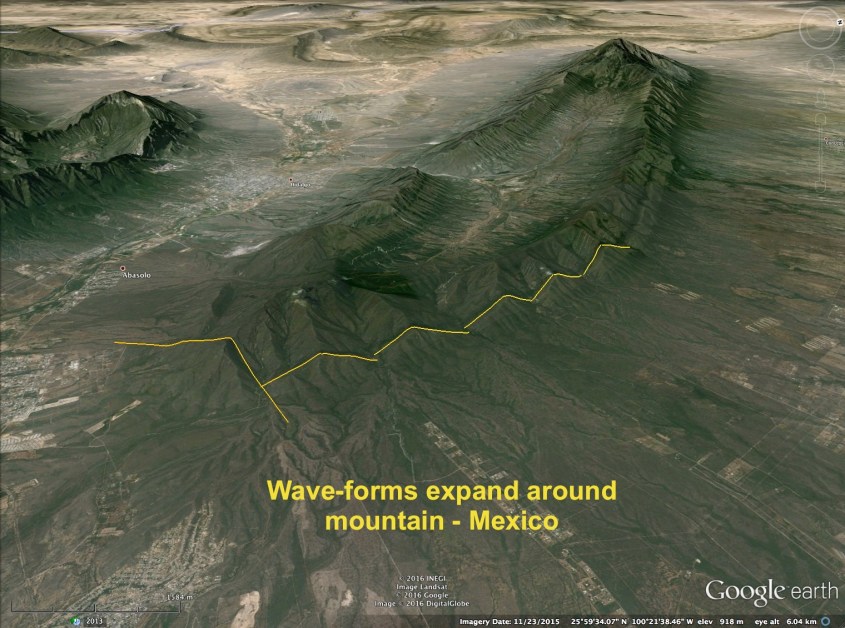
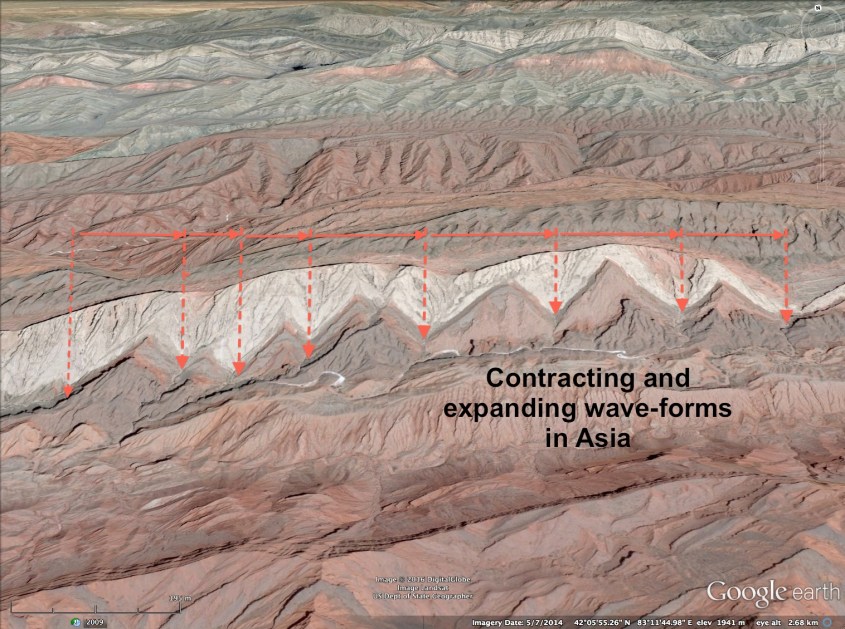
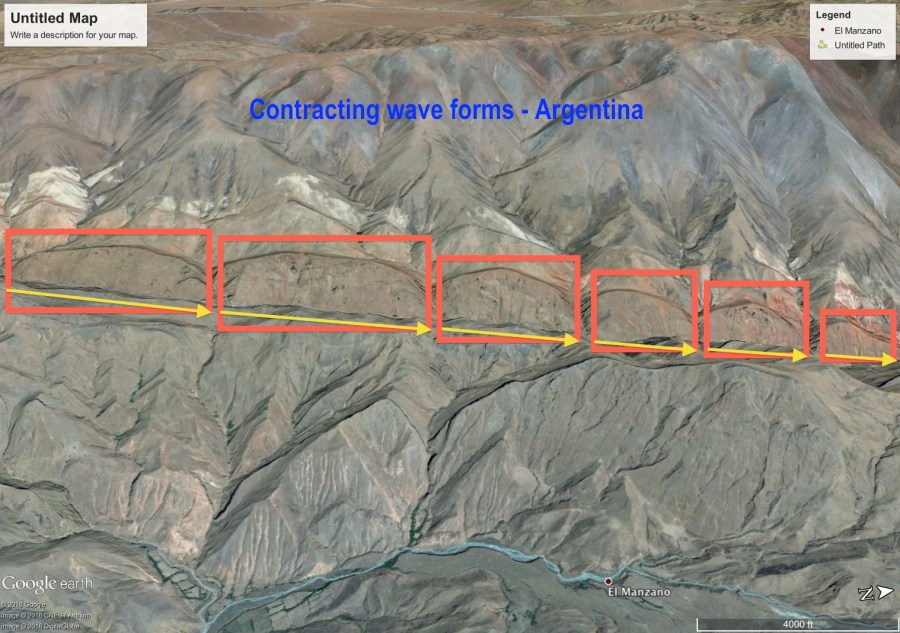


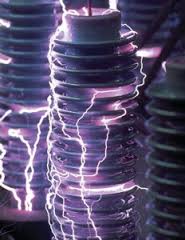
 An arcing fault discharges to ground along the path of least resistance the same way a lightning bolt does. It is conducted through plasma formed by ionized air. Like a lightning bolt, it can be a single spark, or it can fork into a sheet of filaments that jump across gaps and craze across surfaces. The reason arcs tend to craze a surface has to do with a thing called surface conductivity.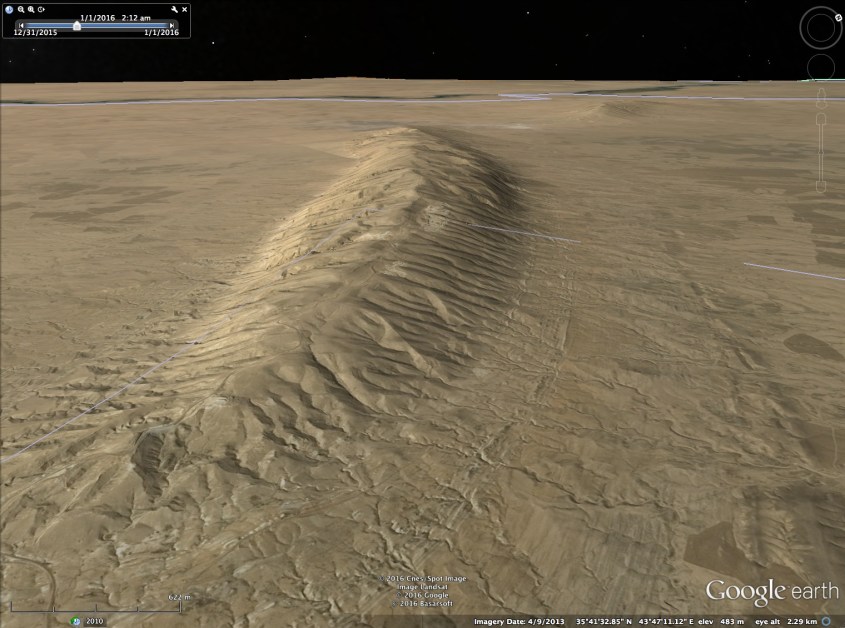
 The astrobleme characteristics, and in particular, the distinctive triangular buttress features that distinguish them, is explained by rogue geophisicist, “Craterhunter,” in this well written article,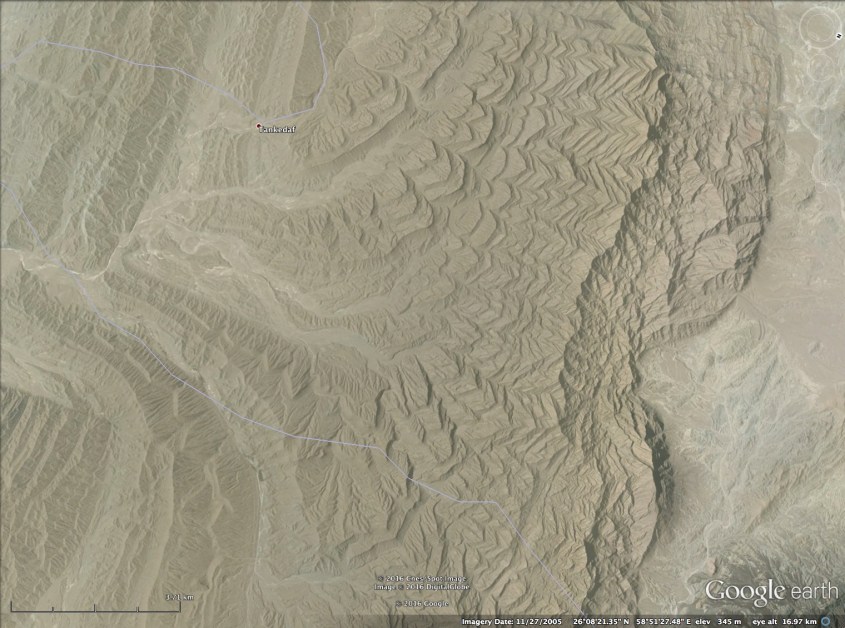
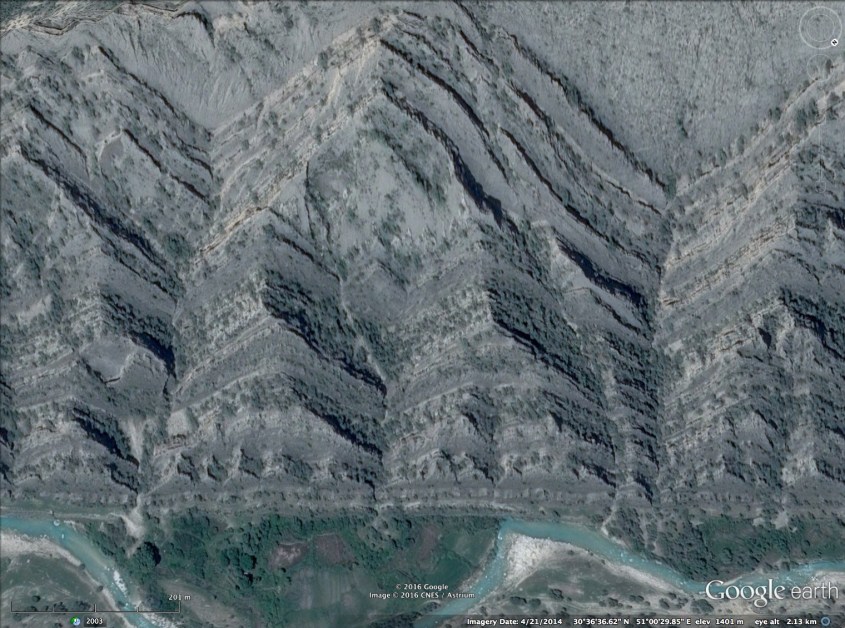
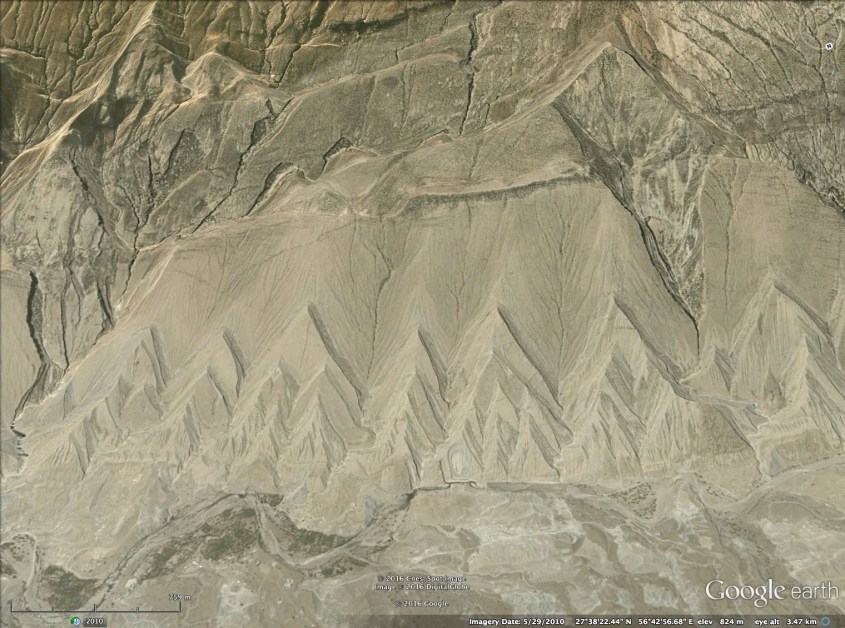
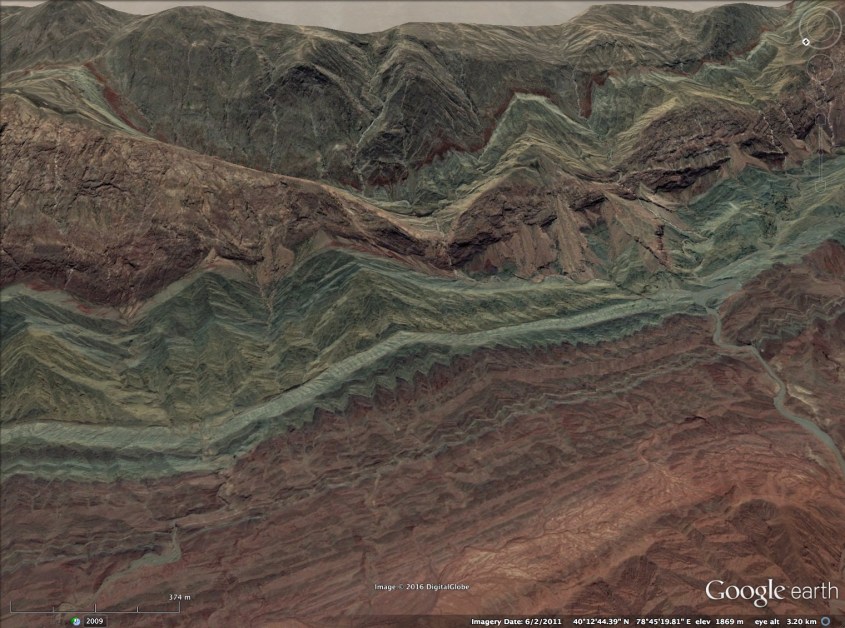
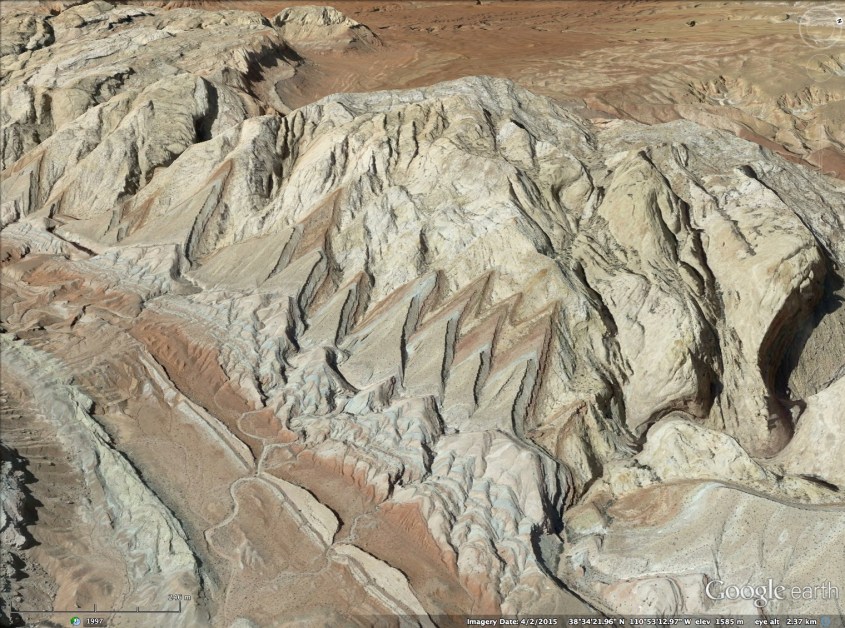
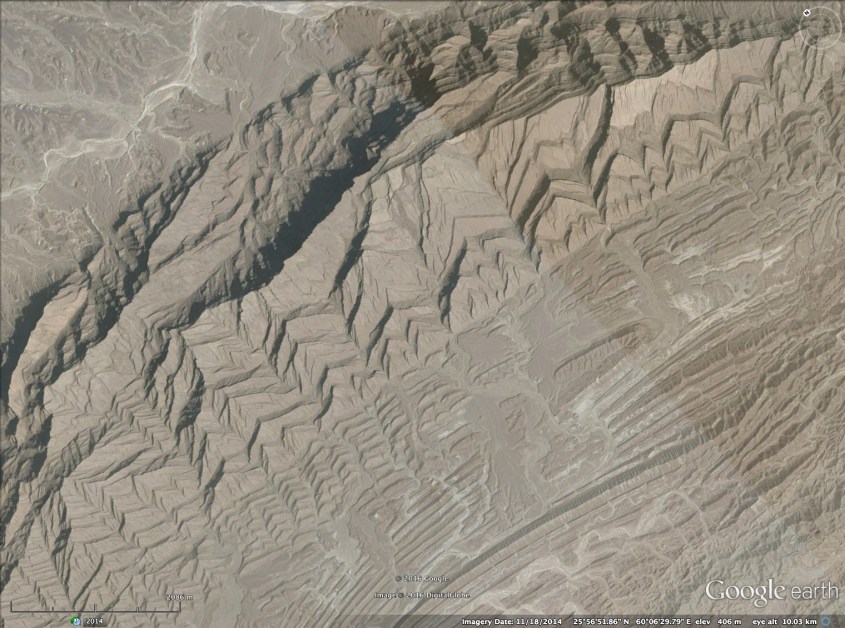
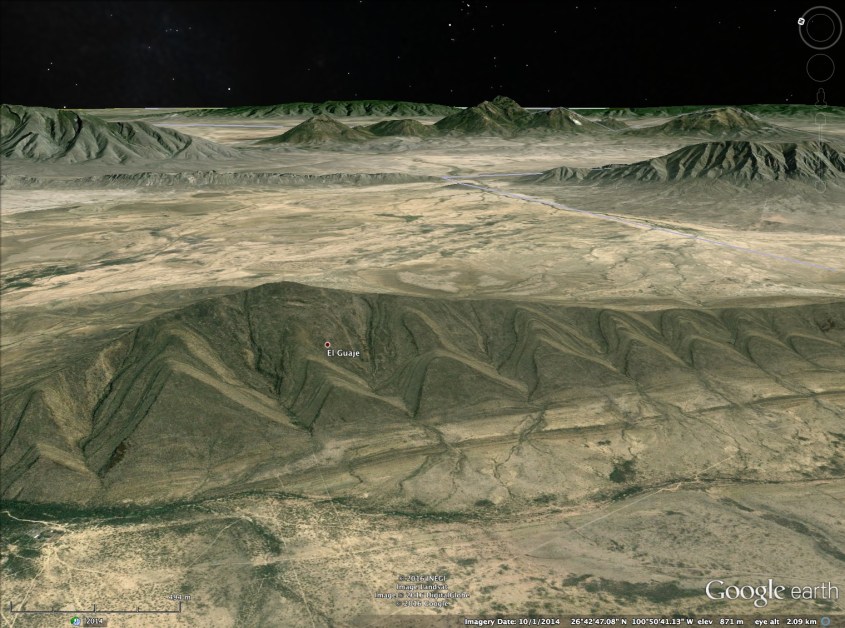
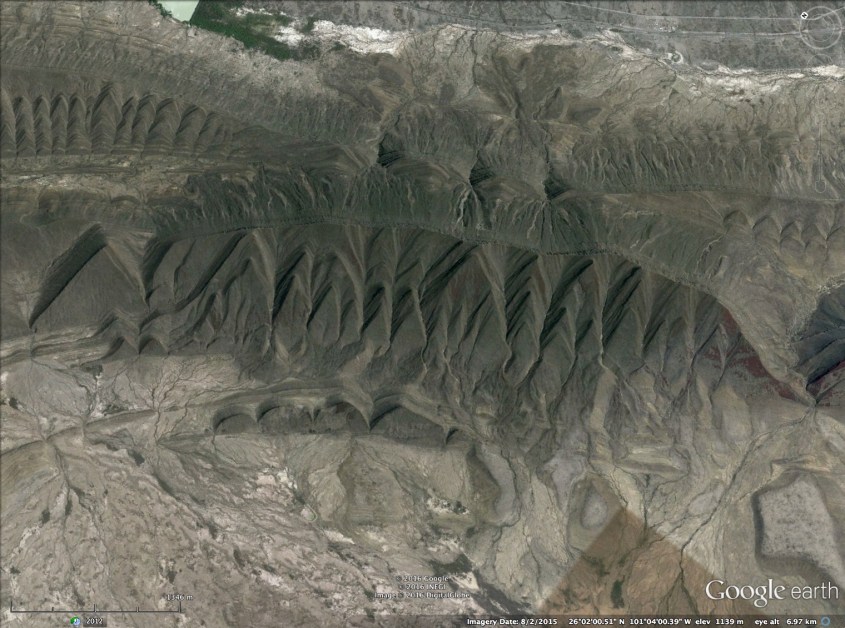
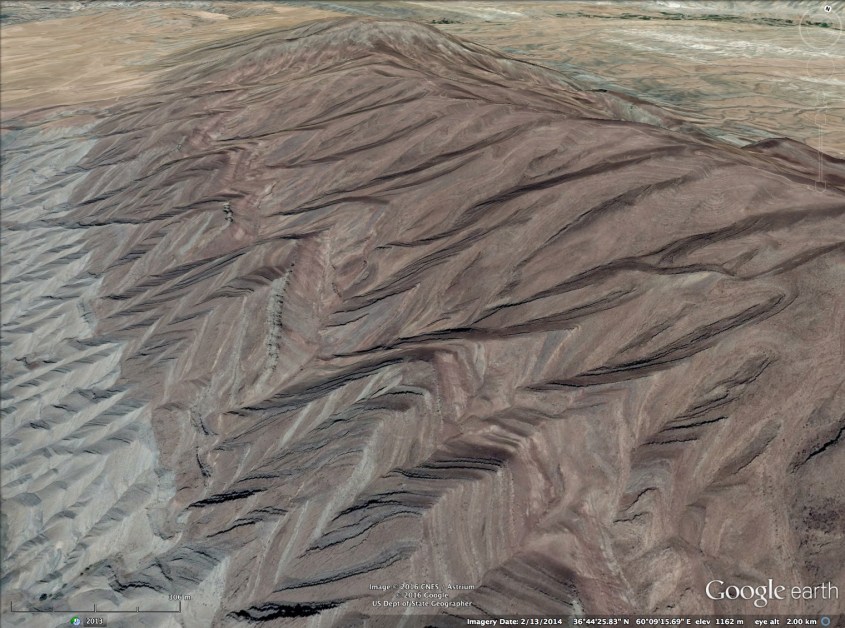
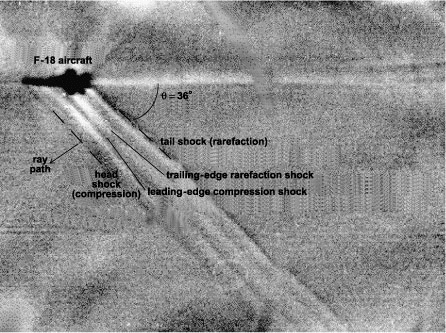


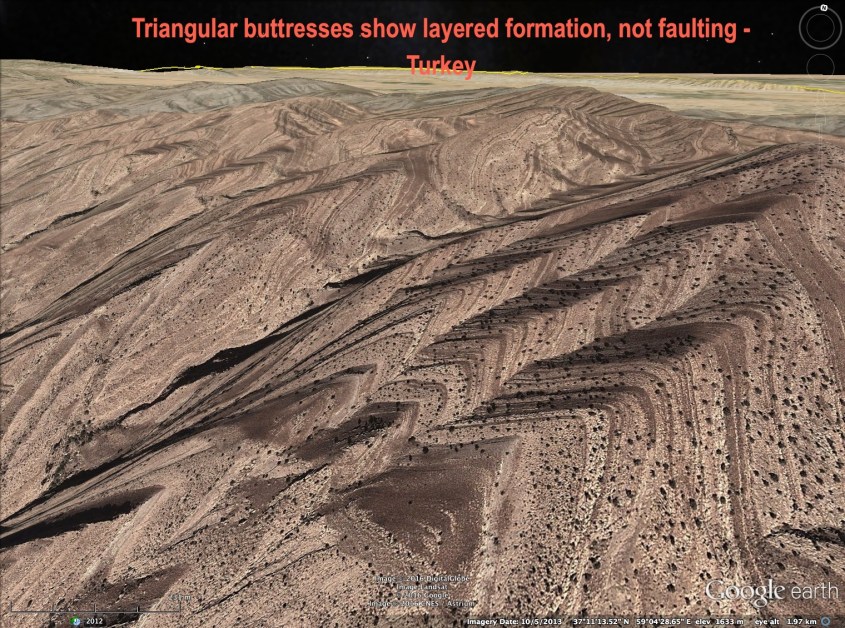
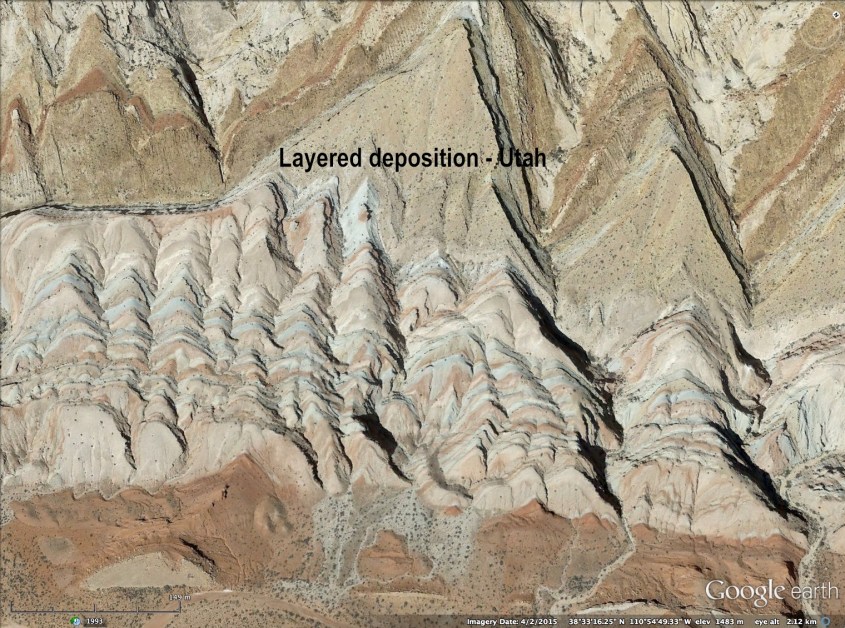
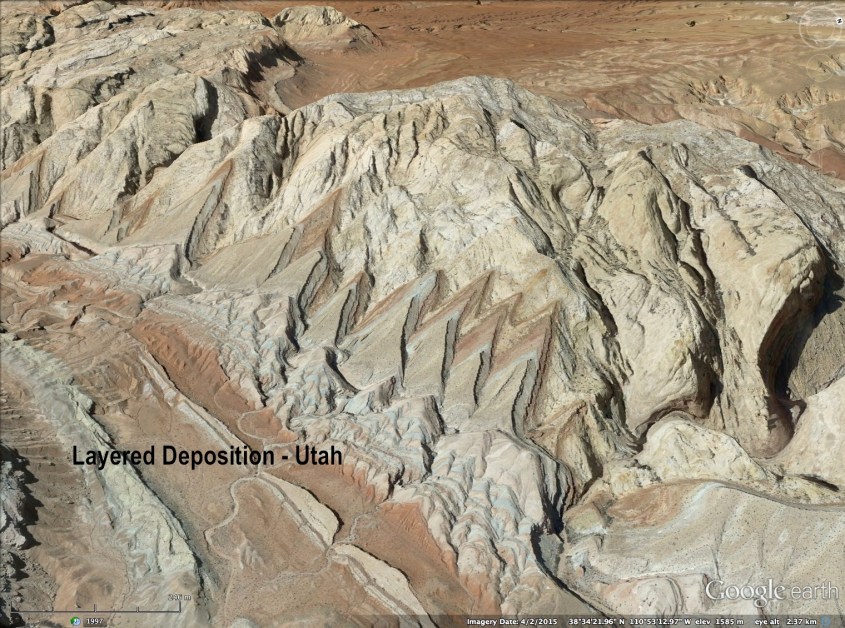
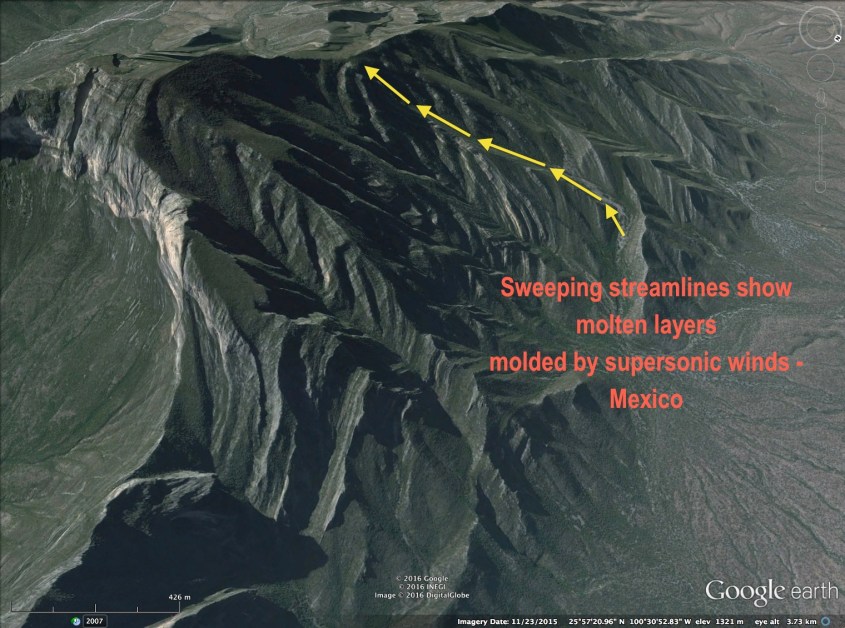
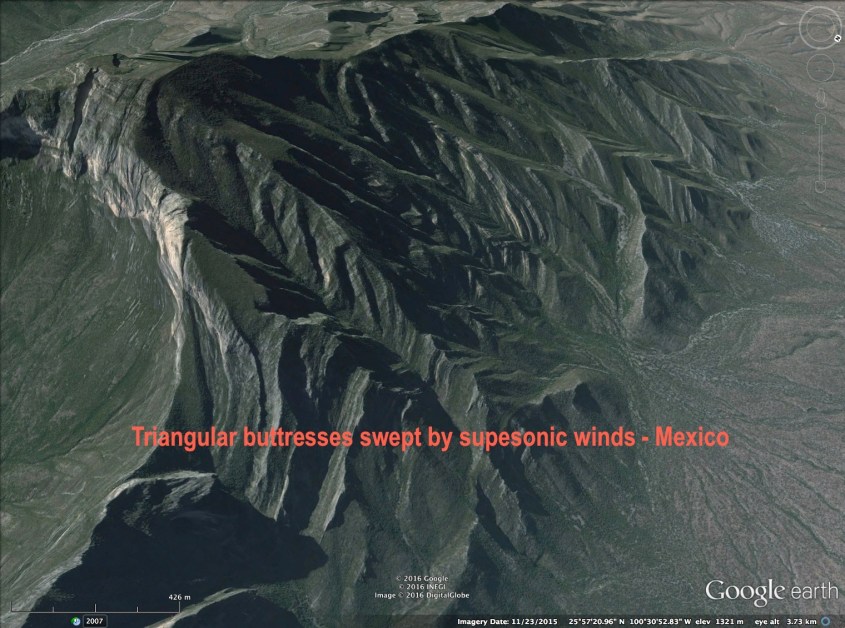
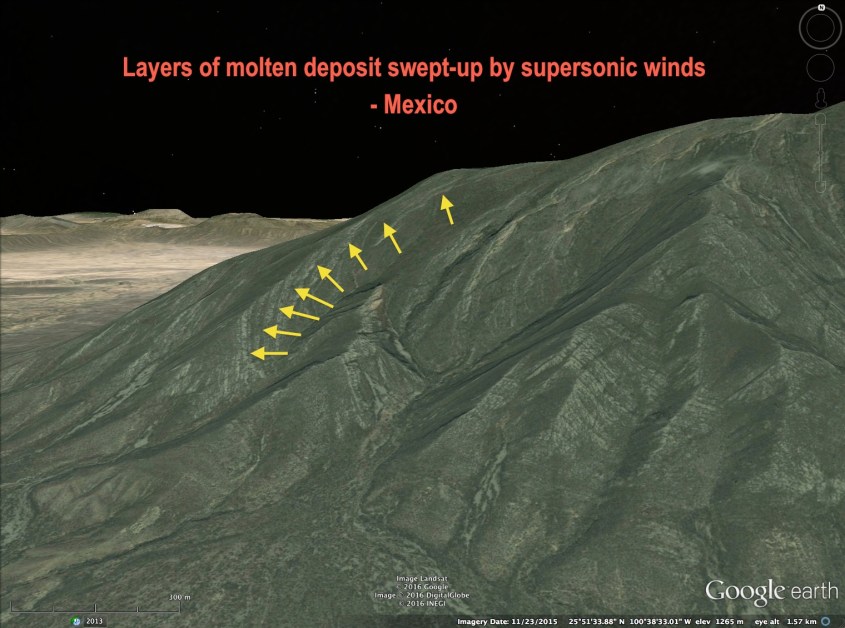
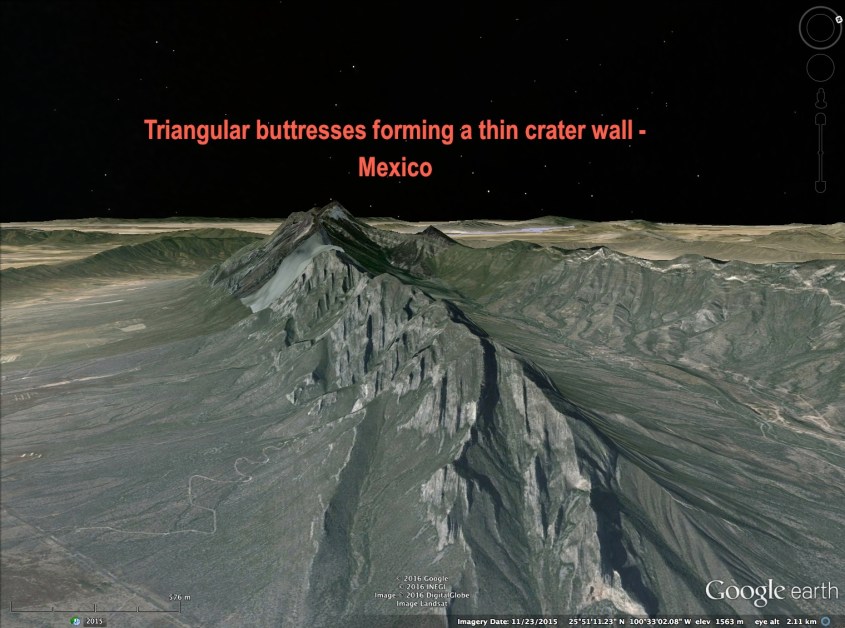
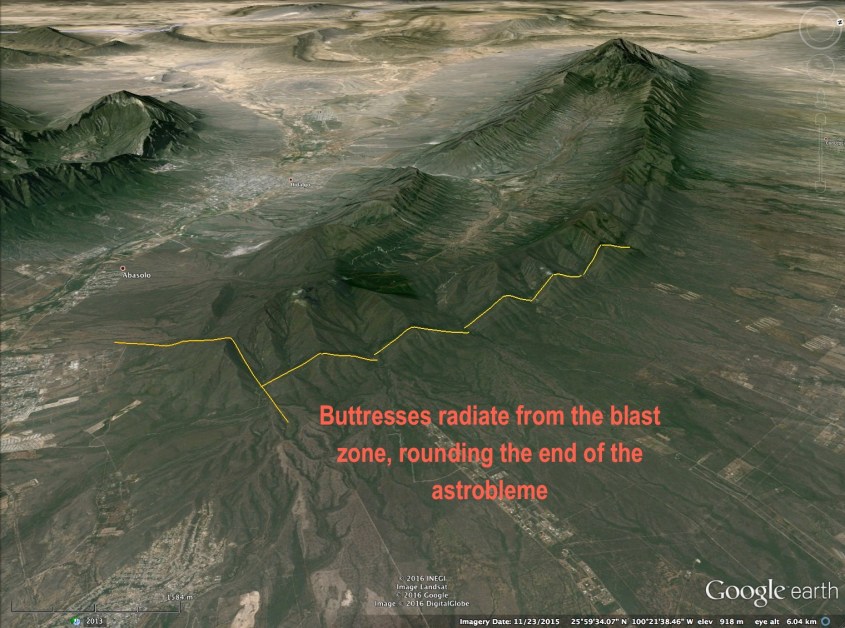
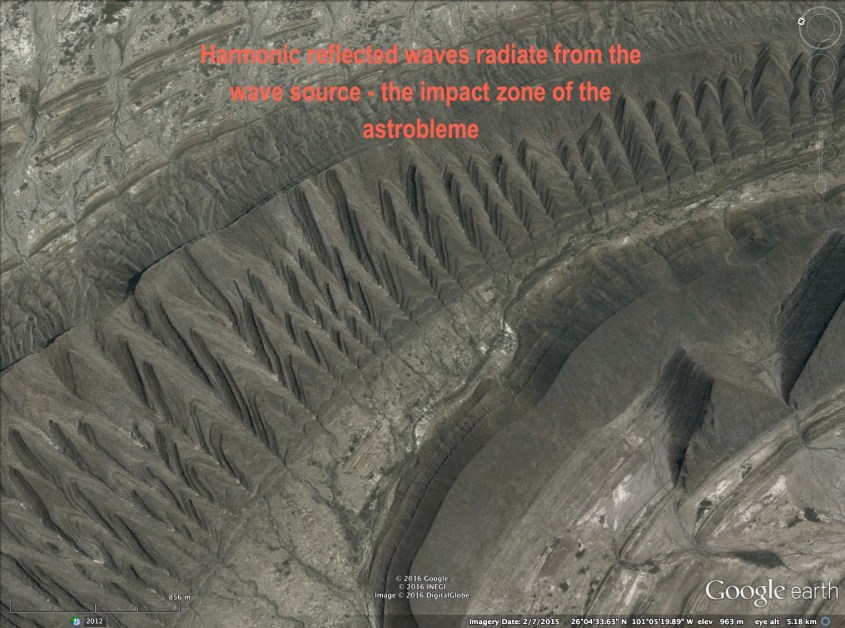
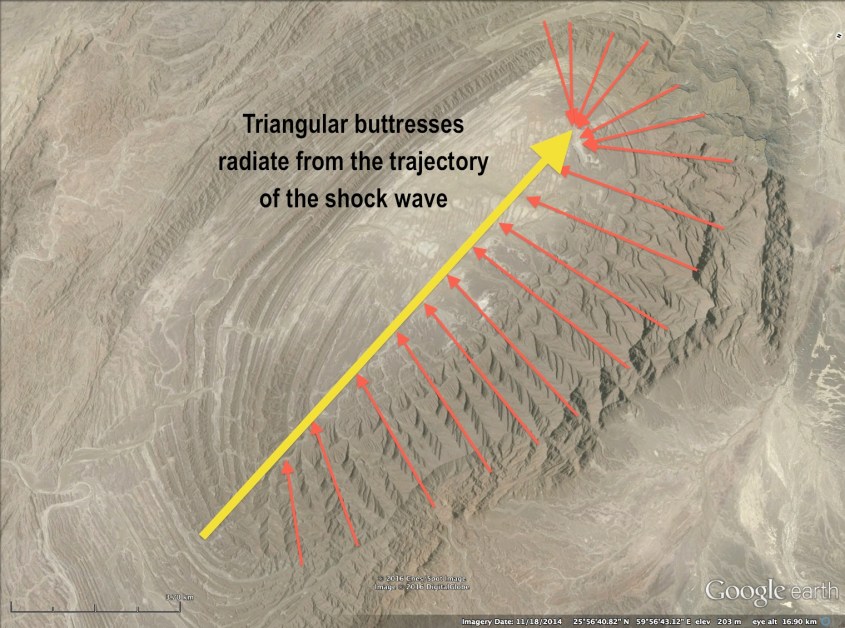
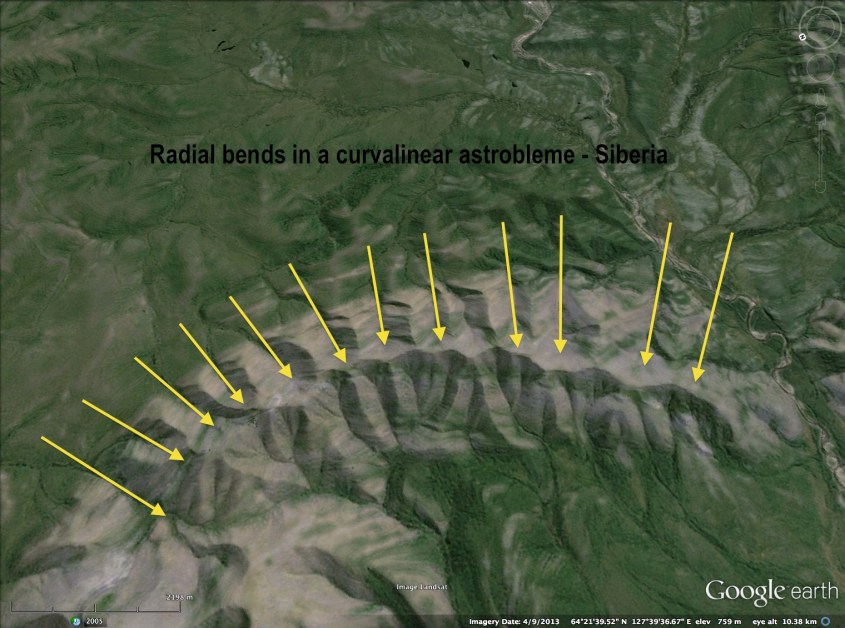
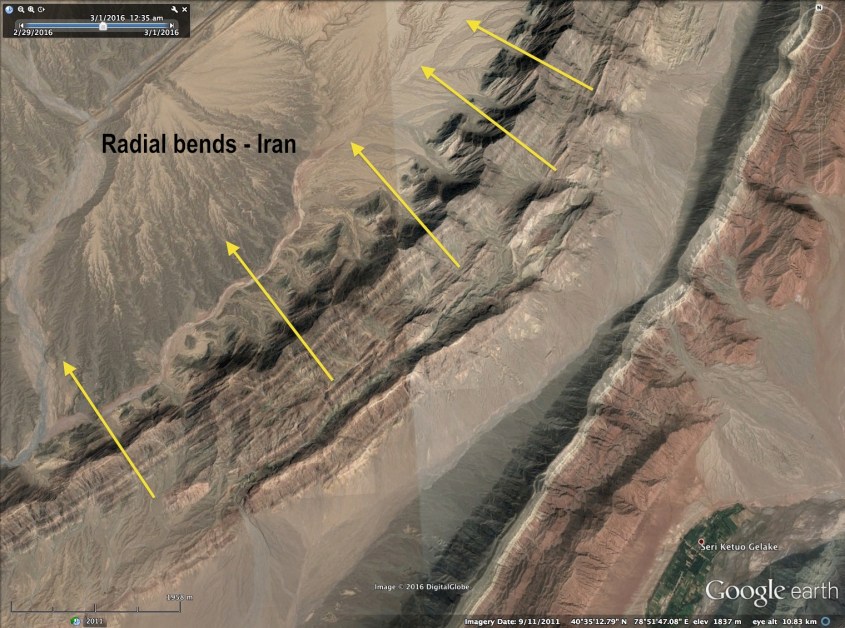
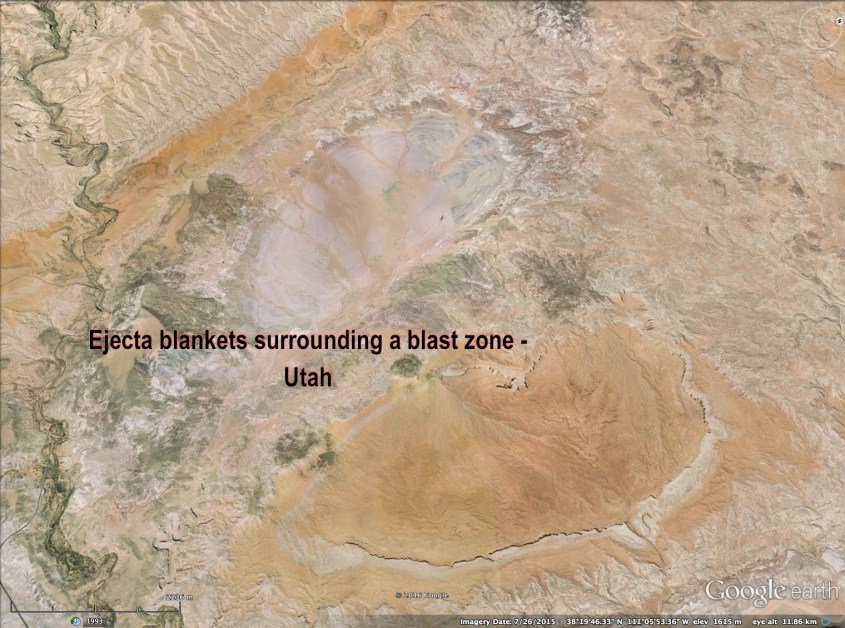
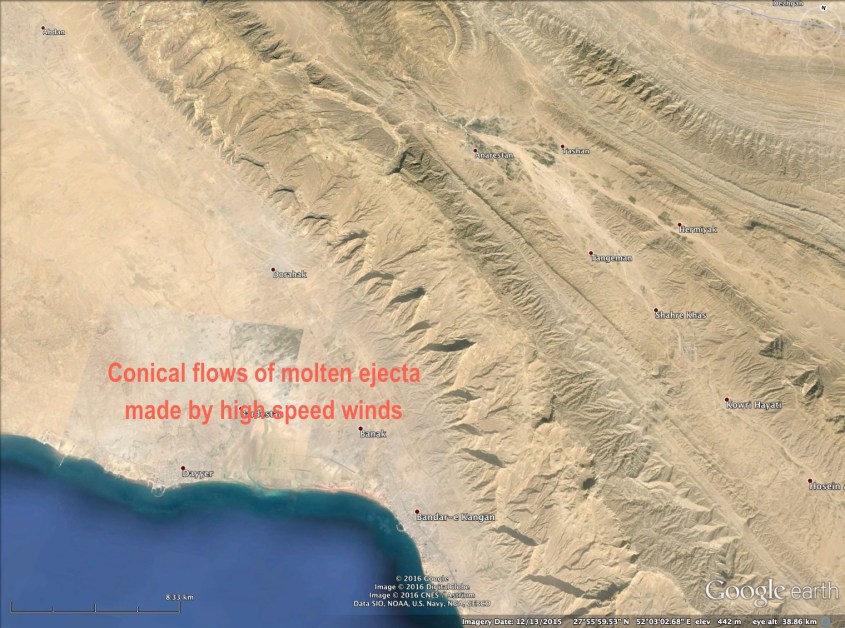
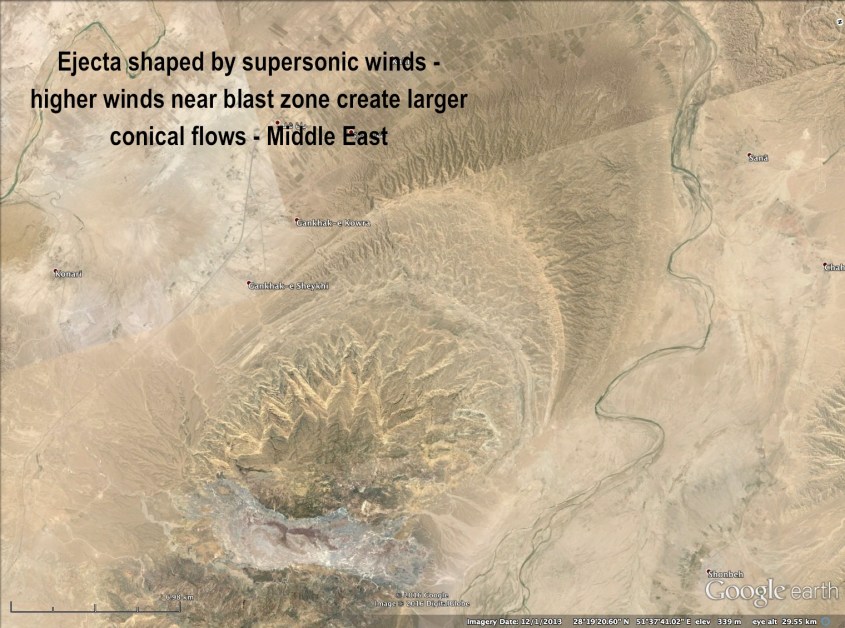
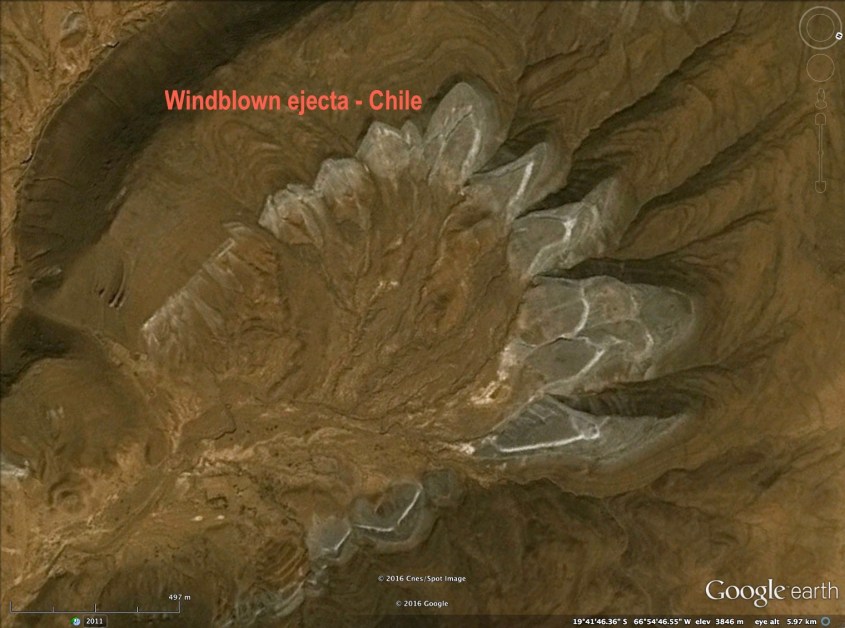
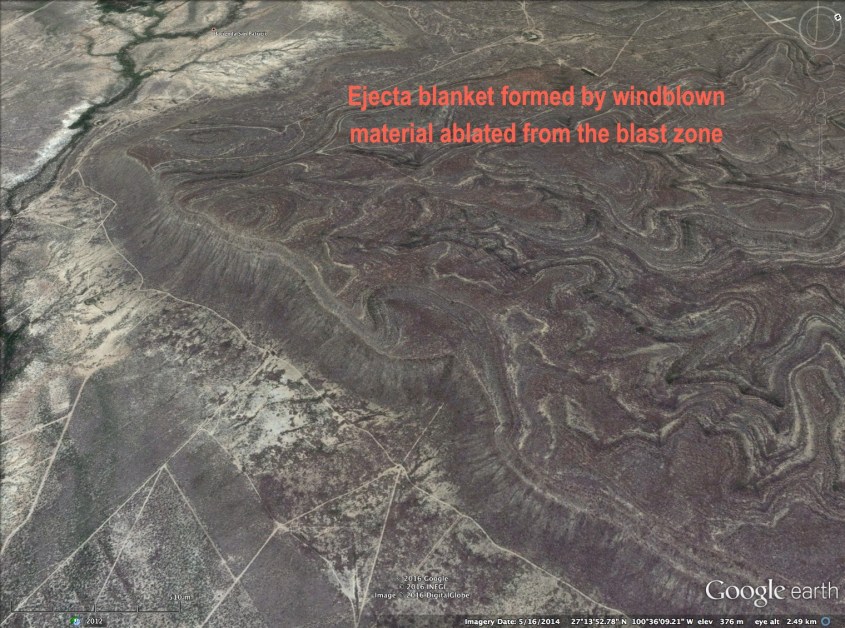
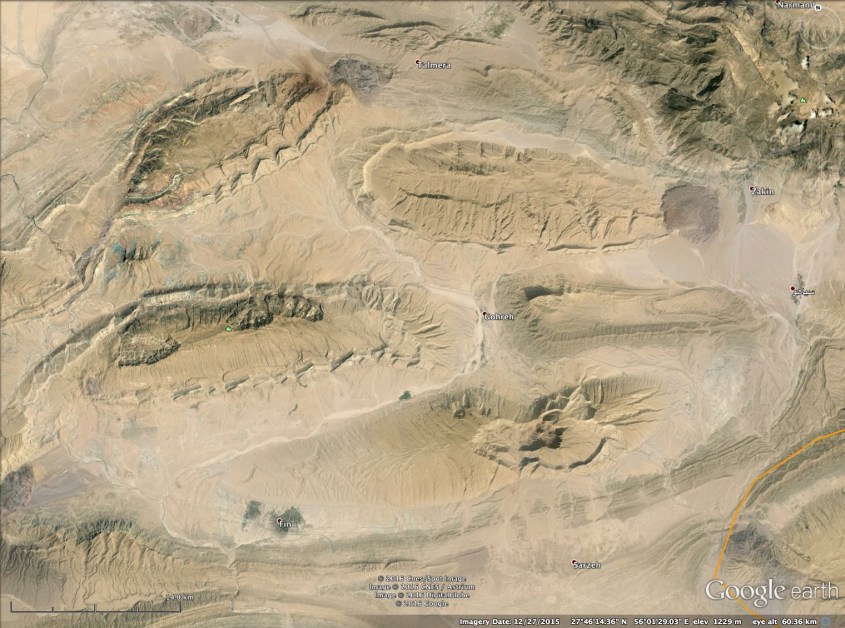
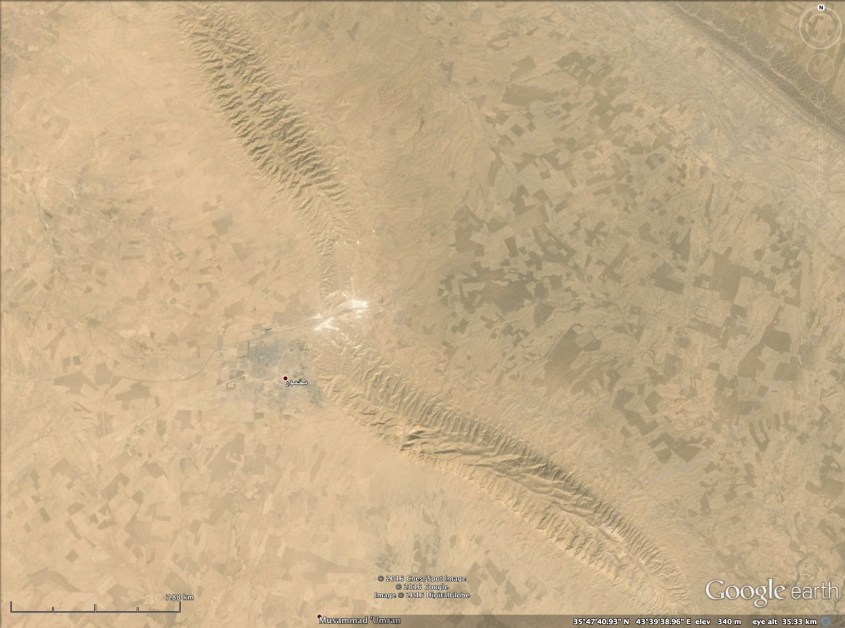
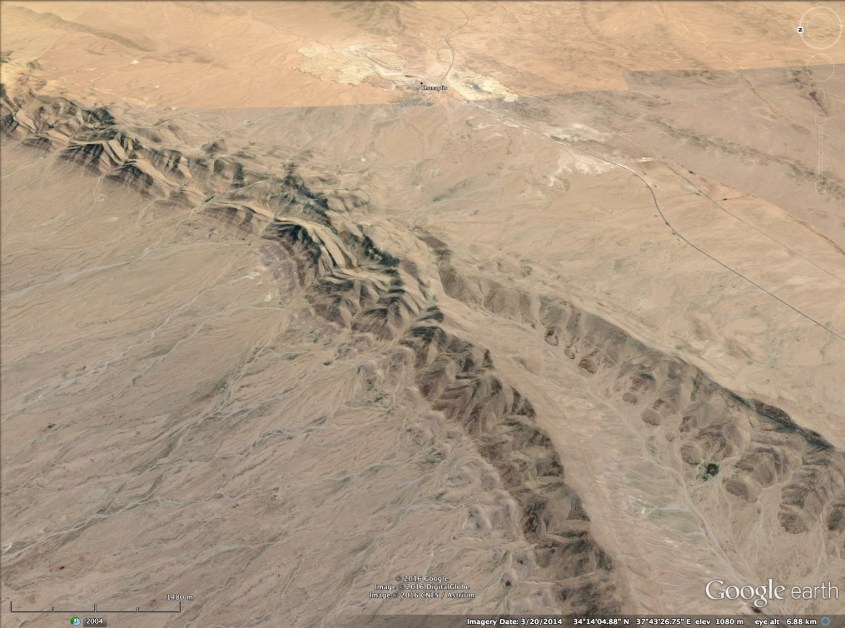
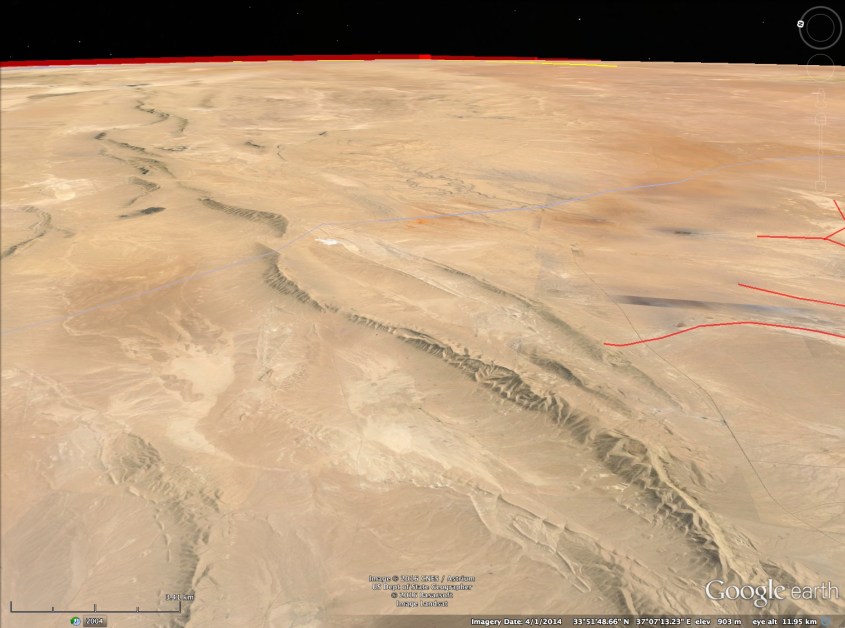
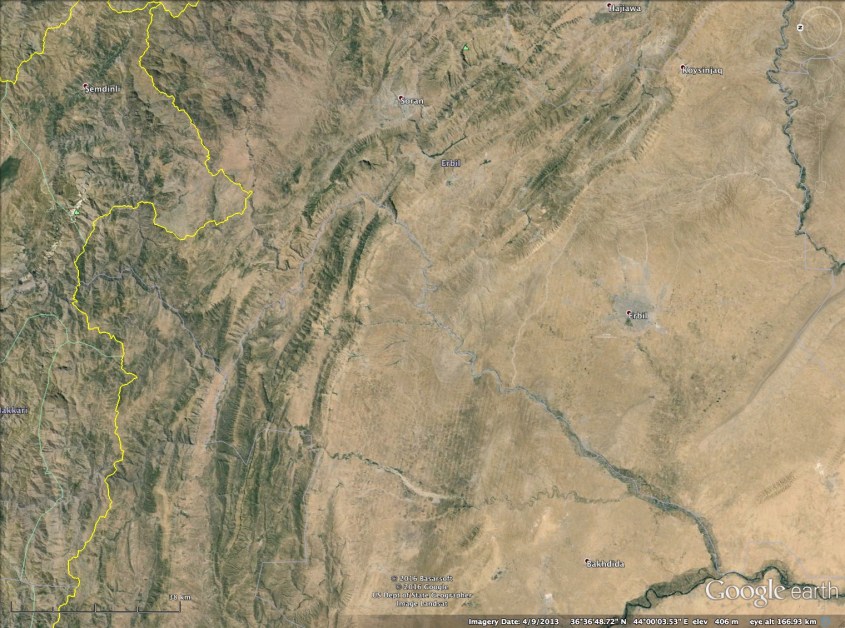
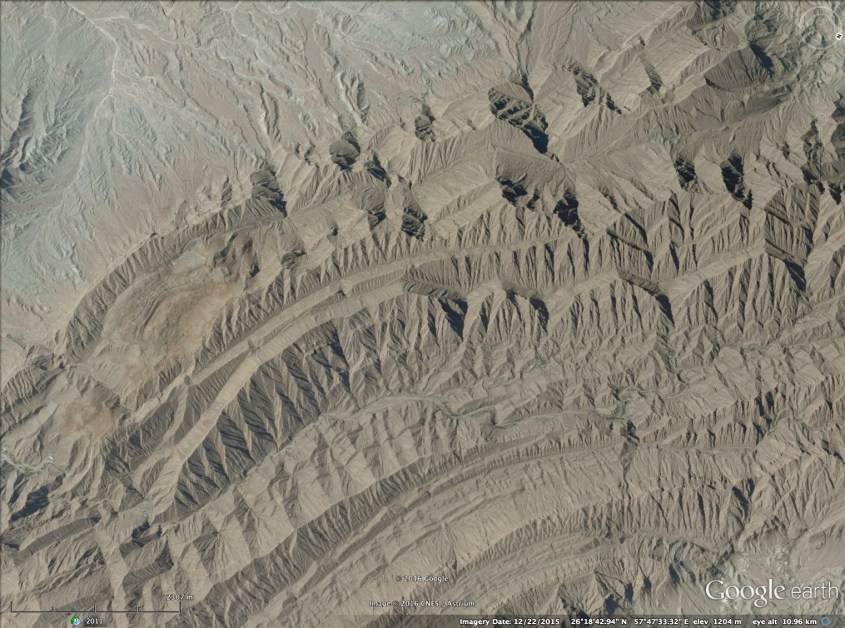
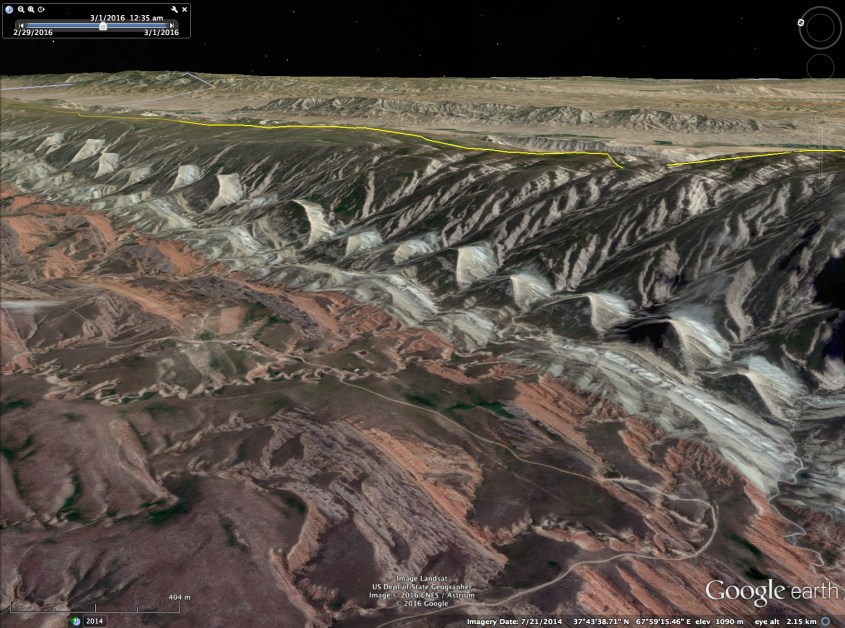
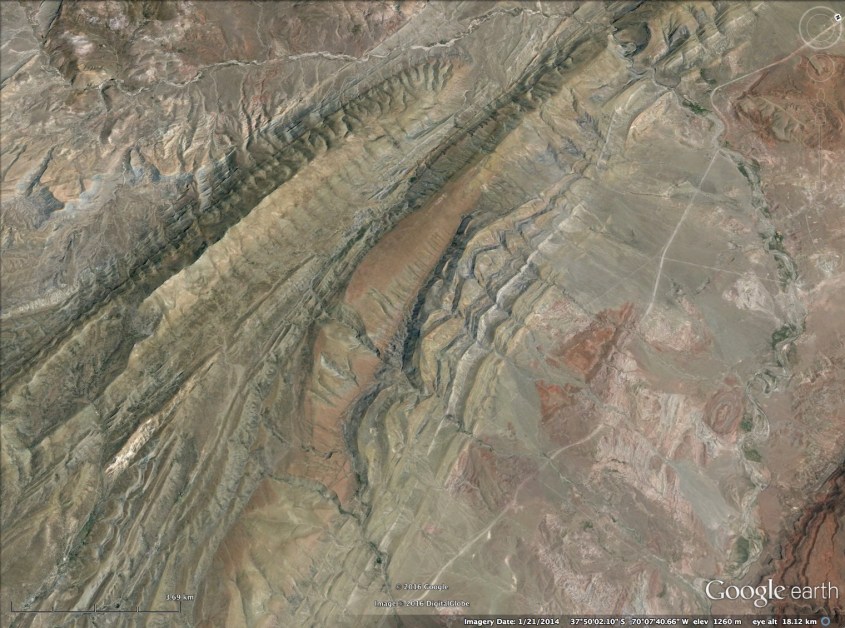
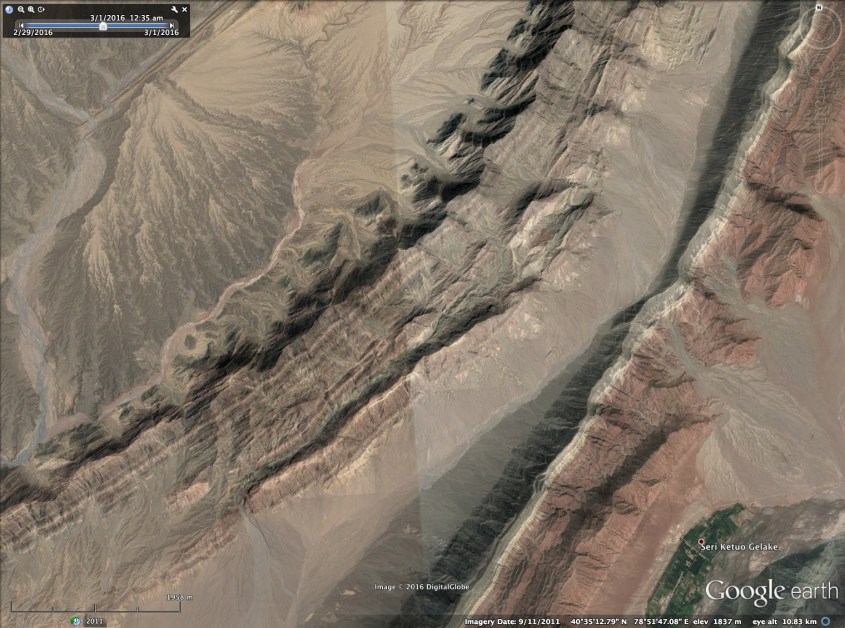


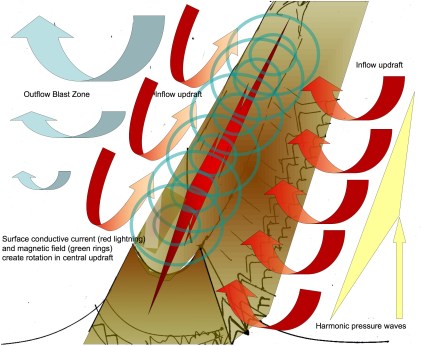
 To understand more about how the Earth’s internal currents are induced by the electromagnetic environment of the solar system, see EU 2015 speakers

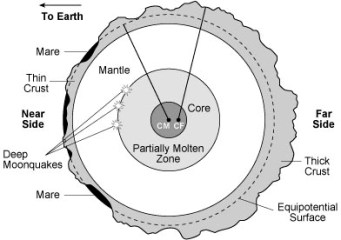

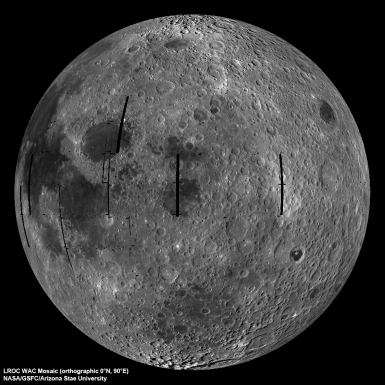
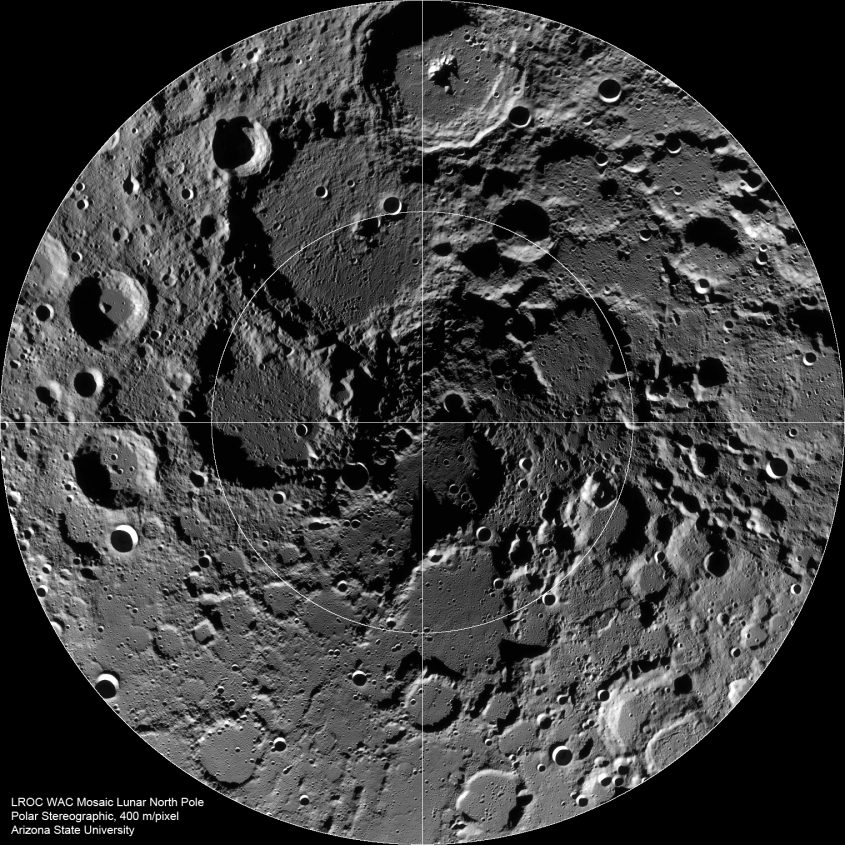


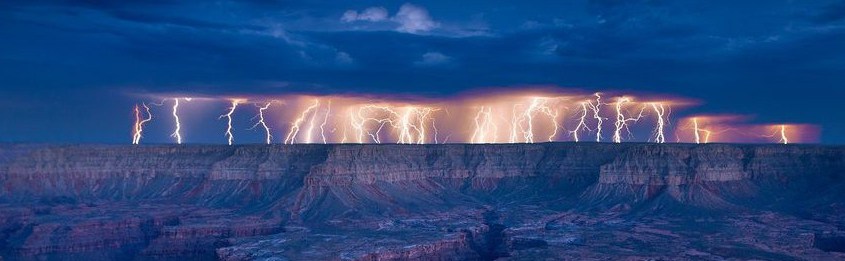
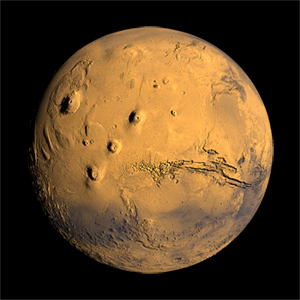
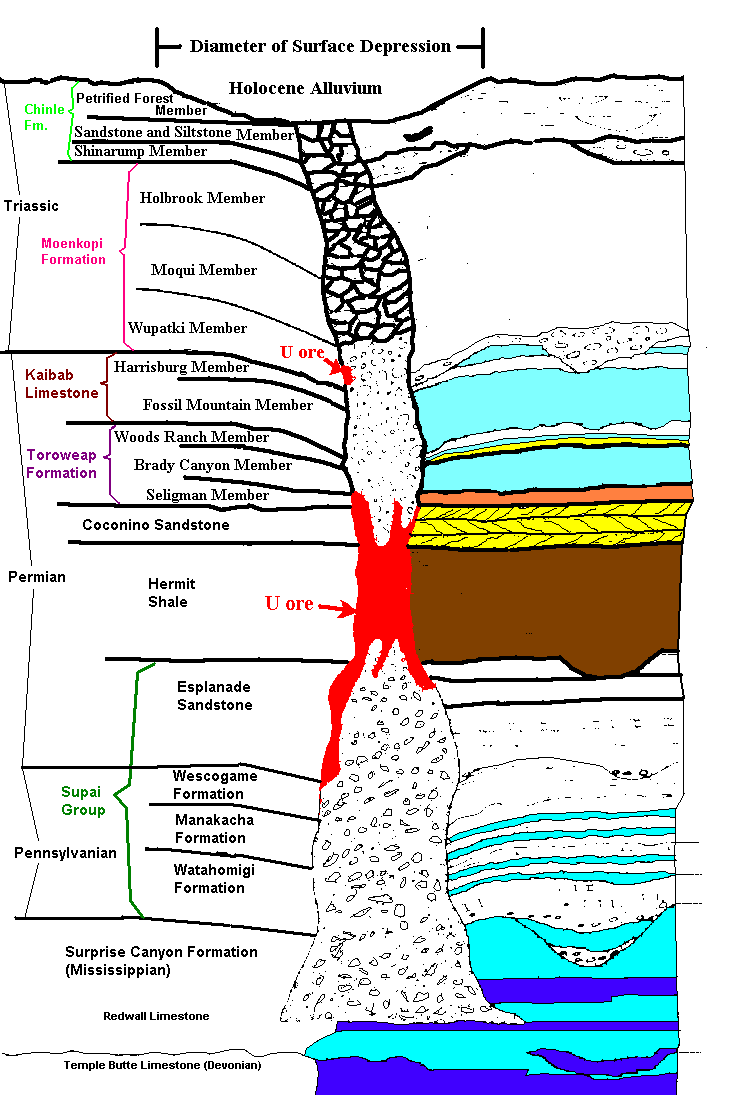



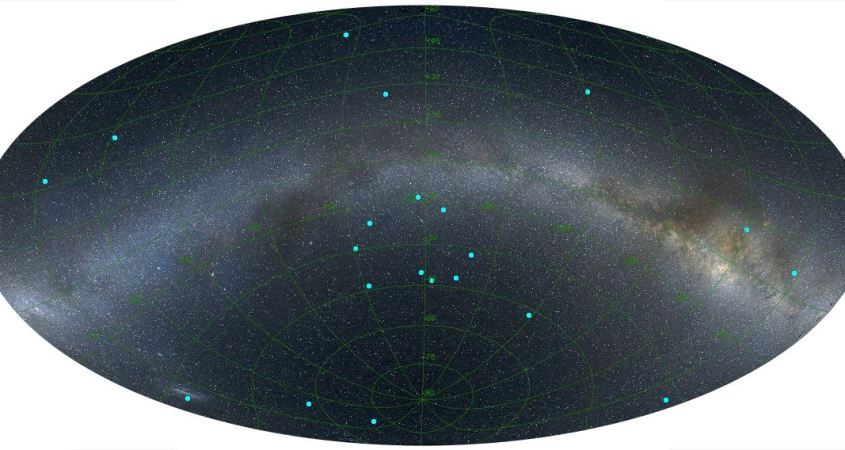


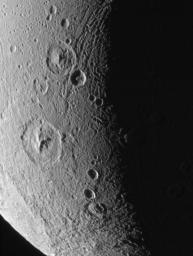

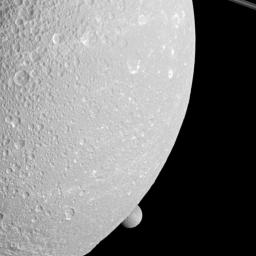

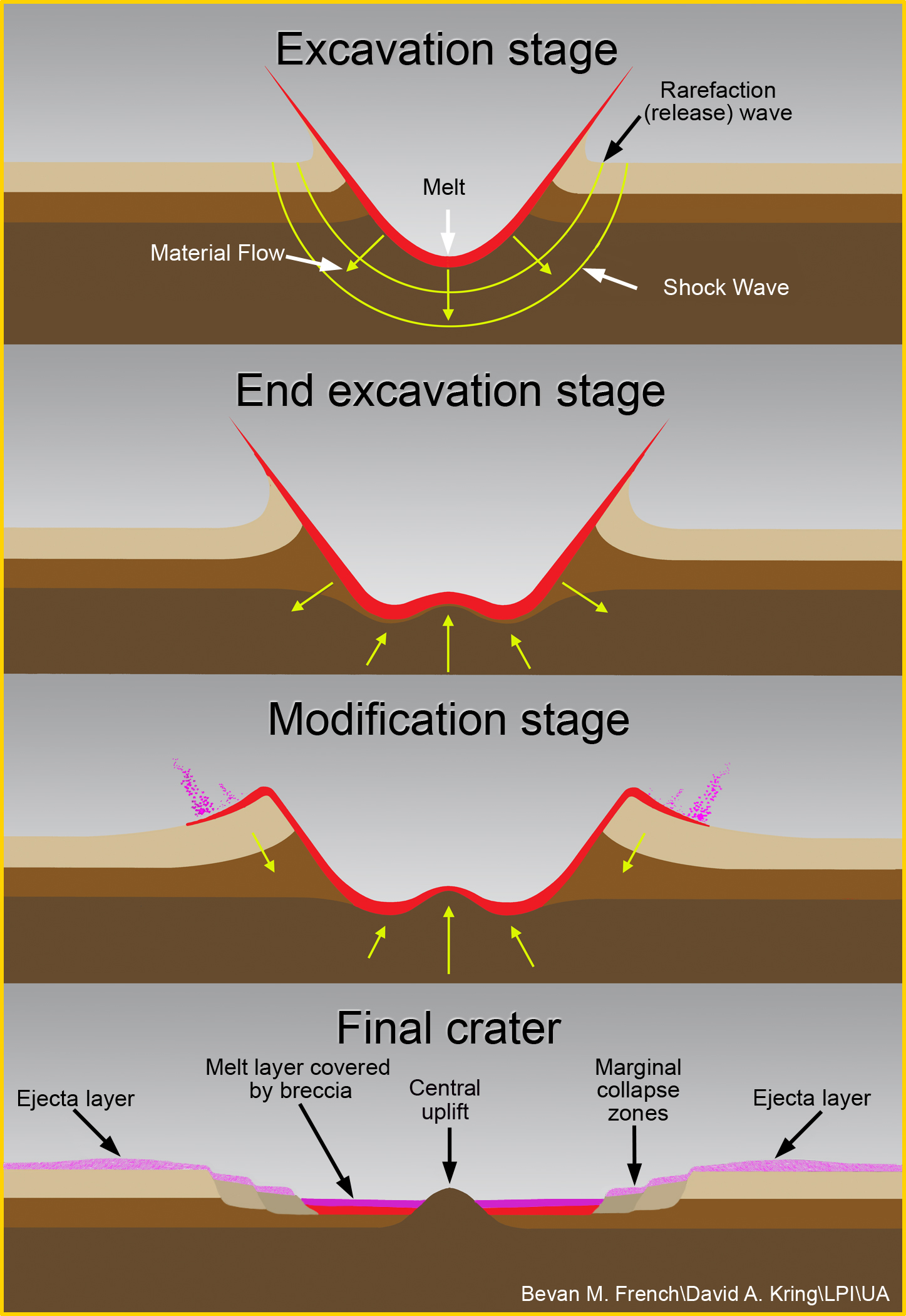


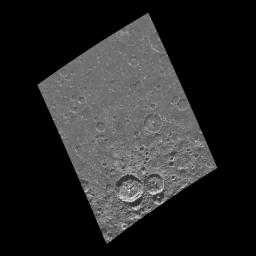
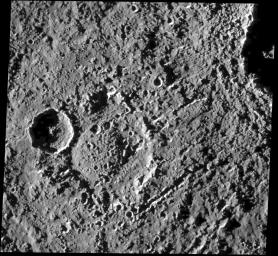


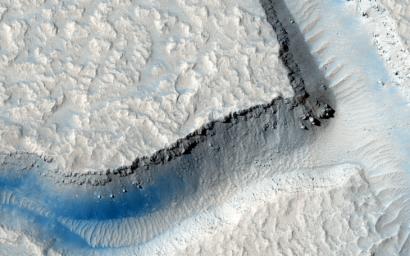
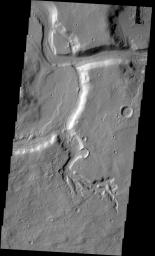

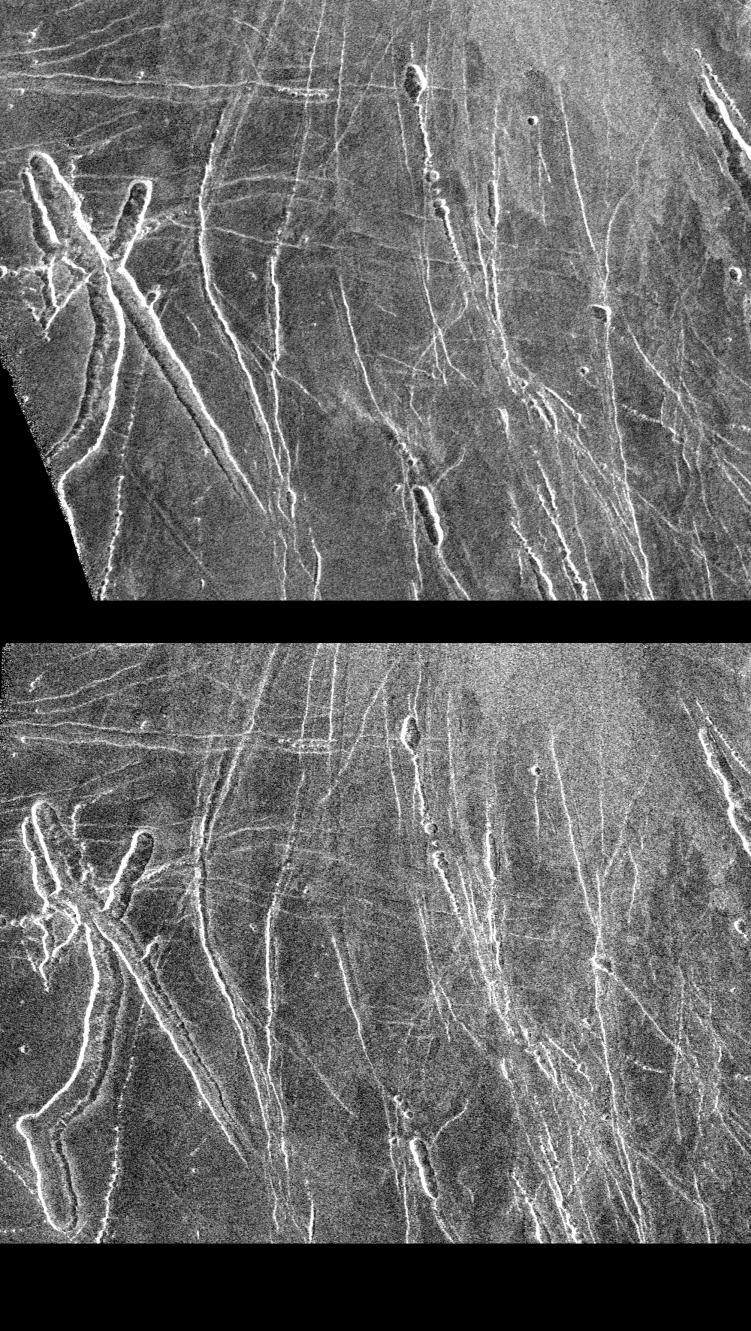
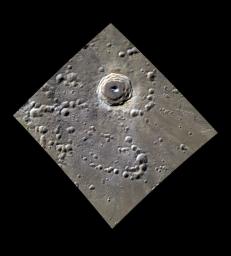



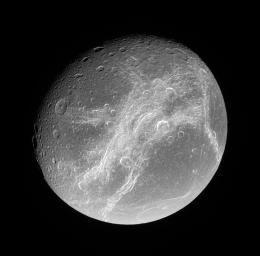
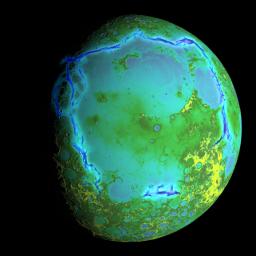


 The Daily Plasma